Yoga for Beginners: A Comprehensive Guide to Starting Your Practice in 2025
Yoga for beginners is an accessible practice designed to introduce you to foundational poses, controlled breathing, and mindfulness. Embarking on a yoga journey is a transformative step towards a more balanced and healthier lifestyle. However, the vast world of yoga styles and poses can feel overwhelming for a newcomer. This guide is crafted to demystify the practice and empower you to take your first steps onto the mat with confidence and clarity.
This article will serve as your foundational resource, exploring simple yet powerful poses ideal for anyone starting out. We will delve into the core principles of yoga for beginners, ensuring you build a safe and sustainable practice. As you grow, integrating a tool like the Vitalizen App | Yoga + Meditation can provide the structured guidance needed to deepen your practice and support your ongoing wellness journey.
Why Prioritize Yoga for Your Well-being?
When you are new to yoga, building a solid foundation is paramount. Starting with basic poses allows you to grasp the essential principles of alignment and breathwork (pranayama). These elements are crucial for a safe, effective, and rewarding practice. The initial poses are designed to gradually enhance your flexibility, build functional strength, and improve balance. As your comfort and confidence grow, you can seamlessly transition to more complex sequences.
According to 2025 projections from the National Center for Complementary and Integrative Health (NCCIH), over 94% of individuals practicing yoga in the U.S. do so for wellness-related reasons. Stress reduction and improved mental health are primary motivators, highlighting yoga’s role as a vital tool for modern well-being.
The benefits extend far beyond the physical. A consistent beginner yoga practice can significantly improve mental clarity, reduce symptoms of anxiety, and promote a profound sense of inner peace. It is a holistic discipline that nurtures both the body and the mind.
Exploring Gentle Yoga Styles for Beginners
Not all yoga is the same. For a beginner, choosing the right style is key to a positive introductory experience. Here are a few styles renowned for their accessibility and gentle approach, making them perfect for your initial exploration of yoga for beginners.
- Hatha Yoga: Often recommended for beginners, Hatha is a slower-paced style that focuses on holding basic poses for several breaths. It’s an excellent way to learn alignment and become comfortable with the foundational postures.
- Vinyasa Yoga: While some Vinyasa classes can be vigorous, beginner-focused sessions link breath to movement in a flowing sequence. It’s a dynamic way to build heat and endurance. Look for classes labeled as “slow flow” or “beginner Vinyasa.”
- Yin Yoga: This meditative style involves holding passive floor-based poses for extended periods (3-5 minutes). It targets the deep connective tissues and is fantastic for increasing flexibility and promoting a state of calm.
- Restorative Yoga: The ultimate goal of Restorative Yoga is deep relaxation. It uses props like bolsters, blankets, and blocks to support your body completely, allowing you to release tension without any effort.
What Are the Best Foundational Yoga Poses for a Beginner?
To start your practice, you don’t need to master intricate movements. The focus should be on consistency and attuning to your body’s signals. Here are seven foundational poses that will help you build confidence, strength, and stability on the mat.
1. Mountain Pose (Tadasana)
Though it appears simple, Mountain Pose is the blueprint for all standing postures. It cultivates balance, stability, and a powerful connection to the earth beneath you.
- Stand with your feet together or hip-width apart. Press all four corners of your feet firmly into the mat.
- Engage your thigh muscles to lift your kneecaps, keeping your legs straight but not locked.
- Align your head, neck, and spine. Relax your shoulders down and back, away from your ears.
- Breathe deeply, feeling your connection to the ground. It’s the perfect way to center yourself before you begin your practice.
2. Downward-Facing Dog (Adho Mukha Svanasana)
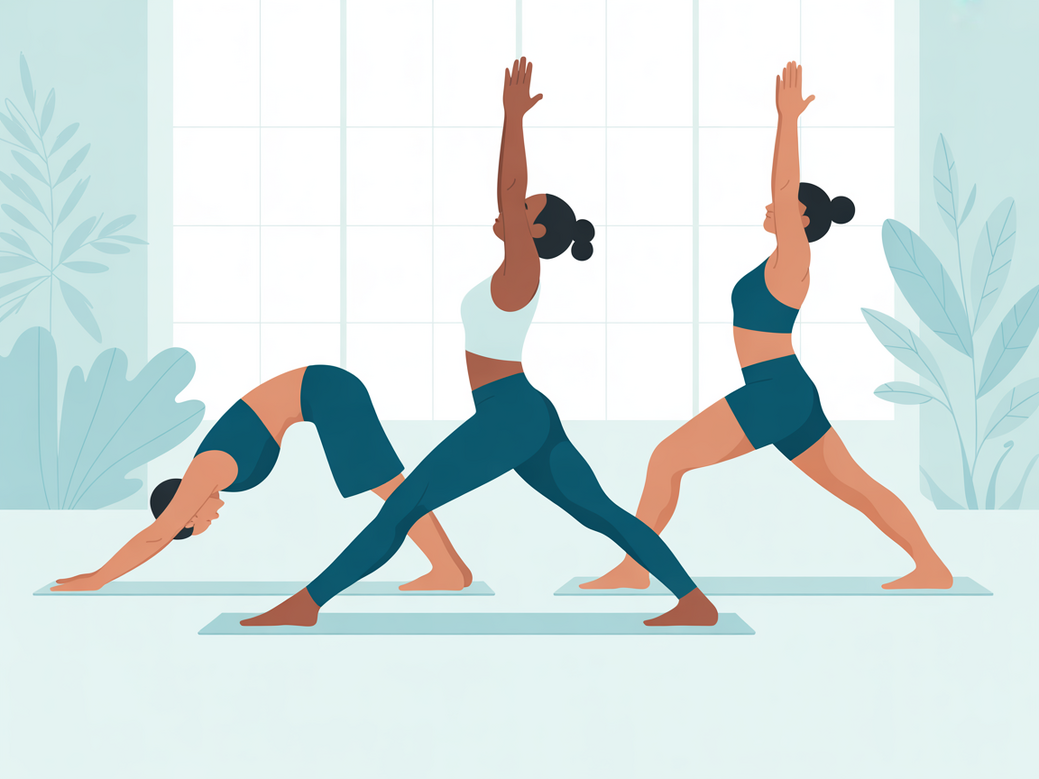
This is one of yoga’s most iconic poses for good reason. Downward-Facing Dog provides a full-body stretch, particularly for the hamstrings and calves, while building strength in the arms and shoulders.
- Begin on your hands and knees. Position your wrists directly under your shoulders and your knees under your hips.
- Exhale as you lift your hips up and back, forming an inverted “V” shape with your body.
- Press your hands firmly into the floor and keep your head relaxed between your upper arms.
- Beginner Tip: Bend your knees generously to lengthen your spine and make the pose more accessible.
3. Warrior II (Virabhadrasana II)
Warrior II is a powerful standing pose that strengthens the legs and core while opening the hips and chest. It cultivates focus and determination.
- Stand with your feet wide apart, about 3 to 4 feet.
- Turn your right foot out 90 degrees and your left foot in slightly.
- Bend your right knee, ensuring it is aligned directly over your ankle. Extend your arms parallel to the floor.
- Gaze over your right hand and hold the pose, breathing steadily. Remember to repeat on the other side.
4. Cat-Cow Pose (Marjaryasana-Bitilasana)
This dynamic duo is a gentle and effective way to warm up the spine and release tension in the back, shoulders, and neck. It beautifully links your movement with your breath.
- Start on your hands and knees in a tabletop position.
- As you inhale (Cow), drop your belly, arch your back, and look forward.
- As you exhale (Cat), round your spine towards the ceiling, tucking your chin to your chest.
- Flow between these two poses for 5-10 breaths, letting your breath guide the movement.
5. Bridge Pose (Setu Bandhasana)
Bridge Pose is a gentle backbend that strengthens the glutes and hamstrings, opens the chest, and can help alleviate back pain. It’s a great preparatory pose for deeper backbends.
- Lie on your back with your knees bent, feet flat on the floor hip-width apart.
- Press into your feet and arms to lift your hips off the floor.
- Keep your thighs parallel and clasp your hands together underneath your back if accessible.
- Hold for 30-60 seconds while breathing smoothly.
6. Cobra Pose (Bhujangasana)
Cobra Pose is a foundational backbend that increases spinal flexibility and strengthens the back muscles. It’s an integral part of the Sun Salutation sequence.
- Lie on your stomach with your hands under your shoulders, fingers pointing forward.
- Press the tops of your feet into the mat and engage your legs.
- On an inhale, gently lift your chest off the floor, keeping your lower ribs on the ground.
- Keep your neck long and your shoulders relaxed away from your ears. Avoid pushing too high.
7. Corpse Pose (Savasana)
While it may look like just lying down, Savasana is one of the most vital and challenging poses in yoga. It allows your body to integrate the benefits of the practice and promotes deep, conscious relaxation.
- Lie on your back with your legs slightly apart and your arms alongside your body, palms facing up.
- Close your eyes and release control of your breath. Let your body feel heavy and completely relaxed.
- Stay here for at least 5-10 minutes. This is the perfect way to conclude your practice and absorb its effects.
How to Start Your Yoga Journey Today
Are you ready to begin? Starting your yoga for beginners practice is simpler than you might think. You don’t need pre-existing flexibility or any special experience—just a willingness to try.
- Set an Intention: Clarify why you want to practice. Is it for flexibility, stress relief, or building strength? Your intention will be your anchor.
- Find a Space: Designate a quiet, comfortable corner in your home where you can practice without interruptions.
- Start Small: Begin with just 15-20 minute sessions, 2-3 times a week. Consistency is far more important than duration when you’re starting out.
- Use a Guide: A guided class can be incredibly beneficial for learning alignment and flow. The Vitalizen App offers routines specifically designed for beginners.
🎯 Ready to start? A guided practice can make all the difference. Explore beginner-friendly classes on the Vitalizen App to build your confidence.
How Much Does Yoga for Beginners Cost?
The cost of starting yoga can vary widely, but it can also be entirely free. High-quality resources are available for every budget.
| Option | Estimated Cost (2025) | Description |
|---|---|---|
| At-Home Practice (Free) | $0 | Utilize free apps, YouTube tutorials, and a comfortable space on your floor. Many credible instructors offer free content. |
| Basic Home Setup | $20 – $50 | This typically includes a quality yoga mat. Props like blocks and straps are optional but highly recommended for support. |
| App Subscription | $10 – $30 / month | Gain access to structured programs, a library of guided classes, and meditation resources, like those on the Vitalizen App. |
| Studio Classes | $80 – $200 / month | Benefit from in-person instruction, a sense of community, and access to all necessary equipment and a dedicated space. |
Ready to Transform Your Well-being?
Now that you are equipped with knowledge of foundational yoga poses and a clear path to begin, you are ready to start your wellness journey. To make your practice more complete and rewarding, we invite you to discover the Vitalizen App. With guided classes, personalized meditations, and a wealth of resources, it’s the perfect companion for anyone committed to improving their quality of life. Don’t wait any longer to invest in yourself.
💡 Tip: Download the Vitalizen app today to access a free trial and start your first beginner yoga class!
Frequently Asked Questions About Yoga for Beginners
How many times a week should a beginner do yoga?
For beginners, practicing yoga 2 to 3 times a week is an ideal start. This frequency allows your body to adapt to new movements and build strength and flexibility without becoming overwhelmed. Remember, consistency is more impactful than duration; a 20-minute practice three times a week is more beneficial than one long session once a week.
Do I need special equipment to start yoga?
The only essential piece of equipment is a yoga mat, which provides cushioning and grip. However, you can certainly start on a comfortable, non-slip surface. As you progress, you might consider props like foam blocks or a strap to assist with alignment and deepen stretches, but they are not necessary for starting. For more tips, check out our articles and guides.
What are the main benefits of yoga for beginners?
Even for beginners, yoga offers a multitude of benefits. Beyond improving flexibility and building physical strength, it is proven to reduce stress and anxiety, enhance posture, and promote better sleep quality. Furthermore, yoga is a practice of self-awareness that strengthens the connection between your mind and body. If you have more questions, please feel free to contact us.
For further reading and to deepen your knowledge, visit authoritative sources like the Yoga Journal for tips and pose guides, and the National Center for Complementary and Integrative Health (.gov) for research-backed information. For academic insights, Harvard Health Publishing also provides excellent resources on the benefits of yoga.