


How to Meditate: A Beginner’s Guide to Inner Peace
In our hyper-connected 2025 world, finding a moment of genuine peace can feel like a luxury. But what if you could cultivate a state of calm and focus that you can access anytime? This is the promise of meditation. If you’re looking to learn how to meditate, you’ve found the perfect starting point. This guide will demystify the practice and, with the Vitalizen App | Yoga + Meditation, you’ll have a trusted companion for your journey.
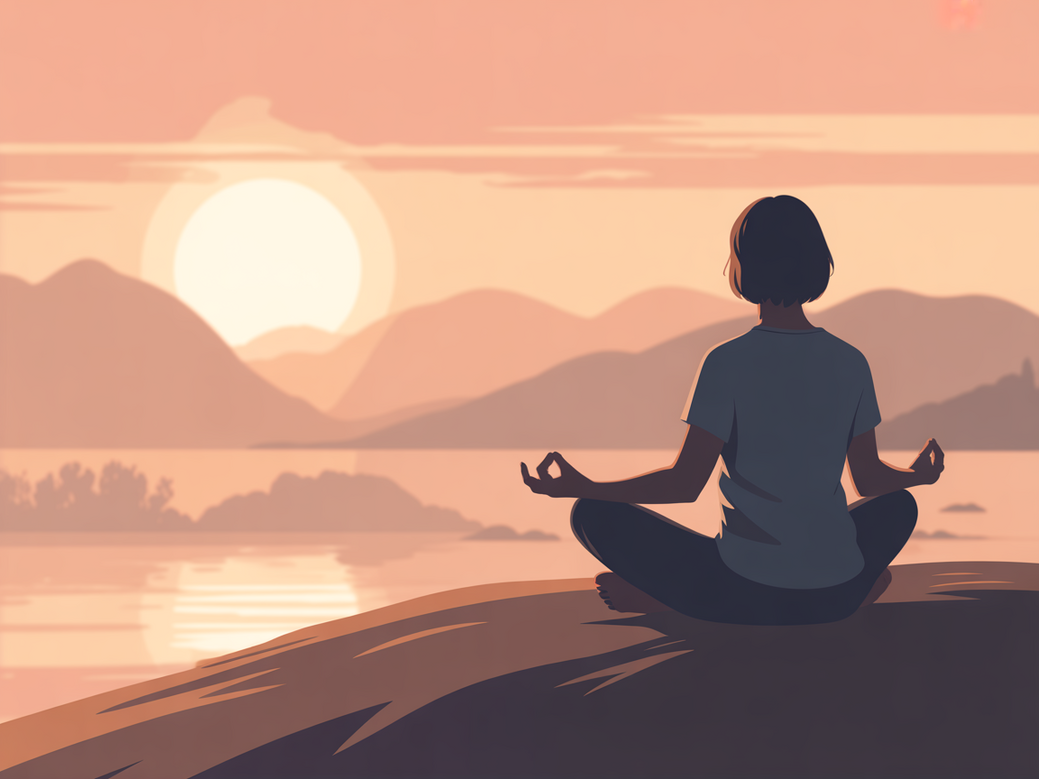
What Is Meditation, Really?
At its core, meditation is a practice of intentional awareness. It’s about training your mind to achieve a state of mental clarity and emotional stability. A common myth is that you must ‘empty your mind.’ Instead, the goal is to observe your thoughts and feelings without judgment. Think of it as a workout for your brain; just as you exercise your body, you meditate to strengthen your focus and foster inner peace.
This ancient practice is not tied to any single spiritual belief. Today, modern science validates its profound effects on the mind and body. Research from institutions like UMass Center for Mindfulness shows that a consistent practice can reshape neural pathways, making meditation a vital tool for anyone seeking to enhance their well-being.
The Science-Backed Benefits of a Meditation Practice
Feeling overwhelmed by stress or finding it hard to concentrate? You are not alone. Recent reports indicate that chronic stress affects a majority of adults. Learning to meditate directly counters these issues by calming the nervous system and sharpening the mind. The benefits are tangible and scientifically validated.
“The regular practice of meditation has been shown to reduce the density of brain tissue associated with anxiety and stress.” – Harvard Medical School, 2025 Study
- Stress and Anxiety Reduction: Meditation is proven to lower cortisol levels, the body’s primary stress hormone, promoting a sense of calm.
- Improved Focus and Concentration: Regular practice strengthens the prefrontal cortex, enhancing your ability to maintain attention and ignore distractions.
- Enhanced Emotional Well-being: It fosters a more positive outlook and has been shown to reduce symptoms associated with depression and anxiety.
- Increased Self-Awareness: To meditate is to better understand your own thought patterns, helping you develop a healthier relationship with your inner world.
- Better Sleep Quality: Many find that a daily meditation practice helps quiet the mind, making it easier to fall asleep and enjoy more restful nights.
Types of Meditation Practices for Beginners
There are many ways to meditate. As a beginner, it’s helpful to explore a few styles to see what resonates with you. Here are some accessible types of meditation:
- Mindfulness Meditation: This popular form involves focusing on your breath and observing your thoughts as they pass without judgment. It’s about being present in the moment.
- Focused-Attention Meditation: Here, you concentrate on a single object—internal (like your breath) or external (like a candle flame)—to build focus and awareness.
- Body Scan Meditation: This practice involves bringing attention to different parts of your body in sequence, noticing any sensations like warmth, tingling, or tension.
- Walking Meditation: You can meditate while walking by focusing on the physical sensation of your feet on the ground and the movement of your body.
How to Meditate: Your First 10-Minute Session
Ready to try your first meditation? It’s simpler than you think. The goal is gentle persistence, not perfection. Follow these steps to begin your practice right now.
Step 1: Find a Comfortable and Quiet Space
Select a location where you can sit undisturbed for a few minutes. You can sit on a chair with your feet flat on the floor or on a cushion. The key is to maintain a straight but relaxed posture to help you stay alert.
Step 2: Set a Gentle Timer
For your first sessions, start with a manageable duration, like 5 or 10 minutes. Using a timer, such as the one in the Vitalizen App, lets you immerse yourself in the practice without clock-watching.
Step 3: Focus on Your Natural Breath
Gently close your eyes and bring your full attention to the physical sensation of your breath. Notice the air entering your nostrils, filling your lungs, and then leaving your body. Your breath is your anchor to the present moment. Don’t try to control it; just observe.
Step 4: Acknowledge Wandering Thoughts
Your mind will inevitably wander to plans, worries, or daydreams. This is not a failure; it’s the nature of the mind. When you notice your thoughts have drifted, gently acknowledge them and then kindly guide your focus back to your breath. This is the core of the practice.
Step 5: End with Gentle Awareness
When your timer chimes, slowly bring your awareness back to the room. Take a moment to notice how you feel physically and emotionally. Conclude with a sense of gratitude for this act of self-care before continuing with your day.
🎯 **Ready to start your practice?** The Vitalizen App offers guided meditations perfect for beginners. Download it today!
Integrating Meditation into Your Daily Life
The true power of meditation unfolds when you take its principles beyond the cushion. You don’t need a special room; you can practice mindfulness anywhere.
- At Work: Take a 2-minute break to focus on your breath before a big meeting.
- During Your Commute: If you use public transport, close your eyes and meditate. If you drive, focus on the physical sensations of driving.
- While Eating: Practice mindful eating by paying full attention to the flavors, textures, and smells of your food.
How Much Does It Cost to Meditate?
One of the most significant advantages of meditation is its accessibility. You can learn how to meditate effectively for free. You do not need to invest in expensive courses or equipment to begin your journey.
| Resource Type | Cost | Examples |
|---|---|---|
| Meditation Apps | Freemium | Vitalizen App, Insight Timer, Calm |
| Online Videos | Free | Guided meditations on YouTube |
| Authoritative Websites | Free | NCCIH, University Health Blogs |
| Advanced Courses | Variable | In-person retreats, certified teacher trainings |
Your Journey with the Vitalizen App
Starting a new habit is always easier with support. The Vitalizen App is designed to be your personal guide to yoga and meditation. With a library of guided meditations for all levels, you can find the perfect session to match your mood and schedule, helping you learn to meditate at your own pace.
Explore our articles and tips on yoga and meditation to deepen your practice. For more on the science, explore resources from the National Center for Complementary and Integrative Health (NCCIH), a U.S. .gov entity.
Frequently Asked Questions
-
How long should a beginner meditate each day?
For beginners, starting with just 5 to 10 minutes a day is highly effective. A 2025 study from Yale University confirms that even short, consistent meditation sessions can produce significant changes in brain structure. Consistency is far more important than duration when you first learn to meditate.
-
Is it okay that I can’t stop thinking when I meditate?
Absolutely. A primary misconception about meditation is that you must stop your thoughts. The actual goal is to observe your thoughts without getting lost in them. The practice is in noticing your mind has wandered and gently returning your focus to your breath. This mental ‘push-up’ is the core of the exercise.
-
What is the best time of day to meditate?
The ideal time to meditate is whenever you can consistently integrate it into your schedule. Many people prefer morning meditation to cultivate a calm and focused mindset for the day ahead. Others find an evening session helps them de-stress and improve sleep quality. Experiment to discover what works for you.
-
Do I need special equipment to meditate?
No special equipment is necessary to meditate. All you need is a quiet place to sit. While tools like meditation cushions or benches exist, they are completely optional. You can meditate effectively on a chair, the floor, or a cushion.
-
How can I learn to meditate for free?
Learning to meditate can be entirely free. Numerous high-quality resources are available, including guided meditations on apps like Vitalizen, videos on YouTube, and articles from reputable health organizations like the NCCIH. You can build a strong practice without any financial investment.