


How to Start Yoga for Beginners: A Complete Guide for 2025
Have you ever considered starting yoga but felt overwhelmed by where to begin? You’re not alone. In our fast-paced world, finding a practice that nurtures both body and mind is invaluable. Yoga for beginners is not about achieving perfect poses; it’s a personal journey toward greater health and self-awareness.
This guide is designed to demystify the process and provide clear, actionable steps to start your yoga practice with confidence. Yoga is a holistic discipline connecting physical postures (asanas), breathing techniques (pranayama), and meditation. It’s an accessible path to wellness that requires minimal equipment, making it easy to start your journey today with tools like the Vitalizen App.
Why Start a Yoga Practice? The Core Benefits
In an age of constant digital stimulation, yoga offers a sanctuary. It provides powerful tools to manage modern pressures, leading to significant improvements in physical and mental health. The benefits are both immediate and cumulative, creating a sustainable foundation for lifelong wellness.
- Stress and Anxiety Reduction: The deliberate focus on breath and movement activates the parasympathetic nervous system, inducing a state of calm and lowering stress levels.
- Increased Flexibility and Mobility: Yoga systematically stretches muscles and lubricates joints, helping you move more freely and with less stiffness in your daily activities.
- Improved Strength and Balance: Many beginner yoga poses require you to support your body weight in new ways, building functional strength and enhancing stability.
- Better Posture and Body Awareness: By strengthening your core and heightening your sense of alignment, yoga helps you stand and sit taller, reducing back pain.
- Enhanced Mental Clarity and Focus: The meditative aspects of a consistent yoga practice help quiet mental chatter, improving concentration and promoting a state of inner peace.
How to Start Yoga at Home: A Step-by-Step Guide
Starting yoga from the comfort of your home is a fantastic option for beginners. It allows you to learn at your own pace in a private, judgment-free environment. Follow these steps to build a safe and effective home yoga practice.
- Create a Dedicated Space: Designate a quiet, clutter-free spot. A peaceful environment is crucial for maintaining focus and reaping the meditative benefits of yoga.
- Gather Essential Gear: A non-slip yoga mat is your most important investment. Wear comfortable, breathable clothing that allows for a full range of motion.
- Choose a Beginner-Friendly Style: Begin with Hatha, Restorative, or Gentle Yoga. These styles emphasize slower movements and foundational alignment, which is ideal for anyone new to yoga.
- Use a Guided Resource: Following a qualified instructor is key to learning poses correctly and safely. The Vitalizen App offers guided classes specifically designed for beginners.
- Prioritize Consistency Over Duration: Aim for 2-3 shorter sessions (20-30 minutes) per week rather than one long, infrequent practice. Consistency is the key to building momentum and seeing results.
5 Essential Yoga Poses for Every Beginner
To get started, focus on mastering a few fundamental poses. This will build your confidence and create a strong foundation for your practice. Here are five essential poses for anyone starting yoga for beginners.
1. Mountain Pose (Tadasana)
This is the blueprint for all standing poses. Stand with your feet together, ground down through your soles, engage your leg muscles, and lengthen your spine. It teaches balance and body awareness.
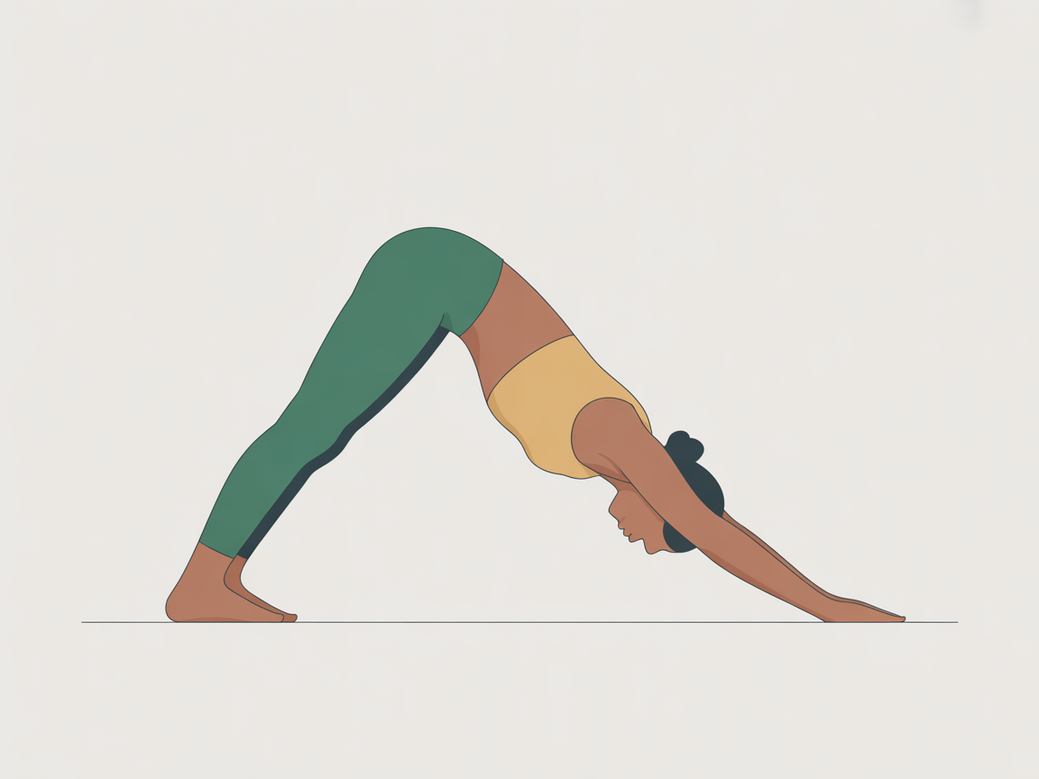
2. Downward-Facing Dog (Adho Mukha Svanasana)
From your hands and knees, lift your hips up and back to form an inverted ‘V’ shape. This pose stretches the entire body, builds upper body strength, and calms the nervous system.
3. Cat-Cow Stretch (Marjaryasana-Bitilasana)
On all fours, inhale as you drop your belly and look up (Cow), then exhale as you round your spine and tuck your chin (Cat). This simple flow warms up the spine and improves flexibility.
4. Warrior II (Virabhadrasana II)
Step your feet wide apart, turn one foot out 90 degrees, and bend the front knee. Extend your arms parallel to the floor. This powerful pose builds strength in the legs and core while opening the hips.
5. Child’s Pose (Balasana)
This is a gentle resting pose. Kneel on the floor, sit back on your heels, and fold forward, resting your forehead on the mat. It’s perfect for relieving stress and tension in the back and shoulders.
> 💡 **Ready to master these poses?** The Vitalizen App offers guided tutorials for all essential beginner yoga poses. Download today and start practicing!
Which Style of Yoga Is Best for Beginners?
With so many yoga types, choosing one can be confusing. For beginners, it’s best to select a style that prioritizes fundamental alignment, breathwork, and slower pacing. This table compares popular styles suitable for those new to the practice.
| Yoga Style | Pace | Primary Focus | Ideal For Beginners? |
|---|---|---|---|
| Hatha | Slow | Basic postures and breathing | Yes, an excellent starting point for learning foundational poses. |
| Vinyasa | Moderate to Fast | Flowing between poses with breath | Yes, after gaining comfort with basic poses in a slower class. |
| Restorative | Very Slow | Deep relaxation using props | Yes, perfect for stress relief and gentle stretching. |
| Iyengar | Slow | Precise alignment with props | Yes, highly recommended for its focus on proper form and safety. |
Yoga in 2025: A Timeless Practice for Modern Wellness
The relevance of yoga continues to grow as we seek effective, proactive ways to manage our health. In 2025, the emphasis on integrated mental and physical wellness is more critical than ever. Yoga directly addresses this by offering a practical framework for self-care that fits into any lifestyle.
“According to a 2025 report from the National Center for Complementary and Integrative Health (NCCIH), over 90% of people who practice yoga report reduced stress, and 85% experience improved physical fitness.”
This ancient discipline is not a fleeting trend; it’s a time-tested practice validated by modern science. For more in-depth research, explore resources from authoritative bodies like the NCCIH or the Physical Activity Guidelines for Americans.
Common Mistakes to Avoid in Your Yoga Practice
As you begin your yoga journey, being aware of common pitfalls can help you practice more safely and effectively. Here are a few things to keep in mind:
- Pushing Too Hard: Yoga is not a competitive sport. Honor your body’s limits and avoid pushing into pain. Progress will come with consistent, gentle effort.
- Holding Your Breath: The breath is central to yoga. Make sure you are breathing smoothly and continuously throughout each pose.
- Ignoring Alignment: Proper form is crucial for safety and effectiveness. Using a guided resource like the Vitalizen app ensures you learn correct alignment from the start.
- Comparing Yourself to Others: Your yoga practice is uniquely yours. Focus on your own progress and sensations rather than comparing your poses to others.
How Much Does It Cost to Start Yoga?
One of yoga’s most appealing aspects is its accessibility. The initial cost can be very low. Your primary investment is a quality yoga mat, which can range from $20 to $100. While props like blocks and straps are helpful, they are not essential for a beginner yoga practice.
Instruction costs vary widely. In-person studio classes can range from $15 to $30 per session. However, digital platforms provide a more affordable and flexible alternative. A subscription to an app like Vitalizen often costs less for a whole month than a single studio class, granting you access to a vast library of guided sessions anytime, anywhere.
Your journey to a healthier, more balanced life is just a few steps away. By embracing yoga for beginners, you are giving yourself a powerful gift of wellness that will last a lifetime. Explore our blog for more tips and insights.
> 🎯 **Ready to transform your well-being?** Contact us today to learn how Vitalizen can support you on your yoga journey.