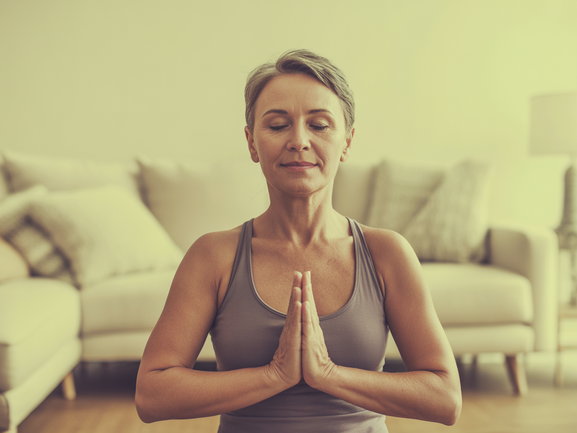
How to Start Yoga and Meditation: A Beginner’s Guide for 2025
Have you ever wondered how to find a moment of calm in your busy life? Starting a yoga and meditation practice can be a transformative step. Yet, knowing where to begin is often the biggest challenge. This guide provides clear, actionable steps for your journey toward a more balanced life. To support you, the Vitalizen App | Yoga + Meditation is your perfect personal guide.
Why Start a Yoga and Meditation Practice in 2025?
In our fast-paced, digitally connected world, finding genuine peace is essential. Yoga and meditation are no longer niche activities but fundamental tools for modern well-being. They offer a powerful sanctuary from daily stress, helping you reconnect with yourself.
According to a 2025 report from the Global Wellness Institute, 75% of adults report feeling stressed. Regular mindfulness practice, a core component of yoga and meditation, can reduce symptoms of anxiety by up to 60%.
This makes starting a yoga and meditation routine one of the most impactful decisions for your health. It’s an investment in your mental clarity, emotional stability, and physical vitality. The benefits extend far beyond the mat, influencing how you handle challenges in your daily life.
Understanding the Core Philosophy: More Than Just Exercise
Before diving in, it’s helpful to understand the philosophy behind these practices. Yoga is a holistic discipline from ancient India. It combines physical postures (asanas), breathing techniques (pranayama), and meditation to unite mind, body, and spirit. It’s a journey of self-awareness, not a competition.
Meditation is the practice of training the mind for deep relaxation and focused awareness. By concentrating on your breath or a mantra, you learn to quiet mental chatter. It is a skill that strengthens with consistent practice, leading to profound inner peace.
Choosing Your Path: Types of Yoga and Meditation for Beginners
The worlds of yoga and meditation are vast. For a beginner, starting with gentle and foundational styles is key. This approach ensures you build a strong, safe, and enjoyable practice.
Beginner-Friendly Yoga Styles
- Hatha Yoga: A slower-paced class, perfect for beginners. It focuses on basic postures and breathing, helping you build a solid foundation.
- Vinyasa Yoga: This style links movement with breath in a flowing sequence. Look for beginner-level Vinyasa classes that move at a manageable pace.
- Restorative Yoga: Uses props like bolsters and blankets to support your body in gentle poses. It is deeply relaxing and excellent for stress relief.
Approachable Meditation Techniques
- Mindfulness Meditation: The most common starting point. It involves focusing on your breath and observing your thoughts without judgment.
- Guided Meditation: A teacher’s voice leads you through the meditation. The Vitalizen App has a library of guided sessions perfect for beginners.
- Walking Meditation: If sitting still is a challenge, try this. Focus on the physical sensation of your feet on the ground and the movement of your body.

How to Start Your Yoga Practice: A Step-by-Step Guide
Beginning your yoga journey requires very little. A willingness to learn is your most important asset. Here are the essential first steps to get you started with this transformative practice.
- Create a Dedicated Space: Find a quiet, comfortable spot in your home. Ensure you won’t be disturbed for at least 20-30 minutes.
- Get Basic Equipment: A yoga mat is ideal for grip and cushioning. However, a soft carpet or large towel works when you’re just starting.
- Learn Foundational Poses: Start with simple, gentle poses to build confidence. The Vitalizen App has guided sessions for beginners that include:
- Mountain Pose (Tadasana): The foundation for all standing poses.
- Downward-Facing Dog (Adho Mukha Svanasana): An energizing stretch for the entire body.
- Cat-Cow Stretch (Marjaryasana-Bitilasana): A gentle flow to warm up the spine.
- Warrior II (Virabhadrasana II): Builds strength and stability in the legs.
- Focus on Your Breath: The connection between movement and breath is central to yoga. Inhale as you expand or lengthen, and exhale as you contract or deepen a pose.
Remember, the goal of yoga and meditation is not to achieve perfect poses. It is to create a mindful connection with your body.
Your First Steps in Meditation: Finding Stillness
Meditation is about finding stillness amid the noise. You can start with just five minutes a day. Here’s how to begin your mindfulness practice:
- Find a Comfortable Position: Sit on a chair with your feet flat on the floor or on a cushion with your legs crossed. Keep your back straight but not rigid.
- Focus on Your Breath: Gently close your eyes. Pay attention to the physical sensation of your breath as it enters and leaves your body. Don’t try to change it; just observe.
- Acknowledge Wandering Thoughts: Your mind will wander—that’s normal. When you notice your thoughts drifting, gently and without judgment, guide your focus back to your breath.
- Use a Guided Resource: If you find it hard to focus, guided meditations are a fantastic tool. They provide a voice to follow, making the process much simpler.

Common Pitfalls for Beginners and How to Overcome Them
When starting any new skill, challenges are part of the process. Being aware of common hurdles in yoga and meditation can help you navigate them with ease.
Challenge 1: Expecting Instant Results
Many beginners feel frustrated when they don’t feel “zen” after one session. Remember, yoga and meditation are practices, not quick fixes. The benefits accumulate over time with consistency.
Challenge 2: Pushing Your Body Too Hard
It’s easy to get caught up in trying to achieve a perfect pose. This can lead to injury. Always listen to your body. If you feel sharp pain, gently back off. Progress in yoga is measured by awareness, not flexibility.
Challenge 3: Believing You’re “Bad” at Meditating
The goal of meditation isn’t to have an empty mind. It’s to notice when your mind has wandered and gently bring it back. Every time you do this, you are successfully meditating. There is no such thing as being “bad” at it.
What Are the Main Benefits of a Consistent Practice?
Committing to a regular yoga and meditation routine offers extensive benefits. A 2025 study from a leading research university highlighted the positive impact of mindfulness on cognitive function and emotional resilience. Further research from institutions like the National Institutes of Health (NIH) confirms these findings.
Key Advantages:
- Reduced Stress and Anxiety: Both practices are proven to lower cortisol, the body’s primary stress hormone.
- Improved Physical Health: Yoga enhances flexibility, strength, and balance, while meditation can lower blood pressure.
- Enhanced Focus and Clarity: Regular practice trains your mind to concentrate, improving your attention span.
- Better Emotional Regulation: You’ll develop a greater awareness of your emotions and learn to respond more calmly. For more, review findings from Stanford University.
💡 Tip: Download our free guide in the Vitalizen App to deepen your knowledge!
How Much Does It Cost to Start Yoga and Meditation?
The cost of starting can vary, but there are options for every budget. You can start for free at home or invest in more structured guidance. Here’s a comparison:
| Practice Method | Estimated Monthly Cost | Key Benefits |
|---|---|---|
| At-Home (Self-Guided) | $0 | Complete flexibility, no cost, practice anytime. |
| Vitalizen App | Freemium / Low-Cost Subscription | Guided sessions, progress tracking, accessible anywhere. |
| Local Yoga Studio | $80 – $200+ | In-person instruction, community, dedicated space. |
Frequently Asked Questions (FAQ)
How often should a beginner practice yoga and meditation?
For beginners, consistency is more important than duration. Aim for 10-20 minutes of yoga and meditation daily. This helps build a sustainable habit. As you become more comfortable, you can gradually increase the length of your sessions.
Do I need to be flexible to start yoga?
Not at all! In fact, a key benefit of a regular yoga practice is improved flexibility. The goal is to listen to your body and move within your own range of motion, not to force yourself into difficult poses. For more on this, see guidance from experts at Yoga Journal.
What is the main difference between yoga and stretching?
While both improve flexibility, yoga is a holistic practice that integrates mind, body, and breath. Yoga involves specific postures (asanas), breathing techniques (pranayama), and meditation. Stretching, in contrast, typically focuses only on elongating muscles.
Can meditation really help with anxiety?
Yes, numerous studies show that regular meditation can significantly reduce anxiety. It calms the nervous system and improves emotional regulation. Mindfulness meditation helps you observe anxious thoughts without reacting to them.
Can I use the Vitalizen App to learn both yoga and meditation?
Absolutely. The Vitalizen App is designed for all experience levels, offering a wide range of guided yoga and meditation sessions. You can find beginner-friendly classes to start your journey and more advanced sessions as you progress. Find more tips on our blog.