

Yoga and Meditation for a Calm Mind: Your 2025 Guide to Inner Peace

In the fast-paced world of 2025, finding a moment of tranquility can feel like a monumental task. The constant digital noise, demanding schedules, and global pressures contribute to rising stress and anxiety levels. Fortunately, ancient practices offer a powerful antidote: yoga and meditation. These disciplines are not just about physical flexibility or momentary silence; they are profound tools to calm your mind and cultivate lasting inner peace.
This guide explores how integrating yoga and meditation into your daily routine can transform your mental well-being. We will delve into the science-backed benefits, practical techniques for beginners, and strategies to build a sustainable practice that nurtures a calm mind. Whether you’re seeking stress relief or a deeper connection with yourself, this is your starting point.
The Science Behind a Calm Mind: How Yoga and Meditation Work
To understand the power of yoga and meditation, it’s essential to look at their physiological and psychological impact. These practices directly influence your nervous system, helping to shift it from a state of high alert (the “fight-or-flight” response) to one of rest and recovery (the “rest-and-digest” response).
The practice of yoga combines physical postures (asanas), controlled breathing (pranayama), and mindfulness. This synergy helps release physical tension, which is often a manifestation of mental stress. A study from the National Center for Complementary and Integrative Health (NCCIH) highlights that yoga can help manage stress and improve mental health. Meditation, on the other hand, trains the brain to focus and redirect thoughts, reducing the grip of anxiety-inducing thought patterns.
Key Neurological Benefits
- Reduces Cortisol: Consistent practice of yoga and meditation is proven to lower levels of cortisol, the primary stress hormone.
- Boosts GABA: These activities increase the production of Gamma-aminobutyric acid (GABA), a neurotransmitter that produces a calming effect.
- Strengthens the Prefrontal Cortex: Meditation enhances activity in the prefrontal cortex, the brain region associated with focus, planning, and emotional regulation.
- Calms the Amygdala: It also reduces reactivity in the amygdala, the brain’s fear center, making you less susceptible to stress triggers.
Getting Started with Yoga for a Calm Mind
You don’t need to be a contortionist to benefit from yoga. The goal is to connect your breath with movement, fostering a state of mindfulness. Here are simple yet effective yoga poses to help calm your mind.

5 Foundational Yoga Poses for Stress Relief
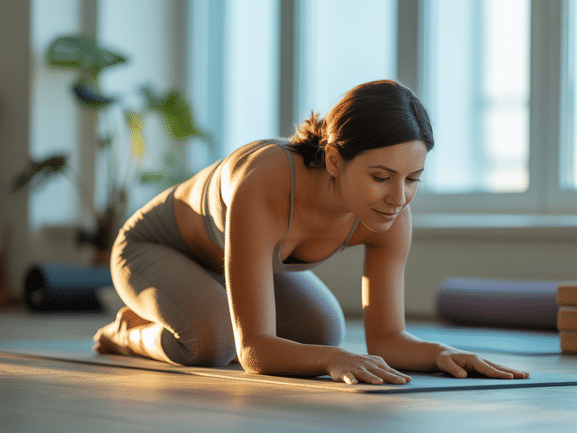
- Child’s Pose (Balasana): This gentle resting pose calms the brain and relieves stress and fatigue. It gently stretches the hips, thighs, and ankles.
- Cat-Cow Stretch (Marjaryasana-Bitilasana): This dynamic duo warms up the spine and synchronizes breath with movement, a core principle of yoga and meditation. It encourages mindfulness and releases tension in the back.
- Legs-Up-The-Wall (Viparita Karani): An incredibly restorative pose that helps calm the nervous system, drain fluid from the legs, and alleviate mild headaches.
- Corpse Pose (Savasana): While it looks like just lying down, Savasana is a practice of conscious relaxation. It allows the body to fully absorb the benefits of the practice and quiet the mind.
- Standing Forward Bend (Uttanasana): This pose helps relieve stress and anxiety by calming the nervous system. The mild inversion increases blood flow to the brain.
💡 Tip: Ready to deepen your practice? Download our free illustrated guide to beginner yoga poses!
Meditation Techniques to Quiet Your Thoughts in 2025
Meditation is the art of focused awareness. While there are many forms, the core purpose is to train your attention and achieve mental clarity. A calm mind isn’t an empty mind, but one that can observe thoughts without getting carried away by them.
Starting a meditation practice can be simple. You don’t need a special cushion or a silent retreat. All you need is a few minutes and a willingness to try. For more ideas, you can explore our article on advanced mindfulness techniques.
Simple Meditation Practices to Begin Today
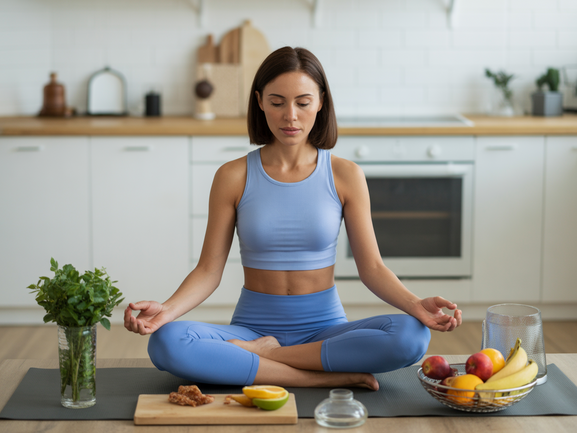
- Mindful Breathing: Sit comfortably, close your eyes, and bring your attention to your breath. Notice the sensation of the air entering and leaving your body. When your mind wanders, gently guide it back to your breath. Start with just 5 minutes a day.
- Body Scan Meditation: Lie down and bring your attention to different parts of your body, from your toes to your head. Notice any sensations—warmth, tingling, tension—without judgment. This practice enhances the mind-body connection.
- Loving-Kindness Meditation: Focus on generating feelings of compassion and kindness for yourself and others. Repeat phrases like, “May I be happy. May I be healthy. May I be safe.” This is a powerful tool for reducing negativity.
Building a Consistent Yoga and Meditation Practice
The greatest benefits of yoga and meditation come from consistency. Creating a sustainable habit is key to achieving a permanently calm mind. Here’s how to build a routine that sticks.
First, start small. A 10-minute daily session is more effective than a 2-hour session once a month. Second, schedule it. Treat your practice like any other important appointment. Third, be patient. Progress isn’t always linear. Some days will be easier than others. The goal is to simply show up. For more tips on habit formation, check out this resource from the American Psychological Association.
Frequently Asked Questions (FAQ)
How long does it take to feel the benefits of yoga and meditation?
While some people report feeling calmer after their very first session, significant neurological and psychological benefits, such as reduced anxiety and improved focus, are typically observed after several weeks of consistent practice (e.g., 3-5 times per week).
Do I need to be flexible to practice yoga?
No, this is a common misconception. Flexibility is a result of yoga, not a prerequisite. The practice meets you where you are. The focus is on connecting with your body and breath, not on achieving perfect poses.
Can I practice yoga and meditation if I have a busy schedule?
Absolutely. Even 5-10 minutes of focused breathing or a few gentle stretches can make a significant difference. The key is consistency. Many find that a short morning practice helps set a calm tone for the entire day. Explore our 5-minute meditations to get started.
Embracing yoga and meditation in 2025 is more than a trend; it’s a practical and profound investment in your mental health. By dedicating just a small part of your day to these practices, you can build resilience, reduce stress, and cultivate a calm mind capable of navigating life’s challenges with grace and clarity.
🎯 Ready to find your inner calm? Explore our guided meditation sessions in the Vitalizen App and start your journey today!