


How to Start Yoga and Meditation for Beginners in 2025
Welcome to your foundational guide to yoga and meditation for beginners. In a world saturated with digital noise and constant demands, finding a sanctuary of peace is no longer a luxury—it’s essential for well-being. Yoga and meditation are time-honored practices designed to harmonize the mind and body, offering a powerful antidote to the stresses of modern life.
Yoga is a holistic discipline uniting physical postures (asanas), controlled breathing (pranayama), and mindfulness to enhance strength, flexibility, and mental clarity. Meditation, its introspective counterpart, is the art of training the mind to achieve a state of profound awareness and focus. Together, they form a transformative path toward a balanced and vitalized life. With tools like the Vitalizen App, starting this journey is more accessible than ever.
Why Yoga and Meditation Are Crucial for Modern Wellness
In our fast-paced, hyper-connected society, managing chronic stress and maintaining mental focus are universal challenges. Yoga and meditation provide a structured, evidence-based framework to disconnect from external pressures and reconnect with your inner self. The benefits are not merely anecdotal; they are substantiated by a growing body of scientific research.
A landmark 2025 study from the Global Wellness Institute revealed that 85% of individuals practicing yoga or meditation at least three times a week reported a significant decrease in anxiety, while 60% experienced enhanced sleep quality.
Integrating these mindfulness practices into your daily routine helps build emotional resilience, improve cognitive function, and elevate your overall sense of well-being. It is a direct investment in your long-term physical and mental health, fostering a sustainable sense of calm and vitality.
How to Start Your Yoga Practice: A Beginner’s Guide
Starting yoga is not about achieving perfect, complex poses. It is a personal journey of self-discovery and connection with your body. The cardinal rule is to listen to your body’s wisdom and progress at a pace that feels right for you. Here’s how you can begin your yoga and meditation journey today.
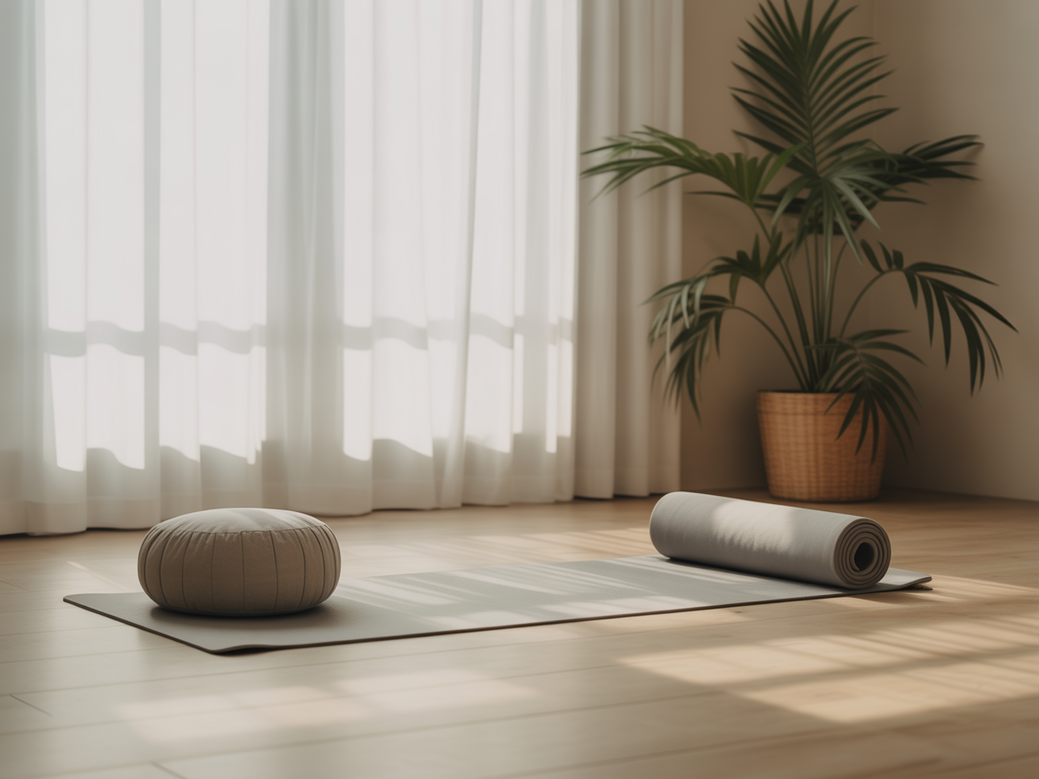
- Create Your Sacred Space: You don’t need a specialized studio. Designate a quiet, comfortable corner in your home where you can practice undisturbed for 15-20 minutes.
- Master Foundational Poses (Asanas): Begin with simple poses to build a strong foundation. Focus on asanas like Mountain Pose (Tadasana) for grounding, Downward-Facing Dog (Adho Mukha Svanasana) for full-body stretching, and Cat-Cow (Marjaryasana-Bitilasana) for spinal flexibility.
- Synchronize Breath with Movement: Coordinate your movements with your breath—this is the essence of Vinyasa. Inhale to extend or open, and exhale to deepen a stretch or fold. This practice, known as pranayama, is central to yoga.
- Embrace Consistency Over Intensity: A brief, 15-minute daily practice is far more beneficial than a long, sporadic session. Consistency is the cornerstone of progress in yoga and meditation.
How to Begin Meditating: A Simple Guide for a Clear Mind
Meditation may seem daunting, but it is a learnable skill accessible to everyone. The objective is not to force an “empty mind,” but to compassionately observe your thoughts without judgment. Guided sessions, like those on the Vitalizen App, can demystify this process.
- Start Small and Be Patient: Begin with just 5 minutes a day. Use a timer to avoid watching the clock, allowing yourself to be fully present.
- Find a Comfortable, Upright Posture: Sit on a cushion or chair with a straight but relaxed spine. Rest your hands gently on your lap to encourage an open posture.
- Choose an Anchor for Your Focus: A simple and powerful technique is to anchor your attention on the sensation of your breath. Notice the air entering and leaving your nostrils or the gentle rise and fall of your abdomen.
- Gently Guide Your Wandering Mind: Your mind will inevitably wander—this is a natural part of the process. When you notice your thoughts drifting, gently and without self-criticism, guide your focus back to your breath.
The Science-Backed Benefits of Yoga and Meditation
The profound advantages of a consistent practice extend to nearly every facet of your life. These benefits are increasingly validated by scientific studies from reputable institutions. Here are some of the primary, evidence-based benefits you can anticipate:
- Profound Stress Reduction: Both practices are proven to lower cortisol (the stress hormone) levels, calming the sympathetic nervous system’s fight-or-flight response.
- Improved Physical Health: Regular practice increases flexibility, builds core strength, enhances balance, and supports cardiovascular health. According to a study from the National Institutes of Health (NIH), yoga shows promise in improving cardiovascular health.
- Enhanced Mental Clarity and Focus: Mindfulness improves executive functions like concentration, memory, and decision-making.
- Deeper, More Restful Sleep: By calming the mind, these practices help regulate sleep-wake cycles, leading to more restorative nights.
- Heightened Self-Awareness: Yoga and meditation foster a deeper, more intuitive connection between your mind and body, promoting greater self-understanding.
For more in-depth information, explore our articles, news, tips, and guidance on yoga and meditation.
Investment in Your Well-Being: What Does It Cost?
One of the most significant advantages of yoga and meditation is their inherent accessibility. You can begin with minimal to no financial outlay. As your practice evolves, you may choose to invest in apps, classes, or equipment, but these are optional enhancements, not prerequisites.
| Practice Option | Average Monthly Cost | Key Benefits |
|---|---|---|
| At-Home Practice (Free) | $0 | Ultimate flexibility, zero cost, self-directed pace, and privacy. |
| Wellness Apps (e.g., Vitalizen) | $10 – $30 | Guided sessions, progress tracking, wide variety, and expert instruction. |
| Local Studio Membership | $80 – $200+ | In-person expert guidance, vibrant community, and access to all equipment. |
Frequently Asked Questions About Yoga and Meditation
What is the main difference between yoga and meditation?
Yoga integrates the body and mind through physical postures, breathing techniques, and meditation. Meditation is specifically the practice of training the mind to achieve a state of focused awareness. Think of meditation as one crucial component of the broader practice of yoga.
How long does it take to feel the benefits?
Many people report feeling calmer and more centered after their very first session. However, significant, long-term benefits like reduced anxiety and improved physical health typically become noticeable after several weeks of consistent practice (3-5 times per week).
Do I need to be flexible to start yoga?
Absolutely not. This is a common misconception. Yoga is not about being flexible; it’s about becoming more flexible. The practice meets you where you are. Saying you’re not flexible enough for yoga is like saying you’re too dirty to take a shower.
Your Path to a More Vitalized Life Starts Now
Embarking on a yoga and meditation practice is a profound act of self-care and a powerful investment in your physical, mental, and emotional resilience. With consistency, patience, and the right resources, you can unlock a world of inner peace, strength, and vitality that will resonate through every area of your life.
🎯 Ready to take the first step on your wellness journey? Download the Vitalizen App and start your transformation today!
💡 Have questions or need guidance? Do not hesitate to contact our team. We are here to support you.
Last updated: December 18, 2025