

How Do Yoga and Meditation Improve Your Health?
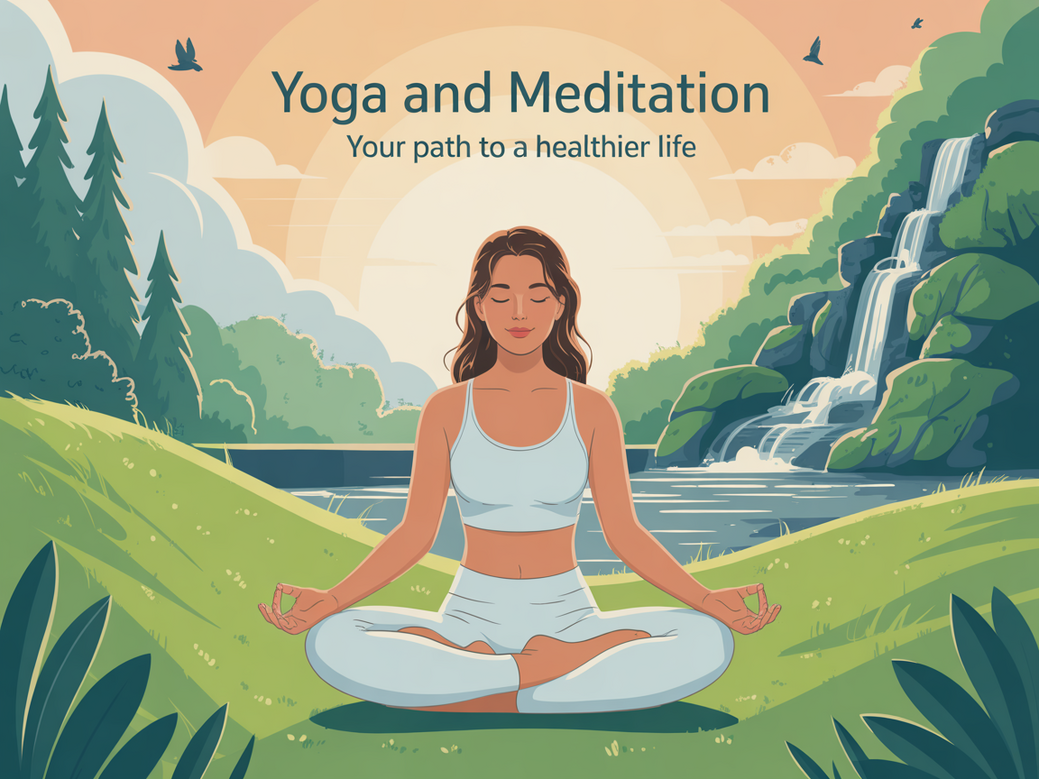
In our fast-paced modern world, the ancient practices of yoga and meditation offer a powerful toolkit for fostering a deep connection between mind and body. Yoga is a holistic discipline combining physical postures (asanas), controlled breathing (pranayama), and meditation to build strength, flexibility, and mental peace. Meditation, in turn, specifically focuses on training your awareness to achieve profound calm and clarity. Together, they provide a robust framework for managing stress and enhancing overall health.
Have you ever wondered how to effectively reduce stress while boosting your physical vitality? The answer may lie in integrating these two disciplines. With accessible resources like the Vitalizen App | Yoga + Meditation, this transformative journey is easier than ever. Let’s explore the incredible health benefits of yoga and meditation.
The Synergy Between Yoga and Meditation
While yoga and meditation can be practiced separately, their combination creates a powerful synergy for holistic well-being. Yoga uses physical movement to release tension stored in the body, which prepares it for the stillness required for effective meditation. A body that is open and relaxed makes it significantly easier for the mind to settle and focus.
Conversely, the mental clarity gained from meditation enhances your yoga practice. You become more attuned to your body’s alignment, the rhythm of your breath, and the subtle sensations during each pose. This mindful awareness transforms physical exercise into a moving meditation, creating a comprehensive practice that nurtures both body and soul for profound, lasting benefits.
The Science Behind How Yoga and Meditation Enhance Well-being
The demands of modern life have led to unprecedented levels of stress, which is why the consistent practice of yoga and meditation has become essential. These practices offer a scientifically-backed solution to counteract the physiological effects of chronic stress by activating the parasympathetic nervous system—our “rest and digest” mode.
According to research from authoritative institutions like the National Center for Complementary and Integrative Health (NCCIH), evidence strongly suggests that yoga and meditation are effective at managing stress, reducing anxiety, and improving symptoms of depression. This is largely because they help lower cortisol, the body’s primary stress hormone.
Key Scientific Benefits of Regular Practice:
- Stress and Anxiety Reduction: Both practices are proven to lower cortisol levels, promoting a state of calm and mitigating the fight-or-flight response.
- Improved Physical Health: The asanas in yoga help build muscle tone, increase flexibility, and improve cardiovascular health by enhancing circulation and lowering blood pressure.
- Enhanced Mental Focus: Regular meditation sharpens concentration and attention span. Studies from institutions like Harvard University show it can even increase gray matter density in brain regions linked to learning and memory.
- Better Sleep Quality: By calming the nervous system, yoga and meditation can lead to more restful, deep, and rejuvenating sleep, combating issues like insomnia.
- Increased Emotional Resilience: These practices teach you to observe thoughts without judgment, helping you manage emotions more effectively and fostering a more positive outlook.
Choosing Your Path: Types of Yoga and Meditation
With so many styles available, finding the right fit is key to building a sustainable practice. Whether you’re seeking a physical challenge or a gentle path to mindfulness, there’s a style of yoga and meditation for you.
Popular Yoga Styles for Beginners:
- Hatha Yoga: A slow-paced, gentle style that focuses on basic poses and breathing, making it perfect for beginners.
- Vinyasa Yoga: A more dynamic practice that links movement with breath in a flowing sequence.
- Restorative Yoga: Uses props like bolsters and blankets to support the body in relaxing poses, ideal for deep relaxation and stress relief.
Common Meditation Techniques:
- Mindfulness Meditation: Involves focusing on your breath and observing thoughts as they pass without judgment.
- Guided Meditation: A teacher or app guides you through visualization and relaxation techniques. The Vitalizen App offers a rich library of these.
- Transcendental Meditation (TM): A mantra-based practice performed for 20 minutes twice a day to achieve a state of deep rest.
How to Integrate Yoga and Meditation into Your Daily Routine
Starting a new habit can feel daunting, but consistency is more important than duration. Even 10-15 minutes a day can make a significant impact. The goal is to create a sustainable ritual that you look forward to.
A Simple 10-Minute Morning Routine:
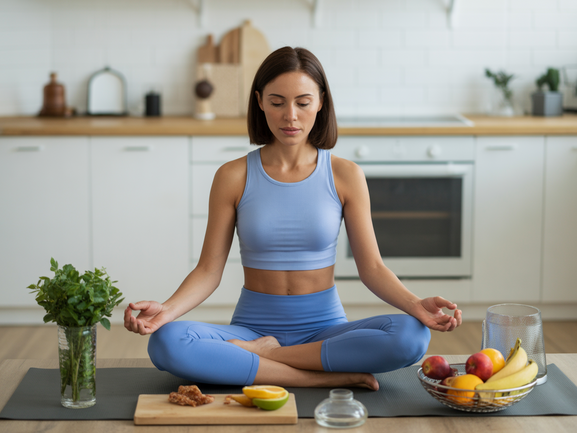
- Start with Breath (2 minutes): Sit comfortably and take several deep breaths. Inhale through your nose for four counts, hold for four, and exhale for six.
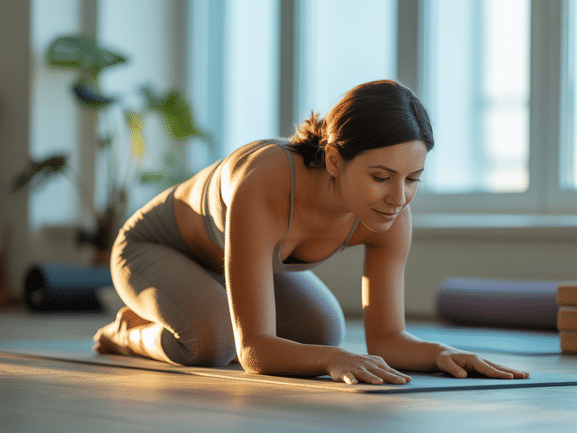
- Gentle Stretches (5 minutes): Move through a few basic yoga poses like Cat-Cow, Downward-Facing Dog, and Child’s Pose to awaken the body.
- Mindful Moment (3 minutes): Sit in silence, focusing on the sensation of your breath. When your mind wanders, gently guide it back.
For guided classes that fit any schedule, the Vitalizen App provides sessions ranging from 5 minutes to over an hour.
💡 Ready to start your journey? Download the Vitalizen app to access personalized yoga and meditation programs tailored to your goals!
Common Mistakes to Avoid for Beginners
When starting with yoga and meditation, it’s common to encounter a few hurdles. Being aware of them can help you navigate your journey more smoothly.
- Pushing Too Hard: Yoga is not about forcing yourself into a pose. Listen to your body and avoid pain. Progress will come with time.
- Expecting an Empty Mind: The goal of meditation isn’t to stop thinking—it’s to become an observer of your thoughts. Don’t get frustrated when your mind wanders.
- Inconsistency: Practicing for 10 minutes daily is more effective than one long session per week. Build a consistent habit.
- Lack of Guidance: Especially in yoga, proper alignment is crucial to prevent injury. Using an app like Vitalizen or attending a class can provide the guidance you need.
Frequently Asked Questions (FAQ)
What is the main difference between yoga and meditation?
Yoga is a broad discipline that includes physical postures (asanas), breathing techniques (pranayama), and meditation. It uses the body as a tool for wellness. Meditation is a specific practice focused entirely on training the mind to achieve deep relaxation and focus. While yoga often includes meditation, they can be practiced independently.
How often should I practice yoga and meditation to see results?
For optimal results, aim for 3-5 times a week. However, consistency is more important than duration. Even 10-15 minutes of yoga and meditation each day can be highly beneficial. The Vitalizen App offers sessions of varying lengths to fit any schedule.
Do I need any special equipment to start?
You don’t need much! A yoga mat is recommended for comfort and grip. Otherwise, all you need is a quiet space and comfortable clothing. For more tips, you can check out this external resource on essential yoga gear.
Are You Ready to Begin Your Journey?
Taking the first step is often the most challenging part, but the rewards of practicing yoga and meditation are immeasurable. A healthier, more balanced, and peaceful life is within your reach. Explore our blog for more wellness tips or visit our about page to learn about our mission.
🎯 Ready to transform your well-being? Start your free trial on the Vitalizen App today! If you have any questions, please contact us. We are here to support you every step of the way.