

Yoga at Home: Your Complete Guide to Starting in 2025
Have you ever considered turning a corner of your home into a personal sanctuary for peace and well-being? The practice of yoga at home involves performing yoga postures and routines in your own space, guided by digital tools or personal knowledge. Starting an at-home yoga practice might be the most transformative decision you make this year. It provides a powerful, accessible tool for stress relief and physical health that is available at any moment, perfectly fitting into our modern, busy lives.
Why Practice Yoga at Home? The Unmatched Benefits
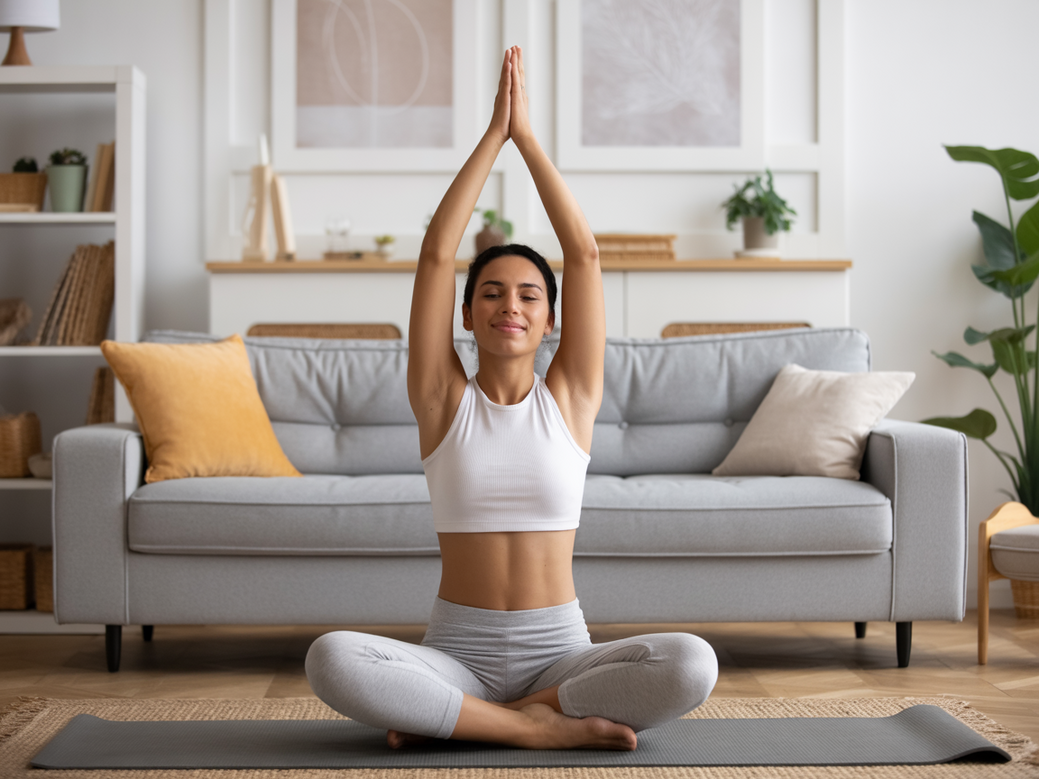
Practicing yoga in the comfort of your home offers incredible freedom and flexibility. It allows you to move at your own pace without pressure or comparison, making it easier to build a consistent routine that fits *your* schedule. This autonomy is key to long-term success and enjoyment in your yoga at home journey.
According to a study published by the National Center for Biotechnology Information, regular yoga practice can significantly improve flexibility and reduce stress. This highlights the scientifically-backed benefits you can achieve without leaving your house.
Beyond flexibility, a consistent home yoga practice offers a wealth of advantages:
- Enhanced Mental Clarity: Quiet moments on your mat help reduce mental clutter and improve focus.
- Improved Posture and Strength: Foundational poses build core strength and align the spine, counteracting the effects of daily sitting.
- Better Sleep Quality: Gentle, restorative yoga in the evening can calm the nervous system, leading to deeper, more restful sleep.
- Ultimate Convenience: Your yoga studio is always open. Whether you have 15 minutes in the morning or an hour at night, your mat is waiting.
With an application like the Vitalizen app, you essentially have a personal instructor in your pocket. This guidance is crucial for maintaining proper form and discovering new routines, ensuring your yoga at home practice is both safe and effective.
Creating Your Sanctuary: Setting Up Your Home Yoga Space
The environment you practice in can dramatically impact your experience. You don’t need a dedicated room; a quiet corner is enough to start your yoga at home sanctuary.
- Designate a Spot: Choose a clutter-free area where you have enough space to stretch your arms and legs in all directions. Consistency in your location helps build the habit.
- Set the Mood: Dim the lights, light a candle, or use an essential oil diffuser. Soft, ambient music or complete silence can also help you focus inward.
- Minimize Distractions: Inform family members or roommates that this is your time. Put your phone on silent (unless you’re using the Vitalizen app for guidance!) to fully immerse yourself.
Making this space special, even in a small way, signals to your brain that it’s time to transition from the stress of the day to the peace of your practice.
Essential and Optional Gear for Your Home Practice
You don’t need a lot of expensive equipment to begin your yoga at home journey. In fact, simplicity is a core part of the practice. Here is what you truly need and some optional extras:
The Essentials:
- A Yoga Mat: This is your most important investment. It provides cushioning on hard floors and essential grip for standing poses, preventing slips.
- Comfortable Clothing: Wear clothes that allow for a full range of movement and won’t distract you.
- A Reliable Guide: This is where the Vitalizen App becomes invaluable, offering guided sessions for all levels, ensuring your at-home yoga practice is safe and structured.
Optional (But Helpful) Props:
- Yoga Blocks: These bring the floor closer to you in poses, supporting proper alignment. Books can be a substitute.
- A Yoga Strap: This helps you deepen stretches safely, especially for tight hamstrings. A belt or towel works too.
- A Bolster or Pillow: Excellent for restorative poses, providing support to help you relax more deeply.
How to Start Your First Home Yoga Session: A Step-by-Step Guide
Ready to take the first step onto your mat? Follow this simple, step-by-step process for a successful first session of yoga at home.
- Set Your Intention: Before you begin, take a moment to decide what you want from your practice. Is it to de-stress, energize your body, or simply be present?
- Choose Your Guided Session: Open the Vitalizen App and select a beginner-friendly class. Starting with guidance removes the guesswork and ensures a balanced flow.
- Warm-Up Gently: Begin with simple movements like neck rolls, shoulder shrugs, and several rounds of Cat-Cow to prepare your body.
- Follow the Guidance and Listen to Your Body: Pay close attention to the instructor’s cues, but always honor what your body is telling you. Never push into pain.
- End with Rest (Savasana): Conclude your practice with 5-10 minutes of rest in Savasana (Corpse Pose). This is crucial for integrating the benefits of your efforts.
3 Simple Poses for Your First At-Home Yoga Practice
To give you a taste of the practice, here are three foundational poses perfect for starting your yoga at home journey. Remember to breathe deeply and connect the breath to each movement.
1. Cat-Cow Stretch (Marjaryasana-Bitilasana)
This gentle warm-up is excellent for relieving tension in the spine and abdomen. It is a simple, flowing movement synchronized with your breath that prepares the body for more activity. It feels incredibly soothing after a long day of sitting.
2. Downward-Facing Dog (Adho Mukha Svanasana)
A foundational pose in most yoga styles, it stretches the entire back of the body. While challenging at first, with practice, it becomes a restful and rejuvenating posture that builds upper body strength. Don’t be afraid to bend your knees generously!
3. Child’s Pose (Balasana)
This is a resting pose that gently stretches the hips, thighs, and ankles while calming the mind. It’s the perfect posture to return to whenever you need a break during your home yoga routine. It’s all about giving yourself a moment of peace.
Common Mistakes to Avoid When Practicing Yoga at Home
A home practice offers freedom, but it also requires self-awareness. Here are common pitfalls to avoid:
- Pushing Too Hard: Yoga is a journey, not a race. Avoid pushing into painful positions. Progress will come with consistency.
- Ignoring Alignment: Proper form is key to preventing injury. Using a guided app like Vitalizen helps ensure you are practicing poses correctly.
- Forgetting to Breathe: The breath (pranayama) is the anchor of the practice. If you lose your breath, ease off the pose.
- Inconsistency: Practicing for 15 minutes three times a week is more beneficial than one long session every two weeks. A regular yoga at home schedule is crucial.
🎯 Ready to build a consistent practice?
Download the Vitalizen App today and explore hundreds of guided classes to make your yoga at home journey a success!
Which Style of Yoga Is Best for You at Home?
With so many options, it can be hard to know where to start. The best style depends on your personal goals. Here’s a quick comparison of popular styles available in the Vitalizen app:
| Yoga Style | Pace | Primary Benefit |
|---|---|---|
| Hatha | Slow | Great for learning foundational poses and alignment. |
| Vinyasa | Fast | Builds heat and cardiovascular endurance; a good workout. |
| Yin | Static | Deeply stretches connective tissues and promotes relaxation. |
| Restorative | Very Slow | Promotes deep relaxation and stress relief using props. |
The U.S. Department of Health & Human Services recommends regular physical activity for substantial health benefits, and all these styles of yoga at home contribute to that goal. Find more information on their Physical Activity Guidelines for Americans.
💡 Tip: For more guidance on building a healthy lifestyle, explore our other articles on yoga and meditation.
Frequently Asked Questions (FAQ)
How often should a beginner do yoga at home?
For beginners, starting with 2-3 sessions per week of about 15-30 minutes is a great goal. Consistency is more important than duration. As you get more comfortable with your home yoga practice, you can gradually increase the length and frequency.
Do I need to be flexible to start yoga?
Absolutely not! This is a common myth. Yoga is not about *being* flexible; it’s about improving your flexibility from your starting point. A consistent yoga at home practice is what builds flexibility over time.
Can I lose weight by practicing yoga at home?
Yes, yoga can be a great tool for weight management. More active styles, like Vinyasa, burn more calories. Furthermore, practicing yoga at home helps reduce stress, which can prevent stress-related eating. The Vitalizen app has specific programs to help you with this goal.
What is the best time of day to practice yoga?
The best time is whenever you can fit it into your schedule consistently. Many people prefer the morning to energize themselves, while others find an evening practice helps them unwind. The beauty of yoga at home is that you can experiment and see what works for *your* lifestyle.
Can I do yoga without a mat?
You can, but it is not ideal. A mat provides crucial grip and cushioning. If you are on a carpeted surface, you might manage for gentle, seated poses. However, for a consistent and safe yoga at home practice, investing in a basic yoga mat is highly recommended.
Your journey with yoga at home is a personal one, and we’re here to support you. Have more questions? Don’t hesitate to get in touch with us through our contact page.