

Yoga for Beginners: A Guide to Starting in 2025
Have you ever wondered how to reduce stress, improve flexibility, and find a greater sense of inner peace? If so, learning yoga for beginners is your answer. Yoga and meditation are powerful, time-tested practices that offer a direct path to achieving these goals. This guide is designed for the absolute beginner, providing clear, actionable steps to help you start your transformative journey toward a healthier, more balanced life in 2025.
What is Yoga and Why is it Important?
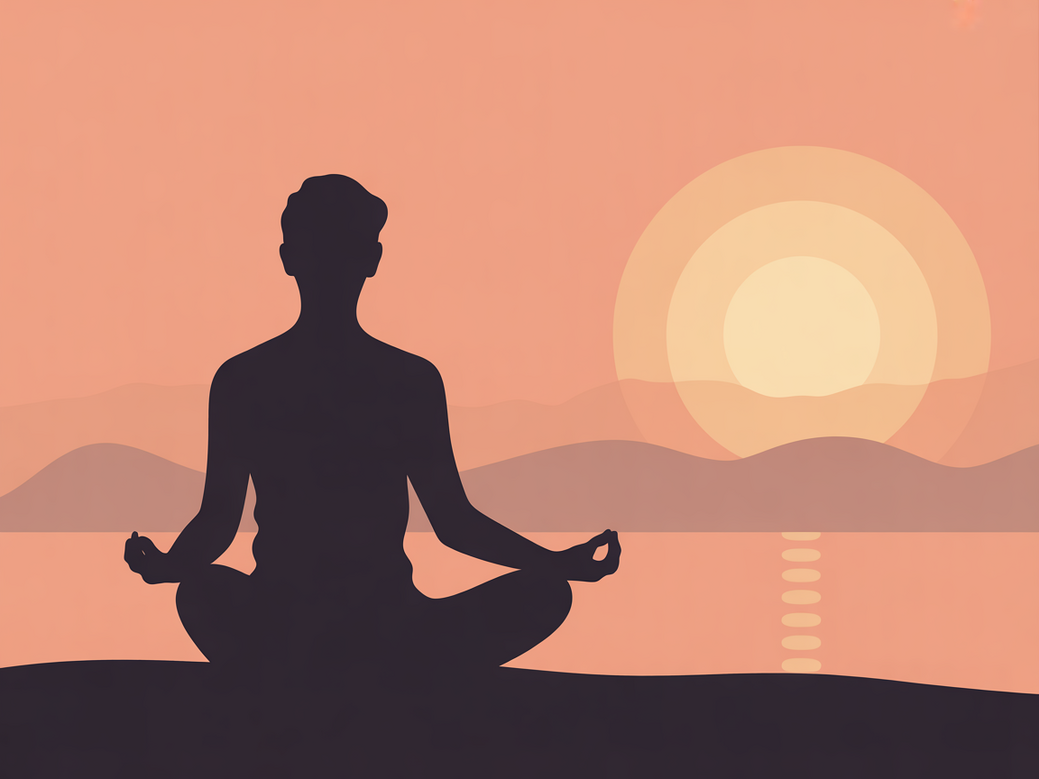
Yoga is a holistic mind-body practice that originated in ancient India over 5,000 years ago. It combines physical postures (asanas), breathing techniques (pranayama), and meditation to foster a union between the mind, body, and spirit. More than just a form of exercise, yoga is a profound tool for self-discovery and stress management that is perfect for anyone to learn.
Regular practice offers a wealth of benefits that are especially relevant in our fast-paced world. It is scientifically proven to enhance physical and mental health. For example, it can significantly increase flexibility, build muscle strength, and improve respiratory function. It is also a powerful method for calming the nervous system, which is why so many people explore yoga for beginners to find mental clarity.
According to a 2025 industry report, 85% of people who practice yoga report a significant reduction in stress levels, and 65% experience improved sleep quality within the first three months.
Key Benefits of Starting Yoga
- Improved Flexibility: Gently stretches muscles and increases the range of motion in your joints. You don’t need to be flexible to start!
- Increased Strength: Bodyweight-bearing poses build lean muscle mass across your entire body.
- Better Posture: Strengthens core muscles and increases body awareness, helping you stand taller.
- Stress Reduction: Lowers cortisol (the stress hormone) levels and calms the mind.
- Enhanced Mental Focus: The concentration required in poses translates to better focus in daily life.
How to Start Practicing Yoga at Home
Starting a yoga practice is simple and does not require expensive equipment. You can begin today with foundational beginner yoga poses in the comfort of your home. The most important part is to focus on your breath and how your body feels in each posture, rather than achieving a “perfect” look. Consistency is more important than intensity.
Five Foundational Poses for Beginners
- Mountain Pose (Tadasana): The blueprint for all standing poses. Stand with your feet together or hip-width apart. Ground down through your feet, engage your leg muscles, lengthen your spine, and relax your shoulders.
- Cat-Cow Stretch (Marjaryasana-Bitilasana): A perfect warm-up for the spine. On your hands and knees, inhale to drop your belly and look up (Cow). Exhale to round your spine and press the floor away (Cat). Flow for 5-10 breaths.
- Downward-Facing Dog (Adho Mukha Svanasana): From your hands and knees, tuck your toes and lift your hips up and back, forming an inverted V-shape. It energizes the body and stretches the hamstrings and spine.
- Warrior I (Virabhadrasana I): A powerful standing pose that builds confidence and strength. Step one foot back, bend your front knee, and raise your arms overhead.
- Child’s Pose (Balasana): A restorative resting pose. From your hands and knees, sit your hips back on your heels and fold forward, resting your forehead on the floor. It gently stretches the back, hips, and shoulders.

What is Meditation for Beginners?
Meditation is a mental practice that trains attention and awareness. The goal is to achieve a mentally clear, emotionally calm, and stable state. You can do this by using a technique like mindfulness for beginners, where you focus on a single point of reference, such as your breath, a bodily sensation, or a specific word (mantra).
When you meditate, you are not trying to stop your thoughts, but rather to observe them without judgment. By consistently bringing your focus back to your anchor point, you train your brain to be less reactive and more present. This practice can help reduce stress and anxiety while improving focus and sleep. For guided sessions, the Vitalizen App | Yoga + Meditation is an excellent resource.
A Simple 5-Minute Breathing Meditation
Ready to try meditation? Here is a simple breathing exercise you can do anywhere:
- Step 1: Find a comfortable seated position on a chair or cushion. Sit upright but relaxed.
- Step 2: Gently close your eyes and take a few deep breaths to settle in.
- Step 3: Bring your natural attention to the sensation of your breath. Notice the air entering your nostrils and the rise and fall of your chest or abdomen.
- Step 4: When your mind inevitably wanders, gently and without judgment, guide your focus back to your breath. This is the core of the practice.
- Step 5: Continue for 5 minutes. Don’t worry about doing it “perfectly.” Just showing up is the win.
💡 Tip: The Vitalizen App offers a library of guided meditations perfect for beginners. Download today to start your journey!
Yoga vs. Meditation: What’s the Difference?
While often discussed together, yoga and meditation have distinct focuses. Understanding their differences can help you choose the right practice for your goals. Yoga is a broader discipline where physical movement is a key component, while meditation is a purely mental exercise. However, they are deeply complementary and often practiced together for maximum benefit.
| Aspect | Yoga | Meditation |
|---|---|---|
| Primary Focus | Mind-body connection through movement and breath. | Training the mind for awareness and calm. |
| Physicality | Active. Involves physical postures and sequences. | Passive. Typically practiced in a still, seated position. |
| Main Goal | Union of mind, body, and spirit; physical health. | Mental clarity, emotional stability, and presence. |
Common Mistakes in Yoga for Beginners
As you start your practice, it’s common to make a few mistakes. Being aware of them can help you build a safer and more effective habit.
- Holding Your Breath: Remember to breathe deeply and consistently. Your breath is the anchor of your practice.
- Pushing Too Hard: Yoga is not about forcing yourself into a pose. Listen to your body and respect its limits to avoid injury.
- Comparing Yourself to Others: Your yoga journey is unique. Focus on your own progress and sensations.
- Inconsistency: Practicing for 15 minutes three times a week is more beneficial than one long session every two weeks.

Your Journey to Wellness Starts Here
Embracing yoga and meditation for beginners is a powerful commitment to your physical and mental well-being. By starting with these simple, accessible practices, you are laying the foundation for a more balanced, centered, and fulfilling life. The journey of a thousand miles begins with a single step—or in this case, a single breath.
To learn more about how the Vitalizen App can support you, discover what is Vitalizen.app. For more tips, visit our blog with articles on yoga and meditation. If you have questions, feel free to contact us.
🎯 Ready to start? Explore our library of guided meditations and yoga classes for all levels on the Vitalizen App today!
For more scientific information, you can visit these external resources from Johns Hopkins Medicine, the National Center for Complementary and Integrative Health (.gov), or a study from Harvard University on mindfulness.