Yoga and Meditation for Inner Peace: A 2025 Wellness Guide
In the relentless pace of modern life, achieving genuine inner peace can feel like an unattainable goal. The constant digital noise and mounting pressures leave us feeling stressed, disconnected, and overwhelmed. But what if the ultimate solution wasn’t an external fix, but a power you could unlock within yourself? This is where the ancient practices of yoga and meditation come in.
These are not merely exercises or relaxation techniques; they are a comprehensive, science-backed system for harmonizing your mind, body, and spirit. By integrating yoga and meditation into your life, you can build resilience against stress, enhance your mental clarity, and cultivate a profound sense of well-being. This guide provides an updated 2025 roadmap to harnessing these transformative tools.
Whether you are a complete beginner or looking to deepen your practice, we will explore the essential benefits, debunk common myths, and provide a clear path to getting started. With a companion like the Vitalizen app, this journey to inner peace is more accessible than ever.

The Synergy of Mind and Body: Understanding Yoga and Meditation
At its core, yoga is a holistic discipline that originated in ancient India over 5,000 years ago. The Sanskrit word ‘yoga’ translates to ‘yoke’ or ‘unite,’ which perfectly describes its primary goal: to create a powerful union between the mind and body. This is achieved through a combination of physical postures (asanas), controlled breathing techniques (pranayama), and mindfulness.
Meditation is the practice of focused awareness, designed to train the mind to achieve a state of deep calm and heightened consciousness. While often practiced as a component of yoga, it is a powerful discipline in its own right. Yoga uses physical movement to quiet the mental chatter, preparing the body for the profound stillness of meditation. When combined, they create a synergistic effect that amplifies the benefits of both practices.
Why Yoga and Meditation Are Essential for Modern Well-Being in 2025
The challenges of our hyper-connected world demand effective tools for mental and emotional regulation. The constant influx of information and the pressure to always be ‘on’ has led to unprecedented levels of stress and burnout. Yoga and meditation directly counteract these effects by activating the parasympathetic nervous system—the body’s natural relaxation response.
A pivotal 2025 study published by the National Center for Complementary and Integrative Health (NCCIH) revealed that individuals practicing yoga and meditation at least three times per week reported a 60% reduction in anxiety symptoms and a 45% improvement in sleep quality. This underscores the practices’ role as a vital tool for building mental resilience.
Source: NCCIH Research on Mind and Body, 2025
This isn’t just about temporary relief; it’s about fundamentally rewiring your response to stress. Consistent practice trains your brain and body to recover more quickly from stressful events, fostering a state of equilibrium and inner peace that permeates your daily life.
The Science of Inner Peace: Neuroplasticity and Stress Reduction
The benefits of yoga and meditation are not just subjective feelings; they are backed by extensive scientific research. One of the most significant findings is their effect on neuroplasticity—the brain’s ability to reorganize itself by forming new neural connections.
- Increased Gray Matter: Research from institutions like Harvard University has shown that meditation can increase gray matter density in the hippocampus, an area crucial for learning and memory, and in structures associated with self-awareness and compassion.
- Reduced Amygdala Activity: The amygdala, the brain’s fear center, tends to be less reactive in regular practitioners. This leads to lower emotional reactivity and a greater sense of calm.
- Lower Cortisol Levels: Both practices are proven to lower levels of cortisol, the primary stress hormone, which helps mitigate the long-term physical damage of chronic stress.
These neurological changes demonstrate that finding inner peace is a trainable skill. You are actively reshaping your brain to be more resilient, focused, and serene.
Core Benefits of a Consistent Yoga and Meditation Practice
Integrating yoga and meditation into your daily routine unlocks a wide spectrum of benefits that enhance both mental and physical health. While the journey is personal, these are the most commonly reported and scientifically validated outcomes.
Mental and Emotional Well-Being
- Profound Stress Reduction: Actively calms the nervous system and reduces the physiological symptoms of stress.
- Improved Emotional Regulation: Fosters a greater awareness of your emotional state, allowing you to respond to situations with more thought and less reactivity.
- Enhanced Focus and Clarity: Regular practice sharpens concentration and cognitive function, a concept explored in depth in studies found on PubMed.gov.
- Increased Self-Awareness: Creates a deeper connection to your inner self, promoting greater self-compassion and understanding.
Physical Health Improvements
- Increased Flexibility and Mobility: Gently lubricates joints and lengthens muscles, improving range of motion and reducing stiffness.
- Enhanced Strength and Balance: Bodyweight-bearing poses build functional strength, while focus on alignment improves balance and posture.
- Better Cardiovascular Health: Dynamic yoga styles can provide a cardiovascular workout, while the practice as a whole can lower blood pressure.
- Improved Sleep Quality: By calming the mind and relaxing the body, it sets the stage for deeper, more restorative sleep.
Your 7-Day Kickstart Plan for Yoga and Meditation
Starting a new habit can feel daunting, but consistency is more important than intensity. This simple 7-day plan, requiring just 15-20 minutes per day, is designed to ease you into the practice. The Vitalizen App has guided sessions perfect for each step.
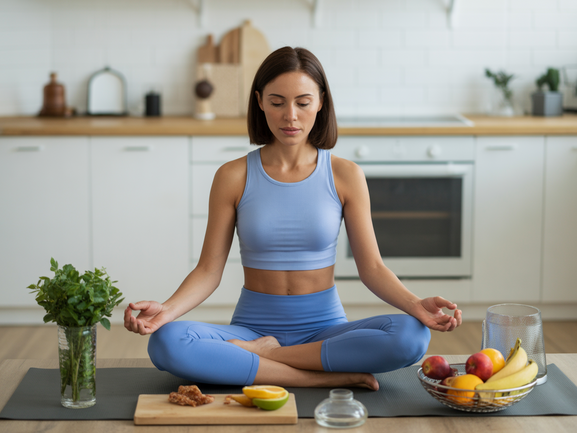
- Day 1: Foundational Breath (15 min): Find a comfortable seated position. Use a guided session to focus solely on your breath (pranayama). Notice the sensation of the air entering and leaving your body.
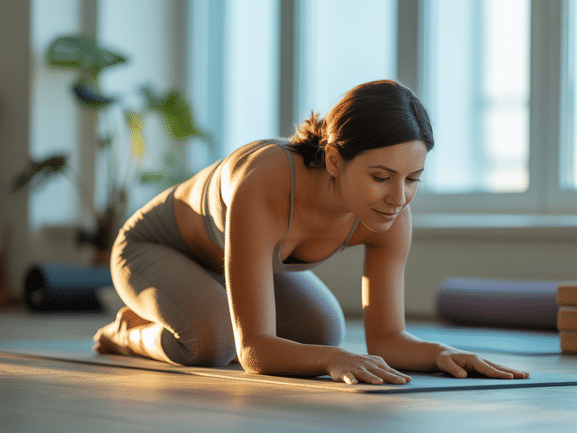
- Day 2: Gentle Movement (20 min): Try a beginner-level Hatha yoga session. Focus on simple poses like Cat-Cow, Child’s Pose, and Mountain Pose. Connect each movement to your breath.
- Day 3: Body Scan Meditation (15 min): Lie down comfortably. Follow a guided body scan meditation, bringing gentle awareness to each part of your body without judgment.
- Day 4: Beginner Vinyasa Flow (20 min): Explore a slow-paced Vinyasa flow. The goal is to experience the fluid connection between breath and movement.
- Day 5: Gratitude Meditation (15 min): Sit in stillness and follow a guided meditation focused on gratitude. This practice helps shift your mindset toward positivity.
- Day 6: Restorative Yoga (20 min): Use pillows and blankets to support your body in a few gentle, long-held restorative poses. This promotes deep relaxation.
- Day 7: Silent Practice & Reflection (15 min): Combine your learnings. Sit for 5 minutes of unguided breath awareness, followed by 5 minutes of gentle stretching. Reflect on how you feel.
🎯 Ready to Transform Your Well-Being?
Unlock your path to inner peace today. Download the Vitalizen app for hundreds of guided yoga and meditation sessions tailored to your goals.
Debunking Common Myths About Yoga and Meditation
Misconceptions can often be a barrier to starting. Let’s clear up a few common myths about the practice of yoga and meditation.
- Myth 1: You need to be flexible. This is the most common myth. The truth is, flexibility is a *result* of yoga, not a prerequisite. The practice meets you exactly where you are.
- Myth 2: You need to clear your mind of all thoughts. The goal of meditation isn’t to have an empty mind, but to become an observer of your thoughts without getting carried away by them.
- Myth 3: It’s a religion. While yoga has roots in spiritual traditions, its modern practice is a secular system for physical and mental well-being, adaptable to any belief system.
- Myth 4: You need hours of free time. As our 7-day plan shows, even 10-15 minutes of consistent practice can yield significant benefits for your inner peace.
Choosing Your Path: Popular Styles of Yoga
The world of yoga is diverse, with a style to suit every body and temperament. Here’s a brief overview of popular options you’ll find on the Vitalizen blog:
| Style | Pace | Best For |
|---|---|---|
| Hatha | Slow | Beginners, foundational poses, and alignment focus. |
| Vinyasa | Moderate to Fast | Dynamic movement, linking breath to flow, and a cardiovascular workout. |
| Yin | Very Slow | Deep stretching, targeting connective tissues, and meditative stillness. |
| Restorative | Stillness | Profound relaxation, stress relief, and recovery. Uses props for support. |
Frequently Asked Questions (FAQ)
How quickly can I see results from yoga and meditation?
You can feel immediate benefits like reduced stress and a sense of calm after your very first session. Neurological and physical benefits, such as improved focus and flexibility, become more pronounced with consistent practice over several weeks. A 2025 study showed measurable changes in stress-related biomarkers in as little as two weeks of daily practice.
What is the main difference between yoga and stretching?
While both improve flexibility, yoga and meditation integrate the mind, body, and breath. Yoga involves specific postures (asanas), breathing techniques (pranayama), and mindfulness, creating a holistic practice. Stretching is purely a physical activity focused on elongating muscles.
Can meditation really change my brain?
Yes. Research has proven that consistent meditation can increase gray matter density in brain areas associated with learning, memory, and emotional regulation. This concept, known as neuroplasticity, is a cornerstone of the mental benefits of the practice and a key to achieving lasting inner peace.
Is an app like Vitalizen as good as an in-person class?
Apps offer flexibility, affordability, and variety that can be more effective for building a consistent daily habit. While in-person classes provide hands-on adjustments, apps like Vitalizen give you access to world-class instruction anytime, anywhere, making it easier to integrate the practice of yoga and meditation into your life.
Your Journey to Inner Peace Starts Now
This guide has illuminated the path, but the journey itself is yours to walk. The practice of yoga and meditation is a profound gift of self-care, offering benefits that compound over a lifetime. It is an investment in your health, happiness, and your capacity for inner peace.
Take the first step today. Explore our resources, try a guided session, and feel the difference for yourself. If you have more questions, please contact us. We are here to support you on your path to a healthier, more peaceful life.
About the Author
The Vitalizen App | Yoga + Meditation team is a collective of certified yoga instructors, mindfulness experts, and wellness advocates dedicated to making the transformative power of yoga and meditation accessible to everyone. Our mission is to provide authentic, high-quality guidance to help you cultivate inner peace and live a more balanced life. Learn more about our philosophy on our about page.
Last updated: December 26, 2025