


Beginner Yoga: A Complete Guide to Starting in 2026
Have you ever considered starting yoga but felt unsure where to begin? You’re not alone. Beginner yoga is a journey into physical and mental wellness, designed specifically for newcomers. It focuses on foundational poses (asanas), controlled breathing (pranayama), and mindfulness. This approach builds a strong, safe base for a practice that enhances flexibility, strength, and mental clarity. The key to success is approaching your practice with patience, consistency, and the right guidance.
This guide will walk you through everything you need to know to start your beginner yoga practice with confidence. With tools like the Vitalizen App, you can create a positive and lasting wellness habit right from your first session.
What Are the Main Benefits of Beginner Yoga?
Integrating beginner yoga into your routine offers transformative advantages for your physical and mental health. The practice is holistic, with scientifically-backed benefits that you can feel both on and off the mat. It’s an investment in your long-term well-being.
- Reduced Stress and Anxiety: Yoga is proven to lower cortisol, the body’s primary stress hormone. This regulation promotes a profound sense of calm and mental balance.
- Improved Flexibility and Balance: Consistent practice of basic yoga poses helps lengthen muscles and improve stability. This reduces your risk of injury in daily activities.
- Increased Functional Strength: Many yoga poses require you to support your body weight in new ways. This builds strength that is practical for everyday life, from carrying groceries to playing with your kids.
- Enhanced Posture and Body Awareness: By strengthening your core and teaching you to listen to your body, yoga helps correct slouching and poor alignment caused by sedentary lifestyles.
- Better Sleep Quality: The relaxing effects of a gentle yoga practice can help you fall asleep faster and enjoy deeper, more restorative rest, leading to more energy during the day.
- Boosted Immunity: Research suggests that yoga can help bolster the immune system by reducing stress and improving circulation.
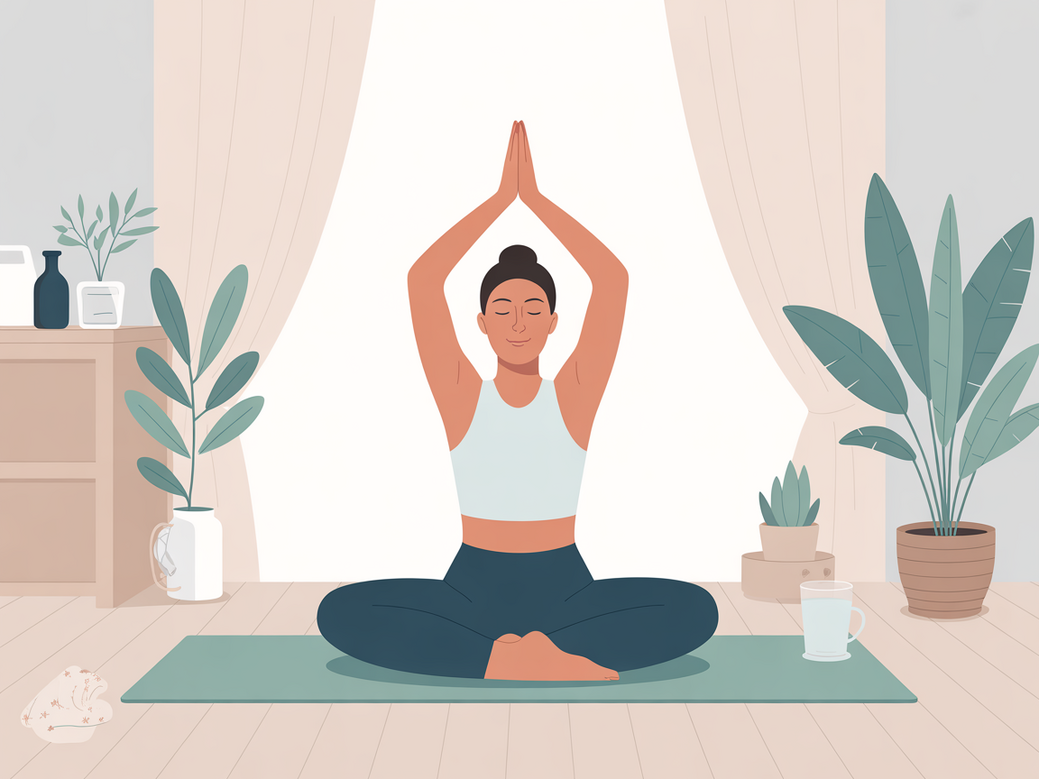
Start your beginner yoga practice in the comfort of your home with guided sessions from the Vitalizen App.
How to Start Your Beginner Yoga Practice Today
Starting yoga at home is a convenient and empowering choice. You control the environment, pace, and schedule, making it easier to build a consistent habit. Here is a simple, step-by-step guide to begin your journey effectively.
- Step 1: Create a Dedicated Space. Designate a quiet, clutter-free corner in your home for your practice. A peaceful environment helps you focus and signals to your brain that it’s time for self-care.
- Step 2: Acquire Essential Equipment. A non-slip yoga mat is your most important tool. As you progress, you might consider props like yoga blocks to support alignment and a blanket for comfort during final relaxation.
- Step 3: Learn Foundational Poses. Don’t try to master everything at once. Start with basic yoga poses like Mountain Pose, Cat-Cow, Downward-Facing Dog, and Warrior I. Focus on proper alignment over depth.
- Step 4: Follow a Guided Practice. Using an app like Vitalizen is crucial for anyone new to yoga. It provides structured sessions from certified instructors, ensuring you practice safely and effectively.
- Step 5: Schedule Your Sessions. Treat your yoga practice like any other important appointment. Consistency is more important than duration. Even 15-20 minutes, three times a week, will yield significant results.
💡 Ready to start? The Vitalizen App offers guided classes perfect for beginners. Download it today and get your first week free!
Essential Beginner Yoga Poses (Asanas) Explained
To build a strong foundation, focus on mastering a few key poses. These asanas are the building blocks for almost all yoga sequences. Pay attention to your breath and how your body feels in each shape.
Mountain Pose (Tadasana)
This is the blueprint for all standing poses. Stand with your feet together, ground down through your soles, engage your leg muscles, and lengthen your spine. It teaches balance and body awareness.
Downward-Facing Dog (Adho Mukha Svanasana)
An iconic yoga pose that stretches the entire body. From your hands and knees, lift your hips up and back to form an inverted ‘V’ shape. It energizes the body and calms the mind.
Cat-Cow Stretch (Marjaryasana-Bitilasana)
A gentle, flowing sequence that warms up the spine. On your hands and knees, you’ll alternate between arching your back (Cow) on an inhale and rounding it (Cat) on an exhale. It’s perfect for relieving back tension.
Warrior II (Virabhadrasana II)
A powerful standing pose that builds strength in the legs and core while opening the hips and shoulders. It cultivates focus and stability.
Child’s Pose (Balasana)
A resting pose that offers a gentle stretch for the back, hips, and thighs. It’s a go-to for calming the nervous system and taking a break during your practice.
Common Mistakes to Avoid in Your First Yoga Sessions
As a beginner, it’s natural to make a few mistakes. Being aware of these common pitfalls can help you practice more safely and enjoyably.
- Holding Your Breath: Breathing is central to yoga. Make sure you are breathing deeply and consistently. Your breath should guide your movement.
- Pushing Too Hard: Yoga is not a competitive sport. Listen to your body and avoid pushing into pain. Flexibility and strength will come with time.
- Comparing Yourself to Others: Every body is different. Focus on your own journey and progress, not on what the person next to you (or on screen) is doing.
- Inconsistent Practice: Practicing once a month won’t yield many benefits. Aim for consistency, even if it’s just for a short duration each time.
Why is Beginner Yoga Important for Your Well-being?
In our fast-paced world, self-care is a necessity, not a luxury. Beginner yoga provides a structured way to connect with yourself and mitigate the effects of a high-stress lifestyle. Its importance extends beyond physical fitness, offering a powerful tool for mental and emotional resilience.
The practice encourages mindfulness, teaching you to be present in the moment and observe your thoughts without judgment. This skill is invaluable for managing daily stressors. As research shows, the benefits are tangible and significant.
A 2022 study highlighted that regular yoga practice is significantly associated with better sleep quality, increased physical activity, and healthier dietary choices among young adults. This underscores yoga’s role as a gateway to a healthier lifestyle.
Source: National Center for Complementary and Integrative Health (NCCIH)
Furthermore, research from Johns Hopkins University suggests that gentle yoga can reduce a person’s stress-response system. This can be effective in managing anxiety and depression.
Source: Johns Hopkins Medicine
How Much Does it Cost to Implement Beginner Yoga?
The cost of starting yoga can vary, but it remains one of the most accessible wellness practices. You can begin with a minimal investment, especially when practicing at home. Here’s a breakdown of potential costs for 2026.
| Expense Category | Home Practice Cost | Studio Practice Cost | Wellness ROI |
|---|---|---|---|
| Equipment (Mat, Blocks) | $30 – $100 (one-time) | Often included or for rent ($2-$5/class) | Improved health, reduced medical bills |
| Instruction (App/Classes) | $0 – $20/month (e.g., Vitalizen App) | $100 – $200/month (unlimited) | Stress reduction, increased productivity |
| Apparel | Use existing comfortable clothes | Use existing comfortable clothes | N/A |
Note: Prices are estimates and can vary. The return on investment (ROI) is measured in wellness benefits, which often translate to long-term financial savings.
Where and When Should You Practice Yoga?
Finding the right place and time for your beginner yoga practice is key to building a consistent habit. The best answer depends entirely on your lifestyle, preferences, and personal goals.
Where to Apply Beginner Yoga Effectively?
The beauty of modern yoga is its flexibility. You can practice in various settings:
- At Home: Offers maximum convenience, privacy, and cost-effectiveness. It is ideal for self-starters and those with busy schedules.
- In a Studio: Provides community, in-person instructor feedback, and a dedicated environment free from home distractions.
- Outdoors: Practicing in a park or on a beach can deepen your connection to nature and enhance the meditative experience.
When is the Best Time for a Beginner to Practice?
There is no single “best” time to practice yoga; the ideal time is whenever you can do it consistently.
- Morning: An energizing morning session can boost your metabolism, increase focus for the day, and establish a positive tone.
- Afternoon: A midday practice can be a great way to combat the afternoon slump, release physical tension, and reset your mind.
- Evening: A gentle evening practice can help you unwind from the day’s stress, release tension, and prepare for a restful night’s sleep.
Conclusion: Your Path to a Healthier Life Starts Now
Starting a beginner yoga practice is a profound act of self-care that nurtures your body, calms your mind, and uplifts your spirit. The journey begins with a single step, a single breath, and the decision to show up for yourself. Remember to be patient, listen to your body, and enjoy the process of discovery. This practice is not about achieving perfect poses; it’s about creating a sustainable habit for a healthier, more balanced life.
🎯 Ready to take the next step? Start your wellness journey now with our guided programs on the Vitalizen App. For more tips and insights, explore our blog and feel free to contact us with any questions. For further reading, check out trusted resources like Yoga Journal.