Yoga for Beginners: A Complete Guide to Starting Your Practice in 2026
Yoga for beginners is a transformative practice designed to unite the body, breath, and mind through fundamental postures and controlled breathing exercises. This discipline focuses on learning foundational poses (asanas) and meditation techniques to systematically build physical strength, enhance flexibility, and cultivate profound mental clarity. For anyone seeking an effective method to reduce stress and improve overall well-being, starting with beginner yoga offers a safe, structured, and highly accessible path toward a more balanced and centered life.
Do you ever feel swept away by the relentless pace of modern life? You are far from alone. The journey into yoga for beginners is your personal toolkit to discover tranquility amidst the chaos. This comprehensive guide is crafted specifically for you—the curious beginner—to help you take your first steps with confidence. With powerful tools like the Vitalizen App, you gain a personal guide right in your pocket, making the process of starting your practice simpler and more intuitive than ever before.
The Core Benefits of Starting Yoga in 2026
In our hyper-connected world, carving out time for self-care is not a luxury—it is a fundamental necessity for long-term health. Recent data highlights a sharp rise in stress-related health issues, making mind-body practices like yoga more critical than ever. Yoga and meditation are ancient disciplines fortified by modern scientific research, offering tangible benefits that directly counteract the pressures of contemporary life.
Investing in a consistent beginner yoga practice helps you build mental and physical resilience. You will feel more grounded, centered, and better equipped to navigate life’s inevitable challenges. Remember, the goal is not about achieving flawless poses; it’s about committing to consistent progress and showing up for yourself, one breath at a time.
Key Benefits of a Consistent Yoga Practice:
- Profound Stress Reduction: Numerous studies, including those cited by Harvard University, confirm that yoga can significantly lower cortisol, the body’s primary stress hormone, promoting a state of calm.
- Improved Flexibility and Mobility: You do not need to be flexible to start yoga; the practice itself is what cultivates flexibility. With consistency, you’ll notice a gradual increase in your range of motion.
- Enhanced Mental Clarity and Focus: The meditative aspects of yoga sharpen your concentration, quiet mental chatter, and improve cognitive function.
- Increased Functional Strength: Holding yoga poses, even basic ones, engages and strengthens muscles throughout your entire body, improving posture and stability.
- Better Sleep Quality: By calming the nervous system, a regular yoga practice can lead to deeper, more restorative sleep.
Choosing the Right Style of Yoga for Beginners
The world of yoga is vast, but a few styles are perfectly suited for those just starting. Choosing the right one depends on your current fitness level and personal goals. Here are some of the best options for yoga for beginners:
- Hatha Yoga: This is often the recommended starting point. Hatha classes are typically slower-paced and focus on holding basic poses to teach alignment and breathing.
- Viniyasa Yoga: Known for its flowing sequences, Viniyasa links breath to movement. Look for beginner-level classes that move at a manageable pace.
- Yin Yoga: A slow, meditative practice where poses are held for several minutes. It targets deep connective tissues and is excellent for increasing flexibility and calming the mind.
- Restorative Yoga: The ultimate relaxation practice. It uses props like bolsters and blankets to support your body in comfortable poses, promoting deep rest and recovery.
Your First Yoga Session: A Step-by-Step Guide
Starting your beginner yoga journey is simpler than you might imagine. You don’t need expensive gear or prior expertise. The most important principle is to listen to your body and move at a pace that feels right for you. Here is a structured guide to begin your practice today.
A Simple 15-Minute Beginner Routine:
- Centering (2 minutes): Sit comfortably on your mat. Close your eyes and take several deep breaths. Focus on the sensation of the air moving in and out of your body.
- Warm-up (3 minutes): Gently move through neck rolls and shoulder shrugs. Perform a few rounds of Cat-Cow Pose to warm up your spine.
- Core Poses (7 minutes): Move slowly through a sequence of foundational poses. Hold each for 5 deep breaths: Mountain Pose, Downward-Facing Dog, Warrior II (on both sides), and Triangle Pose (on both sides).
- Cool-down (3 minutes): Wind down with a gentle Child’s Pose, followed by lying on your back for Savasana (Corpse Pose), allowing your body to absorb the benefits of the practice.
🎯 Ready to start? The Vitalizen App offers guided sessions perfect for your first time. Let our experts lead you safely through your initial practice.
10 Foundational Yoga Poses for Beginners
Mastering these foundational poses will provide a solid base for your entire yoga journey. They are designed to build strength, improve balance, and increase flexibility in a safe and accessible way. Focus on your alignment and breath in each pose.
| Pose Name | Sanskrit Name | Primary Benefit |
|---|---|---|
| Mountain Pose | Tadasana | Improves posture and creates a sense of grounding. |
| Downward-Facing Dog | Adho Mukha Svanasana | Stretches the entire body, particularly hamstrings and spine. |
| Cat-Cow Pose | Marjaryasana-Bitilasana | Warms up the spine and improves flexibility. |
| Warrior II | Virabhadrasana II | Builds leg strength and opens the hips and shoulders. |
| Triangle Pose | Trikonasana | Stretches the hamstrings, hips, and spine. |
| Bridge Pose | Setu Bandhasana | Strengthens the back, glutes, and legs. |
| Tree Pose | Vrksasana | Improves balance and concentration. |
| Child’s Pose | Balasana | A gentle resting pose that calms the mind and relieves stress. |
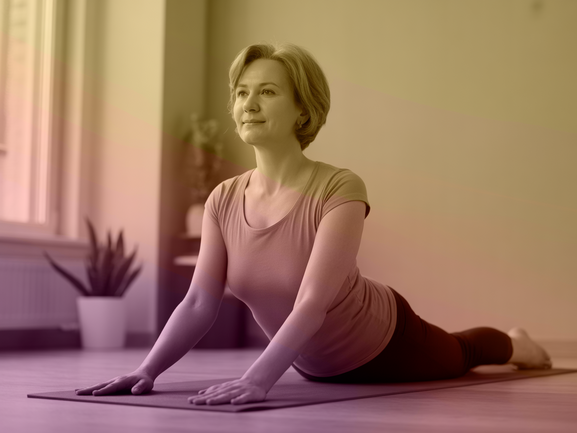
| Cobra Pose | Bhujangasana | Strengthens the spine and opens the chest. |
| Corpse Pose | Savasana | Promotes deep relaxation for the body and mind. |
How to Start Meditation: A Beginner’s Guide
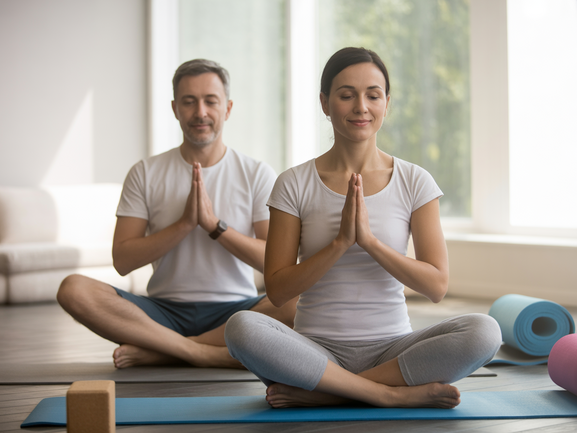
If you believe meditation requires completely emptying your mind, it’s time for a new perspective. Meditation is the practice of observing your thoughts without judgment. It is a skill, and like any other, it becomes easier and more natural with consistent practice. Meditation for beginners is a core component of a holistic yoga practice.
How to Meditate in 3 Simple Steps:
Find a comfortable seated position, set a timer for just 5 minutes, close your eyes, and bring your focus to your breath. Notice the physical sensation of the air entering and leaving your body. When your mind inevitably wanders, gently and without criticism, guide your focus back to your breath. That’s it. You are meditating!
💡 Tip: Consistency is more important than duration. Starting with just 5 minutes a day is more effective than one long session per week. The Vitalizen App features a library of guided meditations to help you build a strong and sustainable habit. Start your wellness journey now and discover a calmer, more focused you.
Common Mistakes to Avoid in Your Beginner Yoga Practice
As you embark on your yoga for beginners journey, being aware of common pitfalls can help you practice more safely and effectively. Avoiding these mistakes will ensure your experience is positive and sustainable.
- Pushing Too Hard: Yoga is non-competitive. Pushing your body into pain can lead to injury. Listen to your body’s signals and respect its limits.
- Holding Your Breath: The connection between breath and movement is central to yoga. Make sure you are breathing deeply and continuously throughout each pose.
- Comparing Yourself to Others: Every person’s body is different. Focus on your own progress and how the practice feels for you, not how it looks compared to someone else.
- Inconsistent Practice: Practicing for 15-20 minutes a few times a week is more beneficial than a single, long session once a month. Consistency is the key to seeing results.
Your Questions Answered (FAQ)
Do I need to be flexible to do yoga?
Not at all! In fact, saying you’re not flexible enough for yoga is like saying you’re too dirty to take a bath. Yoga is the tool that will help you improve your flexibility over time. The primary goal is to feel good in your body and connect with your breath, not to force yourself into complex shapes. Progress will come naturally with consistent practice.
What equipment do I need for beginner yoga?
All you truly need is a comfortable space and the willingness to try. A yoga mat is highly recommended for grip and cushioning. You can start on a carpet or a non-slip towel. As you progress, you might consider props like blocks or straps to assist with alignment, but they are not essential at the start. For more tips, check out our articles on yoga and meditation.
How is Vitalizen App different from other wellness apps?
Vitalizen App is designed as your personal wellness companion, offering guided yoga for beginners and meditation for all levels. We focus on making these ancient practices accessible and enjoyable, helping you build a sustainable habit for a healthier, happier life. Our goal is to provide clear, simple guidance without pressure. For more details, feel free to contact us.
How long does it take to see results from yoga?
Many people feel benefits like reduced stress and better sleep after their very first session. Physical changes, such as increased flexibility and strength, typically become noticeable within a few weeks of consistent practice (2-3 times per week). The key is consistency rather than intensity. The mental and emotional benefits often develop gradually and become more profound over time.
How much does it cost to start yoga?
The cost of starting yoga can be as low as zero. You can begin by practicing at home using free online videos or apps with free introductory content. A good quality yoga mat can cost between $20 and $100. Subscriptions to apps like Vitalizen offer a cost-effective way to get guided classes. Attending in-person studio classes is typically the most expensive option, with prices varying by location.
Your path to inner peace begins with a single step and a single breath. We hope this guide has empowered you to start your beginner yoga practice. Remember, this is your personal journey. Embrace it with curiosity and self-compassion. For a deeper dive into the science, explore resources from the National Center for Complementary and Integrative Health (NCCIH), a trusted authority on wellness.
Ready to transform your life? Download the Vitalizen App today and start your journey to a more mindful and joyful you!
Last updated: January 8, 2026