

Start Yoga and Meditation: A Beginner’s Guide to Inner Peace in 2026
Why Start a Yoga and Meditation Practice Now?
In our hyper-connected, fast-paced world, the search for tranquility has never been more critical. Stress, anxiety, and digital fatigue are common struggles, leaving many feeling overwhelmed and disconnected. Yoga and meditation offer a powerful, time-tested solution to reconnect the mind and body, fostering profound mental and physical well-being.
These ancient practices are not about achieving pretzel-like poses or emptying your mind completely. Instead, they are about creating intentional space for yourself. Through physical postures (asanas), controlled breathing (pranayama), and focused mindfulness, you can cultivate a state of calm, clarity, and resilience. This guide provides a clear, actionable roadmap to start yoga and meditation, even with a busy schedule. With a supportive tool like the Vitalizen App | Yoga + Meditation, your journey toward inner peace is simpler than ever.
The Science-Backed Benefits of a Consistent Practice
Before diving into the ‘how,’ understanding the ‘why’ can provide powerful motivation. The advantages of combining yoga with meditation are not just anecdotal; they are supported by a growing body of scientific research that highlights their transformative impact on your quality of life.
- Drastic Stress and Anxiety Reduction: Both practices are proven to lower levels of cortisol, the body’s primary stress hormone. This physiological shift promotes a lasting sense of calm and emotional regulation.
- Improved Physical Health and Vitality: Yoga’s asanas are a holistic form of exercise. They build functional strength, enhance flexibility, improve posture, and boost circulation, contributing to overall physical resilience.
- Enhanced Mental Clarity and Focus: Meditation is like a workout for your brain. It trains your attention and awareness, leading to a sharper mind, better concentration, and more thoughtful decision-making in your daily life.
- Deeper, More Restful Sleep: By calming the central nervous system, a regular practice can significantly improve sleep quality. This leads to more restorative rest, helping you wake up feeling energized and refreshed.
- Increased Emotional Well-being: Mindfulness, a core component of both practices, helps you observe your thoughts and feelings without judgment. This fosters greater self-awareness and a more positive outlook on life.
According to a 2026 study from the JAMA Network, consistent mindfulness practice can reduce anxiety symptoms by up to 60% over a six-month period, demonstrating its efficacy as a mental health tool.

How to Start Your Yoga Practice: A Step-by-Step Guide
Starting yoga doesn’t require advanced flexibility or expensive gear. It’s an inclusive practice focused on connecting with your body and breath, wherever you are. Here is a simple, step-by-step process to begin your journey.
- Set Your Intention: Before you even unroll a mat, ask yourself *why* you want to start yoga. Is it for stress relief, physical fitness, or mental clarity? Your intention will be your anchor, motivating you to stay consistent.
- Create a Dedicated Space: Designate a quiet, comfortable area in your home. It doesn’t need to be large—just enough space for a yoga mat. This simple ritual helps signal to your brain that it’s time to transition into your practice.
- Gather Minimal Equipment: All you truly need is your body. However, a non-slip yoga mat is highly recommended. As you progress, you might consider blocks or straps to assist with alignment, but they aren’t necessary at the start.
- Learn Foundational Poses: Don’t overwhelm yourself. Begin with a few simple, foundational poses. For example, Cat-Cow is a gentle warm-up that links breath to movement, while Mountain Pose helps you find grounding and proper alignment. The key is to move slowly and with intention.
- Prioritize Your Breath: The breath (pranayama) is the life force of yoga. Focus on inhaling as you expand or lengthen and exhaling as you deepen or contract. This mindful breathing is what transforms physical movement into a meditative practice.
- Listen to Your Body’s Wisdom: This is the most crucial rule. Yoga is not a competition. Never force yourself into a pose that causes sharp pain. The goal is to feel a gentle, productive stretch, not strain. Your body’s feedback is your most valuable guide.
Using guided sessions can provide essential structure and motivation when you first start yoga and meditation. The Vitalizen App offers a library of guided yoga sessions designed for all levels, from absolute beginners to advanced practitioners.
🎯 Ready to start? The Vitalizen app has sessions as short as 5 minutes to fit any schedule. Begin your wellness journey today!
Which Yoga Style Is Best for Beginners?
The sheer number of yoga styles can be intimidating. For those just starting, it’s best to choose a style that focuses on fundamentals and alignment. Here’s a simple breakdown of styles that are perfect for beginners.
| Style | Pace | Best For |
|---|---|---|
| Hatha Yoga | Slow | Learning basic poses, proper alignment, and breathing techniques. The ideal starting point. |
| Vinyasa Yoga | Moderate to Fast | Connecting breath with movement in a flowing sequence. Good after mastering basics. |
| Restorative Yoga | Very Slow | Deep relaxation and stress relief, using props like blankets and bolsters to support the body. |
| Yin Yoga | Very Slow | Holding passive poses for longer periods to target deep connective tissues and increase flexibility. |
How to Begin Meditating: A Guide to Stillness
If yoga is the practice of moving the body with mindfulness, meditation is the practice of stilling the mind with awareness. This doesn’t mean you have to stop thinking. Instead, it’s about learning to observe your thoughts without getting carried away by them. This is a core skill for anyone looking to start yoga and meditation for mental clarity.
A Simple Breathing Meditation to Start in 3 Minutes
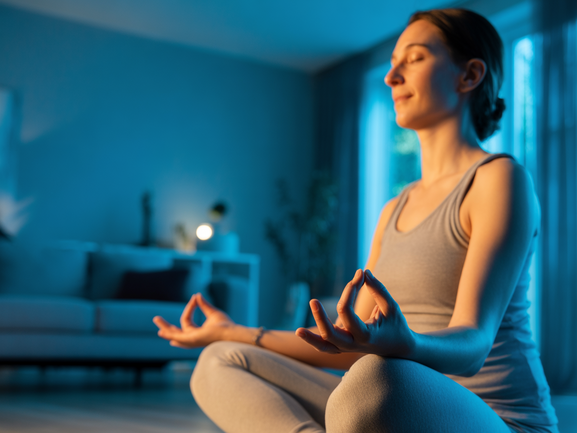
Sit in a comfortable position with your back straight but not rigid. You can be on a chair with your feet flat on the floor or on a cushion on the ground. Close your eyes gently and bring your attention to your breath. Don’t try to change it; just notice the sensation of the air entering your nostrils and leaving your body. When your mind wanders—and it absolutely will—gently and without judgment, guide your focus back to your breath. That’s it. You are meditating!
Exploring Different Meditation Techniques
While breath awareness is a foundational technique, you can explore other styles as you build your practice:
- Body Scan Meditation: Bring focused attention to different parts of your body, from your toes to the top of your head, noticing any sensations without judgment.
- Walking Meditation: Pay close attention to the physical sensation of walking—the feeling of your feet on the ground, the movement of your legs, and the rhythm of your steps.
- Guided Visualization: Listen to an audio recording that guides you to imagine a peaceful scene, helping to calm the mind and reduce stress.
For beginners, guided meditation is an invaluable tool. It provides a voice to follow, making it easier to stay present and build confidence. Let us help you find your focus and start your wellness journey now.
Overcoming Common Challenges for Beginners
Every new journey has its obstacles. Anticipating them can help you navigate them with grace and compassion. Here are some common hurdles and how to overcome them.
- “I’m not flexible enough for yoga.” This is like saying you’re too dirty to take a shower. Flexibility is a result of yoga, not a prerequisite. Start where you are, and your body will open up over time.
- “I can’t quiet my mind.” The goal of meditation is not an empty mind. It’s to notice when your mind has wandered and gently bring it back. Every time you do this, you are strengthening your mindfulness “muscle.”
- “I don’t have enough time.” Consistency trumps duration. A consistent 10-minute daily practice is far more effective than a 90-minute session once a month. Start small to build the habit.
- “I’m not sure if I’m doing it right.” In yoga and meditation, if you are breathing and paying attention, you are doing it right. Let go of perfectionism and embrace the process of learning and self-discovery.
Consistency: The Key to Unlocking Lasting Results
The profound, transformative power of yoga and meditation is unlocked through consistent practice. It’s the daily commitment, however small, that rewires your brain and reshapes your response to stress. Building this new habit is where the Vitalizen App truly shines. By exploring what Vitalizen.app is, you’ll discover a partner for your wellness journey. Our app provides structured programs, daily reminders, and a rich variety of sessions to keep you motivated.
For more tips and guidance, be sure to check out our other articles on yoga and meditation. As noted by researchers at leading institutions like the NCCIH and Harvard University, it is the regularity of practice that integrates mindfulness into your life and unlocks long-term benefits.
💡 Tip: Use the Vitalizen App to schedule your practice and track your progress. Download for free to start building your routine!
Frequently Asked Questions (FAQ)
How long should I practice each day to see benefits?
Even 5-10 minutes a day can make a significant difference when you’re starting out. It’s better to practice for a short time consistently than for a long time sporadically. The Vitalizen app has sessions as short as 3 minutes to fit any schedule!
How much does it cost to start yoga and meditation?
You can start for free! Your body and breath are the only essential tools. While a yoga mat is helpful, it’s not required at first. Apps like Vitalizen offer free introductory sessions, allowing you to invest in classes or equipment as you progress on your journey.
What if I can’t clear my mind during meditation?
This is the most common misconception about meditation. The goal is not an empty mind, but to notice when your mind has wandered and gently guide it back to your anchor (like your breath). Every time you do this, you are successfully practicing mindfulness.
When is the best time of day to practice?
The best time to practice is whenever you can be most consistent. Many people prefer the morning to start their day with clarity and intention. Others find an evening practice helps them unwind and prepare for a restful sleep. Experiment and see what works best for your life.
Your Journey Starts Now
Your journey to a calmer, stronger, and more centered you is a marathon, not a sprint. Be patient and compassionate with yourself. Every breath, every pose, and every moment of mindfulness is a step in the right direction. The goal is not perfection, but presence.
Ready to take that first, powerful step? Start your wellness journey with Vitalizen today! If you have more questions or need support, feel free to contact us. We’re here to help.