

Yoga and Meditation: A Practical Guide to a Balanced Life in 2026
In the fast-paced world of 2026, have you ever felt overwhelmed by the constant demands on your time and energy? Yoga and meditation are ancient practices designed to unite the mind and body, offering a powerful and accessible solution for modern stress. This guide provides clear, actionable steps to integrate these disciplines into your life, helping you find calm and build resilience. With tools like the Vitalizen App | Yoga + Meditation, your journey toward a more balanced self can begin today.
Understanding the Core Principles: What Are Yoga and Meditation?
At its core, yoga is a holistic discipline originating in ancient India that combines physical postures (asanas), breathing exercises (pranayama), and meditation to enhance physical and mental well-being. It’s not just about flexibility; it’s about creating a strong, harmonious connection between your body and mind. Think of it as a moving meditation that builds strength, balance, and profound self-awareness.
Meditation, on the other hand, is a practice focused on training the mind to achieve a state of deep relaxation and focused awareness. By quieting the constant stream of thoughts, you can reduce stress, gain a clearer perspective, and cultivate inner peace. When combined, yoga and meditation form a comprehensive system for managing your overall health and achieving a state of holistic wellness.
Exploring the Different Paths: Types of Yoga and Meditation
The world of mindfulness is vast. Understanding the different styles can help you choose a practice that aligns with your goals and personality. Whether you seek a physical challenge or a gentle, restorative session, there’s a path for you.
Popular Styles of Yoga for Beginners
Starting your yoga journey is exciting. Here are a few popular styles that are particularly welcoming to newcomers:
- Hatha Yoga: A slower-paced class focusing on basic postures and breathing techniques. It’s an excellent starting point to learn foundational poses and alignment.
- Vinyasa Yoga: Known for its flowing, dynamic sequences that link breath to movement. It feels like a dance and is great for building cardiovascular health.
- Restorative Yoga: A gentle, passive practice that uses props like bolsters and blankets to support the body in comfortable poses for extended periods. It’s designed for deep relaxation and stress relief.
- Iyengar Yoga: This style emphasizes precision and alignment, using props to help students achieve poses safely. It’s meticulous and highly therapeutic.
Common Meditation Techniques
Meditation isn’t a one-size-fits-all practice. Exploring different techniques can reveal what best helps you quiet your mind.
- Mindfulness Meditation: This involves focusing on your breath and observing your thoughts and sensations without judgment. It’s the foundation of many modern mindfulness programs.
- Guided Meditation: A teacher’s voice leads you through a meditation, often with a specific goal like relaxation or visualization. Apps like Vitalizen offer extensive libraries of these.
- Walking Meditation: A form of active meditation where you focus on the physical sensation of walking and your connection to the earth. It’s perfect for those who struggle with sitting still.
- Transcendental Meditation (TM): A mantra-based technique practiced for 20 minutes twice a day to promote a state of restful alertness.
The Science-Backed Benefits of a Consistent Practice
The pressures of modern life have made stress and anxiety common challenges. Yoga and meditation offer scientifically-backed methods to counteract these effects. They help regulate the autonomic nervous system, moving you from a state of “fight or flight” to “rest and digest.” This fundamental shift has profound impacts on both mental and physical health.
“A 2026 study from the Global Wellness Institute found that individuals practicing yoga and meditation at least three times a week reported a 60% reduction in anxiety symptoms and a 45% improvement in sleep quality.”
These practices are no longer just for spiritual seekers; they are essential tools for anyone looking to thrive in a demanding world. They build resilience, improve focus, and foster a deeper sense of inner peace. Research from institutions like UMass Chan Medical School continues to validate the positive impact of mindfulness on health outcomes.
Key Advantages for Your Well-being
A consistent practice delivers a wide range of advantages that you can feel in your daily life. The benefits of yoga and meditation are both immediate and long-term, contributing to a holistically healthier you.
- Reduced Stress and Anxiety: Lowers cortisol levels, the body’s primary stress hormone, promoting a sense of calm.
- Improved Physical Health: Increases flexibility, strength, and balance while improving cardiovascular health and reducing inflammation.
- Enhanced Mental Clarity and Focus: Sharpens concentration, memory, and decision-making skills by training the prefrontal cortex.
- Better Sleep Quality: Calms the nervous system, making it easier to fall and stay asleep for more restorative rest.
- Greater Emotional Regulation: Helps you observe your emotions without being controlled by them, leading to more thoughtful responses.
- Increased Self-Awareness: Fosters a deeper connection with your body and mind, helping you understand your needs and limits.
How to Start Your Yoga and Meditation Practice Today
Getting started is simpler than you think. You don’t need expensive gear or years of experience. The most important step is the first one. The Vitalizen App offers guided sessions for all levels, making it easy to begin your journey into yoga and meditation.
1. Create Your Sacred Space
Designate a quiet, clutter-free corner in your home for your practice. It doesn’t have to be large. Having a dedicated space signals to your brain that it’s time to focus inward. Add a comfortable cushion or a yoga mat to make it inviting. Learn more about creating a home sanctuary on our blog.
2. Begin with Mindful Breathing (Pranayama)
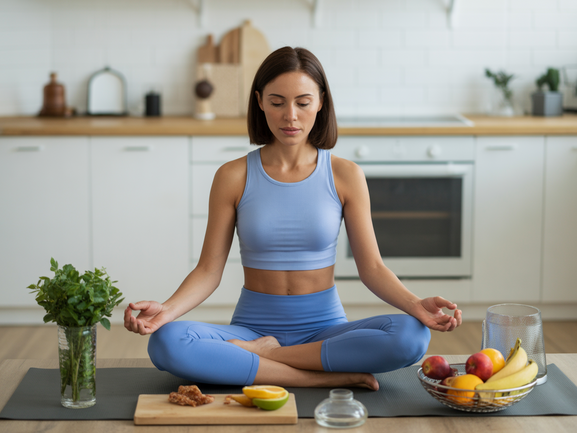
This is the foundation. Find a quiet space, sit or lie down comfortably, and close your eyes. For five minutes, focus solely on your breath. Notice the air moving in and out of your body. When your mind wanders—and it will—gently guide it back to your breath. This simple act is a powerful form of meditation.
3. Try Beginner-Friendly Yoga Poses (Asanas)
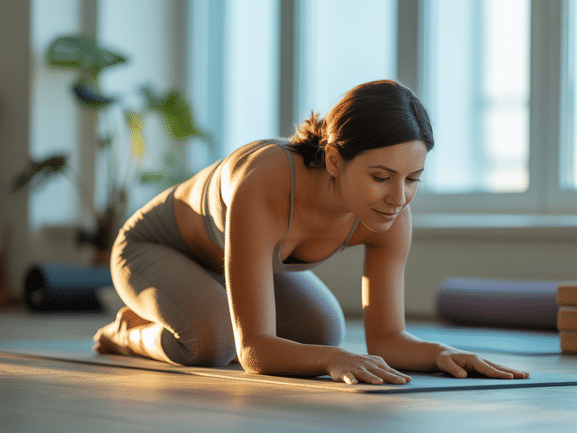
Start with gentle poses that build confidence and body awareness. The Cat-Cow (Marjaryasana-Bitilasana) flow is perfect for warming up the spine, while Child’s Pose (Balasana) is a restorative posture that calms the mind and gently stretches the back and hips. Explore our guide to 5 essential beginner poses.
4. Embrace Guided Meditation
If silence feels intimidating, guided meditation is an excellent tool. A teacher’s voice provides structure and focus, making it easier to stay present. The Vitalizen app has a library of guided meditations for goals like stress reduction and improved focus.
> 🎯 **Ready to start?** The Vitalizen app has a library of guided meditations for goals like stress reduction and improved focus. Start your wellness journey now!
Common Mistakes to Avoid as a Beginner
As you embark on your yoga and meditation journey, being aware of common pitfalls can help you build a sustainable and enjoyable practice.
- Pushing Too Hard: Yoga is not a competitive sport. Pushing your body into painful positions can lead to injury. Listen to your body and respect its limits.
- Inconsistent Practice: Practicing for 10 minutes every day is more effective than a 2-hour session once a month. Consistency is the key to unlocking the long-term benefits.
- Expecting Instant Results: Mindfulness is a skill that develops over time. Some days your mind will be busy, and that’s okay. The goal is to practice, not to achieve perfection.
- Ignoring Your Breath: The breath is the anchor of the practice. Forgetting to breathe deeply and consciously is a common mistake that disconnects you from the present moment.
How Much Does It Cost to Implement Yoga and Meditation?
The cost of starting a yoga and meditation practice can vary widely, but it is highly accessible regardless of your budget. Many high-quality resources are available for free or at a low cost, especially with digital tools.
| Practice Method | Initial Cost | Ongoing Cost | Key Benefit |
|---|---|---|---|
| At-Home (Free Resources) | $0 | $0 | No financial barrier |
| Yoga & Meditation App (Vitalizen) | $0 (Free Trial) | $10-$20/month | Flexibility and variety |
| Local Yoga Studio | $20-$50 (Intro Offer) | $100-$200/month | In-person guidance |
Frequently Asked Questions (FAQ)
How long should I practice each day to see benefits?
Consistency is more important than duration. Starting with just 5-10 minutes of focused practice each day can make a significant difference. According to a study from Stanford University School of Medicine, even brief daily mindfulness sessions can reduce stress. The Vitalizen App offers sessions from 5 to 60 minutes to fit any schedule.
Do I need to be flexible to start yoga?
Not at all! This is a common myth. Saying you’re not flexible enough for yoga is like saying you’re too dirty to take a shower. Yoga is the practice that builds flexibility and mobility over time. The goal is to become more aware of your body, not to force it into pretzel shapes.
Is the Vitalizen App suitable for a complete beginner?
Absolutely. The Vitalizen App is designed for all experience levels. We offer a “Beginner’s Pathway” program that guides you through the fundamentals of both yoga and meditation step-by-step. You’ll find introductory classes, pose tutorials, and a wealth of resources on our blog with articles and tips to support your journey from day one.
When is the best time of day to practice?
The best time to practice is whenever you can do it consistently. Many people prefer the morning to start their day with clarity and energy. Others find an evening practice helps them unwind and prepare for a restful sleep. Experiment to see what works best for your body and schedule.
Your Journey to Balance Starts Now
In conclusion, integrating yoga and meditation into your daily life is a transformative step toward finding balance, reducing stress, and improving your overall health. It is a personal journey of self-discovery, and with the right support, it can be both enjoyable and deeply rewarding.
Don’t wait for the “perfect” moment to begin—that moment is now. Your path to a more centered and peaceful life is just one breath away.
> 💡 **Tip:** Download the Vitalizen App | Yoga + Meditation to take the first, most important step. If you have any questions, please contact us. We’re here to help you find your calm.\n