


Yoga for Beginners: Your Complete Guide to Starting in 2026
Are you looking for a way to improve your flexibility, reduce stress, and enhance your overall well-being in 2026? Yoga for beginners is the perfect starting point. This ancient practice involves combining physical postures, breathing techniques, and mindfulness to create a powerful connection between your body and mind. Starting a new practice can feel intimidating, but it doesn’t have to be. This guide provides a clear, step-by-step path to begin your journey with confidence. With a tool like the Vitalizen App | Yoga + Meditation, you’ll have a friendly guide right in your pocket.
Why Is Yoga for Beginners a Powerful Tool for Well-being?
In our fast-paced world, taking time for yourself is more important than ever. Yoga is a holistic practice scientifically shown to improve both physical and mental health. It’s not just about stretching; it’s about creating a sustainable habit for a healthier, more balanced life. A consistent beginner yoga practice offers numerous advantages that compound over time, making it a transformative journey.
The main benefits of starting yoga include:
- Reduced Stress and Anxiety: Yoga helps calm the nervous system by activating the parasympathetic response, which lowers cortisol levels.
- Improved Flexibility and Balance: The various poses (asanas) work to lengthen muscles, increase range of motion in joints, and improve stability.
- Increased Strength: In yoga, you use your own body weight as resistance to build functional, lean muscle across your entire body.
- Enhanced Mental Clarity: The intense focus on breath and movement helps quiet the constant mental chatter, leading to improved focus and presence.
- Better Sleep Quality: A regular practice, especially a gentle one in the evening, can lead to more restful and deeper sleep cycles.
- Improved Posture and Body Awareness: Yoga teaches you to become more aware of your body’s alignment, helping to correct postural issues from daily life.
According to a 2026 study from the Global Wellness Institute, 89% of people who started a consistent yoga practice reported a significant decrease in daily stress levels within three months.
Choosing the Right Style of Yoga for Beginners
The word “yoga” is a broad term for many different styles. For a beginner, choosing the right one can make all the difference. Look for classes labeled as “beginner,” “foundational,” or “gentle.”
- Hatha Yoga: This is often the best style for beginners. It’s a slower-paced class that focuses on holding basic poses to learn proper alignment.
- Vinyasa Yoga: This style links movement with breath in a more dynamic, flowing sequence. It can be more challenging, but many studios offer beginner-level Vinyasa classes.
- Yin Yoga: A very slow, meditative practice where poses are held for several minutes. It targets deep connective tissues and is excellent for increasing flexibility and calming the mind.
- Restorative Yoga: The goal here is deep relaxation. It uses props like bolsters and blankets to support your body in comfortable poses, allowing you to rest and rejuvenate.
How to Start with 7 Foundational Yoga Poses
To begin your practice, you don’t need to know dozens of complex poses. Mastering a few foundational ones is the key to building a safe and effective routine. Here are seven simple poses to start with. Remember to breathe deeply and listen to your body’s signals.
-
1. Mountain Pose (Tadasana)
This pose looks simple, but it is the foundation for all standing poses. Stand with your feet together or hip-width apart. Ground down through all four corners of your feet. Lengthen your spine, relax your shoulders away from your ears, and keep your arms by your sides with palms facing forward. It dramatically improves posture and body awareness. -
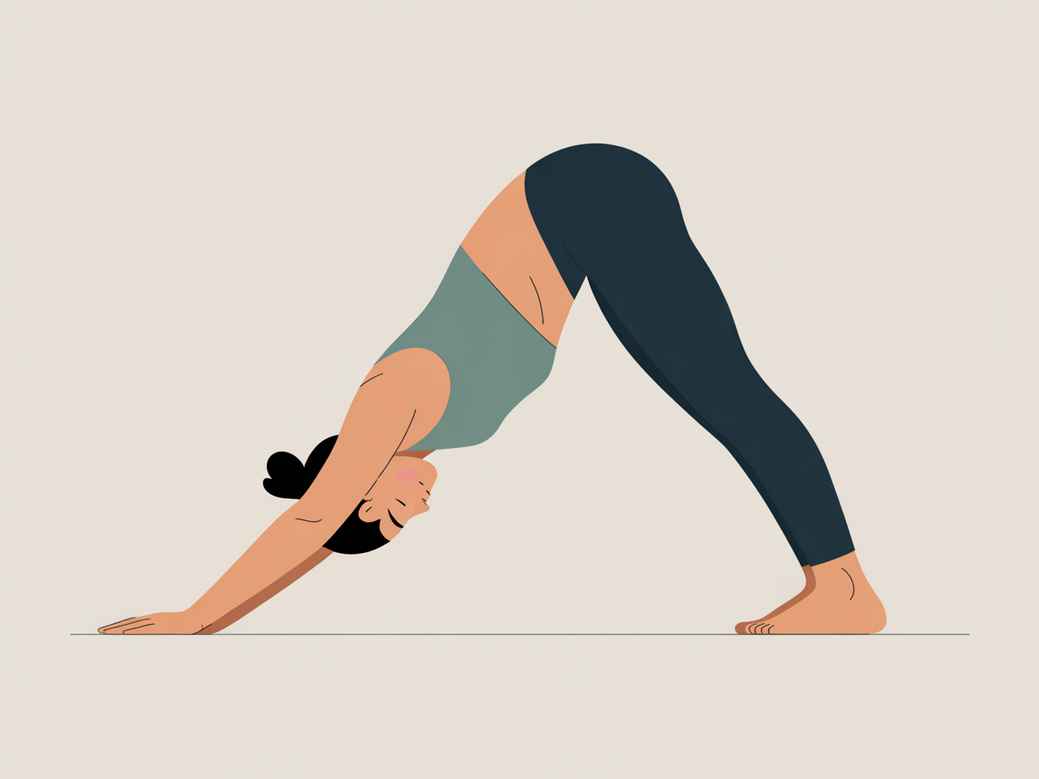
2. Downward-Facing Dog (Adho Mukha Svanasana)
From your hands and knees, tuck your toes, and lift your hips up and back to form an inverted V-shape. Press firmly into your hands and gently “pedal” your feet by bending one knee at a time. This pose is fantastic for stretching the entire back of the body, especially the hamstrings and spine. -
3. Warrior II (Virabhadrasana II)
Step your feet wide apart. Turn your right foot out 90 degrees and your left foot in slightly. Extend your arms parallel to the floor. Bend your right knee, ensuring it stays directly over your ankle. This powerful pose builds strength in the legs and core while opening the hips and chest. -
4. Cat-Cow Stretch (Marjaryasana-Bitilasana)
Start on your hands and knees in a tabletop position. As you inhale, drop your belly towards the mat and look up, opening your chest (Cow Pose). As you exhale, round your spine toward the ceiling and tuck your chin to your chest (Cat Pose). This simple flow is excellent for warming up the spine and relieving tension. -
5. Bridge Pose (Setu Bandhasana)
Lie on your back with your knees bent and feet flat on the floor, hip-width apart. Press into your feet and lift your hips off the floor. Clasp your hands underneath your back. This pose strengthens the back, glutes, and legs, and gently stretches the chest. -
6. Triangle Pose (Trikonasana)
From a wide stance, turn your right foot out 90 degrees. Extend your arms, then hinge at your right hip to reach down and rest your right hand on your shin, ankle, or a block. Extend your left arm to the ceiling. This pose is a great stretch for the hamstrings, hips, and spine. -
7. Child’s Pose (Balasana)
From your hands and knees, bring your big toes to touch, sit back on your heels, and fold forward, resting your forehead on the mat. This is a gentle resting pose that calms the mind and gently stretches the hips, thighs, and back. It’s a great pose to return to anytime you need a break during your yoga for beginners practice.
Essential Gear for Your Beginner Yoga Practice
One of the best parts about starting yoga is that you need very little equipment. However, a few key items can make your practice safer and more comfortable.
- Yoga Mat: This is the most important piece of gear. Look for a mat that is about 1/4-inch thick to provide enough cushioning for your joints without being unstable.
- Comfortable Clothing: Wear clothes that allow you to move freely. Avoid anything too baggy that might get in the way or too restrictive.
- Yoga Blocks (Optional): Blocks are fantastic for beginners. They act as an extension of your hands, making poses more accessible as you build flexibility.
- Strap (Optional): A yoga strap can help you get a deeper stretch in poses where you can’t quite reach your feet, like in a seated forward fold.
How Much Does It Cost to Implement Yoga?
The cost of starting a yoga for beginners practice can vary widely, from completely free to a significant investment. The beauty is that you can choose the path that fits your budget. The most important investment is your time and consistency.
- At-Home with an App: The initial cost is a mat ($20-$50). An app like Vitalizen might have a monthly fee ($0-$15), offering incredible convenience and affordability.
- Local Yoga Studio: Besides a mat, a monthly membership can range from $80 to $200. This provides valuable in-person guidance and community.
- Free Online Videos: The only cost is an optional mat. This is the most budget-friendly way to start, though it lacks personalized feedback.
For more tips and guidance, feel free to explore our other articles, news, tips, and guidance on yoga and meditation.
Common Mistakes to Avoid When Starting Yoga
As you begin, being aware of common pitfalls can help you practice safely and progress steadily.
- Pushing Too Hard: Yoga is not a competitive sport. Pushing your body into pain can lead to injury. Listen to your body’s signals and back off when needed.
- Holding Your Breath: Breath is central to yoga. A common mistake is to hold your breath in challenging poses. Focus on maintaining a steady, deep breath.
- Comparing Yourself to Others: Your yoga journey is unique. Don’t worry about what the person next to you is doing. Focus on your own practice and progress.
- Inconsistent Practice: Practicing once a month won’t yield significant results. Consistency is more important than duration. A short, regular practice is better than a long, infrequent one.
Studies from authoritative sources like the National Center for Complementary and Integrative Health (.gov) confirm the physical and mental benefits of a consistent yoga practice.
> 💡 **Tip:** Download the free Vitalizen App to get guided sessions that help you avoid these common mistakes and build a strong foundation!
Frequently Asked Questions (FAQ)
How often should a beginner do yoga?
For beginners, practicing 2-3 times a week is a great start. This frequency allows your body to adapt, build strength, and develop muscle memory without getting overwhelmed. Even focused sessions of 15-20 minutes can be highly beneficial for creating a sustainable beginner yoga habit.
Do I need to be flexible to start yoga?
Absolutely not. This is one of the most common myths. Saying you’re not flexible enough for yoga is like saying you’re too dirty to take a shower. Yoga is the practice that builds flexibility. The goal of yoga for beginners is to start where you are and work with your own body.
What is the best time of day to practice yoga?
The best time to practice is whenever you can be consistent. Some people prefer the morning to energize their day, while others find an evening practice helps them unwind and prepare for sleep. Listen to your body and your schedule to find a time that works for you.
Can I lose weight with beginner yoga?
Yes, yoga can support weight loss. While it may not burn as many calories as high-intensity cardio, it builds muscle mass, which boosts metabolism. More importantly, it promotes mindfulness, which can lead to healthier eating habits and reduced stress-related weight gain. A consistent practice is key.
What is Vitalizen.app and how can it help?
What is Vitalizen.app? It is a comprehensive wellness app offering guided yoga and meditation sessions for all levels. For beginners, it provides clear, easy-to-follow instructions to ensure you are practicing safely and effectively, helping you build a consistent and rewarding practice from day one.
Ready to Transform Your Well-being?
Your journey into yoga is a personal adventure in self-discovery and health. By starting with these easy poses and tips, you are laying a strong foundation for a lifelong practice that will serve you for years to come. Embrace the process and enjoy the journey of starting yoga.
> 🎯 **Ready to start?** Download the Vitalizen App today and let us guide you every step of the way. If you have any questions, please don’t hesitate to contact us.
Last update: Feb 12 2026