


Meditation for Beginners: Start Your Practice Today
Meditation for beginners offers a pathway to reduced stress and enhanced mental clarity. This comprehensive guide teaches you how to start meditating effectively, even if you’ve never practiced before.
Starting a meditation practice doesn’t require special equipment or previous experience. In today’s high-stress environment, learning mindfulness techniques provides essential tools for emotional regulation and cognitive enhancement. Whether you seek anxiety relief or improved focus, beginner meditation creates measurable changes within weeks.
Research from 2026 confirms that novice practitioners experience significant benefits from just ten minutes of daily practice. Your brain literally rewires itself through consistent training, strengthening areas responsible for attention and emotional control. This guide provides everything necessary to establish a sustainable routine.
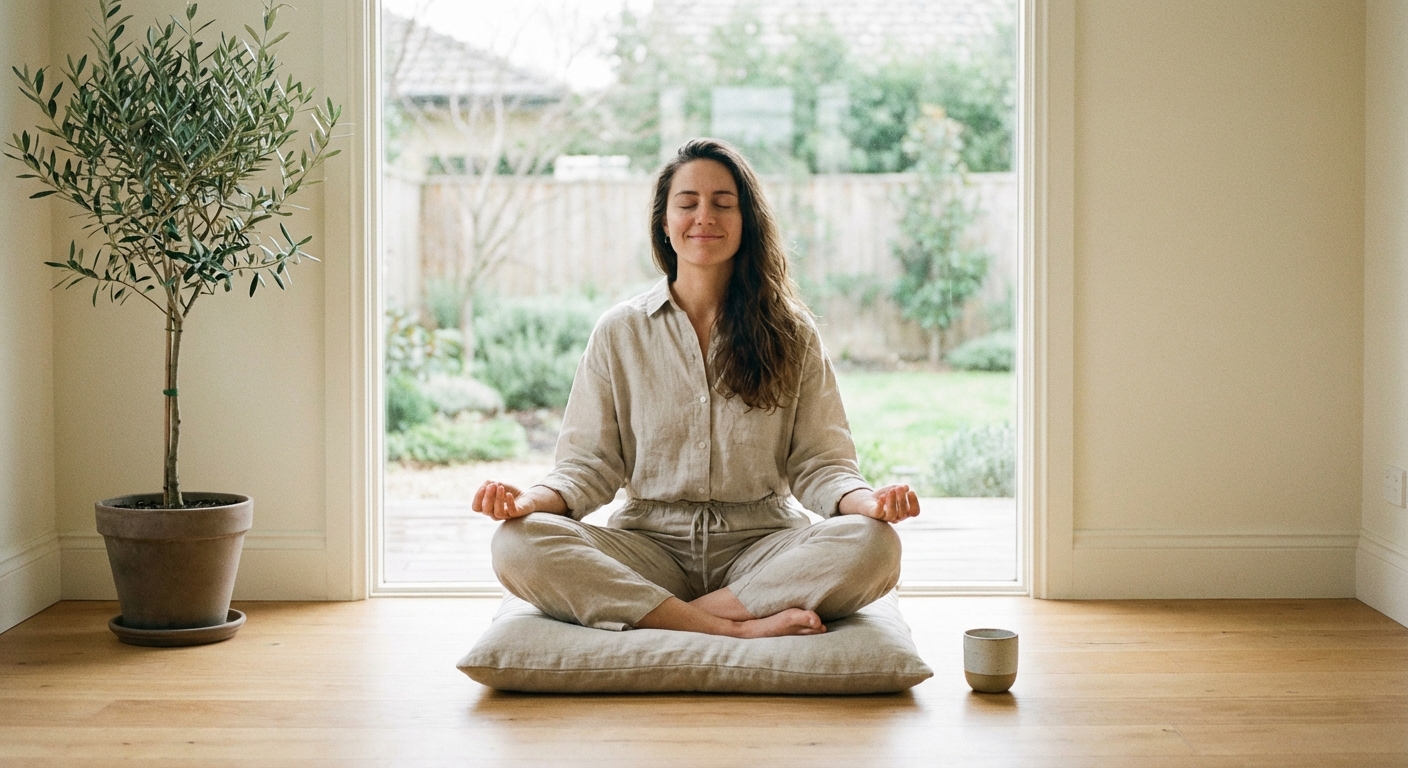
What Is Meditation for Beginners?
Meditation for beginners involves simple techniques that train your attention and awareness. Unlike advanced practices requiring years of study, entry-level methods focus on accessible breathwork and present-moment observation. You learn to observe thoughts without judgment, creating mental space between stimulus and response.
Modern mindfulness meditation strips away religious complexities, offering secular tools for mental wellness. You don’t need to sit in lotus position or chant mantras unless desired. The essence involves directing focus intentionally while maintaining gentle awareness of bodily sensations.
The Science Behind Beginner Meditation
Neuroscience research demonstrates that novice meditators show altered brain activity within eight weeks. Your amygdala—responsible for fear responses—decreases in reactivity while prefrontal cortex thickness increases. These structural changes translate to better impulse control and reduced anxiety.
Harvard Medical School studies reveal that starting to meditate lowers cortisol levels by 23% on average. Blood pressure normalizes and heart rate variability improves, indicating enhanced autonomic nervous system balance. Even brief daily sessions create cumulative physiological benefits.
Common Myths About Starting Meditation
Many beginners believe they must “empty their minds” completely. This misconception creates frustration when thoughts inevitably arise. Actually, noticing distractions and returning focus constitutes the actual exercise. Each redirection strengthens neural pathways associated with concentration.
Another myth suggests you need thirty minutes or hour-long sessions. Short daily practice outperforms sporadic lengthy attempts. Five to ten minutes provides sufficient foundation for habit formation while fitting busy schedules.
Why Should Beginners Start Meditating Now?
Initiating a meditation for beginners routine addresses modern wellness challenges effectively. Digital distractions fragment attention spans while chronic stress damages physical health. Establishing mindfulness habits creates protective factors against burnout and cognitive decline.
Immediate Benefits for Novice Practitioners
First-time meditators often report immediate calm following initial sessions. This relaxation response counteracts sympathetic nervous system activation. You experience:
- Reduced muscle tension within minutes
- Slower respiratory rates promoting parasympathetic dominance
- Decreased mental chatter and rumination
- Enhanced body awareness and interoception
- Improved sleep quality starting the first week
Long-Term Advantages of Consistent Practice
Beyond immediate relaxation, sustained beginner meditation produces transformative changes. Practitioners develop meta-awareness—the ability to observe thoughts rather than identify with them. This psychological distance prevents emotional reactivity during challenging situations.
Research indicates that six months of regular practice increases gray matter density in hippocampal regions. Your memory consolidation and learning capacities improve measurably. Additionally, telomere length preservation suggests cellular aging slows through consistent mindfulness training.
How to Start Meditating: A 5-Step Framework
Learning how to meditate for beginners requires systematic approach rather than random attempts. Follow this evidence-based methodology to establish sustainable habits:
Step 1: Create Your Meditation Environment
Select a quiet location minimizing external interruptions. This dedicated space conditions your nervous system for relaxation through environmental cues. Consider these elements:
- Comfortable seating: Use cushions, chairs, or meditation benches supporting upright posture
- Temperature control: Maintain 68-72°F to prevent discomfort distractions
- Lighting adjustment: Dim lights or use natural morning sunlight depending on preference
- Sound management: White noise machines or earplugs block unpredictable disturbances
Remove electronic devices or enable airplane mode. Physical boundaries communicate to household members that interruption should occur only for emergencies.
Step 2: Master Basic Posture Techniques
Proper alignment facilitates deep breathing and alertness. Sit with pelvis slightly tilted forward, maintaining natural spinal curves. Rest hands on thighs or knees, palms facing down for grounding or up for receptivity.
Relax shoulders away from ears while lengthening the spine. Tuck chin slightly, creating alignment between crown of head and tailbone. Physical stability supports mental stability during practice.
Step 3: Establish Breath Awareness
Close eyes gently or maintain soft focus on a fixed point. Take three deep cleansing breaths, inhaling through the nose and exhaling through the mouth. Then allow breathing to normalize without controlling it.
Direct attention to nostril sensations or abdominal movement. Notice temperature differences between inhalation and exhalation. When attention wanders—and it will—gently return to respiratory rhythms without self-criticism.
Step 4: Handle Wandering Thoughts Skillfully
Mind wandering represents normal neurological activity, not failure. When noticing distraction, label it “thinking” silently, then redirect focus to breath. This meta-cognitive awareness strengthens executive function over time.
Avoid forcing concentration through willpower. Instead, invite attention back gently, as you would guide a young child. This compassionate approach prevents meditation from becoming another source of stress.
Step 5: Build Consistency Gradually
Start with five-minute sessions daily rather than attempting lengthy sporadic practices. Set a gentle timer to eliminate clock-watching anxiety. Increase duration by two minutes weekly until reaching twenty-minute sessions.
Track consistency using habit-tracking apps or journals. Morning meditation often proves easiest to maintain before daily obligations accumulate. However, any consistent time slot provides benefits.
“The goal isn’t to control your thoughts; it’s to stop letting them control you. Beginning meditators who practice just ten minutes daily show measurable stress reduction within fourteen days.”
— Journal of Behavioral Medicine, 2026
Best Meditation Techniques for Beginners
Various styles suit different personalities and goals. Experiment with these beginner-friendly meditation methods to discover personal resonance:
Mindfulness of Breath
This foundational technique anchors attention to respiratory sensations. Count breaths from one to ten, restarting when losing track. Simple yet profound, breath awareness suits absolute beginners while offering depth for advanced practitioners.
Body Scan Meditation
Systematically move attention through body regions, noticing sensations without changing them. This practice proves particularly effective for chronic pain management and sleep preparation. Start at toes, progressing upward to crown of head.
Loving-Kindness (Metta) Practice
Direct well-wishes toward yourself and others through silent phrases like “May I be happy, may I be healthy.” This technique specifically targets emotional regulation and empathy development. Particularly beneficial for those experiencing self-criticism or social anxiety.
Guided Visualization
Follow recorded instructions imagining peaceful scenes or healing light. Guided meditation for beginners reduces uncertainty about technique correctness. Apps like Vitalizen provide structured progression from basic to advanced visualizations.
When Is the Best Time to Meditate?
Optimal timing depends on chronotype and lifestyle constraints. However, certain periods offer distinct advantages for meditation for beginners:
Morning Practice Benefits
Upon waking, your mind remains in theta wave states conducive to deep practice. Willpower reserves remain full, making habit adherence easier. Additionally, morning sessions set calm tones influencing entire days.
Try meditating before checking phones or emails. Digital hygiene preserves mental clarity before information overload begins.
Evening Sessions for Sleep Enhancement
Nighttime practice helps process daily stress and transition into restorative sleep. Avoid intense concentration techniques immediately before bed, favoring body scans or gentle breathing instead.
Midday Micro-Meditations
Three-minute breathing spaces between meetings reset nervous systems. These brief interventions prevent cumulative stress buildup during demanding workdays. Even restroom breaks provide sufficient privacy for centering exercises.
Overcoming Common Beginner Challenges
Expect obstacles when establishing new routines. Anticipating difficulties prevents discouragement:
Physical Discomfort and Restlessness
Legs falling asleep or back pain indicates need for posture adjustment. Use wall support or chairs rather than forcing floor sitting. Physical comfort enables mental focus.
Restlessness usually peaks around day four of consistent practice before subsiding. Acknowledge agitation without acting upon urges to move. This urge surfing builds impulse control transferable to other life domains.
Emotional Resistance and Boredom
Quiet sitting sometimes surfaces suppressed emotions. This phenomenon indicates practice effectiveness rather than failure. If overwhelmed, shorten sessions or try walking meditation temporarily.
Boredom suggests expectation of entertainment rather than present-moment awareness. Recommit to curiosity about subtle sensory experiences. Ordinary moments contain extraordinary depth when attention stabilizes.
Essential Resources for Beginner Meditators
While meditation for beginners requires no equipment, certain tools enhance consistency:
| Resource Type | Investment | Best For | Results Timeline |
|---|---|---|---|
| Free Breath Awareness | $0 | Absolute beginners testing interest | 2-4 weeks |
| Guided Apps (Vitalizen) | $0-$15/month | Structured learning and progress tracking | 1-3 weeks |
| Meditation Cushions | $30-$100 | Physical comfort during extended sits | Immediate |
| Group Classes | $15-$40/session | Accountability and community support | Immediate |
| Silent Retreats | $200-$2000 | Intensive immersion and habit reset | 1-2 months |
💡 Ready to begin? Download the Vitalizen App today and access guided meditations specifically designed for beginners!
How Vitalizen Supports Your Meditation Journey
While independent practice offers benefits, structured guidance accelerates skill development. Vitalizen App provides comprehensive resources tailored for meditation beginners:
- Progressive curriculum: Start with basic breath awareness, advancing through body scans and loving-kindness practices
- Personalized tracking: Monitor consistency, mood changes, and stress levels over time
- Community features: Connect with fellow beginners for motivation and question sharing
- Expert guidance: Access techniques from certified meditation teachers
- Flexible durations: Choose sessions from three to thirty minutes fitting your schedule
The platform specifically addresses beginner meditation challenges with troubleshooting guides and adaptive recommendations. Whether you struggle with physical discomfort or wandering thoughts, Vitalizen provides targeted solutions.
🎯 Start your transformation now! Visit Vitalizen.app to begin your free trial and discover why thousands of beginners choose our guided approach.
Learn more about our methodology by visiting what Vitalizen.app offers for your wellness journey.
For additional tips, explore our wellness blog featuring articles on advanced techniques and scientific research.
Frequently Asked Questions About Meditation for Beginners
How long should beginners meditate daily?
Meditation for beginners should start with five to ten minutes daily. This duration proves manageable for establishing consistency without overwhelming novices. Research indicates that brief regular practice outperforms sporadic lengthy sessions. Gradually increase by two minutes weekly until reaching twenty minutes. Quality and consistency matter more than duration—ten focused minutes daily creates more benefit than one hour-long session weekly.
Do I need to sit cross-legged to meditate properly?
No, beginner meditation requires no specific posture. While cross-legged positions work for some, chairs provide excellent alternatives. The essential element maintains upright spine alignment facilitating deep breathing. Use cushions supporting natural spinal curves or chairs with feet flat on floor. Physical comfort prevents distraction from bodily sensations during practice. What matters most is sustained attention, not leg configuration.
Is it normal for my mind to wander constantly during meditation?
Absolutely—mind wandering represents completely normal neurological activity. When learning how to meditate for beginners, noticing distractions and returning focus constitutes the actual exercise. Each redirection strengthens attention networks similar to repetitions in physical exercise. Rather than frustration, celebrate awareness of wandering as success. With consistent practice, gaps between thoughts gradually lengthen, but thinking never ceases entirely. The goal involves changing relationship with thoughts, not eliminating them.
How quickly will beginners notice meditation benefits?
Many meditation beginners report immediate calm following first sessions due to parasympathetic activation. Measurable stress reduction typically appears within two weeks of daily practice. Structural brain changes require approximately eight weeks to manifest on neuroimaging. Sleep improvements often occur within one week, while emotional regulation benefits develop over one to three months. Individual results vary based on consistency, technique, and baseline stress levels. Commit to thirty days before evaluating effectiveness.
Can beginners meditate if they have anxiety or depression?
Yes, meditation for beginners often helps manage anxiety and depression symptoms, though approach matters. Start with brief sessions (three to five minutes) to prevent overwhelm. Body scan techniques prove gentler than intense breath concentration for anxious individuals. Those with trauma histories should avoid closed-eye practices initially, using open-eye grounding techniques instead. While meditation complements mental health treatment, severe symptoms require professional support alongside practice. Many therapists now integrate mindfulness-based cognitive therapy (MBCT) into treatment plans.
Begin Your Meditation Journey Today
You now possess comprehensive knowledge for starting a transformative meditation practice. Remember that consistency outweighs perfection—five minutes daily surpasses sporadic hour-long attempts. Your brain begins rewiring itself with each session, building stress resilience and cognitive clarity.
The path to inner peace requires only your commitment to begin. Start with simple breath awareness, expand gradually, and trust the process. Ancient wisdom and modern science converge confirming meditation’s profound benefits for beginners and experts alike.
🌟 Take action now: Download Vitalizen App to access your first guided meditation and join thousands transforming their mental wellness today!
Questions about getting started? Contact our team for personalized guidance on your meditation journey.
External resources: For additional scientific research on meditation benefits, visit Harvard Health Publishing and Mayo Clinic’s Meditation Guide.