


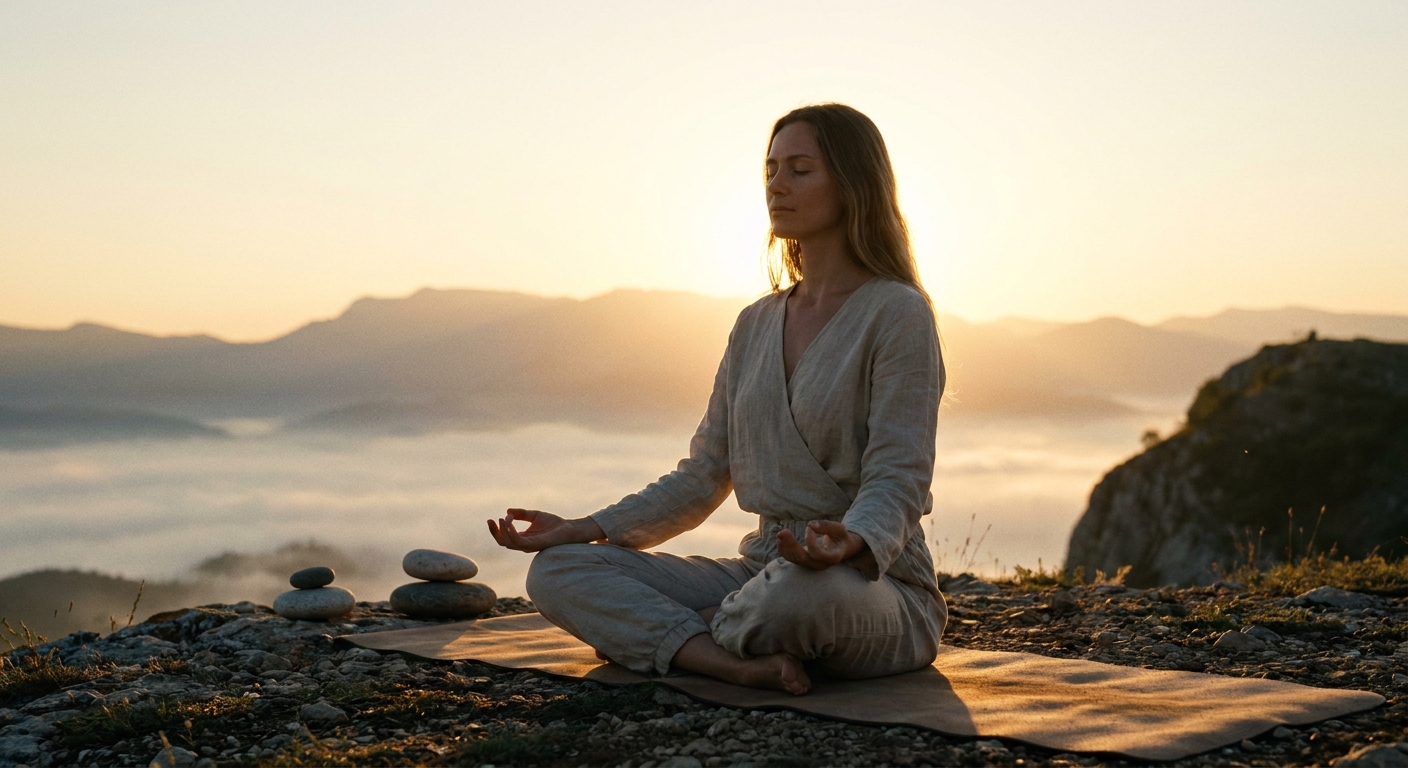
Daily Yoga & Meditation Routine: 10-Minute Mind Reset
Let’s be honest for a second. Life moves fast. Emails pile up, notifications never stop, and somewhere between the morning coffee and the evening scroll, you lose touch with yourself. If that sounds familiar, you’re not alone — and the good news? A simple daily yoga and meditation routine can bring you back.
In fact, studies show that just 10 minutes of mindful movement and breathwork can lower cortisol levels, improve cognitive function, and boost emotional resilience. Sounds like a superpower, right? That’s because it kind of is. And with the Vitalizen App | Yoga + Meditation, building that habit has never been easier.
So whether you’re a seasoned practitioner or someone who thinks namaste is just a fancy way to say goodbye, this guide is for you. Let’s build a routine that actually sticks.
What Is a Daily Yoga and Meditation Routine?
A daily yoga and meditation routine is a consistent practice that combines physical postures (asanas) with mindfulness and breathwork techniques. It doesn’t require hours of your day — even 10 minutes can create profound shifts in your mental and physical well‑being. The goal is to show up every day, connect with your body, and calm your mind, no matter how busy life gets.
This practice typically includes gentle movement to release tension, controlled breathing to activate the parasympathetic nervous system, and a short meditation to cultivate present‑moment awareness. Over time, it rewires your brain for greater resilience, focus, and emotional balance.
Why Does a Daily Yoga and Meditation Routine Change Everything?
Consistency is the secret sauce. Not intensity, not duration — just showing up, day after day. When you commit to a daily yoga practice, even for a few minutes, you train your nervous system to respond differently to stress. You sleep better. You focus longer. You react less and respond more.
“According to a 2026 study by the National Institutes of Health, just 10 minutes of daily meditation can reduce anxiety by 22% and improve sleep quality by 19%.”
Here’s what happens inside your body when you combine yoga with meditation:
- Your cortisol drops — stress hormones decrease, leaving you calmer.
- Your vagus nerve activates — this triggers the parasympathetic (rest-and-digest) system.
- Your prefrontal cortex lights up — better decision-making and emotional regulation.
- Your body releases endorphins — natural mood boosters, no prescription needed.
And the best part? You don’t need a fancy studio or expensive equipment. Just a mat, a quiet corner, and a little guidance. That’s exactly where Vitalizen.app comes in — a complete wellness companion designed to help you build lasting habits.
How to Do a 10-Minute Daily Yoga and Meditation Routine
Time is the number one excuse — and we get it. Between work, family, and the endless to-do list, finding an hour for yoga feels impossible. That’s why this 10-minute daily yoga and meditation routine exists — no fluff, no complicated poses, just pure, effective practice.
| Time (Minutes) | Activity | Key Benefit |
|---|---|---|
| 1–3 | Breathwork & Intention Setting | Activates parasympathetic nervous system, reduces stress |
| 4–6 | Gentle Spinal Flow (Cat-Cow + Seated Twist) | Improves spinal flexibility, releases tension |
| 7–8 | Forward Fold & Ragdoll | Relieves lower back and hamstring tightness |
| 9–10 | Seated Meditation | Enhances focus, emotional regulation |
Breathwork & Intention Setting (Minutes 1–3)
Start in a comfortable seated position (Sukhasana or simply on a chair). Close your eyes and take 5 deep breaths — inhale for 4 counts, hold for 4, exhale for 6. This activates your parasympathetic nervous system immediately. Then ask yourself: What do I need today? Set that as your intention.
Gentle Spinal Flow (Minutes 4–6)
Move to all fours (tabletop position). Inhale as you drop your belly and lift your gaze (Cow Pose). Exhale as you round your spine and tuck your chin (Cat Pose). Repeat 6 times. Then, come back to seated, place your right hand on your left knee, twist gently to the left. Hold for 3 breaths. Repeat on the other side.
Forward Fold & Ragdoll (Minutes 7–8)
Stand up, feet hip-width apart. Exhale and fold forward, bending your knees as much as you need. Let your head hang heavy. Hold opposite elbows and sway gently. Feel the release in your hamstrings, lower back, and neck. Stay here for 6 deep breaths.
Seated Meditation (Minutes 9–10)
Come back to a comfortable seat. Close your eyes. Place one hand on your heart, one on your belly. Breathe naturally and simply observe. When your mind wanders (and it will), gently bring it back to your breath. No judgment. That’s the practice.
That’s it — ten minutes, and you just completed a full mindfulness and yoga session. Feels good, right?
How Can You Stay Consistent with Your Practice?
Let’s address the elephant in the yoga studio: motivation fades. The first week is exciting. The second week is a test. The third week? That’s where habits are made or broken.
“I never thought 10 minutes could change my life, but after a month with Vitalizen, I’m calmer and more focused than ever.”
Here are three strategies that actually work:
- Anchor your practice to an existing habit. Brush your teeth? Roll out your mat right after. Morning coffee? Sit for meditation before the first sip.
- Use a guided app. Having someone tell you exactly what to do removes decision fatigue. The Vitalizen App offers guided yoga flows and meditation sessions designed for real people with real schedules.
- Celebrate showing up, not the outcome. Some days you’ll feel flexible and zen. Other days you’ll feel stiff and distracted. Both count. Both are progress.
Remember: consistency beats perfection. Always.
The Science Behind the Routine
A daily yoga and meditation routine is grounded in neurobiology. Research from Harvard Medical School shows that regular meditation increases gray matter density in regions linked to memory, empathy, and stress regulation. Meanwhile, American Psychological Association studies confirm that yoga reduces inflammation and improves mood.
By combining yoga’s physical benefits with meditation’s mental clarity, you create a powerful synergy. This is why a daily practice is more effective than doing either one alone.
Common Mistakes and How to Avoid Them
Even experienced practitioners slip into traps that reduce effectiveness. Here’s what to watch for:
- Overdoing it — Pushing too hard leads to burnout. Keep it gentle.
- Multitasking — Checking your phone during practice defeats the purpose.
- Skipping the breath — Without conscious breathing, it’s just exercise, not mindfulness.
- Comparing to others — Your practice is unique. Focus on your own growth.
How Much Does It Cost?
One of the biggest myths is that wellness requires a big budget. In reality, a daily yoga and meditation routine can be completely free. All you need is a quiet space and your own body. However, if you want structured guidance, apps like Vitalizen offer affordable subscriptions — often less than the price of a single studio class per month.
Here’s a quick cost comparison:
- Free: YouTube videos, self‑guided practice, outdoor sessions.
- Low‑cost: Meditation apps ($5–$15/month), community classes ($5–$10 per session).
- Premium: Private yoga instruction ($50–$150/session), luxury retreats.
With Vitalizen, you get unlimited access to guided yoga, meditation, and breathwork for a fraction of the cost of a single studio drop‑in — and you can practice anytime, anywhere.
Where to Practice
Your practice can happen anywhere you feel safe and comfortable. While a dedicated corner at home is ideal, you can also practice:
- At home: Living room, bedroom, or even a balcony — just roll out your mat.
- In nature: Parks, beaches, or your backyard add the calming effect of fresh air and natural sounds.
- At work: A quiet conference room or even your desk chair for a quick breathing break.
- While traveling: Hotel rooms, airport lounges — all you need is a few square feet.
The key is consistency, not the perfect setting. Vitalizen’s offline mode lets you download sessions so you can practice even without Wi‑Fi.
When Is the Best Time?
The best time is the time you can actually stick to. Many people prefer mornings because it sets a calm tone for the day and ensures the practice gets done before distractions arise. Others find an evening session helps them unwind and sleep better.
Experiment with both and notice how your body responds. The Vitalizen App offers short morning energizers and relaxing evening wind‑downs, so you can tailor your practice to your schedule.
Why Vitalizen Is Your Perfect Wellness Partner
There are hundreds of wellness apps out there — we know. But here’s what makes Vitalizen.app different: we don’t believe in one-size-fits-all. Whether you have 5 minutes or 45, whether you want gentle yin yoga or an energizing vinyasa, whether you prefer guided meditation or silent sessions with ambient soundscapes — we meet you where you are.
Our platform combines yoga, meditation, and breathwork into a seamless experience. No ads. No fluff. Just real guidance from certified instructors and mindfulness experts.
Thousands of users have already transformed their mornings — and their lives. Start your journey today and discover what a daily practice can do for you.
Frequently Asked Questions
Can I do yoga and meditation every day?
Absolutely. In fact, daily practice is recommended for best results. Even 5 to 10 minutes of daily yoga and meditation can significantly reduce stress, improve flexibility, and enhance mental clarity. Just listen to your body — some days you might want active movement, other days gentle stretching or restorative poses.
Do I need to be flexible to start yoga?
Not at all. Flexibility is a result of yoga, not a requirement. Yoga is about connecting your breath with movement and building awareness in your body. Every pose can be modified. Our beginner-friendly sessions at Vitalizen are designed for all levels.
How long does it take to see results from daily meditation?
Many people report feeling calmer and more focused after just one week of consistent practice. Neurological changes — like increased gray matter in areas related to memory and emotional regulation — can be observed after 8 weeks of regular meditation. The key is consistency, not duration.
Can Vitalizen App replace a live yoga class?
For daily practice, habit-building, and convenience, yes. Our guided sessions are created by certified instructors and offer a structured experience similar to a live class — with the flexibility to pause, repeat, and practice at your own pace. If you enjoy in-person classes, consider Vitalizen as a complement to deepen your daily practice. Check our blog for more tips and guidance.
What if I miss a day of my routine?
Missing a day is completely normal — and it doesn’t erase your progress. The most important thing is to resume the next day without guilt. Think of your practice like brushing your teeth: if you forget one morning, you don’t give up on oral hygiene forever. Just pick up where you left off.
Your Practice Awaits
You’ve read the science. You’ve seen the routine. Now it’s time to experience it. Whether you have 5 minutes or 45, there’s a session waiting for you on Vitalizen.
No judgment. No pressure. Just you, your breath, and a community that believes wellness should be accessible to everyone.
Join thousands already transforming their daily lives.
Loved this guide? Share it with someone who needs a little more calm in their life. And drop a comment below — what does your morning routine look like right now? We’d love to hear from you.