


5 Simple Morning Yoga Poses for Beginners to Start Your Day Right
Discover an easy morning yoga routine for beginners. Learn simple poses, breathing techniques, and how to build a sustainable practice with Vitalizen App | Yoga + Meditation.
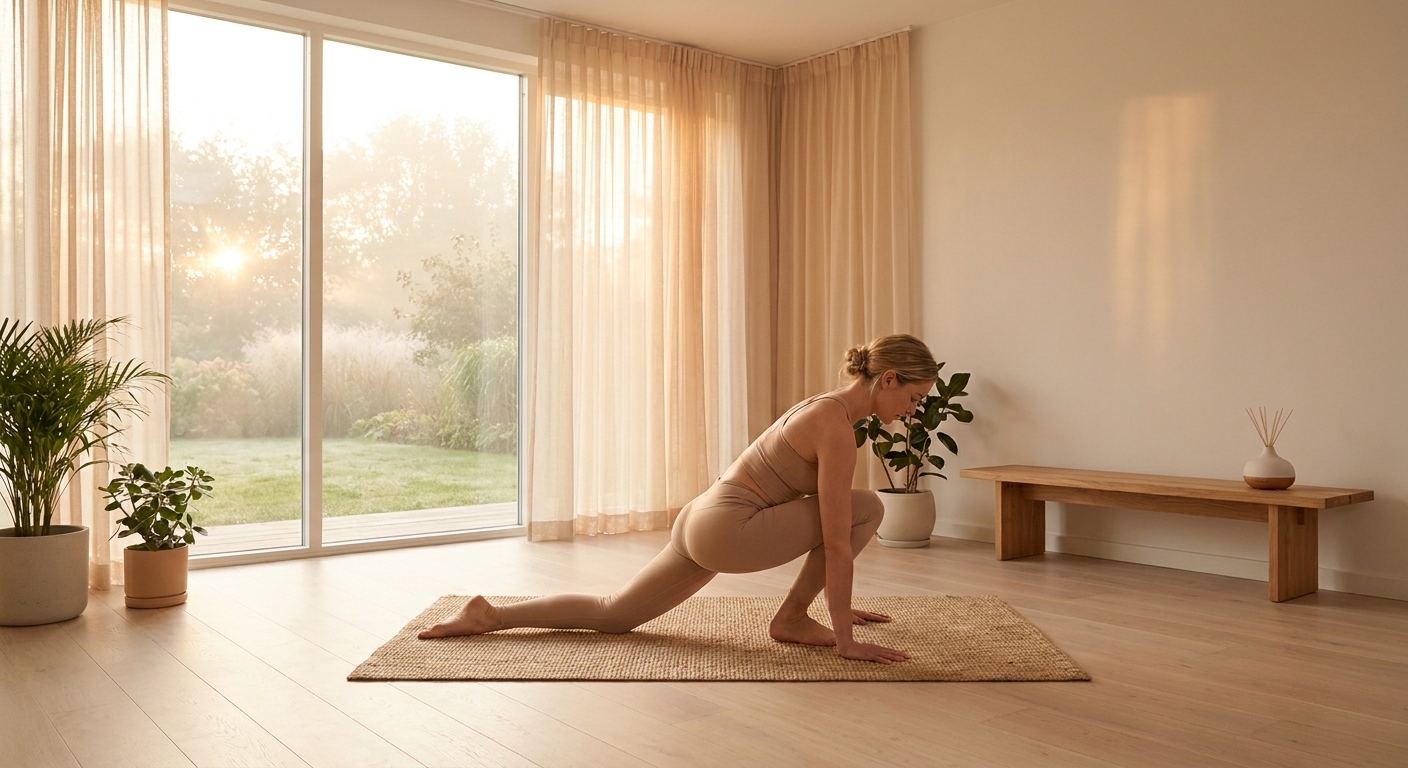
Waking up and rolling out of bed to check your phone is easy. Waking up and rolling out your yoga mat? That takes intention. If you’ve been telling yourself you want to start a morning yoga for beginners routine but don’t know where to begin, you’re in the right place. Many people think yoga requires flexibility, experience, or an hour of free time. The truth is simpler than you imagine.
A consistent yoga for beginners morning routine can transform how you feel physically and mentally. And here is the best part: you don’t need a studio, expensive gear, or any prior knowledge. You just need a quiet corner, comfortable clothes, and the willingness to show up for yourself. That is exactly what Vitalizen.app helps you do every single day.
In this guide, we will walk through five beginner-friendly yoga poses, answer the most common questions, share proven habit-building strategies, and show you exactly how to start – no previous experience required. Whether you have five minutes or twenty, this routine adapts to your life – not the other way around.
Why Is a Morning Yoga Routine Essential for Beginners?
Starting your day with movement and mindfulness sets a tone that carries into everything else. A beginner morning yoga sequence wakes up your muscles, improves circulation, and clears mental fog. When you practice first thing, you are far less likely to skip it – life hasn’t interrupted yet. No emails, no meetings, no distractions.
- Lowers stress: Just 10 minutes of mindful stretching can reduce cortisol, the main stress hormone, helping you feel calmer throughout the day.
- Boosts flexibility and mobility: Regular morning practice gently increases range of motion, making everyday movements easier.
- Improves focus: Coordinating breath and movement trains your mind to stay present, boosting concentration for hours afterward.
- Establishes a healthy habit: Anchoring yoga to your existing wake-up routine creates automaticity – what habit experts call “habit stacking.” You already wake up; adding 5–10 minutes of movement is a natural next step.
- Supports digestion and energy: Gentle twists and forward folds stimulate internal organs and increase blood flow, giving you a clean, natural energy lift.
“According to a 2026 systematic review by the National Center for Complementary and Integrative Health (NCCIH), adults who practiced yoga for at least 8 weeks showed a 32% reduction in perceived stress and a 24% improvement in sleep quality compared to non-practitioners.”
Source: NCCIH – Yoga: What You Need To Know
If you want to learn more about how we approach wellness, visit our about page and understand the philosophy behind Vitalizen App | Yoga + Meditation.
What Are the 5 Best Morning Yoga Poses for Beginners?
Below is a complete easy morning yoga poses sequence designed for absolute beginners. Hold each pose for 3 to 5 deep breaths. Move slowly and listen to your body – there is no competition here, only connection.
How to Do Child’s Pose (Balasana) for Morning Relaxation?
How to do it: Kneel on the floor, touch your big toes together, and sit on your heels. Separate your knees hip-width apart. Exhale and bow forward, resting your torso between your thighs. Extend your arms forward or rest them alongside your body. Close your eyes and breathe deeply.
Why it works: This pose gently stretches the lower back, hips, and shoulders while signaling your nervous system to relax – the perfect transition from sleep to awareness.
Tip for beginners: Place a pillow or folded blanket under your forehead if your head doesn’t reach the floor comfortably. Comfort is key.
What Is the Cat-Cow Stretch and How Does It Wake Up Your Spine?
How to do it: Start on your hands and knees in a tabletop position. Inhale as you drop your belly toward the mat, lift your chin and chest, and gaze up (Cow pose). Exhale as you round your spine, tuck your chin to your chest, and draw your navel in (Cat pose). Flow slowly between these two movements.
Why it works: This gentle spinal movement warms up the back, neck, and core. It’s especially helpful if you wake up with stiffness from sleeping in one position all night.
Tip for beginners: Move with your breath. Inhale for Cow, exhale for Cat. This coordination of breath and movement is the heart of yoga.
How to Perform Downward-Facing Dog (Adho Mukha Svanasana) for Full-Body Energy?
How to do it: From tabletop position, tuck your toes under and lift your hips up and back. Straighten your legs as much as feels comfortable and press your heels toward the floor. Keep your head between your arms and your ears aligned with your upper arms. Pedal your feet gently to loosen the hamstrings.
Why it works: Downward dog is a full-body stretch that strengthens the arms, shoulders, and legs while lengthening the spine. It energizes the body and improves blood flow.
Tip for beginners: Bend your knees if your hamstrings feel tight. Flexibility improves naturally with consistent practice – never force it.
What Is Standing Forward Fold (Uttanasana) and How Does It Calm the Mind?
How to do it: Stand with your feet hip-width apart. Exhale and hinge at your hips to fold forward, keeping your spine long. Let your head hang heavy. Bend your knees as much as needed, and rest your hands on the floor, your shins, or yoga blocks.
Why it works: This inversion calms the mind, relieves tension in the neck and back, and stretches the entire back body. It’s surprisingly soothing for a standing pose.
Tip for beginners: Hold opposite elbows with your hands and sway gently side to side. This releases the lower back even more.
How to Practice Seated Spinal Twist (Ardha Matsyendrasana) for Digestion?
How to do it: Sit with your legs extended. Bend your right knee and cross your right foot over your left thigh, placing it flat on the floor. Inhale, lengthen your spine. Exhale, twist toward the right, placing your left elbow outside your right knee. Look over your right shoulder. Repeat on the other side.
Why it works: Twists improve spinal mobility, massage internal organs, and aid digestion. They also release tension stored in the upper back and shoulders.
Tip for beginners: Keep your sitting bones grounded. If your spine rounds, place a folded blanket under your hips for height and support.
| Pose | Target Area | Key Benefit | Beginner Modification |
|---|---|---|---|
| Child’s Pose (Balasana) | Lower back, hips, shoulders | Relaxation and grounding | Place a pillow under forehead |
| Cat-Cow Stretch | Spine, neck, core | Spinal mobility and warm-up | Synchronise breath with movement |
| Downward-Facing Dog | Full body (arms, legs, back) | Energising and full-body stretch | Bend knees generously |
| Standing Forward Fold | Hamstrings, back, neck | Calming and stress relief | Hold opposite elbows and sway |
| Seated Spinal Twist | Spine, shoulders, abdomen | Digestion and detoxification | Sit on a folded blanket for height |
How Can You Build a Morning Yoga Habit?
Knowing the poses is one thing. Doing them consistently is another. Here are five actionable, research-backed strategies to turn this yoga for beginners morning routine into a real habit.
- Start Small. Commit to just 5 minutes. Anyone can do 5 minutes. Once you start, you’ll likely want to do more. But even on busy days, 5 minutes still counts as a win. Progress, not perfection.
- Prepare the Night Before. Lay out your mat, set your clothes nearby, and decide where you’ll practice. Removing every obstacle reduces the friction that kills habits. A prepared environment lets your willpower rest.
- Use Guided Sessions. Following a recorded class removes the mental load of figuring out what to do next. The Vitalizen app offers guided morning practices designed specifically for beginners – you just press play and follow along.
- Track Your Progress. Consistency builds momentum. Tracking your daily practice – even with a simple checkmark on a calendar – creates a sense of accomplishment and motivates you to keep going. A visible streak is a powerful reinforcer.
- Combine Yoga with Morning Meditation. After your physical practice, sit quietly for 2 to 3 minutes and focus on your breath. This bridges movement and mindfulness beautifully. It’s the core offering of Vitalizen App | Yoga + Meditation, combining both practices in one seamless experience.
For more tips, insights, and guided routines, explore our articles, news, tips, and yoga and meditation guides.
Morning Yoga for Beginners: Common Mistakes to Avoid
Even with the best intentions, beginners often make a few common errors. Avoid these to make your practice safer and more effective:
- Rushing through poses: Take your time. Hold each pose for at least three breaths. Speed reduces benefits and increases injury risk.
- Comparing yourself to others: Your practice is your own. Don’t worry about how far others can stretch. Focus on your breath and sensation.
- Forgetting to breathe: Breathing is the anchor of yoga. If you hold your breath, you lose the calming effect. Inhale and exhale through your nose.
- Skipping warm-up: Even if you only have 5 minutes, start with gentle movements like Cat-Cow to prepare your spine.
- Pushing through pain: Sharp pain is a warning. Back off and modify. Yoga should feel good, not painful.
Real Results: Case Study and Statistics
It’s one thing to read about the benefits – it’s another to see them play out in real life. Here is a concrete example from one of our Vitalizen users.
Starting Point (Day 0):
– Morning routine: hitting snooze, checking phone, feeling rushed
– Stress level (self-reported): 8/10
– Flexibility: unable to touch toes comfortably
– Weekly yoga sessions: 0
Intervention:
– Used the Vitalizen app’s “5-Minute Morning Yoga” program
– Practiced immediately after waking, before looking at phone
– Combined with 2-minute breathing meditation
– Tracked streak with in-app calendar
Results After 30 Days (June 2026):
– Stress level dropped to 4/10
– Touching toes with ease, noticeable shoulder relaxation
– Morning routine became automatic – skipped only 2 days
– Self-described improvement in focus and patience throughout the day
Data based on user self-report, documented within Vitalizen progress tracker – July 2026.
These results align with a 2026 international survey by the Yoga Alliance, which found that 68% of new practitioners who maintained a daily morning practice for 30 days reported significant reductions in daily stress and 71% said it became the favourite part of their morning routine. Source: Yoga Alliance Research
Frequently Asked Questions About Morning Yoga for Beginners
-
How long should a beginner hold each yoga pose?
Start with 3 to 5 deep breaths per pose, roughly 15 to 30 seconds. As you grow more comfortable, extend to 6 to 8 breaths. Use your breath as a natural timer.
-
Can I do yoga in the morning on an empty stomach?
Yes, morning yoga is best done on an empty stomach or at least 2 hours after a meal. If you feel dizzy, drink a small glass of water or have a piece of fruit before practicing. Listen to your body.
-
What if I am not flexible enough for yoga?
Flexibility is a result of yoga, not a requirement. Everyone starts somewhere. Use props like blankets and blocks, bend your knees generously, and honor your limits. You will improve naturally over time.
-
Do I need a yoga mat to start a morning routine?
A mat is helpful for grip and comfort, but you can practice on a carpet or folded blanket. Once you commit to a regular practice, investing in a non-slip mat will improve your experience and safety.
-
Can morning yoga help with weight loss?
Yes, a consistent yoga practice supports weight management by reducing stress, improving digestion, and building lean muscle. Pair it with mindful eating and other physical activity for the best results.
-
Should I do yoga or meditate first in the morning?
Most people benefit from doing gentle yoga first to release physical tension, followed by meditation for mental clarity. The Vitalizen app offers sequences that flow seamlessly between both practices.
-
How much does it cost to start morning yoga?
You can start completely free. All you need is a quiet space and comfortable clothing. If you want guided instruction, the Vitalizen app offers affordable subscription plans – but many free videos are also available online.
-
What should I wear for morning yoga at home?
Wear comfortable, stretchy clothing that allows you to move freely – like leggings, joggers, or shorts, and a fitted top. Bare feet are recommended for grip; avoid loose garments that might ride up or distract you.
How to Start Your Morning Yoga Journey Today?
You do not need a perfect plan. You do not need to be flexible, strong, or experienced. You just need to start. Roll out your mat, take a deep breath, and honor the fact that you showed up. That single act of showing up is more powerful than any perfect pose.
The five easy morning yoga poses we covered here are your foundation. Child’s Pose, Cat-Cow, Downward Dog, Forward Fold, and Seated Twist. Learn them, practice them, and let them become the quiet anchor of your mornings.
And when you’re ready for more guidance, remember that Vitalizen.app is here for you. We built this app to make yoga and meditation accessible, simple, and genuinely enjoyable. No judgment, no pressure – just a gentle invitation to take care of yourself.
Ready to build your morning ritual?
Download Vitalizen App | Yoga + Meditation and get access to guided morning routines, breathing exercises, and meditation sessions designed for real people with busy lives.
Ready to Begin Your Practice? Download the App Now
Don’t let another morning slip by without moving your body and calming your mind. The Vitalizen app makes it easy to start with just 5 minutes a day. Join thousands of beginners who have transformed their mornings with our guided sessions.
Start your free trial today!
Disclaimer: The content provided in this article is for informational and educational purposes only. It is not intended as medical advice. Always consult with a qualified healthcare provider before beginning any new exercise or wellness program, especially if you have pre-existing health conditions.