


Morning Yoga & Meditation: Start Your Day With Energy and Peace
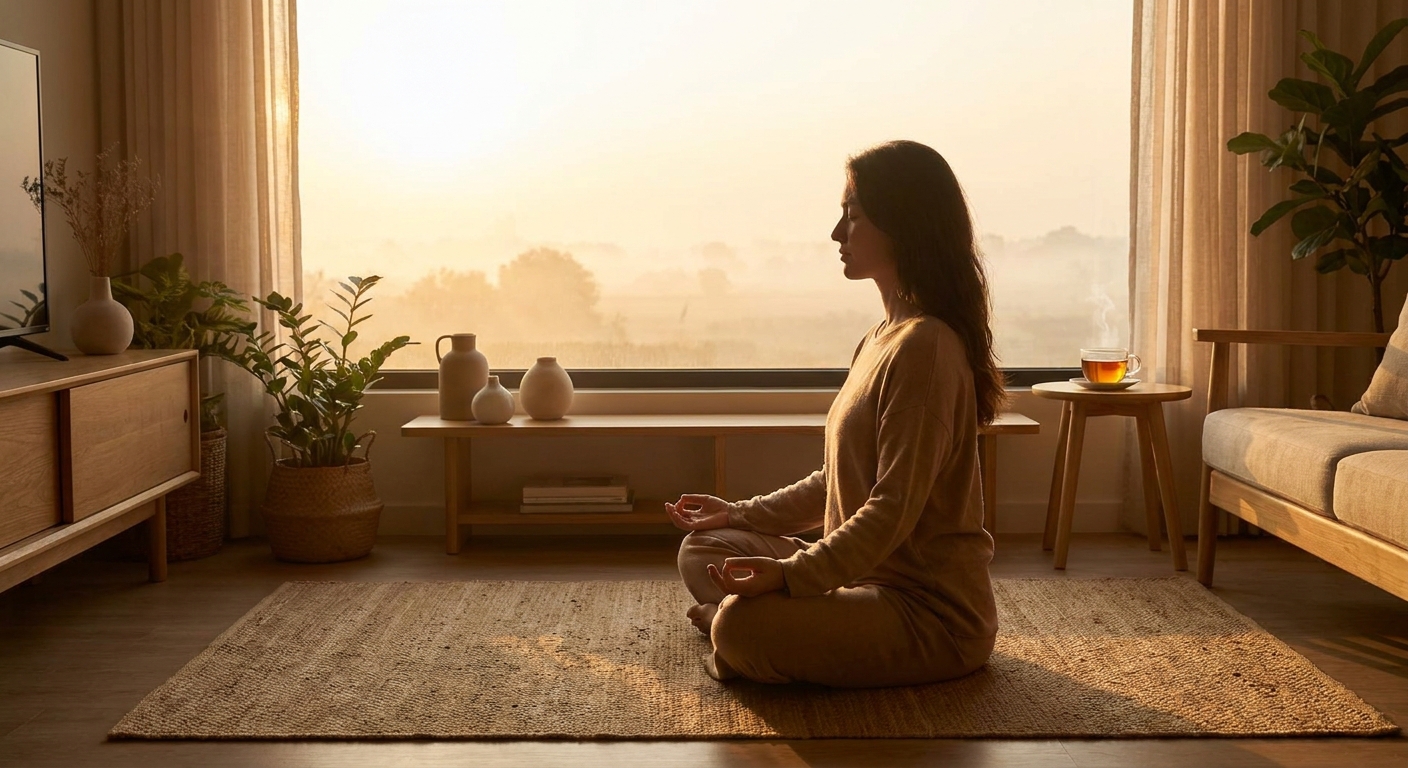
Waking up and immediately checking your phone. Scrolling through emails before your feet even touch the floor. Rushing through breakfast and feeling like you are already behind before the day truly begins. Sound familiar?
If you are looking for a way to replace that morning chaos with clarity, calm, and lasting energy, you have come to the right place. In this guide, we will walk you through everything you need to know about combining morning yoga and meditation to transform your daily routine. Whether you are a complete beginner or someone looking to deepen your practice, these insights will help you build a sustainable habit that actually sticks.
By the end of this article, you will understand why these two practices work so well together, learn step-by-step poses and breathing techniques, and discover how Vitalizen App | Yoga + Meditation can support your journey every single day.
What is a Morning Yoga and Meditation Practice?
A morning yoga and meditation practice is a combined routine of physical postures and mindfulness techniques performed shortly after waking. This practice involves gentle movement to awaken the body and focused breathing to center the mind, aiming to establish a calm, intentional tone for the day ahead.
Main Characteristics of a Morning Practice:
- Gentle Activation: Uses low-impact poses to increase blood flow and release overnight stiffness without straining the body.
- Mental Clarity: Employs breathwork and meditation to reduce mental chatter and improve focus.
- Consistent Routine: Prioritizes a short, daily habit over occasional long sessions to build lasting resilience.
How a Morning Practice Works:
- Step 1: Physical Release. You perform a sequence of yoga poses to release physical tension and activate your parasympathetic nervous system, moving your body out of a stressed state.
- Step 2: Breath Regulation. You transition into controlled breathing, which lowers cortisol levels and signals safety to your brain, creating a bridge between movement and stillness.
- Step 3: Mindful Stillness. You sit in meditation to observe your thoughts without judgment, solidifying a state of balanced awareness that enhances emotional regulation and productivity for the rest of the day.
Why is a Morning Yoga and Meditation Routine Important?
Both yoga and meditation are powerful practices on their own. However, when you combine them during the first moments of your day, something remarkable happens. Yoga prepares your body by releasing physical tension, activating your muscles, and improving blood flow. Meditation then settles your mind, helping you set a calm and focused intention for the hours ahead.
Scientific research supports this combination. A study published in the Journal of Clinical Psychology found that participants who practiced both yoga and meditation reported significantly lower stress levels and improved emotional regulation compared to those who practiced only one of the two. On top of that, morning practitioners often experience better sleep quality and higher productivity throughout the day.
“Participants who practiced both yoga and meditation reported significantly lower stress levels and improved emotional regulation compared to those who practiced only one of the two.”
— Journal of Clinical Psychology
In short, starting your day with movement and mindfulness creates a ripple effect that touches every area of your life. And the best part? You only need 10 to 20 minutes to feel the benefits.
How Does Morning Mindfulness Affect Your Brain?
Cortisol levels are naturally higher in the early morning. This is your body’s way of helping you wake up. However, when stress is already elevated, that cortisol spike can leave you feeling anxious and overwhelmed before your day even begins.
Morning yoga helps regulate cortisol production by activating the parasympathetic nervous system — also known as the “rest and digest” mode. When you pair this with meditation, your brain begins producing more alpha waves, which are associated with relaxation and creativity. Consequently, you start your day not in fight-or-flight mode, but in a state of balanced awareness.
Furthermore, consistent morning practice has been linked to improved gray matter density in the brain, better focus, and even lower blood pressure. These are not just temporary benefits; they compound over time, making you healthier and more resilient in the long run.
| Biological System | Effect of Yoga | Effect of Meditation |
|---|---|---|
| Nervous System | Activates parasympathetic response | Increases alpha brain waves |
| Endocrine System | Regulates cortisol production | Lowers adrenaline levels |
| Cardiovascular System | Improves blood circulation | Reduces blood pressure |
| Brain Structure | Enhances proprioception | Increases gray matter density |
How to Start a 5-Minute Morning Yoga Sequence for Beginners
You do not need to be flexible or experienced to start. This simple sequence is designed for all levels and can be done right next to your bed.
1. Cat-Cow Stretch (Marjaryasana-Bitilasana)
Start on your hands and knees. Inhale, drop your belly, lift your chest and tailbone (Cow). Exhale, round your spine, tuck your chin (Cat). Repeat 5 times. This gently wakes up your spine and releases overnight stiffness.
2. Downward-Facing Dog (Adho Mukha Svanasana)
From all fours, lift your hips upward, straightening your legs as much as comfortable. Pedal your feet gently. Hold for 5 breaths. This pose increases blood flow to the brain and stretches your entire back body.
3. Standing Forward Fold (Uttanasana)
Stand up, fold forward from your hips, and let your head hang heavy. Bend your knees if needed. Stay for 5 breaths. This calms the nervous system and releases tension in the hamstrings and lower back.
4. Mountain Pose (Tadasana)
Stand tall with your feet hip-width apart. Press your feet into the floor, engage your thighs, and lengthen your spine. Arms at your sides or hands at heart center. Hold for 5 breaths. This pose builds body awareness and grounding.
5. Legs-Up-The-Wall Pose (Viparita Karani)
Lie on your back with your legs resting up against a wall. Close your eyes and stay for 2 to 5 minutes. This restorative pose reduces anxiety and promotes deep relaxation.
Once you finish these poses, you will already feel a shift in your body. Now it is time to sit still and meditate.
How to Meditate Right After Your Yoga Practice
After moving your body, your mind is naturally quieter. That is why meditating right after yoga feels so effortless. Here is a simple technique to try:
- Sit comfortably on a cushion or chair with your spine upright.
- Close your eyes and take three deep breaths, inhaling through the nose and exhaling through the mouth.
- Bring your attention to your natural breath. Notice the sensation of air entering and leaving your nostrils.
- When your mind wanders — and it will — gently bring it back to the breath without judgment.
- Start with 3 minutes and gradually increase to 10 or 15 minutes over time.
This breath-focused meditation, also known as mindfulness of breath, is one of the most effective techniques for reducing anxiety and improving concentration. Moreover, it is completely free and requires no special equipment.
What Are Common Challenges When Starting a Morning Routine?
Let us be honest: building a new habit is not always easy. Here are the most common obstacles people face when starting a morning yoga and meditation routine — and how to overcome them.
“I am not a morning person.”
Start small. Set your alarm just 10 minutes earlier. Place your yoga mat next to your bed the night before. Often, the hardest part is simply getting started. Once you move your body, your energy will follow.
“My mind is too busy to meditate.”
That is exactly why you need meditation. A busy mind is not a failure; it is the starting point. Instead of trying to stop your thoughts, observe them like clouds passing through the sky. They come, they go, and you remain.
“I don’t have enough time.”
Quality matters more than quantity. A 5-minute yoga flow followed by 3 minutes of meditation is infinitely better than doing nothing. Once you feel the benefits, you will naturally want to make more time.
How Can Vitalizen App Support Your Morning Practice?
Building a consistent practice becomes much easier when you have the right tools and guidance. Vitalizen App | Yoga + Meditation was designed specifically for people like you — individuals who want to bring more balance, health, and peace into their daily lives.
With guided yoga sessions for all levels, meditation tracks ranging from 3 to 30 minutes, and a personalized daily plan, Vitalizen helps you stay consistent without feeling overwhelmed. The app also includes breathing exercises, sleep stories, and progress tracking to keep you motivated.
Furthermore, you can start completely free. No commitments, no complicated setup. Just download, open, and begin your journey toward a calmer, stronger, and more centered version of yourself.
👉 Begin your wellness journey today with Vitalizen
What Are the Best Tips for Staying Consistent Long-Term?
Consistency is the secret ingredient to transformation. Here are some proven strategies to keep your morning practice alive:
- Stack your habit. Attach your practice to an existing habit, such as brushing your teeth. Right after brushing, unroll your mat.
- Track your progress. Use a simple journal or the Vitalizen app to check off each day. The visual progress is highly motivating.
- Create a calming environment. Dim the lights, light a candle, or play soft background music. Your brain will start associating that environment with relaxation.
- Be kind to yourself. Missed a day? No problem. Simply start again tomorrow. Consistency does not mean perfection.
- Join a community. Practicing alone is beautiful, but practicing with others — even virtually — boosts accountability. Learn more about the Vitalizen community here.
Where Can You Find Authoritative Resources to Deepen Your Practice?
If you want to explore further, here are some trusted external resources recommended by yoga and meditation experts worldwide:
- Research on the effects of yoga and meditation on stress reduction (NCBI)
- Mindful.org — Guided meditations and mindfulness articles
- Yoga Journal — Pose guides, sequences, and wellness tips
Frequently Asked Questions About Morning Yoga and Meditation
Can I do yoga and meditation on an empty stomach?
Yes, it is actually recommended to practice yoga and meditation on an empty or very light stomach. Morning is the ideal time because you have not eaten yet. If you are hungry, have a small piece of fruit or a warm glass of water before starting, and save your main breakfast for after practice.
How long should my morning yoga and meditation routine be?
For beginners, 10 to 15 minutes total is perfect — 5 to 7 minutes of gentle yoga followed by 3 to 5 minutes of meditation. As you build consistency, you can extend your practice to 20, 30, or even 45 minutes. The key is to focus on quality rather than duration.
Do I need any special equipment to practice?
Not at all. A yoga mat is helpful but not mandatory — you can practice on a carpet or towel. Wear comfortable clothing that allows movement. For meditation, a cushion or chair works perfectly. The only essential ingredient is your willingness to show up.
What is the best time to practice yoga and meditation in the morning?
Ideally, practice right after waking up, before or after using the bathroom. The exact time matters less than the act of doing it consistently. Some prefer sunrise for its symbolic fresh start, while others practice right before their morning shower. Find what works for your schedule and stick with it.
Can Vitalizen App help me if I am a complete beginner?
Absolutely. Vitalizen App was built for all experience levels, including complete beginners. The app offers step-by-step guided sessions, beginner-friendly yoga flows, and short meditation tracks designed to help you build confidence and consistency. Start your free trial here.
Start Tomorrow Morning — Your Future Self Will Thank You
Transforming your mornings does not require a radical lifestyle overhaul. It simply requires a willingness to try something new — to roll out your mat, take a deep breath, and give yourself 10 minutes of presence before the world demands your attention.
Whether you practice the 5-minute yoga sequence shared above, sit in silence for a few breaths, or follow a guided session on Vitalizen App, you are already moving in the right direction. Every small step builds momentum, and momentum leads to lasting change.
Here is a simple challenge for you: Tomorrow morning, try the 5-minute yoga sequence plus 3 minutes of meditation. Just once. Notice how you feel afterward. Then, if you enjoyed it, come back the next day and do it again.
And if you want expert guidance, a supportive community, and a personalized practice that grows with you, join Vitalizen App today — your journey toward a more balanced, peaceful, and energized life starts now.
For more articles, tips, and wellness guides, visit our Yoga and Meditation Blog. Have questions or feedback? We would love to hear from you.