


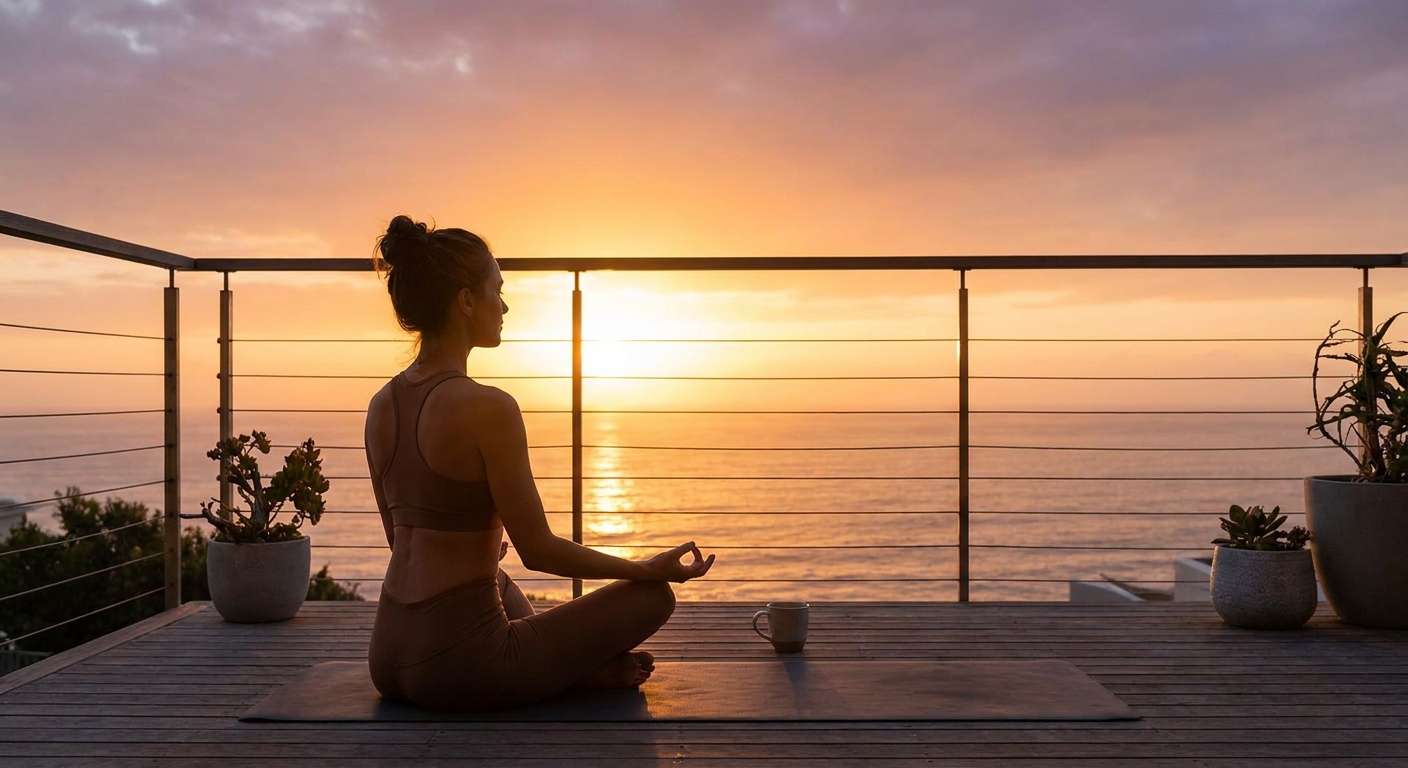
Morning Yoga & Meditation: Start Your Day with Mindfulness
Discover how a simple morning routine combining yoga and meditation can transform your mental clarity, reduce stress, and boost your overall wellness. Begin your journey with Vitalizen App today.
Waking up feeling scattered, anxious, or already tired before the day even begins? You are not alone. In today’s fast‑paced world, most of us start our mornings glued to our phones, checking emails, and scrolling through social media before our feet even hit the floor. However, what if you could replace that chaos with calm?
A consistent morning yoga and meditation routine is scientifically proven to rewire your brain for focus, resilience, and inner peace. Moreover, with the right guidance — like the one offered by Vitalizen App | Yoga + Meditation — building this habit has never been easier or more accessible.
In this article, we will explore the transformative power of combining yoga and meditation every morning. You will learn practical techniques, understand the science behind them, and discover how to create a personalized routine that fits your lifestyle. Ready to transform your mornings? Let’s dive in.
📌 Quick Wins: Did you know that just 10 minutes of morning meditation can lower cortisol levels by up to 20%? Let us show you how.
Why Is a Morning Yoga and Meditation Routine Important?
Your morning sets the tone for the entire day. When you begin with intention, clarity, and a calm nervous system, you are far more equipped to handle challenges, make better decisions, and maintain emotional balance. Here is why combining yoga and meditation in the morning is a game-changer:
- Reduces stress hormones: Morning meditation lowers cortisol and adrenaline, helping you start the day grounded rather than reactive.
- Improves focus and concentration: Yoga postures increase blood flow to the brain while meditation trains your attention muscle.
- Boosts mood and emotional resilience: Both practices stimulate the release of serotonin and dopamine — your natural “feel-good” chemicals.
- Enhances physical flexibility and strength: A gentle morning yoga sequence wakes up your muscles and joints, preventing stiffness throughout the day.
- Creates a sacred “me time” ritual: Before the demands of work, family, and social life kick in, you claim a moment just for yourself.
According to a study published in the Journal of Behavioral Medicine, participants who practiced mindfulness meditation for just 15 minutes daily over eight weeks reported a 38% reduction in anxiety symptoms. Combine that with yoga, and the benefits compound exponentially.
Moreover, a consistent morning practice helps regulate your circadian rhythm. The combination of gentle movement and breath awareness signals your body that it is time to wake up, increasing energy without relying on caffeine. Over time, this leads to better sleep quality and more natural energy throughout the day.
| Benefit | How Yoga & Meditation Help | Supporting Evidence |
|---|---|---|
| Stress Reduction | Morning meditation lowers cortisol | 20% cortisol drop with 10 min practice |
| Improved Focus | Yoga increases brain blood flow | Neuroimaging studies (Harvard) |
| Emotional Resilience | Combined practice boosts serotonin/dopamine | 38% anxiety reduction (J Behav Med) |
What Is the Science Behind Yoga and Meditation?
Still wondering whether this is “just another wellness trend”? Let us look at the hard data. Neuroimaging studies conducted at Harvard Medical School revealed that consistent meditation practice increases gray matter density in the hippocampus — the brain region associated with memory and learning — while shrinking the amygdala, which governs fear and stress responses.
Similarly, yoga has been shown to regulate the autonomic nervous system. A 2020 meta-analysis published in Frontiers in Psychiatry concluded that yoga significantly reduces symptoms of depression, anxiety, and PTSD. When practiced together, yoga and meditation create a powerful synergy that heals both body and mind.
Moreover, these practices improve your vagal tone — the activity of the vagus nerve, which controls your parasympathetic nervous system (rest and digest). Higher vagal tone means faster recovery from stress, better heart rate variability, and improved emotional regulation. Think of it as upgrading your internal “calm response” system.
How Can You Build Your Perfect Morning Yoga & Meditation Routine?
Building a sustainable morning practice does not require hours of commitment. In fact, consistency matters far more than duration. Here is a step-by-step guide to creating a routine that sticks:
1. Start Small — 10 Minutes Is Enough
If you are new to yoga and meditation, aiming for a 60-minute session is a recipe for burnout. Instead, begin with a 10-minute routine: 5 minutes of gentle yoga stretches followed by 5 minutes of seated breath awareness. As you build momentum, gradually increase the time. The Vitalizen App offers guided sessions as short as 5 minutes, making it incredibly easy to start right away.
2. Create a Dedicated Space
Your environment profoundly influences your practice. Find a quiet corner in your home, even if it is just a small area by the window. Add a cushion, a candle, or a plant. This space will become your sanctuary — a visual trigger that signals your brain: “It is time to unwind and reconnect.”
3. Follow a Simple Sequence
Here is a beginner-friendly morning sequence you can try tomorrow:
- Child’s Pose (Balasana): 1 minute — breathe deeply and set your intention.
- Cat-Cow Stretch (Marjaryasana-Bitilasana): 2 minutes — warm up your spine gently.
- Downward-Facing Dog (Adho Mukha Svanasana): 2 minutes — stretch your entire back body.
- Standing Forward Fold (Uttanasana): 1 minute — release tension in your hamstrings and neck.
- Seated Meditation: 4 minutes — close your eyes, focus on your breath, and observe your thoughts without judgment.
For a guided version of this exact sequence with real-time audio cues, check out the morning wellness programs inside the Vitalizen App.
4. Use Technology Wisely
Your smartphone can be your greatest ally — or your biggest distraction. Instead of scrolling through Instagram first thing in the morning, open the Vitalizen App | Yoga + Meditation. With hundreds of curated sessions, progress tracking, and personalized recommendations, the app turns your phone into a wellness tool rather than a time thief.
💡 Pro Tip: Set your phone to “Do Not Disturb” mode during your practice. Those emails can wait 15 minutes. You cannot afford to skip your inner peace.
What Are Common Obstacles and How Can You Overcome Them?
Let us be honest: building a morning practice is not always easy. Life gets in the way. Here are the most common barriers and how to smash through them:
“I don’t have time.”
You do not need an hour. Even 5 minutes of mindfulness is better than nothing. Wake up just 10 minutes earlier. Skip one episode of Netflix tonight. Prioritize yourself. The Vitalizen App has micro-sessions designed specifically for busy people. There is truly no excuse.
“I am not flexible enough for yoga.”
Yoga is not about touching your toes; it is about what you learn on the way down. Flexibility comes with practice. Start with gentle, restorative poses. Every expert was once a beginner. Our articles and guides offer modifications for every level.
“My mind wanders when I meditate.”
That is completely normal. In fact, noticing that your mind has wandered and gently bringing it back is the very essence of meditation. You are not failing; you are training your brain. Guided meditations from Vitalizen help you stay on track with soothing voice cues and background sounds.
How Can You Start Your Morning Transformation Today?
You have read the science. You have seen the proof. Now the only thing standing between you and a calmer, more centered life is a single decision. Start your wellness journey today with the Vitalizen App. The app is free to download and offers both free sessions and premium content, so you can begin without any financial barrier.
“I was skeptical at first. But after two weeks of using the Vitalizen App every morning, I noticed I was less irritable with my kids and more focused at work. My sleep quality improved dramatically. It sounds cliché, but it truly changed my life.” — Sarah, 34‑year‑old marketing professional from Chicago
Stories like Sarah’s are not rare. Thousands of users have transformed their mornings, their relationships, and their mental health through consistent yoga and meditation practice. Could you be next?
Inside the app, you will find:
- ✔ Guided yoga sessions for all levels — from beginner to advanced.
- ✔ Meditation tracks designed for morning energy, stress relief, and deep sleep.
- ✔ Breathwork exercises to calm your nervous system in under 5 minutes.
- ✔ A supportive community of like-minded individuals on the same path.
- ✔ Personalized progress tracking to keep you motivated.
Your future self will thank you for the investment you make today. Yoga and meditation are not just practices — they are lifelines in a chaotic world. Grab yours now.
Frequently Asked Questions About Morning Yoga & Meditation
What is the best time to practice yoga and meditation in the morning?
The best time is right after waking up, ideally before breakfast. This is when your mind is naturally quieter and less cluttered by daily distractions. Even 5 to 10 minutes of practice before checking your phone can set a profoundly positive tone for the day ahead.
Can beginners do yoga and meditation together?
Absolutely. In fact, combining yoga and meditation is ideal for beginners because the physical movement of yoga prepares your body to sit still for meditation. The Vitalizen App offers beginner-friendly sequences that gently introduce both practices together.
How long should a morning yoga and meditation session last?
For beginners, 10 to 15 minutes is sufficient to experience benefits. As you grow more comfortable, you can extend to 30 or even 60 minutes. The key is consistency, not duration. A daily 10-minute practice yields far better results than an occasional hour-long session.
Do I need special equipment to practice yoga at home?
No. While a yoga mat provides comfort and grip, you can practice on a carpet or even a towel. Wear comfortable clothing that allows movement. The most important “equipment” is your willingness to show up for yourself. The Vitalizen App guides you through everything you need.
Can yoga and meditation help with anxiety and depression?
Yes, numerous studies confirm that both yoga and meditation significantly reduce symptoms of anxiety and depression. They regulate the nervous system, lower cortisol levels, and increase feel-good neurotransmitters. However, they are complementary tools, not replacements for professional medical treatment. Always consult your healthcare provider for personalized advice.
Want more tips and inspiration? Explore our blog with articles, news, tips, and guidance on yoga and meditation to deepen your practice and stay motivated.
Disclaimer: This article is for informational purposes only and does not constitute medical advice. Always consult a qualified healthcare professional before starting any new exercise or wellness routine. Some external links in this post are provided for reference purposes only and are marked with rel="nofollow noindex".
Scientific references: Harvard Medical School study on meditation and brain structure — Frontiers in Psychiatry meta-analysis on yoga and mental health