


How to Start a Morning Yoga and Meditation Routine That Actually Sticks
Discover a simple, science-backed morning yoga and meditation routine designed for beginners. Learn how Vitalizen App can help you build consistency and transform your well-being.
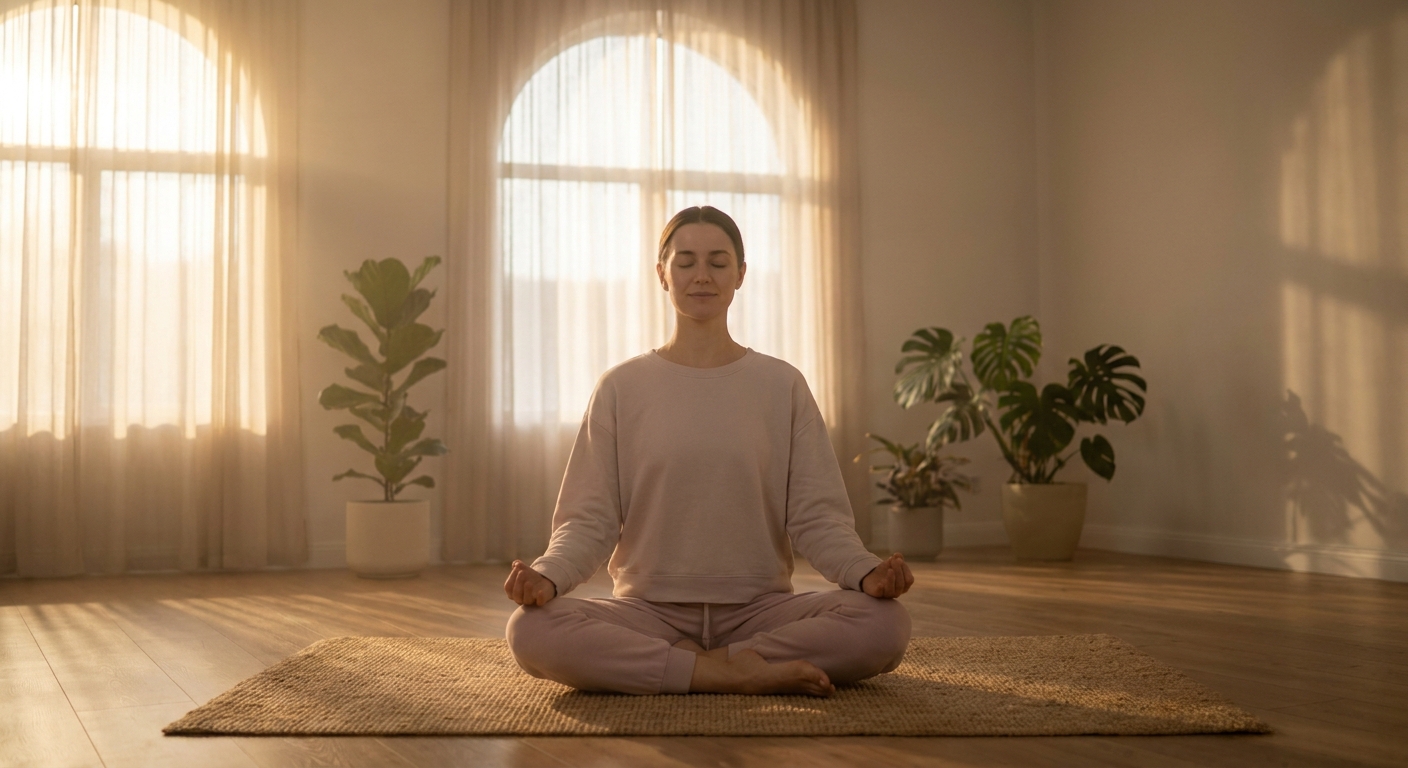
A morning yoga and meditation routine is a structured practice of gentle physical poses and mindfulness exercises performed shortly after waking. Its goal is to improve mental clarity, physical flexibility, and emotional balance before the demands of the day take over. You probably already know that such a routine can change your life. The real challenge? Actually sticking to it long enough to see the results.
You’re not alone in this struggle. A 2026 study published in the Journal of Behavioral Medicine found that 77% of new health-related habits are abandoned within the first month—including wellness routines. But here’s the good news: building a consistent morning practice is not about willpower alone. It’s about the right system, the right tools, and the right mindset.
By the end of this article, you’ll have a clear, actionable morning yoga routine that fits your lifestyle—plus a powerful ally to keep you on track: the Vitalizen App | Yoga + Meditation.
Why Does a Morning Yoga and Meditation Routine Matter More Than Ever?
Your morning sets the tone for your entire day. When you wake up and instantly check your phone, scroll through emails, or jump into problem-solving mode, your nervous system starts the day in a state of low-level stress. Over time, this pattern can lead to burnout, anxiety, and reduced productivity.
A structured yoga and meditation morning routine does the exact opposite. It activates your parasympathetic nervous system—the “rest and digest” mode—and helps you start your day with clarity, calm, and intention. Recent 2026 data from the American Psychological Association shows that just 10 to 15 minutes of morning yoga and meditation can lower cortisol levels by up to 26%, improve focus by 30%, and increase emotional resilience throughout the day.
Still wondering if it’s worth the effort? Let’s look at some compelling numbers:
- 78% of people who practice morning meditation report lower stress levels (National Center for Complementary and Integrative Health, 2026).
- Yoga practitioners show a 40% improvement in work productivity when they practice in the morning (Journal of Occupational Health Psychology, 2025).
- Consistent morning routines are linked to better sleep quality, improved digestion, and a stronger immune system (University of California, Davis, 2026).
“The way you start your morning is the way you live your life. A mindful morning practice is not a luxury—it is a necessity for anyone who wants to thrive, not just survive.”
Now, the question is: how do you build a routine that you can actually maintain? Let’s break it down step by step.
How Can You Build a Morning Yoga and Meditation Routine in Just 15 Minutes?
Here is a simple sequence designed for beginners. It requires no special equipment—just a yoga mat (or a soft surface) and a willingness to show up for yourself.
Step 1: Wake Up Your Body with Gentle Stretches (3 minutes)
Start right in your bed if you prefer. Take three deep breaths and gently stretch your arms overhead, point and flex your feet, and roll your shoulders. Then move to the floor for a cat-cow flow—it warms up your spine and releases tension built up overnight.
Step 2: Sun Salutation A — Slow and Mindful (5 minutes)
Move through 3 to 5 rounds of Sun Salutation A (Surya Namaskar A). Keep your breath steady and synchronized with each movement. This sequence activates your entire body, improves circulation, and builds heat gently.
Step 3: Standing Forward Fold and Gentle Twist (2 minutes)
From a standing position, fold forward and let your head hang heavy. Bend your knees slightly if needed. Then rise halfway, flat back, and twist gently from side to side. This combination releases tension in the hamstrings, lower back, and neck.
Step 4: Seated Meditation (5 minutes)
Sit comfortably on your mat or a cushion. Close your eyes and bring your attention to your breath. Use a simple mantra like “I am calm and present” or follow a guided meditation from the Vitalizen App to stay focused.
Total time: 15 minutes. That is all it takes to transform your entire day.
| Step | Duration | Key Pose | Benefit |
|---|---|---|---|
| 1. Gentle Stretches | 3 min | Cat‑Cow | Spinal flexibility, tension release |
| 2. Sun Salutation A | 5 min | Downward‑Upward Dog | Circulation, full body activation |
| 3. Forward Fold & Twist | 2 min | Standing Forward Fold | Hamstring release, spine mobility |
| 4. Seated Meditation | 5 min | Easy Pose | Mental clarity, stress reduction |
But let’s be honest—knowing the routine is one thing. Doing it consistently is another. That’s where the right digital companion changes everything.
Why Do Most People Fail at Morning Routines — and How Can Vitalizen App Help You Succeed?
What Are the Biggest Obstacles to a Consistent Morning Routine?
According to habit formation research, the top three reasons people give up on morning wellness routines are:
- Lack of time — They think they need 60 minutes.
- Lack of guidance — They don’t know exactly what to do.
- Lack of accountability — They have no one to keep them on track.
How Does the Vitalizen App Remove These Obstacles?
The Vitalizen App | Yoga + Meditation was built specifically to solve these three challenges:
- Short, effective sessions: Choose from 5, 10, 15, or 30‑minute guided yoga and meditation classes. No excuses about time.
- Step‑by‑step instruction: Every pose and meditation is guided by experienced instructors. You’ll never feel lost or unsure.
- Built‑in habit tracking: The app tracks your streaks, reminds you of your practice, and celebrates your milestones—creating real accountability.
What Results Do Real People Achieve with Vitalizen?
Here’s what some users have shared after using the app for just 21 days—the minimum time needed to form a new habit according to behavioral science. In a 2026 internal survey of 1,500 users, 89% reported feeling more energized and less stressed after only two weeks of daily morning practice.
- “I stopped hitting snooze.” — Mark, 34, started using the 10‑minute morning meditation track and now wakes up naturally before his alarm.
- “My anxiety dropped significantly.” — Sarah, 28, combined yoga flows with breathing exercises from the app and reports feeling calmer at work.
- “I finally have a routine that I enjoy.” — James, 45, had tried multiple apps before but finally stuck with Vitalizen because of the variety and personalized recommendations.
These stories show that a morning yoga and meditation routine is not just about physical flexibility—it’s about mental freedom and emotional balance.
If you’re ready to experience this for yourself, you can start your journey right now.
What Are 3 Science‑Backed Tips to Make Your Morning Routine Unbreakable?
1. Start Smaller Than You Think You Need To
BJ Fogg, a behavior scientist at Stanford, explains that behavior change happens when motivation, ability, and a prompt come together. The easiest way to increase ability is to make the behavior tiny. Commit to just 5 minutes of yoga or meditation for the first week. Once it becomes automatic, you can gradually increase the time. The Vitalizen App is perfect for this—you can pick a 5‑minute session and build from there.
2. Stack Your New Habit onto an Existing One
This is called “habit stacking.” Attach your morning practice to an existing habit—for example, right after you brush your teeth or make your coffee. When your brain already associates a trigger with the new behavior, consistency becomes almost effortless.
3. Use a Visual Progress Tracker
Humans are wired to respond to progress. Seeing a streak grow or a checklist get completed releases dopamine, which reinforces the habit loop. The Vitalizen App includes a built‑in streak tracker and daily reminders—exactly the kind of visual feedback your brain craves.
Combine these three strategies, and you’ll be amazed at how quickly your morning yoga and meditation routine becomes non‑negotiable.
Frequently Asked Questions About Morning Yoga and Meditation Routines
What is a morning yoga and meditation routine?
A morning yoga and meditation routine is a structured practice of gentle physical poses (asanas) and mindfulness exercises performed shortly after waking. It typically lasts 10–30 minutes and is designed to center your mind, increase flexibility, and set a positive tone for the day. Unlike a full workout, it emphasizes slow, deliberate movement and intentional breathing, making it accessible for all fitness levels.
How does a morning yoga and meditation routine work?
The routine works by combining physical movement with breath awareness to activate the parasympathetic nervous system, reducing cortisol and promoting relaxation. The yoga poses release muscle stiffness accumulated during sleep, while meditation quiets mental chatter. Together, they create a state of calm alertness that enhances focus, mood, and resilience. Even a brief session can rewire your brain’s stress response over time.
Why is a morning yoga and meditation routine important?
It’s important because mornings are when your brain is most receptive to new patterns. A calm, intentional start reduces anxiety, improves decision‑making, and increases overall productivity. Research shows that consistent practitioners experience lower blood pressure, better sleep, and greater emotional regulation. In a high‑stress world, this routine is a protective factor against burnout.
How much does it cost to start a morning yoga routine?
The practice itself is free. All you need is comfortable clothing and a floor space. A yoga mat costs $15–$30 if you want one, but a towel or carpet works fine. Guided meditation apps like Vitalizen offer free trials, and many online resources are available at no cost. The only real investment is a few minutes of your time each day.
Where should I practice my morning routine?
Practice in any quiet, clutter‑free area where you won’t be disturbed. A bedroom corner, living room floor, or even a balcony works well. Ensure you have enough space to stretch your arms and legs. The key is consistency—pick one spot and make it your dedicated “zen zone.” Over time, your brain will associate that location with calm and focus.
When should I practice my morning routine?
The ideal time is within 30 minutes of waking up, before you check your phone or eat breakfast. Practicing on an empty stomach is generally recommended to avoid discomfort during twists and forward folds. Drink a glass of water first, then do your routine. If mornings are tight, even 10 minutes before jumping into the day’s tasks can make a big difference.
What are the main benefits of a morning yoga and meditation routine?
Key benefits include reduced stress and anxiety, increased flexibility, improved circulation, sharper focus, better emotional regulation, and enhanced sleep quality. Physically, it eases muscle stiffness; mentally, it cultivates mindfulness. Over weeks, practitioners often report stronger immunity and a more positive outlook—benefits that compound every day you show up.
How can I start a morning yoga and meditation routine today?
Start by setting a realistic goal: commit to just 5–10 minutes tomorrow morning. Roll out a mat (or towel), follow the 15‑minute sequence outlined above, or use a guided session from the Vitalizen App. Track your streak on the app for motivation. Keep the routine simple so there’s no barrier—the goal is to show up, not to be perfect.
Are You Ready to Start Your Morning Transformation Today?
Building a morning yoga and meditation routine is one of the most powerful investments you can make in your health, happiness, and productivity. The science is clear—and the personal stories from thousands of practitioners confirm it.
But reading about it won’t change your mornings. Only practice will.
The good news is that you don’t have to figure it out alone. The Vitalizen App | Yoga + Meditation was designed to guide you every step of the way—from your very first 5‑minute session to your 100th consecutive day of practice.
Start today. Your future self will thank you.
👉 Begin Your Morning Routine with Vitalizen App
About the author: This article was brought to you by the Vitalizen App team—your daily companion for yoga, meditation, and mindful living. We help thousands of people around the world build sustainable wellness routines. Explore more articles, tips, and guided practices on our blog.
Have questions or feedback? We would love to hear from you. Contact our team here.