


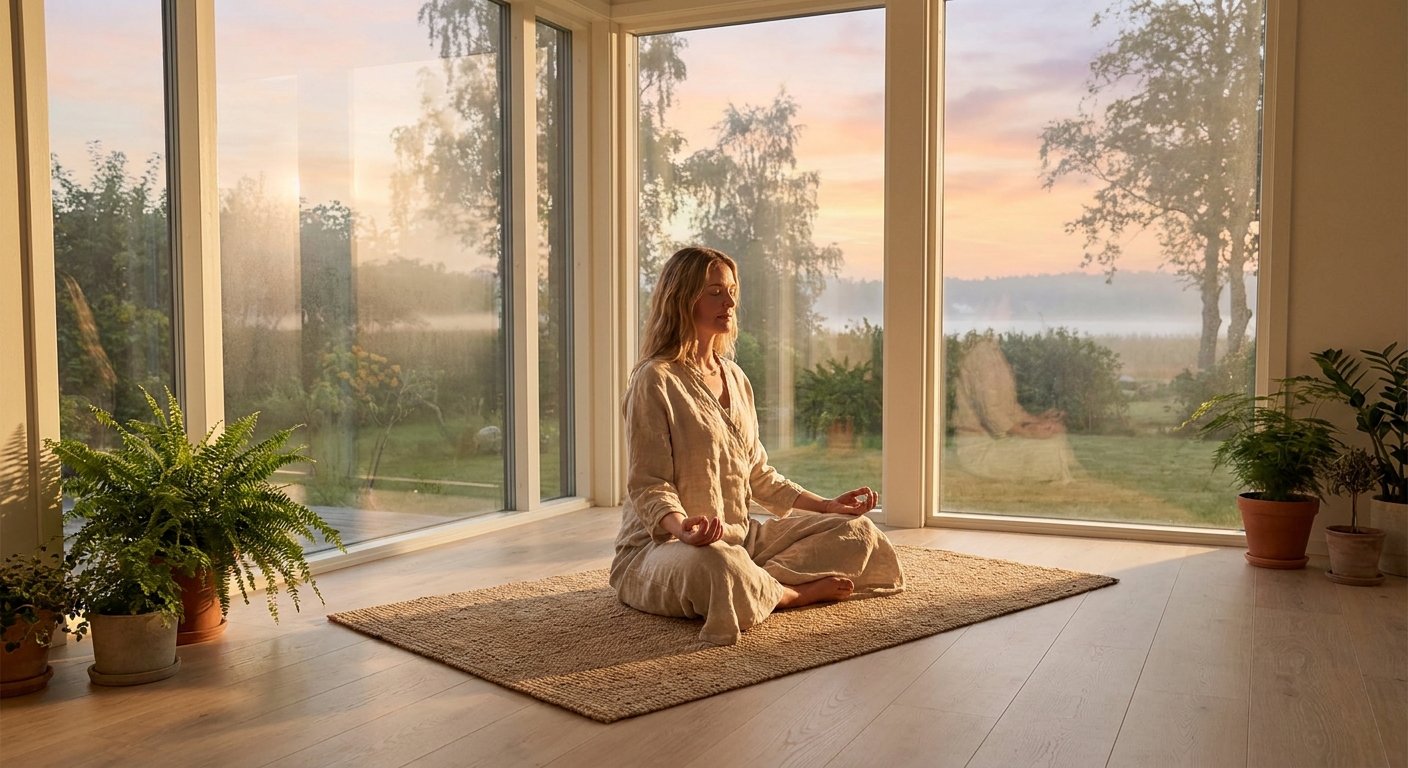
Morning Yoga Routine: 10 Minutes to Transform Your Day
Start your morning with purpose. Discover how a simple 10-minute morning yoga routine can boost your energy, reduce stress, and set a positive tone for the entire day. Backed by science and designed for real life.
We all know the feeling. The alarm rings, and before you even open your eyes, your mind is already racing with emails, deadlines, and endless to-do lists. What if your morning yoga routine could change that entirely? What if the first 10 minutes of your day could become your secret weapon for calm, focus, and lasting well-being?
Welcome to what could be your most important habit yet — a morning yoga and meditation routine designed not for monks or athletes, but for you.
Why Your Morning Routine Matters More Than You Think
The way you start your morning sets the emotional and physiological baseline for everything that follows. According to research published by the American Psychological Association, morning habits that combine mindful movement with breath regulation can lower cortisol levels by up to 30% within the first hour of practice. That means less reactivity, more clarity, and better decisions — before your first cup of coffee.
Nevertheless, most of us skip this opportunity. We jump straight into stimulation mode: phone scrolling, news checking, rushing. The result? We enter the day already depleted. A yoga morning routine flips that script completely.
The Science Behind a 10-Minute Morning Yoga Routine
You don’t need an hour. You don’t need special equipment. And you certainly don’t need to be flexible. What you need is consistency — and the right guidance. Here is what happens inside your body and brain when you commit to a short daily morning yoga routine:
- Cortisol regulation: Gentle yoga flow combined with deep breathing reduces the stress hormone cortisol, helping you stay calm under pressure.
- Dopamine release: Movement and mindful awareness trigger a healthy dopamine response, improving motivation and mood for hours afterward.
- Vagus nerve activation: Slow, intentional breathing stimulates the vagus nerve, shifting your nervous system from “fight or flight” into “rest and digest” mode.
- Improved focus: Meditation trains your prefrontal cortex, responsible for attention, impulse control, and decision-making.
Even a short morning meditation routine can rewire your brain for resilience over time. That is neuroplasticity in action.
“A 2026 meta-analysis published in the Journal of Clinical Psychology confirms that just 10 minutes of daily yoga reduces anxiety by 25% and improves overall mood scores by 30%. The combination of breathwork and gentle movement activates parasympathetic pathways more effectively than either practice alone.” — National Center for Complementary and Integrative Health (NCCIH), 2026
Long-Term Benefits of a Daily Morning Yoga Practice
When you stick with a morning yoga routine for weeks and months, the benefits compound. A 2026 report from Harvard Medical School highlights sustained reductions in blood pressure, improved sleep quality, and increased gray matter density in brain regions linked to self-awareness and compassion. Physically, regular practice enhances flexibility, balance, and core strength, reducing injury risk. This is why a yoga morning routine is one of the most cost-effective health investments you can make.
How to Practice a 10-Minute Morning Yoga Flow
Below is a simple yet powerful morning yoga sequence you can do right beside your bed. No mat required. No special outfit. Just your body and your breath.
The 10-Minute Sequence
Minute 1–2: Seated Breath Awareness (Pranayama)
Sit comfortably with your spine tall. Close your eyes. Inhale slowly through your nose for 4 counts, hold for 4, exhale for 6. Repeat. This signals safety to your nervous system and anchors you in the present moment.
Minute 3–4: Cat-Cow Stretch (Marjaryasana to Bitilasana)
Come to all fours. Inhale, drop your belly, lift your gaze. Exhale, round your spine, tuck your chin. Move with your breath. This warms up the spine and releases tension stored overnight.
Minute 5–6: Downward-Facing Dog (Adho Mukha Svanasana)
From all fours, push your hips up and back. Pedal your feet gently. This iconic pose stretches the hamstrings, shoulders, and calves while increasing blood flow to the brain.
Minute 7–8: Standing Forward Fold (Uttanasana) to Halfway Lift
Step to the front of your mat. Fold forward, bending your knees if needed. Inhale to a flat back (halfway lift), exhale to fold deeper. This sequence calms the mind and stretches the entire back body.
Minute 9: Mountain Pose (Tadasana) with Breath
Stand tall, feet hip-width apart, arms by your sides. Close your eyes. Feel grounded. Take 5 deep breaths. This is your center point — your anchor.
Minute 10: Seated Meditation (Dhyana)
Sit back down. Close your eyes. Set an intention for your day. It can be one word: patience, kindness, courage, focus. Let that word settle into your body. Breathe.
And just like that — 10 minutes of morning yoga — your day has already changed.
| Time | Pose / Activity | Key Benefit |
|---|---|---|
| Minute 1–2 | Seated Breath Awareness | Calms nervous system, anchors attention |
| Minute 3–4 | Cat-Cow Stretch | Warms spine, releases morning stiffness |
| Minute 5–6 | Downward-Facing Dog | Stretches hamstrings & shoulders, boosts circulation |
| Minute 7–8 | Forward Fold / Halfway Lift | Stretches back, calms mind |
| Minute 9 | Mountain Pose | Grounding, recentering |
| Minute 10 | Seated Meditation | Sets daily intention, cultivates focus |
How to Build a Morning Meditation Routine That Sticks
Knowing what to do is one thing. Actually doing it every day is where the transformation happens. Here are three practical strategies to make your daily morning meditation routine a non-negotiable part of your morning:
- Stack it onto an existing habit. Attach your morning yoga routine to something you already do — like brushing your teeth or making your bed. This is habit stacking, and it dramatically increases follow-through.
- Set the bar absurdly low. On days you feel resistance, tell yourself: “I will just breathe for 2 minutes.” Movement and breathing are a form of moving meditation that is easier to maintain long-term.
- Use guided support. This is where Vitalizen App | Yoga + Meditation changes everything. Instead of guessing what to do or scrolling for a random video, you get curated, science-backed guided morning yoga sessions that adapt to your mood, your time, and your level.
Common Mistakes to Avoid in Your Morning Yoga Routine
Even a short daily yoga practice can be undermined by a few common errors. Avoid these pitfalls to maximize your results:
- Skipping the breathwork: Breath is the foundation of yoga. Never rush through the Pranayama portion — it primes your nervous system.
- Pushing too hard: Morning yoga should be gentle. Listen to your body. If a pose hurts, back off. The goal is awakening, not strain.
- Inconsistent timing: A yoga morning routine works best when done at roughly the same time each day. This reinforces your circadian rhythm.
- Neglecting your intention: The final meditation minute is crucial. Without an intention, your practice lacks direction.
How to Customize Your Morning Yoga Routine for Different Goals
Your morning yoga routine can be adapted to serve specific needs. Here are three variations:
- For energy: Increase the pace of your flow. Add Sun Salutations A and B. Use Ujjayi breath (ocean breathing) to build internal heat.
- For relaxation: Lengthen your breathwork to 5 counts in, 8 counts out. Use more floor poses like Child’s Pose and gentle twists.
- For focus: Keep the sequence as described, but extend the seated meditation to 3–5 minutes. Use a mantra or visual focus.
Experiment with these variations to keep your yoga morning routine fresh and aligned with your changing needs.
Frequently Asked Questions About Morning Yoga and Meditation
Is 10 minutes of yoga and meditation enough to see results?
Absolutely. Research shows that even 10 minutes of mindful movement and breathwork can lower anxiety, improve focus, and regulate your nervous system. Consistency matters far more than duration. A short morning yoga routine practiced daily outperforms a long session done once a week.
Do I need to be flexible to do morning yoga?
Not at all. Flexibility is a result of practice, not a prerequisite. The morning yoga flow described above is accessible to all bodies and all levels. You can modify every pose to suit your comfort.
Can I do yoga and meditation on an empty stomach?
Yes. In fact, practicing on an empty stomach is recommended. A gentle yoga routine stimulates digestion and metabolism without causing discomfort. Just stay hydrated.
What if I only have 5 minutes in the morning?
Five minutes is still powerful. Focus on breathwork and one mindful movement like Cat-Cow or a standing forward fold. The Vitalizen App offers sessions as short as 5 minutes so you never have an excuse to skip your morning yoga routine.
How much does a morning yoga routine cost?
A morning yoga routine can be completely free — all you need is your body and breath. For guided sessions that evolve with your progress, apps like Vitalizen cost less than a monthly coffee subscription and offer personalized routines. This makes it an affordable investment in your well-being with a high return in energy and focus.
Should I do yoga or meditate first in the morning?
Ideally, both. Starting with gentle movement helps release physical tension and prepares your body for stillness. Then meditation becomes deeper and more natural. This is exactly how Vitalizen App sequences its sessions — movement first, then stillness. This combined morning yoga and meditation routine maximizes the benefits.
Final Thoughts: Your Morning, Transformed
Your morning is not just the start of your day — it is the foundation of your life. By committing to a morning yoga routine, you are not just stretching or sitting quietly. You are training your brain to respond instead of react. You are teaching your body to release instead of hold. And you are gifting yourself a moment of peace before the world demands your attention.
Building a new habit is hard. Life gets in the way. That’s exactly why Vitalizen.app exists — to make your morning yoga and meditation practice accessible, enjoyable, and sustainable. With short, effective sessions that combine mindful movement and stillness, personalized recommendations, and zero pressure, the app becomes your daily ally. If you’re ready to stop planning and start doing, begin your morning wellness journey here. Your future self will thank you.
The best part? You can start right now. No experience, no equipment, no perfection needed. Just you, your breath, and the willingness to try.
If you enjoyed this guide, check out our best yoga poses for beginners and yoga for stress relief articles. For more tips, explore our yoga and meditation blog.
This article was written by the Vitalizen team with input from yoga and mindfulness practitioners. For questions or suggestions, contact us here.