


Yoga for Stress Relief: 7 Simple Poses That Calm Your Mind in Minutes
Discover how yoga for stress relief can transform your daily life. Learn 7 beginner-friendly poses backed by science, plus meditation tips to reduce anxiety naturally.
Life moves fast. Deadlines pile up, notifications never stop, and before you know it, your shoulders are tense, your breath is shallow, and your mind is running a marathon you never signed up for. Does that sound familiar?
If you have been searching for a natural, effective way to unwind, yoga for stress relief might be exactly what you need. And the best part? You do not need to be flexible, experienced, or own expensive gear to start. In fact, you can begin right now with just your body and your breath.
At Vitalizen.app | Yoga + Meditation, we believe that true well-being starts with small, intentional moments. Whether you are a complete beginner or a seasoned practitioner, this guide will walk you through seven powerful poses that target stress at its root — and we have included a few meditation tips to double the calming effect.
Why Does Yoga for Stress Relief Actually Work?
When you practice yoga for stress relief, you activate your parasympathetic nervous system — also known as the “rest and digest” mode. This lowers cortisol levels, reduces blood pressure, and signals your brain that it is safe to relax.
According to research published by the National Institutes of Health, consistent yoga practice significantly reduces perceived stress and anxiety. Furthermore, when combined with mindfulness meditation, the benefits multiply. That is exactly why Vitalizen.app integrates both yoga and meditation into one seamless experience — because your mind and body deserve equal attention.
What Are the Best Yoga Poses for Stress Relief?
Here is a sequence designed to release tension from your body and quiet your mind. Each pose builds on the previous one, creating a gentle flow that takes less than 15 minutes.
1. Child’s Pose (Balasana) — The Ultimate Reset
Kneel on the floor, touch your big toes together, and sit back on your heels. Extend your arms forward or rest them alongside your body. Close your eyes and take five deep breaths. This pose gently stretches your lower back and signals safety to your nervous system.
2. Cat-Cow Stretch (Marjaryasana-Bitilasana)
Come to all fours. Inhale, drop your belly, lift your chest and tailbone (Cow). Exhale, round your spine, tuck your chin (Cat). Repeat slowly for eight rounds. This movement releases tension stored in your spine and improves breath coordination — a key skill for meditation.
3. Standing Forward Fold (Uttanasana)
Stand with feet hip-width apart. Hinge at your hips and fold forward, letting your head hang heavy. Bend your knees if needed. Hold for six breaths. This inversion calms the mind and relieves tension in your neck and shoulders.
4. Legs-Up-The-Wall (Viparita Karani)
Sit sideways against a wall, then swing your legs up. Lie back and relax your arms. Stay here for 5 to 10 minutes. This restorative pose improves circulation and activates the parasympathetic nervous system almost instantly.
5. Tree Pose (Vrikshasana) — Grounding for Anxiety
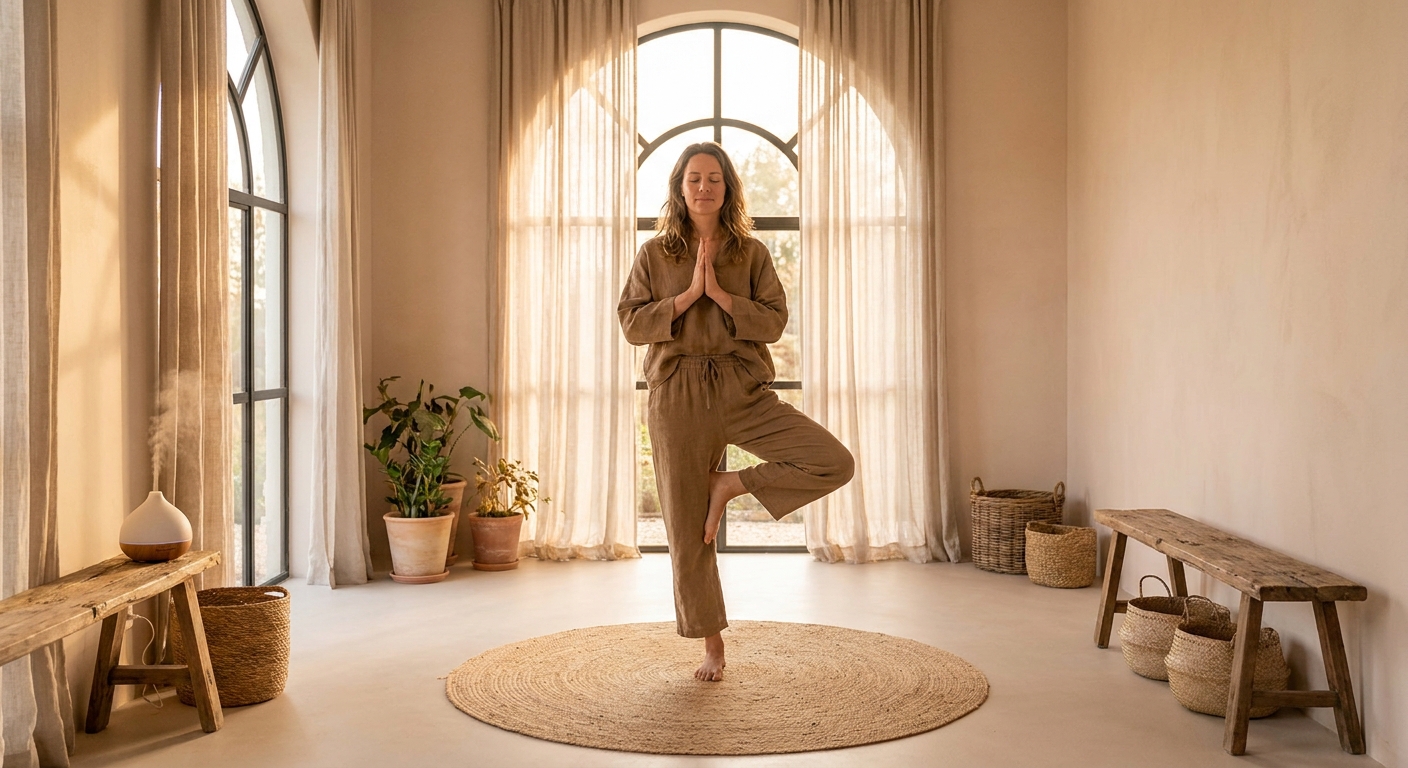
Stand on one leg, place the sole of your other foot on your inner thigh or calf (avoid the knee). Bring your hands to your heart center. Find a focal point. Hold for 5 breaths per side. Tree pose improves focus and teaches your mind to stay steady even when things feel shaky.
6. Seated Spinal Twist (Ardha Matsyendrasana)
Sit with both legs extended. Bend your right knee and cross it over your left leg. Twist toward the right, placing your left elbow outside your right knee. Hold for 5 breaths per side. Twists release physical tension and “wring out” stagnant energy.
7. Corpse Pose (Savasana) — The Final Integration
Lie flat on your back, arms relaxed at your sides, palms up. Close your eyes and simply breathe. Stay here for at least 5 minutes. This is where the magic of yoga for stress relief truly settles into your system.
If you would like a guided version of this sequence with soft background music, start your free wellness journey with Vitalizen.app and access expert-led classes anytime, anywhere.
How Can You Amplify Your Practice with Meditation?
Yoga prepares your body for stillness. Meditation deepens that stillness. When you combine both, you create a powerful tool for managing stress and anxiety.
Try this simple meditation right after your yoga sequence: sit comfortably, close your eyes, and bring your attention to your natural breath. Do not try to change it. Just observe. If your mind wanders — and it will — gently guide it back. Start with 3 minutes and gradually increase.
Research from the American Psychological Association confirms that mindfulness meditation reduces rumination and emotional reactivity. In other words, it helps you respond to stress instead of reacting to it.
At our blog, we share daily tips on yoga and meditation to help you build a sustainable practice. Because consistency matters more than intensity — especially when you are using these tools for stress relief.
What Results Can You Expect from a Consistent Practice?
When you commit to just 10 to 15 minutes of yoga for stress relief each day, here is what many people report:
- Better sleep quality — falling asleep faster and waking up more rested
- Lower anxiety levels — fewer racing thoughts and less physical tension
- Improved focus — sharper concentration at work and in daily life
- Greater emotional balance — less irritability and more patience
- Reduced muscle pain — especially in the neck, shoulders, and lower back
These changes do not happen overnight, but they do happen. The key is showing up. And if you need a little help staying on track, Vitalizen.app offers personalized yoga and meditation plans that adapt to your schedule and experience level.
What Are Common Mistakes When Starting Yoga for Stress Relief?
Many beginners fall into traps that actually increase stress instead of reducing it. Here are three mistakes to avoid:
Mistake #1: Pushing Too Hard
Yoga is not about forcing your body into a shape. It is about feeling. If a pose causes pain or makes you hold your breath, back off. Use props. Modify. Your practice is yours alone.
Mistake #2: Skipping the Rest Poses
Savasana (Corpse Pose) is not optional. It is the most important pose in your sequence because it allows your nervous system to integrate the benefits of your practice. Do not rush through it.
Mistake #3: Comparing Yourself to Others
Comparison is the thief of joy — and relaxation. Your body is unique. Your journey is unique. Focus on how you feel, not how you look. That is the essence of true yoga.
Frequently Asked Questions About Yoga for Stress Relief
How often should I practice yoga for stress relief?
For noticeable results, aim for at least 3 to 4 times per week. However, even 10 minutes of daily practice can make a significant difference. Consistency is far more important than duration.
Can beginners do yoga for stress relief?
Absolutely. The poses in this guide are beginner-friendly and require no prior experience. Always listen to your body and modify as needed. If you want guided instruction, Vitalizen.app offers beginner-level classes that walk you through every step.
What is the best time of day to practice yoga for stress relief?
Morning practice energizes and sets a calm tone for the day. Evening practice helps release accumulated tension and prepares you for restful sleep. Choose the time that fits your schedule and feels sustainable.
Do I need special equipment to practice yoga for stress relief?
No. A yoga mat is helpful for comfort, but you can practice on a carpet or blanket. Comfortable clothing that allows movement is all you really need. The beauty of yoga is its simplicity.
How does yoga for stress relief differ from regular exercise?
While both improve physical health, yoga uniquely combines physical movement with breath awareness and mindfulness. This mind-body connection directly targets the nervous system, making it exceptionally effective for reducing stress and anxiety compared to exercise alone.
Can yoga for stress relief help with anxiety attacks?
Yes. Deep breathing and grounding poses like Child’s Pose or Legs-Up-The-Wall can help calm the nervous system during moments of heightened anxiety. However, if you have a diagnosed anxiety disorder, consult with a healthcare professional and use yoga as a complementary practice, not a replacement for medical treatment.
How Can You Start Your Journey Today?
Stress does not have to control your life. With the right tools and a little consistency, you can reclaim your peace — one breath, one pose, one moment at a time.
We invite you to take the first step. Download Vitalizen.app | Yoga + Meditation and discover a practice that fits your life, not the other way around. Whether you have 5 minutes or 50, we have a session waiting for you.
Now, we want to hear from you: Which of these poses are you most excited to try? Share your thoughts in the comments below or reach out to us — we love hearing how our community is growing.
— The Vitalizen Team
Disclaimer: This content is for informational purposes only and does not constitute medical advice. Always consult with a qualified healthcare professional before starting any new exercise or wellness program, especially if you have pre-existing health conditions.