


Yoga and Meditation: 15-Minute Routine for Beginners
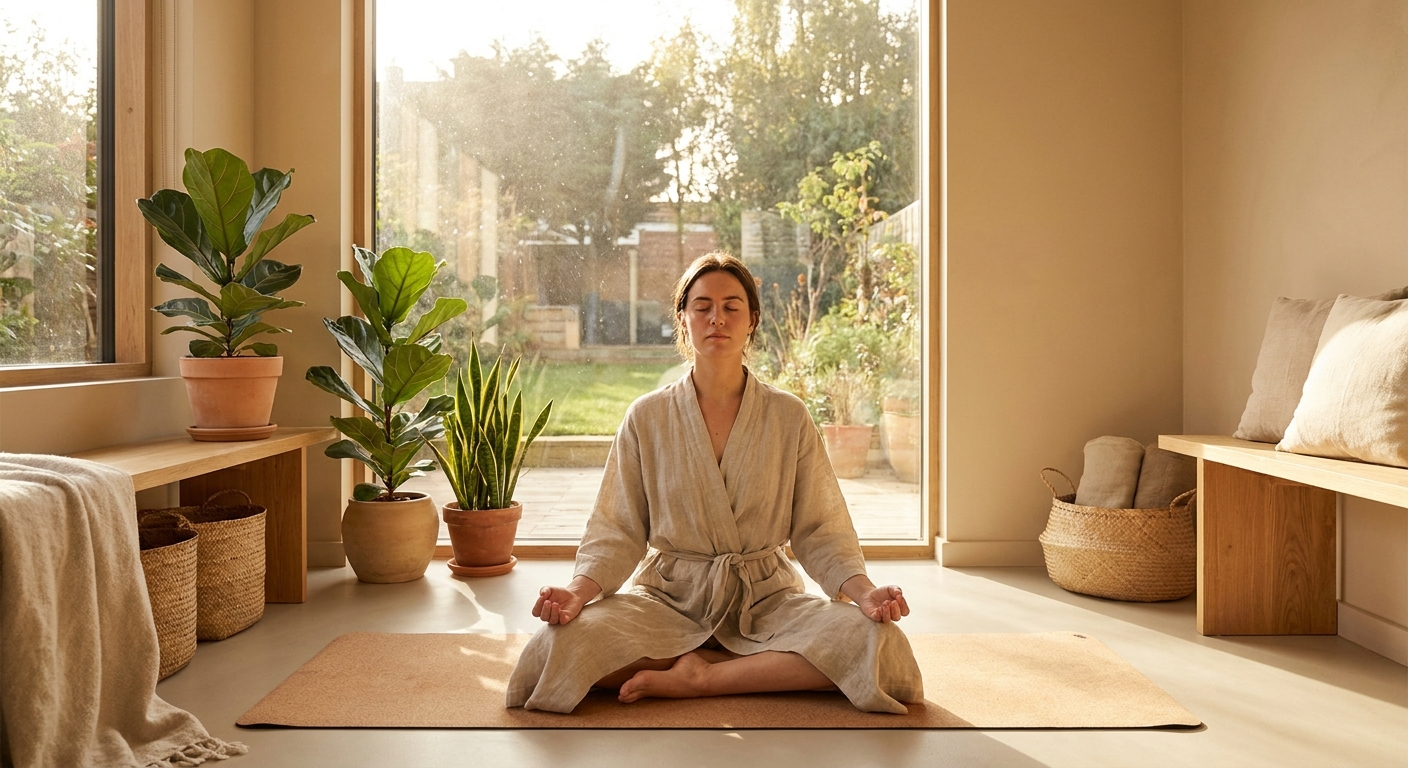
Discover how a simple yoga and meditation routine can reduce stress, improve focus, and boost your overall well-being. This beginner-friendly guide includes a 15-minute daily practice you can start today — no experience required.
What is a Combined Yoga and Meditation Practice?
A combined yoga and meditation practice is a holistic wellness routine that unites physical postures and breathwork with mental focus and stillness. This approach involves moving your body to release tension and then settling your mind to cultivate awareness, all within a single session. The goal is to achieve a state of complete mind-body harmony.
This integrated method is uniquely powerful because it addresses your well-being on multiple levels simultaneously. While the yoga poses improve your physical strength and flexibility, the meditation component trains your brain to manage stress and enhance emotional resilience. You are essentially working out your body and your mind at the same time.
Main Characteristics of This Practice
- Intentional Breathwork: Uses specific breathing patterns to calm the nervous system.
- Mindful Movement: Connects physical postures with present-moment awareness.
- Accessible Progression: Starts with simple, foundational poses that anyone can modify.
- Mental Training: Builds the skill of focused attention, reducing daily stress reactivity.
How a 15-Minute Routine Works
- Phase 1: Centering Breath (2 Minutes). You begin by activating your relaxation response, which immediately lowers your heart rate and signals your body to unwind.
- Phase 2: Gentle Warm-Up (3 Minutes). You perform slow, mindful movements to connect with your body and identify areas of tension without strain.
- Phase 3: Sun Salutation Flow (5 Minutes). You link breath to a classic sequence of poses, creating a moving meditation that builds full-body warmth and focus.
- Phase 4: Seated Meditation (5 Minutes). You practice observing your thoughts without judgment, strengthening your mental clarity and emotional balance.
Why is a Daily Yoga and Meditation Routine Important for Your Well-being?
Have you ever felt like your mind is racing a thousand miles per hour while your body feels completely drained? You are not alone. In today’s fast-paced world, finding balance between mental clarity and physical health can feel like an impossible task. However, the solution might be simpler than you think.
Welcome to the transformative power of yoga and meditation. Whether you are looking to reduce anxiety, improve flexibility, or simply carve out a few moments of peace in your chaotic day, combining these two ancient practices can create profound changes in your life. And the best part? You do not need to be a guru or a contortionist to begin.
At Vitalizen App | Yoga + Meditation, we believe that wellness should be accessible to everyone. That is why we have created this step-by-step guide to help you build a sustainable daily practice — one that fits your schedule, your goals, and your lifestyle.
According to research published by the National Center for Complementary and Integrative Health, a regular yoga and meditation practice can:
- Reduce stress hormones like cortisol by up to 30%
- Improve sleep quality and help combat insomnia
- Enhance focus and concentration for better productivity
- Lower blood pressure and improve cardiovascular health
- Boost emotional resilience and reduce anxiety symptoms
As a result, millions of people around the world are turning to these practices not just as a workout, but as a lifestyle. In fact, the wellness industry has seen a surge in meditation app usage, with downloads increasing by over 40% in the last three years alone.
How to Start a 15-Minute Yoga and Meditation Routine Today
One of the biggest misconceptions about yoga and meditation is that you need hours of free time to practice. The truth is, even 15 minutes a day can yield remarkable results when done consistently. Below is a simple routine designed specifically for beginners.
Phase 1: Centering Breath (2 Minutes)
Find a comfortable seated position on your mat or a chair. Close your eyes and bring your attention to your breath. Inhale deeply through your nose for a count of four, hold for four counts, and exhale slowly for six counts. This activates your parasympathetic nervous system and signals your body to relax.
Phase 2: Gentle Warm-Up (3 Minutes)
Begin with neck rolls, shoulder shrugs, and gentle spinal twists. Move slowly and with awareness. The goal here is not intensity, but connection — tuning into how your body feels in this present moment.
Phase 3: Sun Salutation Flow (5 Minutes)
Perform three to five rounds of Surya Namaskar (Sun Salutation) at your own pace. This classic sequence includes forward folds, plank pose, cobra pose, and downward-facing dog. Each movement is synchronized with your breath, creating a moving meditation that warms up the entire body.
Phase 4: Seated Meditation (5 Minutes)
Return to a comfortable seated position. Set a timer for five minutes and simply observe your breath. When your mind wanders — and it will — gently bring your focus back to the sensation of air entering and leaving your nostrils. This is the heart of mindfulness practice, and it gets easier with time.
If you would like guided support during your practice, start your journey with Vitalizen.app and access hundreds of guided sessions tailored to your experience level.
What Are the Most Common Challenges for Beginners and How Can You Overcome Them?
Starting a new habit is never easy, and yoga and meditation are no exception. Here are the most common obstacles beginners encounter — along with practical solutions.
“I Can’t Sit Still or Quiet My Mind”
This is the number one complaint among new meditators. Remember: meditation is not about emptying your mind. It is about noticing when your mind has wandered and choosing to return to the present moment. Every time you do this, you are strengthening your mental “muscle.”
“I’m Not Flexible Enough for Yoga”
Flexibility is a result of yoga, not a requirement. Yoga is about meeting your body where it is today. Use props like blocks or cushions, and never force a stretch. Progress comes with patience.
“I Don’t Have Time”
Start with just five minutes. Even a brief morning yoga routine can set a positive tone for your entire day. Once you experience the benefits, you will naturally want to make more time.
For additional tips and personalized guidance, check out our articles, news, tips, and guidance on yoga and meditation.
The Science Behind Yoga and Meditation: What Research Shows
Modern science continues to validate what ancient traditions have known for thousands of years. Neuroimaging studies show that consistent yoga and meditation practice actually changes the structure of your brain — a phenomenon known as neuroplasticity.
Specifically, research indicates that long-term practitioners have increased gray matter density in areas associated with emotional regulation, decision-making, and empathy. Meanwhile, the amygdala — the brain’s fear center — actually shrinks with regular meditation, leading to reduced stress reactivity.
“A study from Harvard Medical School found that participants who practiced yoga for just eight weeks showed significant reductions in inflammatory markers and improvements in mitochondrial health — the energy centers of your cells.”
Additionally, a systematic review published in the Journal of Clinical Medicine concluded that yoga and meditation interventions are effective for reducing symptoms of anxiety and depression, with effects comparable to cognitive behavioral therapy.
These findings underscore the transformative potential of a regular yoga and meditation practice. Even 15 minutes a day can trigger measurable biological changes that support your mental and physical health.
When is the Best Time of Day to Practice Yoga and Meditation?
Many experts recommend practicing in the morning to set a calm and focused tone for the day. However, the best time is whenever you can be consistent. Some people prefer an evening practice to unwind and release tension from the day. Experiment and find what works for your schedule.
The key is not the time on the clock, but the consistency of your routine. A short session during your lunch break can be just as effective as a longer morning practice if it helps you maintain the daily habit.
To help you build this habit, try linking your practice to an existing daily trigger — like after brushing your teeth or before your first cup of coffee. This strategy, known as habit stacking, makes it easier to remember and stick with your routine.
How Can Vitalizen.app Help You Stay Consistent?
Building a sustainable practice requires more than just good intentions — it requires support, structure, and community. That is exactly what Vitalizen App | Yoga + Meditation provides.
Our app offers:
- Guided yoga sessions ranging from 5 to 60 minutes
- Meditation programs designed by certified instructors
- Progress tracking to keep you motivated
- Personalized recommendations based on your goals and experience level
- Offline access so you can practice anywhere, anytime
Whether you are a complete beginner or a seasoned practitioner, our platform adapts to your needs. Begin your wellness journey today and discover why thousands of users trust Vitalizen as their daily companion for yoga and meditation.
If you have questions or need support, our team is always available. Contact us anytime — we would love to hear from you.
Tips for Building a Lasting Yoga and Meditation Habit
Consistency is the secret ingredient to reaping the full rewards of yoga and meditation. Here are practical tips to help you make it a non-negotiable part of your day:
- Start small. Commit to just 5 minutes a day. Once that feels effortless, gradually increase your time.
- Set a specific time. Anchor your practice to a time of day — right after waking up, during lunch, or before bed.
- Create a dedicated space. Even a corner of your room with a mat and a cushion can signal your brain that it’s time to relax.
- Use reminders. Set an alarm or use the Vitalizen app’s notification feature to nudge you.
- Forgive yourself. Missing a day is not a failure. Simply start again the next day without guilt.
Remember, every moment you dedicate to your practice is a step toward greater peace and vitality.
Frequently Asked Questions About Yoga and Meditation
How long does it take to see results from yoga and meditation?
Most practitioners report feeling more relaxed and focused after just one week of daily practice. Physical changes like increased flexibility and strength typically become noticeable within three to four weeks. The key is consistency — even 10 minutes a day is more effective than an hour once a week.
Can I do yoga and meditation if I have a physical injury?
Yes, but you should always consult with your healthcare provider first. Many yoga poses can be modified to accommodate injuries. Gentle practices like restorative yoga, chair yoga, and guided meditation are excellent low-impact options. Our app allows you to filter sessions by intensity and focus area.
What is the best time of day to practice yoga and meditation?
Many experts recommend practicing in the morning to set a calm and focused tone for the day. However, the best time is whenever you can be consistent. Some people prefer an evening practice to unwind and release tension from the day. Experiment and find what works for your schedule.
Do I need special equipment to start practicing?
Not at all. While a yoga mat can provide comfort and grip, you can practice on any non-slip surface. Wear comfortable clothing that allows you to move freely. For meditation, a cushion or chair is helpful but not required. The most important tool is your willingness to begin.
Is a meditation app as effective as in-person classes?
Research shows that guided meditation app programs can be just as effective as in-person instruction for reducing stress and improving well-being. Apps offer the added benefit of flexibility, allowing you to practice whenever and wherever you choose. Many users find that combining app-based practice with occasional in-person classes provides the best of both worlds.
How can I stay motivated to practice daily?
Set small, achievable goals and track your progress using an app like Vitalizen. Joining a community or finding a practice buddy can also boost motivation. Remember why you started: to feel better, reduce stress, and improve your health. Celebrate each day you show up, no matter how short the session.
Ready to Transform Your Life? Start Today
The journey of yoga and meditation is not about perfection — it is about showing up for yourself, one breath at a time. Whether you have five minutes or fifty, every moment you dedicate to your practice is a gift to your mind, body, and spirit.
At Vitalizen App, we are passionate about helping you build a practice that lasts. Our mission is to make yoga and meditation accessible, enjoyable, and deeply rewarding for everyone — regardless of age, fitness level, or background.
So take a deep breath. Roll out your mat. Open your heart. And take the first step toward a calmer, stronger, and more balanced you.
Download Vitalizen.app and begin your free trial today.
💡 Tip: Bookmark this page and return to it whenever you need a reminder of your routine. Share it with a friend to start the journey together!