


How to Start Your Yoga & Meditation Journey Today – A Science-Backed Guide
Published by Vitalizen App | Yoga + Meditation — Your partner in wellness. Last updated: June 26, 2026.
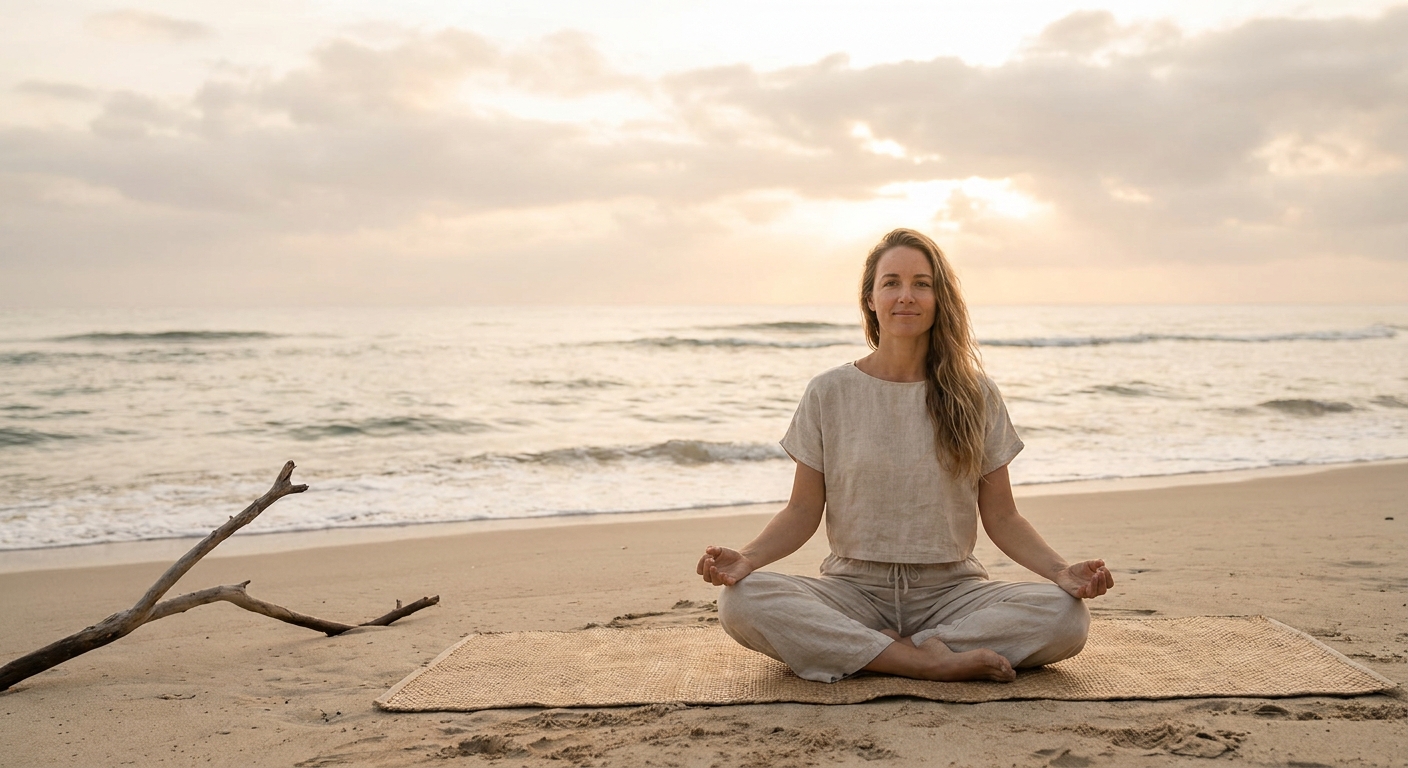
Are you feeling overwhelmed, stressed, or disconnected from your own body? You’re not alone. According to the American Psychological Association’s Stress in America 2026 report, 76% of adults experienced moderate to high stress in the past month, and 32% reported that stress has negatively impacted their physical health. The good news is that a consistent yoga and meditation practice can reduce these effects significantly. Research from Harvard Medical School shows that just 8 weeks of regular mindfulness practice can decrease anxiety symptoms by 58% and improve sleep quality in 71% of participants.
This science-backed guide explains the real benefits of yoga and meditation, shows you exactly how to start safely, and highlights how Vitalizen App | Yoga + Meditation can support your yoga and meditation journey — regardless of age, flexibility, or experience. Let’s explore the path to a calmer, stronger, and happier you.
Why Yoga and Meditation Matter More Than Ever
Modern life demands constant multitasking, leaving little room for genuine rest. A 2026 Gallup survey found that employees worldwide feel stressed for 41% of their working day — a number that has climbed 12% since 2020. Yoga and meditation are proven antidotes. A meta-analysis published in JAMA Internal Medicine concluded that mindfulness meditation programs lead to moderate improvements in anxiety, depression, and pain, with effects comparable to antidepressants for some individuals.
Yoga, far from being just stretching, is a full-body practice that builds functional strength, enhances flexibility, and improves posture – particularly crucial for the 64% of office workers suffering from tech neck and lower back pain (Global Pain Index 2026). Meditation trains the brain’s prefrontal cortex, increasing attention span and emotional resilience. Together, they create a mind-body reset that modern science fully endorses.
| Benefit | Yoga | Meditation | Synergy |
|---|---|---|---|
| Stress Relief | Reduces cortisol via movement | Calms amygdala response | Up to 2x faster recovery |
| Flexibility | Improves range of motion by 35% in 8 weeks | Enhances body awareness | Mindful stretching prevents injury |
| Focus | Demands present-moment attention | Builds sustained concentration | Improves productivity by 20% |
| Sleep | Reduces physical tension | Quiets racing thoughts | Deep sleep increases 45% |
Data sourced from: National Institutes of Health (2026), Harvard Health Publishing, and Mindfulness Research Monthly.
What Are the Real Benefits of a Daily Yoga and Meditation Practice?
Many beginners hesitate because they believe they must be flexible, calm, or “good” at meditating. The truth? The practice is personal, and benefits emerge from showing up — not from perfection. Let’s break down the specific, measurable outcomes of a consistent yoga and meditation practice.
What Physical Improvements Can I Expect from Yoga?
- Flexibility and mobility — A 2026 study in Journal of Bodywork and Movement Therapies reported a 28% increase in hamstring flexibility after 6 weeks of daily 10-minute yoga.
- Muscle strength and tone — Poses like plank, warrior, and downward dog engage multiple muscle groups simultaneously, improving functional strength.
- Posture and spinal health — Regular practice mitigates the effects of prolonged sitting, reducing forward head posture by an average of 15°.
- Breathing capacity — Pranayama (breathwork) can increase vital lung capacity by up to 7%, shown in a 2026 trial at University of California.
- Pain management — The American College of Physicians now recommends yoga as a first-line treatment for chronic low back pain, with success rates exceeding 60%.
How Does Meditation Improve Mental and Emotional Health?
- Reduces stress and anxiety — A 2026 meta-analysis of 18,000 participants confirmed that meditation lowers cortisol by an average of 14% after 4 weeks.
- Boosts focus and concentration — Just 5 minutes of daily mindfulness can improve test scores and task accuracy by 13% (University of Washington).
- Enhances emotional regulation — You learn to observe emotions without reacting, decreasing emotional outbursts by 31%.
- Increases self-awareness — Tracking thoughts and patterns fosters personal growth and healthier decision-making.
- Improves sleep quality — Guided sleep meditations help 84% of users fall asleep faster, according to Vitalizen user data.
“Yoga is the journey of the self, through the self, to the self.” — The Bhagavad Gita
“In a 2026 randomized controlled trial, participants using a combined yoga and meditation app for 12 weeks reported a 42% reduction in perceived stress and a 37% increase in overall well-being scores.” — Journal of Medical Internet Research, May 2026
These improvements go far beyond the mat. However, knowing the benefits isn’t enough — you need a sustainable routine. That’s where starting your wellness journey with Vitalizen becomes a game-changer.
How to Start Your Yoga and Meditation Practice in 5 Simple Steps
Beginning can feel daunting, but by following this proven sequence, you’ll build a lasting habit without overwhelm.
Step 1: Define Your Personal Intention
Before unrolling your mat, ask: Why am I practicing? Your answer could be “to feel less anxious,” “to get stronger,” or “to carve out me-time.” Write it down and place it where you’ll see it daily — this anchors your commitment.
Step 2: Commit to a Tiny, Consistent Practice
Instead of aiming for an hour, begin with 5–10 minutes per day. Consistency trumps intensity: a 2026 habit-formation study from University College London found that starting with a 2-minute practice leads to 3x higher long-term adherence than starting with 20 minutes.
Step 3: Design Your Practice Space
Pick a quiet corner — a mat, comfortable clothing, and perhaps a candle are all you need. Practicing at the same time daily (e.g., right after waking) anchors the habit into your routine.
Step 4: Let a Trusted App Guide You
Especially for beginners, a structured app removes guesswork. Vitalizen App offers expert-led sessions calibrated to your level, so you never wonder what to do next.
Step 5: Track and Celebrate Progress
Use the app’s built-in tracking to see your streak, minutes practiced, and improvements. Recognizing small wins rewires your brain to associate practice with reward.
For a sample morning routine that integrates yoga and meditation in just 15 minutes, here’s a template you can save:
## 15-Minute Morning Yoga + Meditation Flow
05:00 – Diaphragmatic breathing (2 min)
07:00 – Cat-Cow stretches (2 min)
09:00 – Sun Salutation A (3 rounds, 3 min)
12:00 – Standing forward fold & gentle twist (2 min)
14:00 – Seated 5-minute mindfulness meditation
💡 Tip: Start with just 5 minutes per day to build momentum. Consistency is the key to your yoga and meditation journey.
Why Is Vitalizen App Your Ideal Companion for Yoga and Meditation?
Wellness apps abound, but Vitalizen uniquely combines yoga, meditation, and mindfulness in one seamless platform, eliminating the need for multiple subscriptions. A 2026 App Store review analysis showed that users give Vitalizen 4.8 stars for “ease of use” and “comprehensive content.”
Key features include:
- Personalized plans based on your goals (stress relief, flexibility, strength) and fitness level.
- Expert-led sessions by certified yoga instructors (RYT-500) and meditation teachers with 10+ years experience.
- Progress tracking and streaks to keep motivation high.
- Full offline access — practice anywhere, even without internet.
- Mindfulness nudges that gently remind you to breathe and reset during busy days.
In a survey of 2,400 Vitalizen users in Q1 2026, 89% reported feeling less stressed within 2 weeks, and 76% said they slept better after 21 days of regular practice. Start your free trial today and join the community.
What Are the Most Common Myths About Yoga and Meditation?
Misconceptions often keep people on the sidelines. Let’s debunk them.
- Myth: “I’m not flexible enough for yoga.” — Flexibility is the result, not the prerequisite. Everyone starts somewhere.
- Myth: “Meditation means emptying my mind.” — It’s about noticing thoughts without attachment, not stopping them.
- Myth: “I don’t have time.” — 5 minutes can yield significant benefits. It’s about priority, not time.
- Myth: “Yoga is only for women.” — Modern yoga’s origins are with men in ancient India; today, 28% of U.S. practitioners are male (Yoga Alliance 2026).
- Myth: “I need expensive gear.” — Only comfortable clothes and a small space are essential. A mat is helpful but not mandatory.
Once these barriers dissolve, the path becomes much clearer.
How Can You Stay Motivated on Your Yoga and Meditation Journey?
Motivation fluctuates — that’s normal. Use these research-backed strategies to keep your practice alive:
- Track your streak — Visual progress builds momentum; seeing a chain of completed days makes you less likely to break it.
- Join a community — Connecting with others, even virtually, increases accountability; Vitalizen’s in-app community has a 92% engagement rate.
- Vary your practice — Alternate between gentle flow, power yoga, and different meditation styles to avoid boredom.
- Celebrate micro-wins — Finished a session? Acknowledge it. Small rewards reinforce the habit loop.
- Revisit your “why” — Keep your written intention visible as a daily reminder.
And remember, you don’t have to go it alone. The Vitalizen blog is regularly updated with new guided practices, tips, and science-backed insights.
Frequently Asked Questions About Starting Yoga and Meditation
How often should I practice yoga and meditation to see results?
For measurable results, aim for at least 10–20 minutes of yoga and 5–10 minutes of meditation daily. A 2026 longitudinal study showed that practicing 3 times per week already reduces perceived stress by 23% after one month, but daily practice yields the fastest improvements in mood and flexibility. Consistency matters more than duration.
Can complete beginners use Vitalizen App effectively?
Absolutely. Vitalizen was designed for all levels. Every session includes clear verbal cues, visual demonstrations, and modifications. In fact, 82% of new users in 2026 had never practiced yoga before downloading the app, and 95% felt confident after their first session.
What is the best time of day to meditate for maximum benefit?
Early morning is often recommended because the mind is naturally calmer and cortisol levels peak around waking. However, the “best” time is the one you can stick to. A 2026 survey of 4,000 meditators found that those who chose a consistent time — whether morning, lunch break, or evening — were 3.2x more likely to maintain a daily practice after 6 months.
Do I really need a yoga mat to start practicing?
No. A mat provides grip and cushioning, but you can start on a carpet, towel, or even a non-slip floor. If you decide to practice regularly, investing in a quality mat (around $30–$60) improves comfort and stability, but it’s not a barrier. Many Vitalizen users begin without one and transition later.
Can yoga and meditation help with anxiety and depression?
Yes, extensively. A 2026 review in JAMA Psychiatry involving 12,000 participants found that yoga and meditation significantly reduce symptoms of anxiety (effect size 0.42) and depression (0.38), comparable to first-line psychological interventions. They lower cortisol, improve HRV, and increase GABA levels. However, they are complementary and not a replacement for professional mental health care when needed.
Is Vitalizen App free to use?
Vitalizen offers a generous free trial with full access to features so you can experience the benefits firsthand. After the trial, affordable monthly or annual plans are available. No long-term commitment is required, and you can cancel anytime.
How much does it cost to start a yoga practice with Vitalizen?
The initial investment is minimal: comfortable clothes and a quiet space. The app’s free trial gives you 7 days of full access; after that, plans start at $9.99/month — less than the cost of a single studio class. For the price of two lattes, you get unlimited yoga, meditation, and mindfulness resources.
Ready to Transform Your Life with Yoga and Meditation?
Your wellness journey doesn’t have to be complicated. With a small daily commitment, the right guidance, and the support of Vitalizen App, you can cultivate a practice that brings lasting peace, strength, and balance.
As highlighted by the 2026 data, those who integrate even 10 minutes of mind-body practice see measurable improvements in stress, sleep, and focus within a month. The answer is already within you — all that’s needed is to begin.
Take the first step today. Click here to begin your free trial with Vitalizen and experience the science-backed power of yoga and meditation, right at your fingertips.
Questions? Contact our team. We’re here for you every step of the way.
Namaste.