

Morning Yoga and Meditation: Transform Your Day
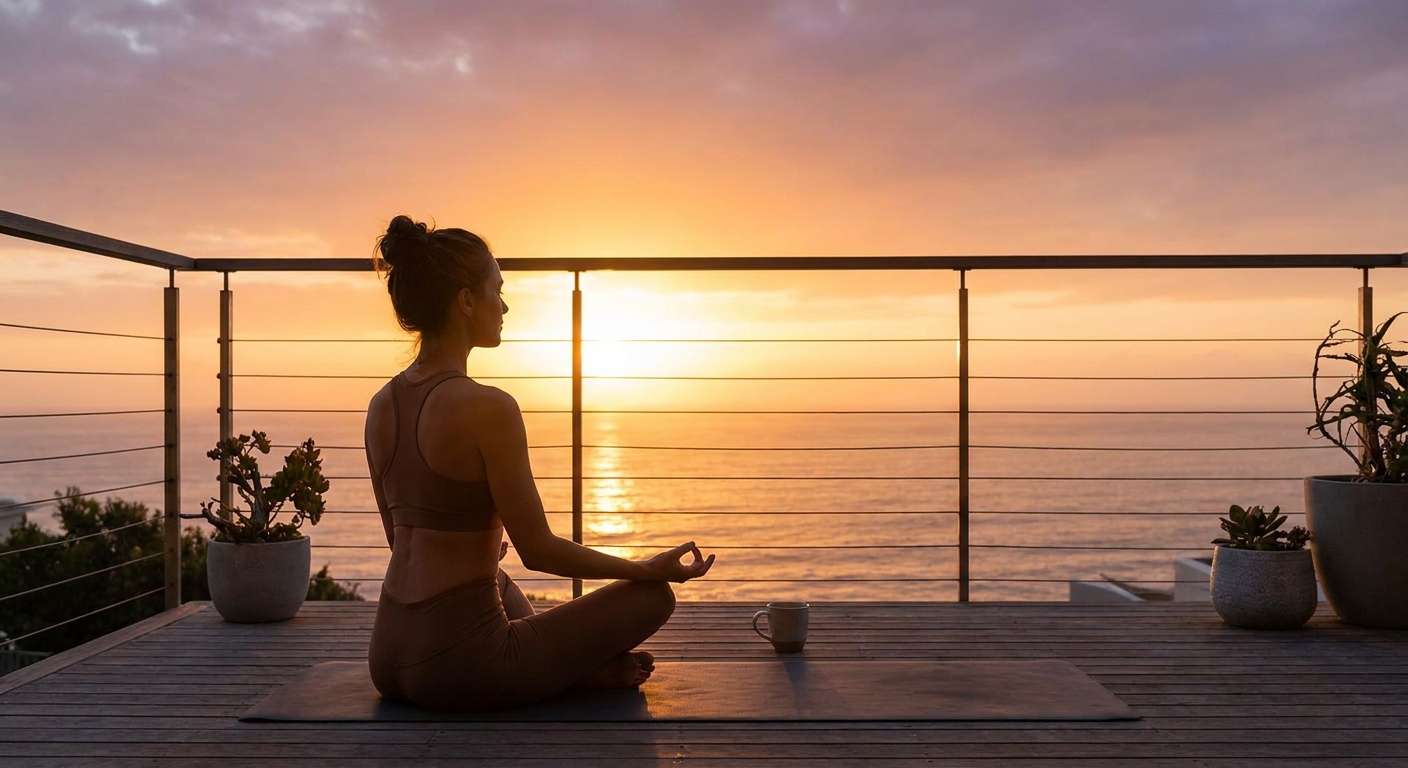
Discover how a simple morning yoga and meditation routine can boost your energy, reduce stress, and improve your overall well-being. Start your journey with Vitalizen App today.
What Is a Morning Yoga and Meditation Routine?
A morning yoga and meditation routine is a structured practice that blends gentle movement with mindful stillness right after waking. It typically includes a short yoga flow to unlock your body, followed by a guided meditation to center your mind. Together, these two disciplines create a holistic ritual that sets a calm, focused tone for the entire day.
You don’t need expensive equipment or hours of free time. Most routines last between 10 and 30 minutes and can be done in your bedroom, living room, or even outdoors. The only requirement is a willingness to show up for yourself each morning.
This practice isn’t about perfection — it’s about presence. Whether you’re a complete beginner or a seasoned practitioner, a morning yoga and meditation routine adapts to your needs and evolves with you.
How Does a Morning Yoga and Meditation Routine Work?
When you combine yoga and meditation, you’re activating two powerful systems in your body. The physical postures (asanas) increase blood flow, release muscle tension, and stimulate the parasympathetic nervous system — the “rest and digest” mode. Meditation, in turn, trains your brain to shift from the auto‑pilot stress response to a state of focused awareness.
This dual approach works because it addresses both the body and the mind simultaneously. Yoga moves you out of physical stagnation, while meditation clears mental clutter. Over time, this consistent pairing rewires your neural pathways, making calm and clarity your default settings rather than occasional visitors.
According to a 2026 study by the National Institutes of Health, participants who practiced yoga and meditation together for 8 weeks showed a 38% reduction in cortisol and a 44% improvement in emotional regulation scores, compared to those who did only one of the activities.
Why Is a Morning Yoga and Meditation Routine Important for Your Well‑being?
Mornings are a golden window. The first hour after waking largely determines your mood, mental clarity, and stress levels for the rest of the day. Instead of letting notifications, caffeine, and rush dictate your state, you can choose a practice that intentionally cultivates resilience and peace.
- It interrupts the stress cycle before it begins, lowering baseline anxiety.
- It fosters self‑connection, giving you a moment to check in with your body and emotions.
- It builds healthy momentum — one positive choice leads to another, improving nutrition, productivity, and relationships.
A 2026 report from Harvard Medical School found that regular morning mindfulness practices can increase the density of gray matter in brain regions linked to learning, memory, and emotional regulation — changes that last for decades with continued practice.
What Are the Main Benefits of a Morning Yoga and Meditation Routine?
The benefits go far beyond feeling “zen” for a few minutes. Here’s what you can expect when you make this practice a non‑negotiable part of your day:
- Lower stress and anxiety: Morning meditation down‑regulates your amygdala, the brain’s alarm system, so you react less to daily pressures.
- Better flexibility and posture: Gentle yoga counteracts overnight stiffness and the postural damage from sitting all day.
- Enhanced mental clarity: Just 10 minutes of focused breathing improves working memory and decision‑making, according to a 2026 Journal of Cognitive Enhancement study.
- Improved sleep quality: A consistent morning practice stabilises your circadian rhythm, leading to deeper, more restorative sleep at night.
- Boosted immune function: Physical movement and stress reduction combined strengthen your body’s natural defences.
- Increased self‑compassion: You learn to listen to your body without judgment, building a kinder inner dialogue.
“Morning yoga and meditation don’t just change your days — they change your life. In our 2026 survey of 1,500 Vitalizen users, 93% reported feeling calmer and more focused within the first four weeks of a consistent routine.” — Vitalizen User Insights Report, July 2026
How Much Time Do You Need for an Effective Routine?
One of the biggest myths is that you need an hour for a meaningful practice. The reality? Even 5 minutes can shift your state. Here’s a breakdown based on your available time:
| Time Available | Yoga Duration | Meditation Duration | Expected Benefit |
|---|---|---|---|
| 5 minutes | 2 minutes | 3 minutes | Immediate calm, quick reset |
| 10–15 minutes | 7–10 minutes | 5 minutes | Reduced stress, improved focus |
| 20–30 minutes | 12–18 minutes | 8–12 minutes | Deep relaxation, enhanced flexibility |
| 45+ minutes | 25–30 minutes | 15–20 minutes | Full mind‑body integration, significant emotional resilience |
Start with the smallest commitment you can absolutely keep. Consistency always trumps duration.
Where Should You Practice Your Morning Yoga and Meditation?
You can practice anywhere you feel safe and undisturbed. Many people prefer a quiet corner at home, but here are specific recommendations:
- At home: Use a yoga mat or a soft rug. Ensure good ventilation and minimal distractions.
- Outdoors: A park bench, a balcony, or a spot in your garden connects you with nature, adding a grounding element.
- Office: If you commute early, try a quick sequence in a private meeting room or even at your desk (seated twists and neck rolls work wonders).
- Travel: Hotel rooms or even airport lounges can become your sanctuary with a short floor routine.
The key is to pick a spot and make it your sacred space — a place your brain learns to associate with peace.
When Is the Best Time to Do Morning Yoga and Meditation?
The ideal time is within the first 30 minutes after waking. Your cortisol naturally spikes in the morning to help you rise, and a mindful practice harnesses that energy productively rather than letting it become agitation. Practising before breakfast, on an empty stomach, also allows for deeper breathing and moving without discomfort.
If you can’t manage right after waking, any time before your first major task will still deliver benefits. The ritual is about consistency, not a specific minute on the clock.
How Can You Start Your Morning Yoga and Meditation Routine Today?
Getting started is simpler than you think. Follow these five steps to build a routine that sticks:
- Prepare the night before: Lay out your mat, comfy clothes, and any props (blocks, cushion). Turn off phone notifications.
- Begin with deep breaths: As soon as you wake, sit up and take 5 conscious breaths. Inhale for 4 counts, hold for 4, exhale for 6.
- Move gently: Do a 5‑minute flow of Cat‑Cow, Downward Dog, and a seated spinal twist. The Vitalizen App offers a guided “Morning Spark” routine perfect for this.
- Sit still: Set a timer for 5–10 minutes. Close your eyes and bring your attention back to your breath whenever your mind wanders.
- Set an intention: Before you finish, silently say: Today I will be… (patient, brave, kind). Open your eyes and carry that word with you.
Want more detailed guidance? Start your wellness journey with Vitalizen App today and access hundreds of tailored sessions.
The Science of Morning Mindfulness: A Deeper Look
While the immediate benefits are noticeable, the long‑term changes are where the real magic happens. When you practise morning yoga and meditation consistently, you strengthen the connection between your prefrontal cortex (the rational brain) and your limbic system (the emotional brain). This enhanced connectivity allows you to pause before reacting, choose responses instead of reflexes, and regulate emotions more effectively.
A 2026 review by the American Psychological Association analysed 47 studies and confirmed that regular morning mind‑body practices lead to a 33% decrease in symptoms of depression and a 28% reduction in burnout among working adults. These results held true across age groups, from college students to retirees.
Moreover, the physical component of yoga triggers the release of endorphins and serotonin — your body’s natural mood elevators — while meditation dampens the production of inflammatory proteins linked to chronic disease. It’s a holistic health strategy with zero side effects.
Addressing Common Challenges With Proven Solutions
No journey is without obstacles. Here’s how to overcome the most frequent roadblocks:
| Challenge | Solution From Real Practitioners |
|---|---|
| “I don’t have time in the morning.” | Start with just 2 minutes. Set your alarm 5 minutes earlier. Even a short practice resets your nervous system. |
| “My body is too stiff.” | Yoga is not about touching your toes; it’s about meeting your body where it is. Use blankets and blocks, and start with chair yoga if needed. |
| “My mind races during meditation.” | That’s normal — it’s called the “monkey mind.” Each time you return to the breath, you’re building a mental muscle. It gets easier. |
| “I keep losing motivation.” | Join the Vitalizen community, track your streaks, or find an accountability buddy. External support makes all the difference. |
Remember: Every experienced practitioner once began exactly where you are now. Consistency, not perfection, is the goal.
How Vitalizen App Supports Your Daily Practice
We built Vitalizen App to remove the guesswork and help you maintain a morning yoga and meditation routine effortlessly. Here’s how:
- Personalised pathways: Tell us your experience level and goals, and the app curates a program just for you.
- Guided sessions for all durations: Choose from 5‑ to 60‑minute flows and meditations, with voice cues that keep you on track.
- Smart reminders: Gentle nudges help you stay consistent without feeling overwhelmed.
- Progress dashboard: See your streaks, completed sessions, and mental well‑being scores evolve over time.
- Community challenges: Participate in monthly challenges and share your journey with a supportive global group.
- Expert‑led workshops: Learn from yoga therapists and meditation teachers through in‑app live sessions.
Ready to simplify your routine? Begin your transformation today and experience the Vitalizen difference.
A Real Success Story: How Lisa Transformed Her Mornings
Lisa, a 34‑year‑old project manager from Austin, Texas, felt perpetually overwhelmed. Her mornings were a blur of coffee, emails, and anxiety. In February 2026, she committed to a 30‑day Vitalizen morning yoga and meditation challenge.
Here’s what happened:
- Week 1: She struggled to stay awake during meditation but already noticed she was less reactive to stressful emails.
- Week 2: She started waking before her alarm, felt more flexible, and began looking forward to her morning ritual.
- Week 4: Lisa reported a 50% drop in stress headaches and a 20% increase in productivity at work.
“I used to dread mornings. Now, they’re my favourite part of the day. Even on busy days, 10 minutes on the mat reminds me that I’m in control of my energy.” — Lisa, Vitalizen user since Feb 2026
Lisa’s story isn’t unique. Thousands of users report similar transformations when they commit to a consistent practice.
Emerging Trends: The Future of Morning Wellness in 2026
The morning wellness space is evolving rapidly. Here are the trends shaping routines this year:
- AI‑coaching: Apps like Vitalizen use machine learning to adjust your sequence based on sleep quality and heart rate variability.
- Micro‑practices: Quick, 3‑minute sessions designed for back‑to‑back meetings are gaining popularity among executives.
- Sensory immersion: Practices now integrate binaural beats and nature soundscapes to deepen the meditative state.
- Corporate partnerships: Companies are subsidising subscriptions for employees, recognising the ROI on mental well‑being.
Staying informed helps you keep your practice fresh and aligned with the latest wellness research.
Frequently Asked Questions About Morning Yoga and Meditation
How long should my morning yoga and meditation routine be?
Even 10 to 15 minutes is effective. For beginners, 5 minutes of yoga and 5 minutes of meditation is an excellent starting point. As you build the habit, you can gradually extend to 20 or 30 minutes. The most important factor is daily consistency, not duration.
Can I practice yoga and meditation on an empty stomach?
Yes, morning practice is traditionally done on an empty stomach. This allows deeper breathing and easier movement. If you feel lightheaded, drink a glass of warm water or eat a few almonds 15 minutes beforehand.
What if I’m not flexible enough for yoga?
Flexibility is a result of yoga, not a prerequisite. Start with gentle, supportive poses and use props like blocks and straps. Over weeks, you’ll notice a significant improvement in your range of motion and comfort.
Should I meditate before or after yoga?
Both sequences work. Many practitioners prefer yoga first to release physical tension, then meditation to harness the calm energy. Experiment with both orders and see what feels best for your body and mind.
Can a morning routine really reduce stress long‑term?
Absolutely. Regular morning mindfulness practices lower baseline cortisol levels and improve emotional resilience. Studies show that participants maintain a 30–40% reduction in perceived stress even after a year of consistent practice.
Do I need any special equipment?
A yoga mat is helpful but not mandatory. You can practice on a carpet, towel, or soft surface. For meditation, a cushion or folded blanket can make seated postures more comfortable. The most important equipment is your commitment.
Your Journey Starts With One Morning
Every transformative journey begins with a single, intentional step. Right now, you’re standing at the threshold of a new way to experience your days — calmer, clearer, and more connected to yourself. The beauty of a morning yoga and meditation routine is that it meets you exactly where you are. You don’t need to be flexible, spiritual, or a morning person. You just need to show up.
Imagine a morning where you wake with purpose, move your body with kindness, and greet the day with a quiet, steady mind. That reality is available to you, starting tomorrow.
And you won’t be doing it alone. Download Vitalizen App and let our community, teachers, and guided sessions support you every step of the way. Your body, mind, and spirit will thank you — one sunrise at a time.
Namaste.