

Morning Yoga & Meditation: 5 Science-Backed Benefits for Your Mental Health
What is a Morning Yoga and Meditation Routine?
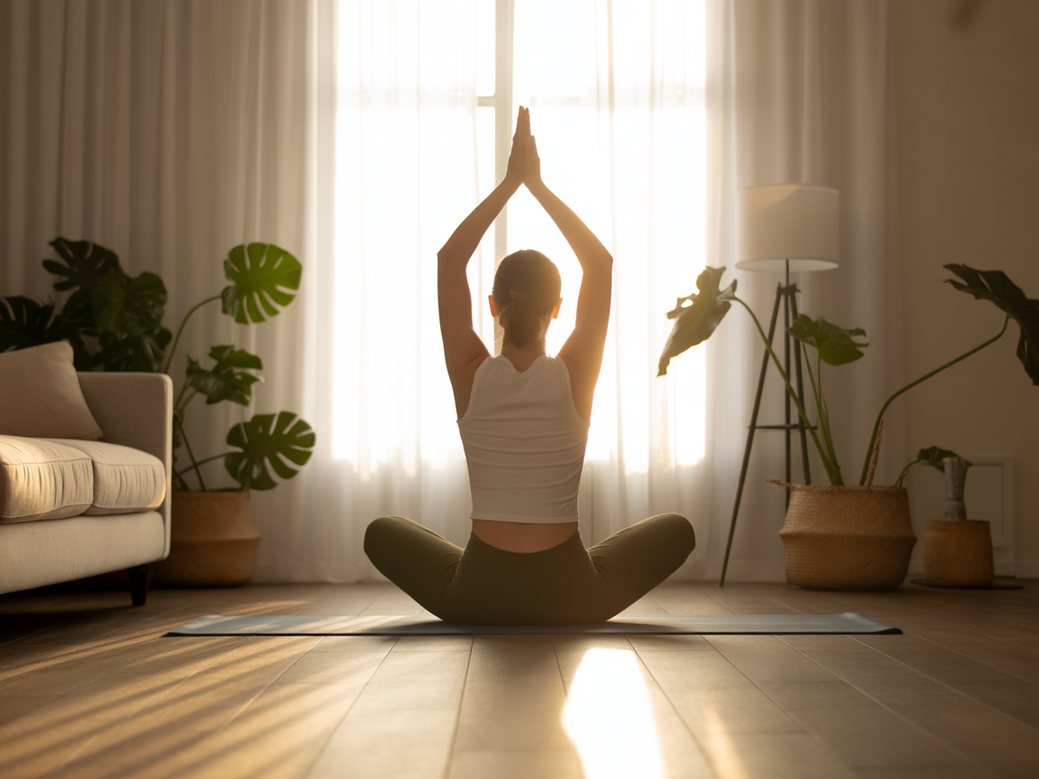
A morning yoga and meditation routine is a structured practice that combines gentle physical postures with focused mindfulness techniques at the start of your day. This practice involves coordinating breath with movement to awaken the body, followed by seated stillness to center the mind. The goal is to establish a calm, intentional state that carries through your entire day.
Unlike a standard workout, this routine prioritizes the mind-body connection. You are not just stretching muscles; you are actively down-regulating your nervous system. This combination creates a powerful synergy, making it one of the most efficient self-care habits you can adopt for long-term mental and physical well-being.
Main Characteristics of a Morning Practice
- Gentle Activation: Uses low-impact movements to increase blood flow and release tension without stressing the body.
- Breath-Centric Focus: Links every movement to an inhale or exhale, which anchors your attention and calms the mind.
- Consistent Timing: Performed at the same time each day to regulate your circadian rhythm and build a lasting habit.
Why is a Morning Yoga and Meditation Practice Important for Your Mental Health?
Your mental health is profoundly influenced by how you begin your day. If you start with stress and reactivity, that pattern often persists. A morning practice is important because it proactively sets your neurochemical baseline. Instead of letting the day dictate your mood, you take control of your internal state from the first moments of consciousness.
This practice directly combats the modern epidemic of chronic stress. By intentionally activating your parasympathetic nervous system—the “rest and digest” mode—you lower stress hormones before they can spike. This daily reset builds a foundation of calm, making you less susceptible to anxiety and overwhelm as the day’s challenges arise.
How Does a Morning Yoga and Meditation Routine Work?
This routine works on a dual level: physiological and psychological. Physically, the yoga postures (asanas) release muscular tension and improve circulation, signaling to your brain that the body is safe. The deep, diaphragmatic breathing during both yoga and meditation stimulates the vagus nerve, a key component of the parasympathetic nervous system that lowers heart rate and blood pressure.
Psychologically, the meditation component trains your brain to observe thoughts without immediate reaction. This is a skill called metacognitive awareness. Over time, this rewires the brain through a process known as neuroplasticity, strengthening the prefrontal cortex (your center of logic and calm) and reducing the reactivity of the amygdala (your brain’s fear center). You are essentially training your mind to respond thoughtfully rather than react impulsively.
What Are the 5 Science-Backed Benefits of Morning Yoga and Meditation?
At Vitalizen.app, we believe that true wellness starts with small, intentional habits. Whether you are a complete beginner or a seasoned practitioner, combining yoga with meditation creates a powerful synergy that benefits both your body and your mind. Let us explore five science-backed benefits of this morning practice and discover how you can start today.
1. Reduces Stress and Lowers Cortisol Levels
Stress is not just a feeling — it is a physiological response. When you are stressed, your body releases cortisol, the primary stress hormone. Chronically elevated cortisol levels have been linked to anxiety, weight gain, sleep disturbances, and even heart disease.
According to a study published in the Journal of Alternative and Complementary Medicine, participants who practiced yoga and meditation regularly showed a significant reduction in cortisol levels. The combination of mindful movement and focused breathing activates the parasympathetic nervous system — your body’s “rest and digest” mode.
By starting your day with a gentle yoga flow followed by a short meditation session, you essentially reset your stress response before the demands of the day begin. This means fewer reactive moments and more calm, intentional responses to challenges.
2. Improves Focus and Cognitive Function
Have you ever sat down to work but found yourself unable to concentrate? Meditation trains your brain to focus. A landmark study from Harvard University found that just 8 weeks of mindfulness meditation increased gray matter density in the hippocampus — the area of the brain responsible for learning and memory.
When you pair meditation with yoga, the benefits multiply. Yoga requires you to coordinate breath with movement, which enhances mind-body awareness and sharpens your ability to concentrate. Many practitioners report feeling more productive and mentally clear after their morning practice.
If you struggle with brain fog or scattered thoughts, a morning routine that includes both yoga and meditation might be exactly what your brain needs. For guided sessions tailored to your level, explore the beginner-friendly programs at Vitalizen.
3. Enhances Emotional Resilience
Life throws curveballs. How you respond to them makes all the difference. Emotional resilience is not about avoiding difficult emotions — it is about navigating them with grace and self-compassion.
Yoga and meditation teach you to observe your thoughts without judgment. Over time, this practice rewires your brain to respond rather than react. A 2018 meta-analysis in Frontiers in Human Neuroscience confirmed that regular meditation practice reduces activity in the amygdala — the brain’s fear center — while strengthening connections to the prefrontal cortex, which governs rational decision-making.
In other words, you become less reactive and more grounded. That annoying traffic jam? You handle it better. That difficult conversation at work? You approach it with clarity instead of anxiety.
4. Supports Better Sleep Quality
Ironically, the best way to improve your sleep might be to focus on your morning routine. Circadian rhythms — your body’s internal clock — respond strongly to morning habits. When you practice yoga and meditation at the start of your day, you signal to your body that it is time to be awake and alert.
But the benefits extend into the night. A study from the National Center for Complementary and Integrative Health found that mindfulness meditation significantly improved sleep quality in older adults with moderate sleep disturbances. Yoga, particularly gentle styles like Hatha or Yin, prepares the body for rest by releasing physical tension stored in muscles and joints.
Many Vitalizen users report falling asleep faster and waking up feeling more refreshed after establishing a consistent morning practice. It is a beautiful cycle: better mornings lead to better nights, and better nights lead to even better mornings.
5. Builds a Sustainable Self-Care Habit
Let us be honest — starting a new habit is hard. But combining yoga and meditation into one seamless morning routine makes it easier to stick with. Instead of trying to find separate time for exercise and mindfulness, you get both in a single, efficient session.
Research from the European Journal of Social Psychology suggests it takes an average of 66 days to form a new habit. However, when the habit feels good and delivers immediate benefits — like reduced stress and improved mood — you are far more likely to continue.
The key is to start small. Even 5 minutes of yoga followed by 5 minutes of meditation can create a powerful ripple effect in your life. As you build momentum, you can gradually increase your practice time.
Ready to build a routine that actually lasts? Start your journey with Vitalizen today and discover how simple consistency can transform your well-being.
How to Start Your Morning Yoga and Meditation Routine Today
Getting started does not require a fancy studio or expensive equipment. Here is a simple framework you can follow tomorrow morning:
- Wake Up 15 Minutes Earlier: Give yourself grace — this adjustment gets easier with time. The extra time is an investment in a calmer day.
- Find a Quiet Space: Choose a corner of your bedroom or living room where you will not be disturbed. A dedicated spot helps signal to your brain that it is practice time.
- Begin with 5 Gentle Yoga Stretches: Cat-Cow, Downward Dog, and Child’s Pose are excellent choices to awaken the spine and release overnight stiffness.
- Transition into 5 Minutes of Seated Meditation: Focus on your breath. When your mind wanders, gently bring it back without judgment. This is the core of the practice.
- Close with 5 Minutes of Gratitude or Intention-Setting: Ask yourself: How do I want to show up today? This frames your mindset for the hours ahead.
If you prefer guided sessions, the Vitalizen app offers a wide variety of yoga and meditation classes designed for every level. From quick 10-minute flows to deeper 30-minute practices, you can find exactly what fits your schedule and mood.
How Much Time Does a Morning Yoga and Meditation Practice Require?
The ideal duration for a morning practice is flexible, but consistency matters more than length. For beginners, we recommend starting with just 10 to 15 minutes total. This is enough time to gain the physiological benefits without feeling overwhelmed. As the habit solidifies, you can naturally extend your session to 20 or 30 minutes.
The table below outlines a few common time commitments and what you can achieve in each:
| Total Duration | Yoga (Asana) | Meditation | Best For |
|---|---|---|---|
| 10 Minutes | 5 Minutes | 5 Minutes | Absolute beginners, busy mornings |
| 15 Minutes | 7-8 Minutes | 7-8 Minutes | Building consistency, stress reduction |
| 20 Minutes | 10 Minutes | 10 Minutes | Deepening focus and flexibility |
| 30 Minutes | 15 Minutes | 15 Minutes | Comprehensive mind-body reset |
Remember, a short practice done daily is infinitely more powerful than a long practice done sporadically. The Vitalizen app has short sessions perfect for busy mornings.
Frequently Asked Questions About Morning Yoga and Meditation
Can I do yoga and meditation on an empty stomach?
Yes, it is actually recommended to practice yoga and meditation on an empty or very light stomach. Morning is the ideal time because your digestive system is at rest. If you feel dizzy, drink a small glass of water or have a piece of fruit before your practice.
Do I need to be flexible to do yoga?
Absolutely not! Flexibility is a result of yoga, not a requirement. Yoga is about connecting your breath with movement and listening to your body. Every pose can be modified to suit your current level. Start where you are and let your practice evolve naturally.
What is the best type of yoga for beginners in the morning?
Gentle styles like Hatha, Yin, or Restorative yoga are excellent for morning practice. These styles focus on slow movements, deep breathing, and relaxation. Avoid vigorous styles like Power Yoga or Ashtanga first thing in the morning unless you are already conditioned for them.
Can meditation really help with anxiety?
Yes, numerous studies confirm that regular meditation reduces symptoms of anxiety. By training your brain to focus on the present moment, you break the cycle of worry and rumination. Many users of Vitalizen report significant reductions in anxiety after just a few weeks of consistent practice.
When is the best time to do morning yoga and meditation?
The best time is immediately after waking up, before checking your phone or engaging with the day’s demands. This is often called the “golden hour” for habit formation. Your mind is most receptive, and the external world is typically quiet. Practicing at the same time daily strengthens your circadian rhythm, making it easier to wake up and fall asleep consistently.
Your Morning, Transformed
The evidence is clear: a morning routine that combines yoga and meditation is one of the most powerful investments you can make in your mental and physical health. From lowering stress and improving focus to building emotional resilience and better sleep, the benefits touch every area of your life.
“According to a 2018 meta-analysis in Frontiers in Human Neuroscience, regular meditation practice reduces activity in the amygdala while strengthening connections to the prefrontal cortex, effectively rewiring the brain for greater emotional control.”
But knowing is only half the journey. The real transformation happens when you take action. Tomorrow morning, give yourself the gift of 15 minutes. Roll out your mat, take a deep breath, and begin.
And if you want guidance, community, and a library of world-class yoga and meditation classes at your fingertips, join the Vitalizen community today. Your future self will thank you.
Namaste.