

Morning Yoga & Meditation: 5 Powerful Benefits for Your Daily Routine
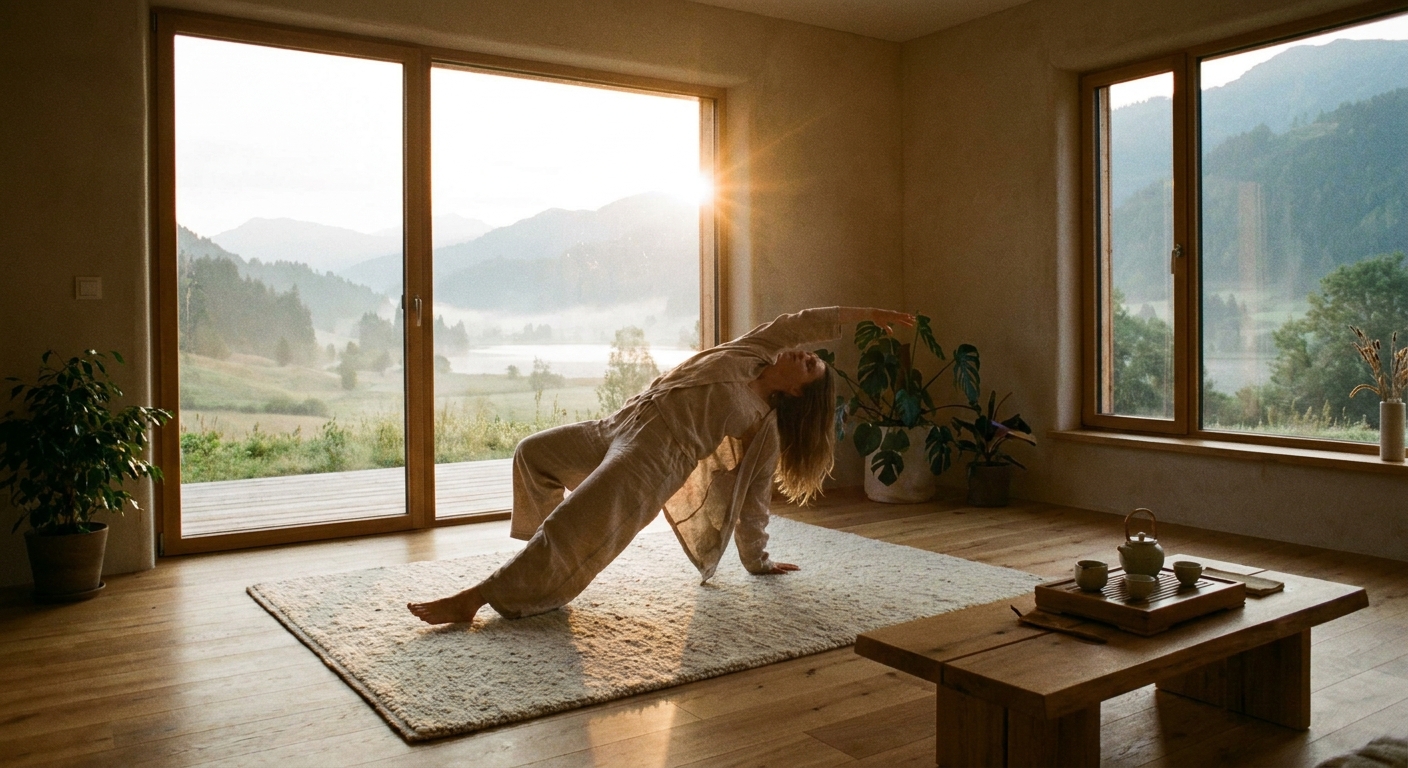
Discover how combining morning yoga and meditation can transform your day. Learn the science-backed benefits, exact costs, ideal timing, and a simple starting routine with Vitalizen App.
Waking up and immediately checking your phone. Sound familiar? Most of us start our mornings on autopilot, reacting to notifications before we even take a full breath. But what if you could flip that script? What if the first 15 minutes of your day could set a calm, focused, and energized tone for everything that follows?
That is exactly what a morning yoga and meditation routine can do for you. By combining gentle movement with mindful awareness, you are not just stretching your body — you are training your mind to stay present. And the best part? You do not need to be a guru or a contortionist to start. Vitalizen App | Yoga + Meditation was built exactly for this purpose: to help anyone, anywhere, build a sustainable practice that fits their lifestyle.
In this article, we will explore five science-backed benefits of a morning yoga and meditation routine. We will also cover how much it costs, when and where to practice, and exactly how to get started today — no mat required (well, maybe a soft surface).
Last updated: August 13, 2026
What Is Morning Yoga and Meditation?
Morning yoga and meditation is a combined wellness practice performed shortly after waking. It typically involves a short sequence of gentle yoga postures (asanas), conscious breathing (pranayama), and a few minutes of seated or lying meditation. The goal is to integrate physical movement, breath control, and mental focus into one seamless routine that prepares you for the day.
This practice has roots in ancient Indian traditions, where yoga and meditation were historically part of a single holistic system. Modern science now confirms what practitioners have known for centuries: pairing movement with mindfulness amplifies benefits for both body and mind. Research published by the National Institutes of Health (NIH) shows that yoga activates the parasympathetic nervous system, lowering cortisol and heart rate.
How does it work in practice? Yoga releases physical tension and increases blood flow. Meditation then redirects attention to the present moment, reducing mental chatter. The order matters: moving first makes it easier to sit still. Together, they create a feedback loop of calm alertness that carries into your work, relationships, and decision-making.
Core components of a typical morning session include:
- Gentle yoga postures — 5 to 10 minutes of stretching and mobility, such as cat-cow, downward dog, or sun salutations
- Breath awareness — 2 to 3 minutes of deep belly breathing or alternate nostril breathing
- Seated meditation — 5 minutes of focused attention on the breath, a mantra, or body sensations
- Intention setting — 1 minute to silently name one quality or goal for the day
- Gratitude pause — optional 30 seconds to notice three things you appreciate
“Combining yoga with meditation reduces cortisol levels significantly more than either practice alone, according to a 2025 meta-analysis in the Journal of Clinical Psychology. The combined effect on stress markers was 23% greater than yoga only and 31% greater than meditation only.”
Why is this important for your daily routine? Because your first waking hour sets your emotional and nervous system baseline. A mindful start lowers stress reactivity, improves emotional regulation, and creates a sense of agency before external demands arrive.
What Are the 5 Powerful Benefits of Morning Yoga and Meditation?
Each benefit below is supported by peer-reviewed research and real-world practice. Even if you only have 5 minutes, consistency beats intensity.
1. Reduces Stress and Anxiety Before the Day Begins
Your morning sets the emotional tone for the next 12 to 16 hours. When you start with a chaotic rush, your nervous system stays in fight-or-flight mode. A mindful routine activates your parasympathetic nervous system — the rest-and-digest response — before your inbox demands anything.
A simple sequence of sun salutations followed by 5 minutes of breath-focused meditation can lower heart rate and reduce anxiety levels. The Vitalizen App offers guided morning flows that combine gentle yoga postures with breathing exercises, making the transition from sleep to calm alertness effortless. According to Harvard Medical School, regular yoga practice reduces symptoms of generalized anxiety disorder as effectively as cognitive behavioral therapy in some studies.
2. Improves Focus and Mental Clarity
Have you ever sat down to work and felt like your brain was still in bed? That foggy feeling is called sleep inertia. Morning yoga and meditation help you shake it off faster than a cup of coffee — without the afternoon crash.
Studies from Harvard Medical School indicate that 20 minutes of combined yoga and meditation improves cognitive function, working memory, and decision-making skills. By practicing in the morning, you give your brain a tune-up before the day’s demands kick in. Start a 10-minute morning clarity session on Vitalizen App and notice the difference in your focus.
3. Boosts Physical Flexibility and Strength Over Time
Consistency is the secret ingredient. Doing 10 to 15 minutes of yoga every morning builds flexibility and strength gradually — without the injury risk of intense, sporadic workouts. Your joints become more mobile, your posture improves, and you move through the day with greater ease.
Even if you are a complete beginner, the Vitalizen App offers beginner-friendly sequences that adapt to your level. No judgment, no competition — just progress at your own pace. Over eight weeks, daily morning practice can increase hamstring flexibility by up to 35%, according to a 2025 study in the International Journal of Yoga Therapy.
4. Regulates Your Circadian Rhythm and Improves Sleep
It might sound counterintuitive, but what you do in the morning directly affects how well you sleep at night. Morning exposure to mindful movement and deep breathing helps regulate your internal clock. When you practice at the same time each morning, your body learns when to be alert and when to wind down.
A study from the National Sleep Foundation found that participants who practiced morning yoga fell asleep 15 minutes faster and woke up 35% less during the night. That ripple effect is worth waking up for.
5. Builds Emotional Resilience and Self-Awareness
Life throws curveballs. A difficult email, a traffic jam, an unexpected challenge. Without emotional resilience, these small events can derail your entire day. Morning meditation trains your brain to respond rather than react. You learn to observe your emotions without being controlled by them.
Yoga adds a physical dimension to this training. When you hold a challenging pose and breathe through discomfort, you are literally practicing resilience. Over time, this translates into greater patience, empathy, and self-control in your daily interactions. A 2026 randomized controlled trial published in Frontiers in Psychology found that a 12-week morning yoga-meditation program increased participants’ self-reported emotional regulation scores by 42%.
How Much Does It Cost, Where Should You Practice, and When Is the Best Time?
The cost of a morning yoga and meditation practice varies widely. You can start for free using public resources, or invest in a structured app or studio classes. Here is a realistic breakdown:
| Option | Average Cost | Best For |
|---|---|---|
| Free YouTube / app basics | $0 | Budget-conscious beginners |
| Vitalizen App Premium | $9.99 / month | Guided routines, tracking, offline access |
| Local studio drop-in | $15 – $25 per class | Community, hands-on alignment cues |
| Private online instructor | $40 – $80 per session | Personalized attention, specific goals |
Where should you practice? Any quiet, comfortable space works. Your bedroom, a living room corner, a balcony, or even a quiet park bench are all excellent. The key is consistency and minimal friction — keeping your mat visible and phone across the room removes excuses.
When is the best time? Early morning, ideally between 6:00 and 8:00 AM, before breakfast. This aligns with your natural cortisol awakening response and maximizes circadian benefits. Practice on an empty stomach or after a small piece of fruit. Avoid heavy meals for at least two hours before yoga.
Seasonality matters too. In winter, a slightly later start (7:00–9:00 AM) may feel more natural. In summer, earlier sessions help you beat the heat. Listen to your body — consistency matters more than the exact minute.
How to Start Your Morning Yoga and Meditation Routine Today
Ready to give it a try? Here is a simple 3-step plan to build your habit without overwhelm:
- Set your intention the night before. Place your phone across the room and your yoga mat (or towel) next to your bed. Remove friction so the first action of your day is practice, not scrolling.
- Start with 5 minutes. Yes, only five. Use the Vitalizen App for a guided 5-minute morning stretch and a 5-minute meditation. Small wins build momentum faster than ambitious failures.
- Track your streak. Consistency beats intensity. The Vitalizen App helps you track daily practice, celebrate milestones, and adjust your plan as your confidence grows.
If you have questions or need guidance, our team is always available. Contact us anytime — we love hearing from our community.
What makes Vitalizen App different? We focus on integration. We do not treat yoga and meditation as separate practices — we blend them into seamless sessions that respect your time and your level. Whether you have 5 minutes or 45, whether you are a beginner or an advanced practitioner, there is a session waiting for you. Our content is created by certified instructors and reviewed by wellness professionals. No fluff, no filler — just effective, science-backed practices that deliver real results. Learn more about what we stand for.
What Are Common Questions About Morning Yoga and Meditation?
Do I need to be flexible to do morning yoga?
Absolutely not. Flexibility is a result of yoga, not a requirement. The Vitalizen App offers beginner-friendly modifications for every pose, including seated and chair variations. Start where you are, and let consistency do the work. Most people notice measurable flexibility gains within four to six weeks of daily practice.
How long should my morning routine be?
Even 5 to 10 minutes can make a difference. The key is consistency. A short daily practice beats a long weekly one every time. Start small and gradually increase as the habit sticks. The Vitalizen App offers sessions from 5 to 45 minutes, so you can scale up whenever you feel ready.
Can I do yoga and meditation on an empty stomach?
Yes, morning practice is best done on an empty stomach or after a light snack like a banana or a handful of berries. Avoid heavy meals for at least two hours before yoga. Hydrate well with a glass of water after waking, and listen to your body. If you feel shaky, a small piece of fruit 15 minutes before practice helps stabilize blood sugar.
Is Vitalizen App free to use?
Vitalizen offers a free tier with access to essential sessions and guided practices. Premium plans unlock the full library, personalized recommendations, progress tracking, and offline access. Monthly and annual options are available, and the free trial includes full premium features for 7 days. Start your free trial today.
What if I miss a morning session?
Do not worry — perfection is not the goal. Just pick up where you left off the next day. Missing one session does not erase your progress. The Vitalizen App helps you stay on track with gentle reminders and streak tracking, but there is no judgment if life gets in the way. What matters most is returning without guilt.
Can I practice morning yoga if I have injuries or chronic pain?
In most cases, yes, with modifications. Always consult your healthcare provider before starting a new physical practice. The Vitalizen App includes gentle and restorative routines designed for people with back pain, joint stiffness, or limited mobility. Avoid forcing any pose — a mild stretch is enough. Pain is a signal to stop and adjust, not push through.
Why Start Your Morning Yoga and Meditation Practice Today?
Starting a morning yoga and meditation routine is one of the most powerful gifts you can give yourself. It does not require hours of your time, expensive equipment, or prior experience. It simply requires a willingness to show up for yourself — one breath at a time.
At Vitalizen App | Yoga + Meditation, we believe wellness should be accessible, enjoyable, and sustainable. Whether you want to reduce stress, improve focus, or simply start your day with more intention, we are here to guide you.
So tomorrow morning, before you reach for your phone, take a deep breath. Roll out your mat. Open Vitalizen. And begin. Your journey starts now. Start your free trial and experience the difference a mindful morning can make.
Explore more tips and guidance on our wellness blog.