

Morning Yoga & Meditation Routine: 5 Steps to Start Your Day Right
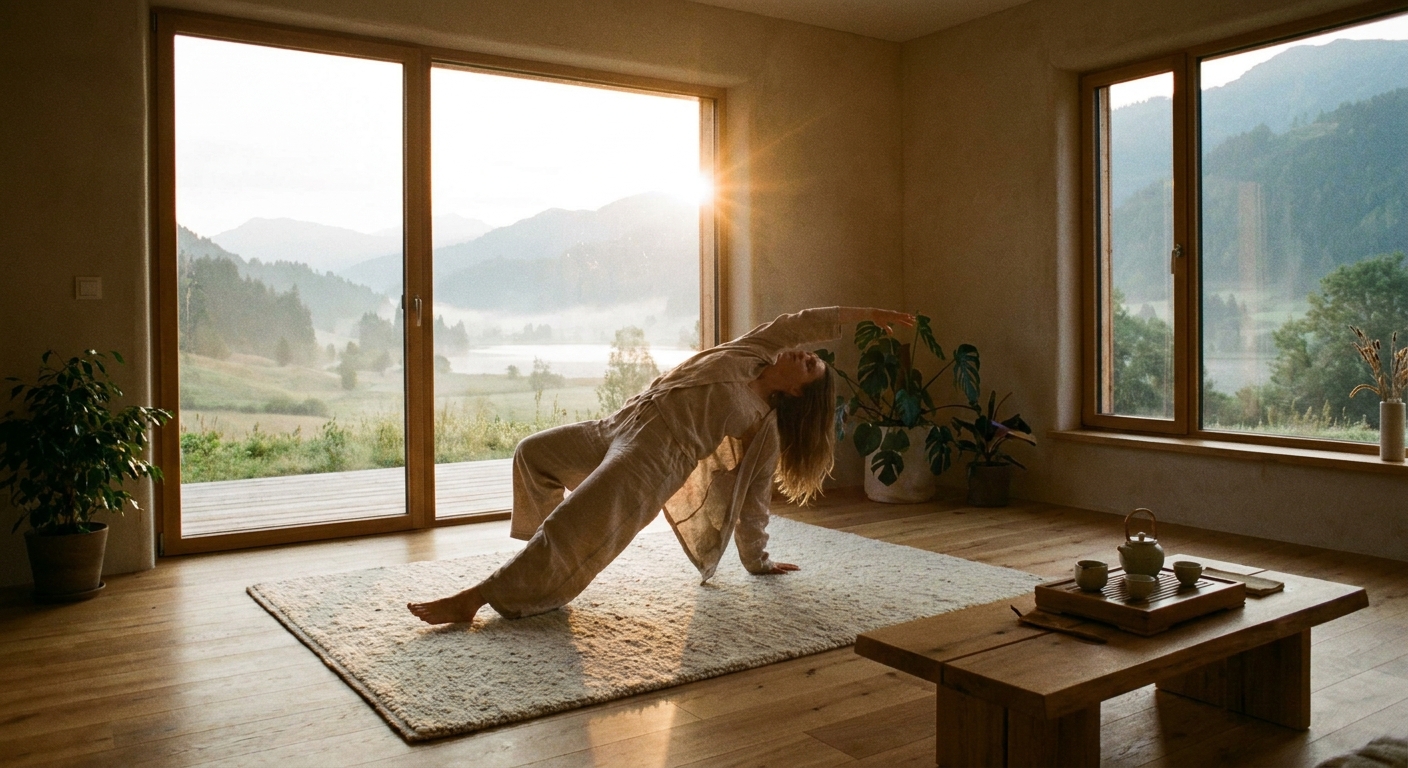
Imagine waking up feeling calm, centered, and ready to take on the world — without rushing, without stress, and without checking your phone first thing. Sounds like a dream, right? Well, it doesn’t have to be. A simple morning yoga and meditation routine can transform your entire day, and the best part? You only need 10 to 15 minutes.
In this guide, we’ll walk you through a practical 5-step routine designed for real people with busy mornings. Whether you’re a complete beginner or a seasoned practitioner, these steps will help you build a sustainable practice. And if you want guided support every step of the way, the Vitalizen App | Yoga + Meditation is here to help you stay consistent and motivated.
Why is a Morning Yoga and Meditation Routine Important?
Your morning sets the tone for the rest of the day. When you start with intention and movement, you’re more likely to make better decisions, stay focused, and handle challenges with grace. According to a study published by the National Institutes of Health, regular yoga practice reduces cortisol levels and improves mood. Combining yoga with meditation in the morning can:
- Reduce cortisol levels — lowering stress from the moment you wake up
- Improve mental clarity — helping you focus on what truly matters
- Boost energy naturally — without relying on caffeine or stimulants
- Enhance emotional resilience — making it easier to navigate difficult situations
- Regulate your circadian rhythm — supporting better sleep at night
- Increase flexibility and strength — over time, your body becomes more resilient
Moreover, a consistent morning practice helps improve digestion and reduces symptoms of anxiety and depression. It’s not just about exercise — it’s about creating a ritual that nourishes your body and mind.
If you’re new to this, check out our Yoga for Beginners guide to learn the basics before starting a routine.
How to Start Your Morning Yoga and Meditation Routine
Follow these five simple steps. Each step is designed to be short and effective, so you can complete the entire routine in 15 minutes or less.
Step 1: Wake Up Your Body with Gentle Stretches (3 Minutes)
Before you jump into anything intense, give your body time to transition from sleep to wakefulness. Start right in bed or on a yoga mat with these gentle movements:
- Child’s Pose (Balasana): Kneel on the floor, sit back on your heels, and stretch your arms forward. Breathe deeply for 30 seconds.
- Cat-Cow Stretch: On all fours, alternate between arching your back (cow) and rounding it (cat). Repeat 8 to 10 times.
- Neck Rolls: Slowly roll your head in circles to release tension from your neck and shoulders.
- Knee-to-Chest Stretch: Lying on your back, hug one knee at a time toward your chest.
These movements increase blood flow, wake up your spine, and signal to your nervous system that it’s time to start the day. As you stretch, focus on your breath — inhale deeply through your nose and exhale slowly through your mouth.
Step 2: Sun Salutations for Energy and Flow (5 Minutes)
Sun Salutations, or Surya Namaskar, are a sequence of 12 yoga poses that warm up the entire body. They’re perfect for a morning routine because they combine movement, breath, and focus. Here’s a simplified version:
- Stand tall at the front of your mat, hands together at your chest.
- Inhale and reach your arms overhead.
- Exhale and fold forward, touching the floor or your shins.
- Inhale and lift your chest halfway (flat back).
- Exhale and step or jump back into a plank position.
- Lower down gently (knees, chest, chin) or flow through Chaturanga.
- Inhale into Upward-Facing Dog or Cobra pose.
- Exhale into Downward-Facing Dog. Hold for 3 breaths.
- Step or jump forward to the front of your mat.
- Inhale and rise up with arms overhead.
- Exhale and return to standing with hands at your chest.
Repeat this sequence 3 to 5 times. If you’re short on time, even 2 rounds will make a difference. The key is to synchronize each movement with your breath — this is what makes yoga a moving meditation.
Step 3: Seated Meditation for Mental Clarity (5 Minutes)
After moving your body, it’s time to quiet your mind. Find a comfortable seated position — on a cushion, a chair, or the floor. Close your eyes and bring your attention to your natural breath. Follow this simple meditation:
- Minute 1: Breathe normally and count each exhale from 1 to 10. If your mind wanders, gently start over.
- Minute 2: Focus on the sensation of air entering and leaving your nostrils.
- Minute 3: Scan your body from head to toe, noticing any areas of tension.
- Minute 4: Imagine a warm, golden light filling your body with each inhale.
- Minute 5: Set an intention for your day — one word or phrase that represents how you want to feel.
This practice trains your brain to stay present and reduces the mental chatter that often leads to anxiety. Over time, you’ll notice improved concentration and a greater sense of inner peace. Research from Harvard Health shows that regular meditation can actually change brain structure for the better.
Step 4: Breathwork to Regulate Your Nervous System (2 Minutes)
Breathwork, or pranayama, is a powerful tool to shift your energy and mood. For the morning, we recommend Nadi Shodhana (Alternate Nostril Breathing), which balances the left and right hemispheres of the brain:
- Sit comfortably and bring your right hand to your nose.
- Close your right nostril with your thumb and inhale slowly through your left nostril for 4 counts.
- Close your left nostril with your ring finger, release your thumb, and exhale through your right nostril for 4 counts.
- Inhale through your right nostril for 4 counts.
- Close your right nostril and exhale through your left nostril for 4 counts.
- Repeat for 5 to 10 rounds.
This technique calms the nervous system, reduces anxiety, and improves focus. It’s especially helpful if you have a busy day ahead or feel mentally scattered in the morning.
Step 5: Gratitude Journaling and Intention Setting (2 Minutes)
End your routine by grabbing a notebook or opening a notes app. Write down:
- 3 things you’re grateful for — they can be as simple as a warm bed or a good cup of coffee
- 1 intention for the day — for example, “I will stay calm under pressure” or “I will listen more than I speak”
- 1 affirmation — repeat a positive statement like “I am capable and strong”
Gratitude shifts your focus from what’s lacking to what’s abundant in your life. Combined with intention setting, this practice helps you approach your day with purpose and positivity.
What Are the Benefits of Using an App for Your Routine?
Building a new habit is never easy — especially in the morning when motivation is low and distractions are high. That’s exactly why the Vitalizen App was created. It’s your personal guide to yoga and meditation, designed to fit into your real life.
With Vitalizen, you get:
- Guided morning routines — from 5 to 30 minutes, tailored to your level
- Meditation sessions for focus, relaxation, and better sleep
- Breathwork exercises to manage stress and boost energy
- Progress tracking to keep you motivated and accountable
- Offline access so you can practice anywhere, anytime
- Community support — connect with others on the same journey
If you’re ready to transform your mornings and your life, start your wellness journey today. It only takes a few minutes to begin, and the results last a lifetime.
Also, explore our Meditation for Beginners article to deepen your practice.
How Can You Build a Sustainable Morning Practice?
Consistency matters more than intensity. Here are some practical tips to help you stick with your morning yoga and meditation routine:
- Start small: Commit to just 5 minutes. You can always add more time later.
- Prepare the night before: Lay out your mat, clothes, and any props you need.
- Keep your phone away: Avoid checking emails or social media until after your practice.
- Be kind to yourself: Some days you’ll feel energetic; other days you’ll feel tired. Both are okay.
- Track your progress: Use a journal or app to note how you feel after each session.
- Find an accountability partner: Share your routine with a friend or join a community.
- Use a guided app: Let Vitalizen lead the way so you don’t have to think about what to do next.
Remember, the goal is not perfection — it’s presence. Even a short, imperfect practice is better than no practice at all.
For more tips, check out our Healthy Morning Routine article.
Frequently Asked Questions About Morning Yoga and Meditation
How long should a morning yoga and meditation routine be?
For beginners, 10 to 15 minutes is ideal. As you build consistency, you can extend your practice to 20, 30, or even 60 minutes. The most important factor is regularity — a short daily practice is more effective than a long weekly one.
Can I do yoga and meditation on an empty stomach?
Yes, it’s actually recommended to practice yoga and meditation on an empty stomach or at least 2 to 3 hours after a meal. If you need something, try a small piece of fruit or a glass of water before your practice.
What if I don’t have time for a full routine?
Even 5 minutes of stretching and 2 minutes of deep breathing can make a difference. Focus on quality over quantity. The Vitalizen App offers quick 5-minute sessions designed specifically for busy mornings.
Do I need any equipment to start?
No special equipment is required. A yoga mat is nice to have, but you can practice on a carpet or even on your bed. Wear comfortable clothing and keep a water bottle nearby.
How soon will I see results from a morning yoga and meditation routine?
Many people notice improvements in mood, energy, and focus within the first week. Physical changes like increased flexibility and strength typically become noticeable after 3 to 4 weeks of consistent practice.
Final Thoughts: Your Morning, Your Transformation
Starting a morning yoga and meditation routine is one of the most powerful gifts you can give yourself. It doesn’t require hours of your time, expensive equipment, or prior experience. All it takes is a willingness to show up for yourself — even for just a few minutes each day.
As you build this practice, remember that every breath is a new beginning. Some mornings will feel effortless, and others will feel challenging. Both are part of the journey. The key is to keep coming back to your mat, your breath, and your intention.
If you’re looking for a supportive companion on this path, explore the Vitalizen App. With guided yoga sessions, meditation tracks, breathwork exercises, and a community of like-minded individuals, you’ll have everything you need to thrive. Start your journey today and discover how good your mornings can truly feel.
For more tips, guides, and inspiration, check out our articles on yoga and meditation. And if you have any questions or feedback, feel free to reach out to us — we’d love to hear from you.
Namaste.