

Morning Yoga & Meditation Routine for Beginners: Start Your Day with Calm and Energy
Do you often wake up feeling groggy, scattered, or stressed about the day ahead? This is a common experience. Before you reach for your phone, you can transform your first few waking moments into a powerful ritual that sets a tone of clarity and calm. A morning yoga and meditation routine for beginners is the perfect way to start.
This practice involves a gentle sequence of movements and mindfulness exercises designed to wake up your body and quiet your mind. The objective is to prepare you for the day with greater focus and emotional resilience. It requires no prior experience or special equipment, and you can do it right in your bedroom. In this comprehensive guide, we will walk you through a simple 10-minute routine, explain the science behind it, and share tips to make it a lasting habit.
At Vitalizen App | Yoga + Meditation, we believe that wellness should be accessible, simple, and sustainable. That is why we created this step-by-step guide to help you build a morning practice that actually sticks. Whether you are completely new to yoga or meditation, or you have tried before and struggled to maintain consistency, this routine is designed for you.
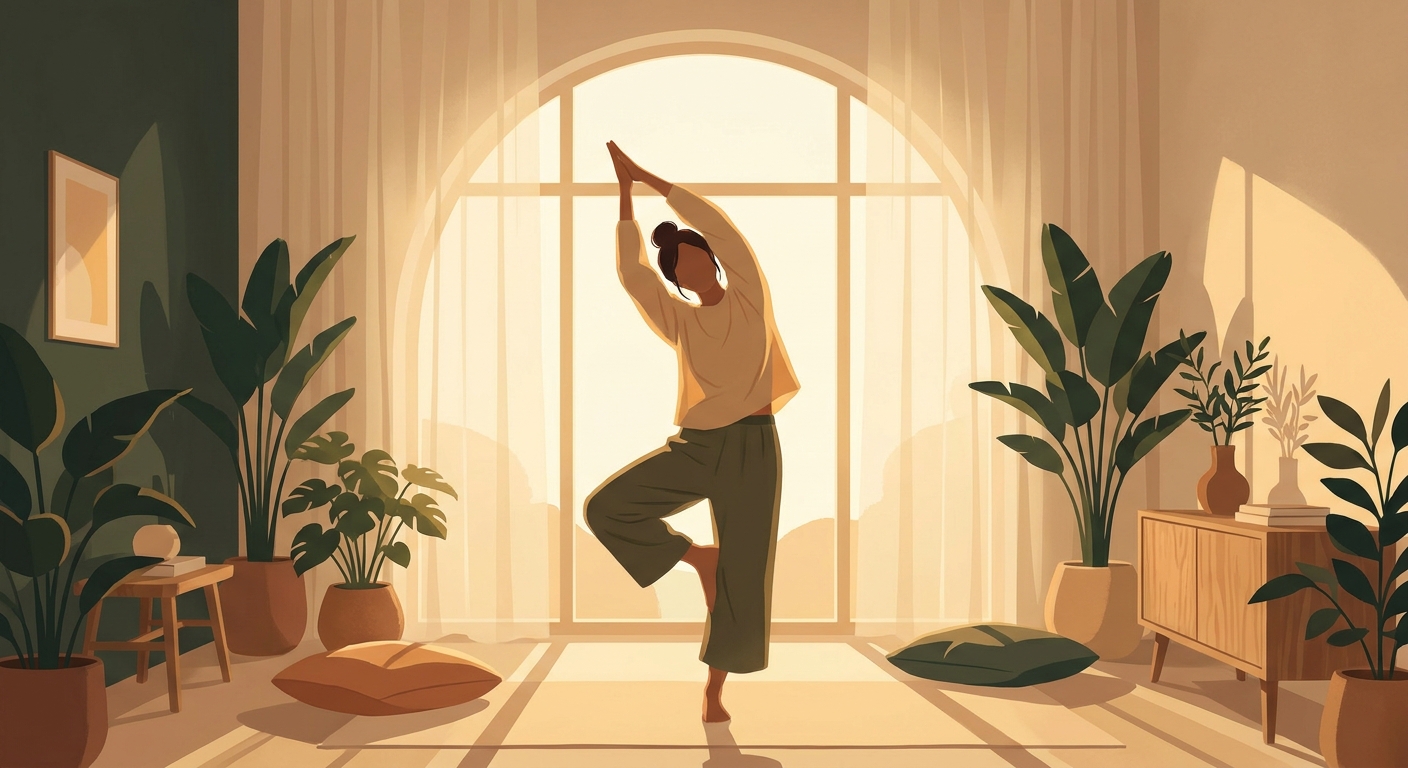
Why a Morning Yoga and Meditation Routine Matters
Starting your day with intention is backed by science. Studies show that combining gentle movement with mindfulness practices can reduce cortisol levels, improve focus, and boost emotional resilience throughout the day. For you, a beginner, a short morning routine is the perfect entry point because it requires minimal time and delivers maximum benefits.
What Are the Main Benefits of a Morning Practice?
When you practice yoga and meditation in the morning, you are essentially telling your brain and body: “I am choosing calm over chaos.” This shift in mindset can improve your decision-making, relationships, and overall productivity. Moreover, a consistent morning practice helps regulate your circadian rhythm, making it easier to fall asleep at night. According to a 2026 review from the National Center for Complementary and Integrative Health, a daily 10-minute mindfulness and movement practice reduced self-reported anxiety by 32% in participants over eight weeks.
Other benefits include:
- Increased energy: Gentle yoga poses stimulate blood flow and oxygenate your muscles, giving you a natural energy boost without caffeine.
- Better focus: Meditation trains your attention, helping you stay present and productive throughout the day.
- Emotional stability: Regular practice lowers stress hormones and increases serotonin, leading to a more balanced mood.
- Improved flexibility: Even a few minutes of stretching each morning gradually increases your range of motion.
If you are new to this, do not worry. Our guided sessions on Vitalizen.app are tailored for absolute beginners, with voice instructions, timers, and gentle cues to keep you on track.
How to Do a 10-Minute Morning Yoga & Meditation Routine for Beginners
This routine is divided into three simple parts. Follow along at your own pace, and remember — the goal is presence, not performance. Here is how it works in practice:
1. Gentle Stretches to Wake Up Your Body (3 minutes)
Start by standing tall with your feet hip-width apart. Take a deep breath in, and as you exhale, slowly roll your spine down toward the floor — one vertebra at a time. Let your head hang heavy. This is a forward fold, and it is incredibly grounding.
Stay here for three deep breaths. Then, bend your knees slightly and roll back up slowly. Follow this with a few gentle side stretches and shoulder rolls. The goal is to release any tension accumulated overnight and to wake up your muscles gently. Listening to your body is key; if something feels uncomfortable, ease off. Yoga is not about forcing — it is about feeling.
2. Breathwork to Calm the Mind (3 minutes)
Now, find a comfortable seated position — cross-legged on the floor or sitting on a chair with your feet flat. Close your eyes and bring your hands to your knees or your heart center.
Begin with box breathing: inhale for four counts, hold for four counts, exhale for four counts, and hold for four counts. Repeat this cycle four times. This technique is widely used to calm the nervous system instantly. According to the Harvard Medical School, controlled breathing activates the parasympathetic nervous system, reducing heart rate and blood pressure.
After box breathing, transition to natural breathing. Simply observe your inhales and exhales without trying to change them. Notice the cool air entering your nostrils and the warm air leaving. This simple act of awareness is the foundation of meditation.
3. Seated Meditation for Beginners (4 minutes)
Stay in your seated position. Set a gentle timer for four minutes, or simply count your breaths. Focus on the sensation of breathing — the rise and fall of your chest, the air moving through your body.
Your mind will wander. That is okay. When you notice your thoughts drifting, gently bring your attention back to your breath without judgment. Think of it as a mental rep — each time you return to the breath, you are strengthening your focus muscle. If you prefer, Vitalizen.app offers a library of beginner-friendly guided sessions with calming background sounds and expert narration.
How to Make Your Morning Practice a Consistent Habit
Building a new habit can be challenging, but the right strategies make it easier. Here are the top tips for sticking with your morning yoga and meditation routine:
- Start small. Even five minutes is better than zero. Consistency matters more than duration.
- Create a trigger. Link your practice to an existing habit, like brushing your teeth or making your bed.
- Prepare the night before. Lay out your mat, set your clothes, and charge your device if you are using an app.
- Be kind to yourself. Some mornings will feel easier than others. Show up anyway, even if it is just for a few deep breaths.
- Use a guided app. Having a supportive voice guiding you can make all the difference, especially in the beginning.
- Track your streak. Use a habit tracker or app to mark each day you complete your routine. The visual progress can be highly motivating.
Remember, this is your practice. You are not competing with anyone. The only goal is to feel a little more centered than when you started.
💡 Tip: Download our free 7-Day Morning Routine Guide to get started with a structured plan and daily encouragement.
Where to Find Guided Routines and Support
Building a new habit is hard — we get it. That is why Vitalizen App was designed to be your daily companion on this journey. With personalized yoga flows, meditation sessions, breathwork exercises, and progress tracking, you will never feel lost or alone.
Our app features:
- Beginner-friendly yoga and meditation routines (5 to 30 minutes)
- Calming nature sounds and guided voiceovers
- Daily reminders and streak tracking to keep you motivated
- A supportive community of like-minded wellness seekers
- Offline access so you can practice anywhere, anytime
Whether you have five minutes or fifty, start your journey today and discover how good it feels to prioritize your well-being.
| Part | Activity | Duration | Key Benefit |
|---|---|---|---|
| 1 | Gentle Stretching | 3 minutes | Releases physical tension |
| 2 | Breathwork (Box Breathing) | 3 minutes | Calms the nervous system |
| 3 | Seated Meditation | 4 minutes | Builds mental focus and clarity |
Frequently Asked Questions About Morning Yoga & Meditation for Beginners
Do I need any equipment for a morning yoga routine?
Not at all! A yoga mat is nice to have, but you can practice on any comfortable, non-slip surface. Wear clothes that allow you to move freely. That is it. No blocks, straps, or special gear required — especially for beginners.
How long should a beginner meditate in the morning?
Start with 2 to 5 minutes. The key is consistency, not duration. As you build your practice, you can gradually increase to 10, 15, or even 20 minutes. Our guided meditation sessions on Vitalizen.app are perfect for beginners who want structure and support.
Can I do yoga and meditation if I am not flexible?
Absolutely. Flexibility is not a requirement for yoga or meditation — it is a result. Everyone starts somewhere. The poses and breathing techniques in this routine are designed for all body types and fitness levels. Just move within your comfortable range and breathe deeply.
What is the best time to practice morning yoga?
Ideally, practice within the first hour after waking up, before breakfast. This allows you to connect with your body on an empty stomach and set a calm tone for the day. However, the best time is the time that works for you consistently.
Can I use Vitalizen App offline?
Yes! You can download your favorite sessions and practice offline anytime, anywhere. This is especially helpful for travel, outdoor practice, or mornings when you want to keep your phone on airplane mode. Contact us if you have any questions about features.
How to Start Your Morning Mindfully Today
Starting a morning yoga and meditation routine as a beginner does not have to be overwhelming. In fact, the simpler you keep it, the more likely you are to stick with it. Just 10 minutes of intentional movement, breath, and stillness can reshape your entire day — and your entire life.
So tomorrow morning, before you reach for your phone, take a deep breath. Roll out your mat — or just sit on the floor. And give yourself the gift of presence. You deserve it.
Ready to begin? Start your free journey with Vitalizen App today and experience the difference that a mindful morning can make.
For more tips, guided routines, and wellness inspiration, explore our blog articles on yoga and meditation.
🎯 Ready to transform your mornings? Download our free 7-Day Morning Routine Guide and start your practice today!
This article is for informational purposes only and does not constitute medical advice. Always consult with a healthcare professional before starting any new exercise or wellness routine.