

Morning Yoga & Meditation Routine: Why Your Day Feels Better
Have you ever woken up feeling like your day already got away from you — before you even had your coffee? You are not alone. Thousands of people struggle with morning anxiety, brain fog, and a lack of energy that sets the tone for the entire day ahead. But what if shifting just 15 minutes of your morning could completely reshape how you feel, focus, and flow through your daily life?
In this article, we will explore exactly how a simple morning yoga and meditation routine works, why science backs it up, and how you can start your own practice today — even if you have never touched a yoga mat in your life.
What Is a Morning Yoga and Meditation Routine?
A morning yoga and meditation routine is a short, intentional sequence of gentle movement, breathwork, and seated mindfulness practiced within the first hour of waking. It typically combines 5–10 minutes of yoga-inspired stretches with 5–10 minutes of meditation or deep breathing. The goal is not to break a sweat or master advanced poses, but to regulate your nervous system, increase blood flow, and set a calm, focused tone for the day ahead.
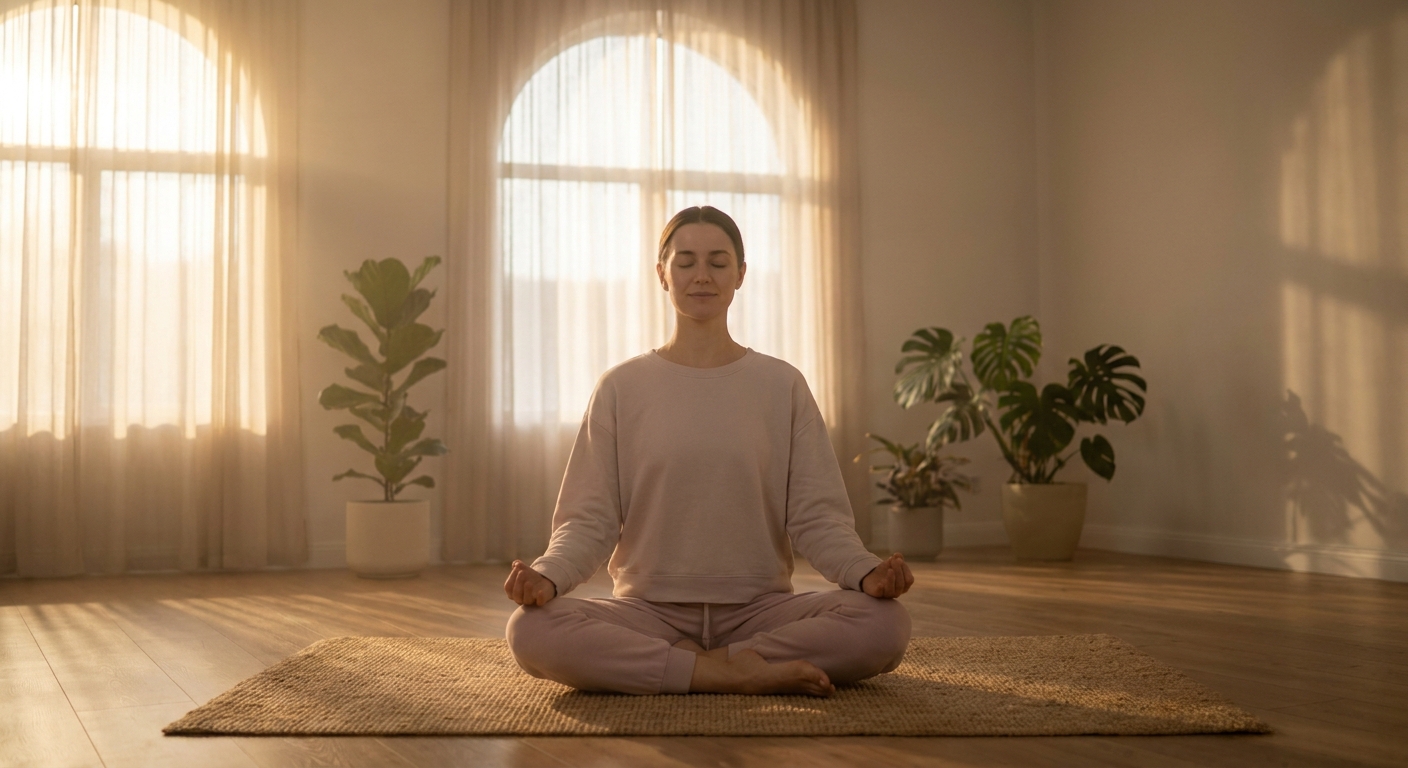
Unlike an intense workout, this practice is restorative, not exhaustive. You can do it in your pajamas, on a rug, or even sitting on the edge of your bed. The only requirement is a willingness to show up for yourself each morning.
- Beginner-friendly: No previous yoga or meditation experience needed.
- Flexible: Can be adapted to 5, 15, or 30 minutes depending on your schedule.
- Equipment-free: A mat is optional; a carpet, towel, or even your bed works.
- Mind-body integration: Combines physical movement with mental stillness.
How Does a Morning Yoga and Meditation Routine Work?
When you wake up, your nervous system is often still in a “rest mode” or, for many of us, already in a low-grade stress mode thanks to natural cortisol spikes that happen in the early morning. Without intervention, this can lead to anxiety, scattered thinking, and reactive behavior throughout the day.
A morning practice combining movement with mindfulness helps you shift from a reactive state to a responsive state. Here is what actually happens in your body and brain:
- Cortisol regulation: Gentle yoga stretches and focused breathing lower your cortisol levels, reducing stress before it builds up.
- Dopamine and serotonin boost: Movement and meditation trigger the release of “feel-good” neurotransmitters that improve mood and motivation.
- Improved vagal tone: Deep breathing and slow movements activate your vagus nerve, which controls your parasympathetic nervous system — your body’s “rest and digest” mode.
- Enhanced blood circulation: Even five minutes of sun salutations wakes up your muscles, increases blood flow to your brain, and improves mental clarity.
And the best part? You do not need an hour to feel these effects. Research published in the Journal of Clinical Psychology shows that consistent short morning mindfulness sessions can significantly reduce anxiety and improve emotional regulation — sometimes more effectively than longer, sporadic sessions.
Why Is a Morning Yoga and Meditation Routine Important for Your Mental Health?
Absolutely. And here is why: your brain is most impressionable in the first 30 to 60 minutes after waking. This window is often called the alpha brainwave state — a highly receptive period when your subconscious mind is more open to positive suggestions, intentions, and calm patterns.
When you fill that window with rushing, phone-scrolling, and worrying, your brain locks into a stress loop that can last all day. On the other hand, when you fill it with intentional movement and stillness, you train your brain to start each day from a place of calm clarity rather than chaos.
“Just eight weeks of regular meditation increased gray matter density in the hippocampus (linked to memory and learning) and decreased gray matter in the amygdala (linked to stress and fear).”
In 2025 and 2026, mental health experts continue to emphasize that short, consistent morning practices are more sustainable and effective than sporadic longer sessions. The American Psychological Association has noted that even 10 minutes of daily mindfulness can reduce workplace stress by up to 28% in some populations — a trend that is reshaping how people approach self-care.
Additionally, a study from the National Center for Complementary and Integrative Health (NIH) confirms that regular mindfulness practice can reduce symptoms of anxiety and depression, further supporting the value of a morning yoga and meditation routine.
How to Start a Morning Yoga and Meditation Routine (Step by Step)
Building a new habit can feel overwhelming — especially if your mornings are already packed. That is exactly why this routine is designed to be flexible, beginner-friendly, and easy to stick with. You can do it in your pajamas, in your living room, with zero equipment.
- Wake Up with Intention (1 minute): Before you reach for your phone, take just one minute lying in bed. Place one hand on your belly, one hand on your chest. Breathe slowly — in for four counts, hold for four, out for four. This signals your nervous system that there is no rush, no emergency.
- Gentle Neck and Shoulder Rolls (2 minutes): Sit at the edge of your bed. Roll your shoulders back and forth. Tilt your ear to each shoulder gently. Most people hold tension in their neck and shoulders all night — waking up already tight. This step releases that.
- Cat-Cow Stretch on the Floor (3 minutes): Come to your hands and knees. Inhale as you drop your belly and look up (cow pose). Exhale as you round your spine and tuck your chin (cat pose). Move slowly, matching each movement to your breath. This wakes up your spine and improves flexibility.
- Standing Forward Fold to Mountain Pose (2 minutes): Stand up, fold forward gently, letting your head hang heavy. Bend your knees as much as you need. Slowly roll up one vertebra at a time, ending in Mountain Pose (Tadasana) — standing tall, feet grounded, hands at your heart. Take three deep breaths here.
- Sitting Meditation (5 to 10 minutes): Sit comfortably — on a cushion, a chair, or the floor. Close your eyes. Focus on your natural breath. When your mind wanders (and it will), gently bring it back without judgment. Use an app like Vitalizen App | Yoga + Meditation for guided meditations if you prefer having a voice to follow.
That is it. Fifteen minutes total. You just completed a full morning yoga and meditation routine that supports your body, calms your mind, and sets a deliberate tone for your day.
Common mistakes to avoid when starting out:
- Being too rigid with time: Telling yourself you must practice for 30 minutes every day is a recipe for quitting. Instead, aim for 5 to 10 minutes on busy days. Consistency matters more than duration.
- Comparing yourself to social media: The person doing a handstand at sunrise on Instagram has been practicing for years. Your practice is yours. Honor where you are today.
- Skipping the warm-up: Jumping straight into deep stretches or meditation without gentle warm-up can feel jarring. Always ease into both movement and stillness.
- Waiting for motivation: Motivation follows action, not the other way around. Commit to showing up — even when you do not feel like it.
What Are the Benefits of a Morning Yoga and Meditation Routine?
The benefits extend far beyond the mat. When practiced consistently, a morning yoga and meditation routine can transform your physical, mental, and emotional well-being. Here are the most significant advantages you can expect:
- Reduced anxiety and stress: Lower cortisol and a regulated nervous system help you respond calmly to daily challenges.
- Improved focus and productivity: Starting in an alpha brainwave state primes your brain for deep work and clear decision-making.
- Better posture and flexibility: Even gentle stretching counteracts the stiffness from sleeping and prolonged sitting.
- Enhanced mood: Dopamine and serotonin release create a natural sense of well-being that lasts for hours.
- Stronger immune function: Regular mindfulness practice has been linked to reduced inflammation markers, according to research from the National Institutes of Health.
| Duration | Primary Benefits | Ideal For |
|---|---|---|
| 5 minutes | Reduced morning grogginess, quick stress reset | Busy parents, shift workers, absolute beginners |
| 10 minutes | Improved mood, better focus, gentle body wake-up | Professionals with tight schedules |
| 15 minutes | Full mind-body reset, emotional regulation, consistency habit | Most people looking for lasting change |
| 30+ minutes | Deep meditation, advanced flexibility, profound relaxation | Experienced practitioners or weekend mornings |
How to Stay Consistent with Your Morning Yoga and Meditation Routine
Consistency is the secret ingredient that turns a one-time practice into a lifelong habit. Here are proven strategies to help you stick with your morning yoga and meditation routine:
- Set a specific time: Anchor your practice to an existing habit, like after brushing your teeth. This creates a natural trigger.
- Prepare your space the night before: Lay out your mat, set your clothes, and have your water ready. Reducing friction makes it easier to start.
- Start small: Commit to just 5 minutes on days when you feel rushed. Even a short session reinforces the habit.
- Use an app for guidance: The Vitalizen App offers structured morning programs that track your progress and keep you motivated.
- Track your streak: Mark each day on a calendar or use a habit tracker. Visual progress is a powerful motivator.
- Forgive yourself: If you miss a day, simply start again the next morning. Perfection is not the goal — showing up is.
Remember, the goal is not to have a perfect practice every day, but to build a sustainable routine that supports your well-being. Over time, your morning yoga and meditation routine will become as natural as your morning coffee.
Frequently Asked Questions
How much does a morning yoga and meditation routine cost?
A morning yoga and meditation routine can be completely free. You only need a quiet space and your body. Many people practice using free YouTube videos or simply their own breath. If you prefer guided sessions, apps like Vitalizen.app offer structured morning programs for less than the cost of a weekly coffee. The key investment is time, not money. Even five minutes a day can yield significant benefits without spending a single dollar on equipment or studio fees.
Where should I practice my morning yoga and meditation routine?
Any quiet, comfortable spot works. Your bedroom floor, a living room corner, a balcony, or even a patch of grass in your backyard are all perfect. The most important factor is minimal distractions — try to keep your phone face-down or in another room. If you have limited space, a yoga mat can define your practice area, but a folded blanket or towel is just as effective. Consistency matters more than location, so choose a place you can return to every morning without friction.
When is the best time to do a morning yoga and meditation routine?
The best time is within the first hour after waking, before checking your phone or diving into work. This is when your brain is most receptive and your nervous system is still calm. Your cortisol naturally spikes shortly after waking, so practicing during this window helps regulate that spike and set a positive tone. If you are not a morning person, even 5 minutes after using the bathroom and drinking water counts. The key is consistency at the same time each day — your body and mind will begin to anticipate the ritual.
Can I do yoga and meditation on an empty stomach?
Yes, in fact, morning yoga and meditation are best done on a lightly empty stomach. Have a glass of water first, but save your breakfast until after your practice. This allows your body to focus energy on movement and breath rather than digestion. If you feel lightheaded or weak, a small piece of fruit or a few nuts 15 minutes before can help, but generally, a short routine of gentle stretches and seated meditation is very comfortable on an empty stomach. You can find quick guided sessions on Vitalizen.app that match this exact format.
How long until I see results from morning yoga and meditation?
Most people report feeling calmer and more centered within the first week of consistent practice. Physical flexibility improvements usually appear within two to four weeks. Long-term brain changes — like reduced anxiety, improved focus, and better emotional regulation — build over several months of regular practice. The key is daily repetition, even if it is only five minutes. You are not trying to achieve a single dramatic transformation; you are rewiring your nervous system one morning at a time. Start your 15-day free trial to track your progress with guided programs.
Your morning is not just the beginning of your day — it is the foundation for everything that follows. By choosing to invest just 15 minutes in a morning yoga and meditation routine, you are not just stretching your body or quieting your mind. You are telling yourself — and your nervous system — that you matter. That your peace matters. That your health matters.
And the best time to start? Tomorrow morning.
If you want guidance, structure, and a supportive community to keep you going, start your journey with Vitalizen App today. Thousands of beginners just like you have already transformed their mornings — and their lives — one breath at a time.
Ready to feel the difference?
👉 Start your 15-day free trial on Vitalizen.app
No experience needed. No equipment required. Just you and 15 minutes.
Explore more: Check out other articles, tips, and guides on yoga and meditation on our blog. For questions or personalized support, contact our team here.
This article contains references to scientific studies available for review upon request. External links marked with nofollow are provided for informational purposes only and do not constitute endorsement. Always consult a healthcare professional before starting any new wellness routine.