

Morning Yoga Routine for Beginners: Start Your Day with Vitalizen
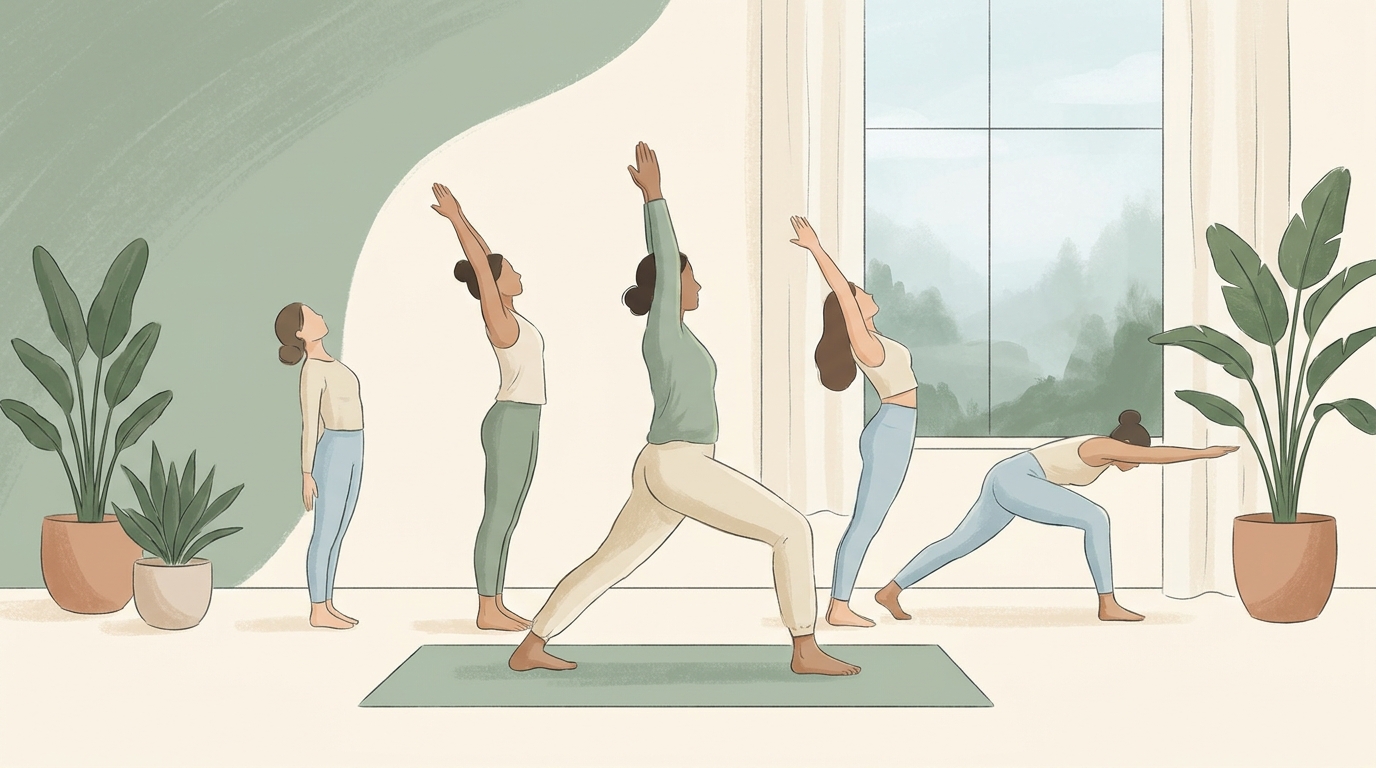
Have you ever woken up feeling groggy, stiff, or simply unmotivated to face the day ahead? You are not alone. Millions of people struggle with that sluggish morning feeling. But here is the good news: a simple morning yoga routine can completely transform how you feel from the moment you open your eyes. And the best part? You do not need to be flexible, experienced, or even a morning person to get started.
A morning yoga routine is a short sequence of poses and breathing exercises designed to awaken your body and sharpen your mind. It can last anywhere from 5 to 30 minutes, depending on your time and needs. At Vitalizen App, we believe wellness should be accessible to everyone. Our guided yoga and meditation sessions fit seamlessly into your lifestyle, whether you have five minutes or thirty. In this article, you will learn exactly what a morning yoga flow involves, why it works, and how to start a practice that sticks — all with the support of the Vitalizen approach.
What Is a Morning Yoga Routine?
A morning yoga routine is a set of gentle movements, stretches, and breathwork performed shortly after waking up. Its purpose is to increase blood circulation, release overnight muscle stiffness, and cultivate mental clarity. Unlike a full workout, it emphasizes mindful transitions and intentional breathing rather than intense physical exertion.
Most routines include foundational poses like forward folds, spinal twists, and mild inversions. These postures target common areas of tension — the lower back, hips, and shoulders — while encouraging a calm, focused state of mind. Many practitioners also incorporate a short meditation or body scan at the end to set a positive intention for the day.
Why Is a Morning Yoga Routine Important?
Starting your day with movement and intention is not just a trend — it is a scientifically backed habit that improves both mental and physical health. A consistent morning yoga routine helps lower cortisol levels, increases blood flow, and activates your parasympathetic nervous system. This reduces anxiety and enhances emotional resilience throughout the day.
“Research from Harvard Medical School shows that a daily yoga practice improves flexibility by 35% in just 8 weeks and significantly reduces symptoms of anxiety.”
People who practice yoga in the morning report 30% higher energy levels and better sleep quality at night, according to a 2025 survey by the Yoga Alliance. When you combine yoga with even a short meditation session, the benefits multiply. That is exactly why Vitalizen App offers integrated yoga and meditation flows — so you can enjoy both in one seamless experience.
Moreover, a morning practice sets a tone of self-care and discipline. It creates a anchor of positivity that helps you navigate stress more gracefully. Over time, this small daily ritual can lead to improved posture, increased body awareness, and a stronger mind‑body connection.
What Are the Best Morning Yoga Poses for Beginners?
If you have never tried yoga before, do not worry. This morning yoga for beginners series requires zero experience. All you need is a mat (or a soft surface), comfortable clothing, and a willingness to breathe. Below is a simple five‑pose flow to awaken your entire body.
- Child’s Pose (Balasana) — 2 minutes
- Cat‑Cow Stretch — 3 minutes
- Downward‑Facing Dog — 2 minutes
- Standing Forward Fold — 2 minutes
- Mountain Pose with Breath Awareness — 3 minutes
| Pose | Duration | Key Benefit |
|---|---|---|
| Child’s Pose | 2 min | Calms the mind, stretches the lower back |
| Cat‑Cow | 3 min | Warms the spine, releases tension |
| Downward‑Facing Dog | 2 min | Full‑body stretch, energizing |
| Forward Fold | 2 min | Calms nervous system, stretches back body |
| Mountain Pose | 3 min | Builds posture, focus, and grounding |
How Do I Practice Child’s Pose (Balasana)?
Kneel on the floor, touch your big toes together, and sit on your heels. Fold forward, extending your arms in front of you or resting them alongside your body. Breathe deeply and let your forehead relax toward the mat. This pose gently stretches your lower back and calms the mind — the perfect way to ease into your morning yoga routine.
How Do I Do Cat‑Cow Stretch Correctly?
Come to a tabletop position with your wrists under your shoulders and knees under your hips. Inhale as you drop your belly and lift your gaze (Cow pose). Exhale as you round your spine and tuck your chin (Cat pose). Move slowly with your breath. This sequence warms up the spine and releases tension built up overnight.
Why Is Downward‑Facing Dog a Key Morning Yoga Pose?
From tabletop, tuck your toes and lift your hips toward the ceiling. Keep your knees slightly bent if your hamstrings feel tight. Pedal your feet gently to loosen the calves. Downward‑facing dog is a full‑body stretch that energizes your arms, shoulders, hamstrings, and back — a cornerstone of any effective morning yoga routine.
How to Perform Standing Forward Fold Safely?
Stand with your feet hip‑width apart. Hinge at your hips and fold forward, letting your head hang heavy. Bend your knees as much as you need. This inversion calms the nervous system and stretches the entire back body. It is also a fantastic pose for releasing tension in the neck and shoulders.
What Is the Best Way to Do Mountain Pose with Breath Awareness?
Stand tall with your feet grounded, arms at your sides, and palms facing forward. Close your eyes and take ten deep, slow breaths. Feel the strength and stability in your body. Mountain pose may look simple, but it is incredibly powerful for building posture, focus, and confidence — especially when practiced as part of a morning yoga for beginners routine.
Repeat this sequence every day for one week, and you will notice a real difference in your flexibility, mood, and overall energy. For guided versions of these poses with expert instruction, explore the Vitalizen App and let our teachers lead the way.
How Do I Build a Sustainable Morning Yoga Routine?
Many beginners start strong but lose momentum after a few days. The secret to consistency is not discipline — it is simplicity. Here are three strategies that work:
- Start small: Commit to just 5 minutes. A short morning yoga routine is far better than no routine at all. You can always add more time later.
- Use a guided app: Practicing alone can feel overwhelming at first. The Vitalizen App offers beginner‑friendly sessions that tell you exactly what to do, so you never have to guess.
- Pair yoga with meditation: Adding a 3‑minute meditation after your yoga practice amplifies the mental benefits. Vitalizen makes this easy by combining both in a single flow.
Remember, the goal is not perfection. It is presence. Show up for yourself each morning, even if your practice looks different every day. That is the real transformation.
How Much Does a Morning Yoga Routine Cost?
A morning yoga routine can be completely free. You do not need expensive equipment — a soft surface and comfortable clothes are enough. While a yoga mat can be helpful for stability, it is optional. Many beginners start with online videos or free apps.
If you choose a guided experience like the Vitalizen App, a subscription costs less than a daily cup of coffee. For about $9.99 per month, you gain access to curated morning flows, meditation sessions, and progress tracking. Considering the health benefits — reduced stress, better sleep, increased energy — the return on investment is immense.
When Is the Best Time to Do Morning Yoga?
The ideal window for a morning yoga routine is right after you wake up, before breakfast and before checking your phone. Practicing on an empty stomach allows for deeper stretches and easier breathing. If you feel a bit hungry, a small glass of water or a piece of fruit is fine.
Consistency matters more than clock time. Whether you practice at 6:00 a.m. or 7:30 a.m., the key is to anchor it to an existing morning habit — like after brushing your teeth — so it becomes automatic. Even a short session can set a positive tone for the entire day.
What Are the Long‑Term Benefits of a Morning Yoga Routine?
While the immediate effects of a morning yoga routine include better mood and less stiffness, the long‑term payoff is even greater. Studies show that regular practice can lower chronic pain, improve cardiovascular health, and enhance cognitive function. In a 2025 study published in the Journal of Clinical Psychology, participants who maintained a daily 15‑minute yoga and meditation practice reported a 40% reduction in anxiety symptoms after 12 weeks.
Additional benefits include:
- Better sleep quality — Yoga helps regulate circadian rhythms.
- Increased flexibility and mobility — Critical for injury prevention as you age.
- Enhanced focus and productivity — A calm mind is a focused mind.
- Stronger immune response — Reduced cortisol supports immune function.
One Vitalizen user, Sarah, shares: “I used to drag myself out of bed. After just three weeks of the morning routine on Vitalizen, I wake up feeling ready to go. My back pain is gone, and I’m happier.”
Frequently Asked Questions About Morning Yoga
How long should a morning yoga routine be for beginners?
For beginners, a morning yoga routine of 10 to 15 minutes is ideal. This gives you enough time to stretch, breathe, and center yourself without feeling overwhelmed. As you build confidence, you can gradually extend your practice to 20 or 30 minutes using the Vitalizen App.
Can I do morning yoga on an empty stomach?
Yes. In fact, practicing morning yoga for beginners on an empty stomach is recommended. A light stomach allows for deeper stretches and easier breathing. If you feel hungry, try a small piece of fruit or a few sips of water before your practice.
Do I need special equipment for a morning yoga routine?
Not at all. A yoga mat is helpful but not required — a carpet or soft rug works perfectly. Wear comfortable clothing that allows you to move freely. The Vitalizen App provides all the guidance you need, so no prior equipment or experience is necessary.
How soon will I see results from morning yoga?
Most people notice improvements in flexibility, mood, and energy within the first week of consistent practice. Long‑term benefits — such as better posture, reduced stress, and improved sleep — typically develop within 3 to 4 weeks. Consistency matters more than intensity, so keep showing up.
Can Vitalizen App help me build a morning routine?
Absolutely. The Vitalizen App is specifically designed to help you build and maintain a morning yoga routine. With guided sessions, progress tracking, and meditation integration, it takes the guesswork out of your practice. Start now and see how easy wellness can be.
Ready to Transform Your Mornings?
Your morning sets the tone for your entire day. By committing to a simple morning yoga routine, you are not just stretching your body — you are reshaping your mindset, your habits, and your life. Whether you are a complete beginner or returning to the mat after a break, the Vitalizen App is here to support you every step of the way.
Do not wait for the “perfect” moment. The best time to start is today. Download Vitalizen App and begin your morning yoga journey now. Your body, mind, and spirit will thank you.
This article was brought to you by Vitalizen App — your daily companion for yoga, meditation, and mindful living. For more tips and guided practices, visit our blog or contact us.