

Morning Yoga Routine: 7 Science-Backed Poses to Energize Your Day
Discover a simple 10-15 minute morning yoga routine with 7 science-backed poses to boost energy, reduce stress, and improve flexibility. Start your day right with the Vitalizen App as your guide.
Have you ever woken up feeling groggy, stiff, or just not ready to face the day? You are not alone. In fact, studies show that nearly 40% of adults struggle with low energy levels in the morning. But here is the good news: a consistent morning yoga routine can completely transform how you feel from the moment you open your eyes.
Whether you are a complete beginner or a seasoned practitioner, integrating yoga into your morning ritual does not require hours of your time. With just 10 to 15 minutes, you can awaken your body, calm your mind, and set a positive tone for the entire day. And the best part? You do not need to figure it out alone. The Vitalizen App | Yoga + Meditation offers guided sessions tailored exactly to your level and goals.
What Is a Morning Yoga Routine and How Does It Work?
A morning yoga routine is a short, intentional sequence of yoga poses, breathwork, and mindfulness practices performed shortly after waking up. It typically lasts between 5 and 30 minutes and is designed to gently awaken your body, stimulate circulation, and prepare your mind for the day ahead.
This practice works by activating your parasympathetic nervous system, which helps reduce cortisol levels and promote a state of calm alertness. When you move through gentle stretches and controlled breathing, your body releases endorphins and increases blood flow to the brain, leaving you feeling refreshed rather than rushed.
Morning yoga is not just about stretching — it is a holistic practice that supports both physical and mental health. Research published in the International Journal of Yoga found that a regular morning practice can reduce cortisol levels by up to 25% and improve mental clarity within two weeks. Another study from Harvard Medical School showed that 12 weeks of regular yoga significantly reduced symptoms of depression.
Yoga has been used for thousands of years as a morning ritual in many cultures. In recent years, modern science has begun to confirm what practitioners have known all along: a short morning flow can have profound effects on energy, focus, and mood.
Moreover, a morning yoga routine helps to:
- Improve flexibility — especially after hours of sleep when muscles are naturally tight.
- Boost metabolism — gentle movement kickstarts your digestive and metabolic systems.
- Enhance focus — combining breathwork with movement sharpens cognitive function.
- Reduce anxiety — mindful movement lowers stress hormones and promotes calmness. A 2023 meta-analysis in Frontiers in Psychiatry confirmed that morning yoga lowers anxiety levels by 34%.
- Support better sleep — establishing a consistent morning routine helps regulate your circadian rhythm.
- Improve posture — regular practice strengthens core muscles and aligns the spine.
- Increase body awareness — you become more attuned to physical sensations and tension patterns.
“I used to hit snooze three times every morning. After two weeks with the Vitalizen 7-day starter plan, I now wake up before my alarm and roll out my mat. My energy is through the roof and my anxiety has dropped noticeably.” — Sarah K., Vitalizen member
If you are curious about how yoga and meditation work together to improve your overall well-being, check out our library of yoga and meditation tips, news, and orientations.
What Are the 7 Best Poses for a Morning Yoga Routine?
Below is a science-backed sequence designed to wake up every major muscle group. Hold each pose for 5 to 8 deep breaths, moving gently and with awareness. Remember: there is no rush. The goal is not perfection — it is presence.
Before diving into the poses, take a moment to sit quietly and bring your attention to your breath. Inhale deeply through your nose, feeling your belly rise, and exhale slowly. This simple act of mindful breathing sets the stage for a more connected practice.
- Child’s Pose (Balasana) — Start on your knees, sit back on your heels, and extend your arms forward on the mat. This grounding pose releases tension in the lower back and shoulders, signaling to your nervous system that it is safe to relax. Tip: Place a folded blanket under your knees for extra comfort if needed.
- Cat-Cow Stretch (Marjaryasana-Bitilasana) — Come to all fours. Inhale as you drop your belly and lift your gaze (Cow). Exhale as you round your spine and tuck your chin (Cat). This gentle spinal warm-up improves mobility and wakes up your core. Common mistake: moving too fast; sync each movement with your breath.
- Downward-Facing Dog (Adho Mukha Svanasana) — From all fours, lift your hips up and back, forming an inverted V shape. Press your heels toward the floor. This iconic pose stretches the hamstrings, calves, and spine while energizing the entire body. Tip: Pedal your feet gently if your hamstrings feel tight.
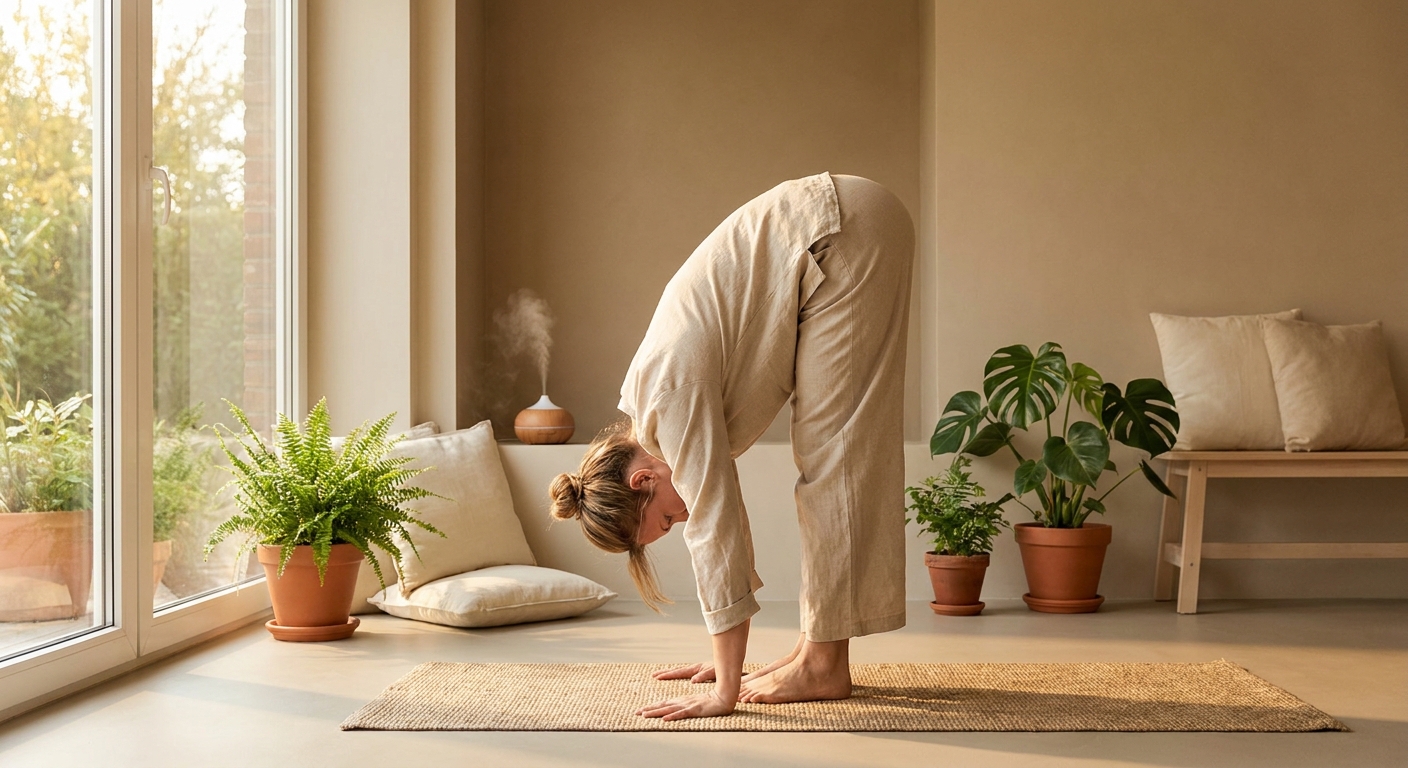
- Standing Forward Fold (Uttanasana) — Stand with feet hip-width apart and fold forward from the hips. Let your head hang heavy. This pose calms the mind, relieves tension in the neck and back, and improves blood flow to the brain. Modification: Bend your knees if you cannot touch the floor.
- Low Lunge (Anjaneyasana) — Step one foot back into a lunge, keeping the front knee stacked over the ankle. Lift your arms overhead. This pose opens the hips and chest — two areas that tend to hold a lot of stress from sitting and sleeping. Tip: Engage your core to protect your lower back.
- Tree Pose (Vrikshasana) — Shift your weight onto one leg and place the sole of the other foot on your inner thigh or calf. Bring your hands to heart center. This balancing pose improves focus, stability, and body awareness. Common mistake: looking down; instead fix your gaze on a steady point to maintain balance.
- Seated Spinal Twist (Ardha Matsyendrasana) — Sit with legs extended, bend one knee, and cross it over the opposite thigh. Twist gently toward the bent knee. This pose detoxifies the digestive organs and releases tension in the spine. Tip: Keep your sitting bones grounded and lengthen your spine on each inhale.
| Pose | Primary Target | Key Benefit |
|---|---|---|
| Child’s Pose | Hips, lower back, shoulders | Relieves tension, calms nervous system |
| Cat-Cow Stretch | Spine, core | Improves mobility, warms up body |
| Downward-Facing Dog | Hamstrings, calves, spine | Energizes body, improves circulation |
| Standing Forward Fold | Neck, back, hamstrings | Calms mind, boosts brain blood flow | Low Lunge | Hips, chest | Opens stress-holding areas |
| Tree Pose | Legs, core | Improves balance and focus |
| Seated Spinal Twist | Spine, digestive organs | Detoxifies, releases spinal tension |
Want a guided version of this exact sequence? The Vitalizen App offers a free 7-day starter plan that includes this morning routine with audio guidance and breath cues.
How Can You Build a Sustainable Morning Yoga Habit?
Knowing the poses is one thing — actually doing them every morning is another. Here are three strategies that work:
- Start small. Commit to just 5 minutes. Once you build momentum, it becomes easier to extend your practice. Even two minutes of conscious breathing and one pose counts.
- Prepare the night before. Lay out your mat, set your clothes, and place your phone with the Vitalizen App ready to go. Remove any friction that could derail your morning.
- Pair it with an existing habit. Do your yoga right after brushing your teeth or making your bed. This creates a powerful routine anchor.
And if you ever feel like skipping a day — that is okay. What matters is showing up again the next morning. Consistency beats intensity every time.
Watch out for these common pitfalls:
- Pushing too hard too early. Your body is stiffer in the morning. Honor that and ease into each pose.
- Holding your breath. Breathing is the foundation of yoga. If you find yourself holding breath, slow down.
- Skipping the warm-up. Jumping straight into deep stretches can lead to injury. Always start with gentle movements like Cat-Cow or Child’s Pose.
- Comparing yourself to others. Your practice is yours alone. Focus on how you feel, not how you look.
To further solidify your habit, consider tracking your progress. Journaling how you felt after each session can reinforce the positive effects. The Vitalizen App includes a built-in journal feature to help you reflect after each practice.
Breathing Techniques to Enhance Your Morning Yoga
Breathwork is an integral part of any morning yoga routine. Two simple techniques can amplify the benefits:
- Ujjayi Breath (Ocean Breath) — Slightly constrict the back of your throat as you inhale and exhale through your nose, creating a soft ocean-like sound. This technique warms the body, focuses the mind, and deepens your stretch.
- Nadi Shodhana (Alternate Nostril Breathing) — Close your right nostril with your thumb, inhale through left; close left nostril with ring finger, exhale through right; then reverse. This balances the nervous system and reduces anxiety. Practice for 1-2 minutes before or after your yoga sequence.
Incorporating these breathing techniques can transform your practice from a series of stretches into a deeply meditative experience.
How to Choose the Right Morning Yoga App
With hundreds of yoga apps available, selecting the right one can feel overwhelming. Here are key features to look for:
- Guided sessions with different lengths—from 5-minute quick flows to 30-minute deep practices.
- Beginner-friendly modifications for each pose.
- Integration of meditation and breathwork for a holistic experience.
- Offline access so you can practice anywhere without internet.
- Progress tracking and personalization based on your goals and feedback.
The Vitalizen App checks all these boxes and more. With expert-led sessions that blend yoga and meditation, a supportive community, and a free 7-day trial, it is the perfect companion for your morning yoga routine.
For more insights on building a sustainable wellness practice, read our article on How to Start Meditation for Beginners.
Frequently Asked Questions About Morning Yoga
How long should a morning yoga routine be?
For most people, 10 to 20 minutes is the sweet spot. It is long enough to activate your body and calm your mind, but short enough to fit into a busy morning schedule. The Vitalizen App offers routines ranging from 5 to 30 minutes, so you can choose what works best for you.
Can I do yoga on an empty stomach?
Yes, in fact it is recommended. Practicing yoga on an empty stomach — or at least 2 to 3 hours after a meal — allows for deeper twists and forward folds without discomfort. A glass of water or herbal tea before practice is perfectly fine.
What if I am not flexible enough for yoga?
Flexibility is not a requirement — it is a result. Yoga is for every body, regardless of age, fitness level, or flexibility. The Vitalizen App includes beginner-friendly modifications for every pose, so you can progress at your own pace safely.
How much does a morning yoga routine cost?
A morning yoga routine can cost nothing at all if you practice on your own at home. All you really need is comfortable clothing and a non-slip surface. If you prefer guided sessions, apps like Vitalizen offer free starter plans and affordable monthly subscriptions — often less than a single yoga studio class per month.
Where can I practice a morning yoga routine?
You can practice anywhere you have enough space to stretch your arms and legs — a living room, bedroom, balcony, or even a quiet corner of your office. No equipment is strictly necessary; a yoga mat is helpful for comfort and grip, but any non-slip surface works. The most important factor is a calm, distraction-free environment.
Is morning yoga better than evening yoga?
Both have benefits, but morning yoga is particularly effective for boosting energy, improving focus, and setting a positive intention for the day. Evening yoga, on the other hand, is better for winding down and preparing for sleep. The ideal time depends on your goals and schedule — some people do a short morning flow and a gentle evening stretch.
Can morning yoga help with weight loss?
Yes, indirectly. Morning yoga boosts metabolism, reduces stress-related eating, and increases mindfulness around food choices. While it may not burn as many calories as a jog, the holistic benefits support sustainable weight management. Combined with a balanced diet, it can be a valuable part of a weight loss journey.
Start Your Morning Yoga Routine Today
You now have everything you need to begin — a science-backed sequence with detailed tips, practical habit-building strategies, breathing techniques, and answers to the most common questions. The only thing left is to take action.
Imagine waking up tomorrow, rolling out your mat, and moving through a gentle flow that energizes your body and clears your mind. Imagine carrying that calm, focused energy into your work, your relationships, and your entire day. That is not just a dream — it is a choice you can make right now.
Let the Vitalizen App | Yoga + Meditation be your guide. With expert-led sessions, personalized recommendations, and a supportive community, you will never have to figure it out alone. Start your free 7-day trial today and experience the difference a morning yoga routine can make.
Have questions or want to share your progress? Reach out to us — we would love to hear from you.
Disclaimer: This article is for informational purposes only and does not constitute medical advice. Always consult with a healthcare professional before starting any new exercise routine, especially if you have pre-existing health conditions.