

Yoga and Meditation for Beginners: Your Path to Inner Peace
If you have ever felt overwhelmed by the noise of daily life, you are not alone. More people than ever are turning to yoga and meditation to find balance, reduce stress, and reconnect with themselves. But where do you even begin? This guide walks you through everything you need to know — from the science behind the practice to simple steps you can take today. And the best part? Vitalizen App is here to support your journey every step of the way.
What Are Yoga and Meditation?
Yoga is an ancient physical, mental, and spiritual practice originating in India that combines postures (asanas), breath control (pranayama), and meditation to promote overall well-being. Meditation is a mental training technique that involves focusing the mind to achieve a state of calm, clarity, and heightened awareness. When practiced together, yoga prepares the body for stillness while meditation deepens the inner journey, creating a holistic path to inner peace.
These practices aren’t just trends — they are backed by thousands of years of tradition and an ever-growing body of scientific research. From reducing anxiety to improving physical flexibility, yoga and meditation empower you to cultivate a healthier, more balanced life. And you don’t need to be an athlete or a monk to experience the benefits — just an open mind and a willingness to begin.
Why Do Yoga and Meditation Work So Well Together?
Yoga and meditation complement each other perfectly. Yoga’s physical movements release muscular tension and increase body awareness, making it easier to sit comfortably in meditation. Meditation, in turn, trains the mind to remain present, deepening the focus and relaxation you feel during yoga. Together they create a powerful feedback loop: the body supports the mind, and the mind supports the body.
Think of yoga as the warm‑up for your body and meditation as the workout for your mind. One without the other is still beneficial, but combining them unlocks a deeper level of well‑being. That’s exactly why Vitalizen App integrates both practices into a single, seamless experience — so you never have to choose between moving your body and calming your mind.
“Yoga is the journey of the self, through the self, to the self.” — The Bhagavad Gita
What Are the Science-Backed Benefits of Yoga and Meditation?
Modern research confirms what ancient practitioners have known for centuries. Studies from the National Institutes of Health show that regular yoga practice significantly reduces cortisol — the hormone responsible for stress. Meanwhile, a 2026 report from Harvard Medical School found that regular meditation increases cortical thickness in the prefrontal cortex, improving decision‑making and emotional regulation.
Physical Benefits of Yoga
- Improved flexibility and mobility — even 10 minutes a day makes a difference
- Better posture — counteracts the effects of sitting at a desk all day
- Enhanced breathing capacity — pranayama techniques strengthen your lungs
- Reduced chronic pain — especially lower back and neck tension
Mental Benefits of Meditation
- Lower anxiety levels — mindfulness rewires your brain’s stress response
- Improved focus and concentration — your attention span gets a natural boost
- Better sleep quality — guided meditations help quiet a racing mind
- Greater emotional balance — you respond instead of react
These benefits are not reserved for monks or elite athletes. Anyone can experience them — including you. The key is consistency, not perfection. And with Vitalizen App, you get guided sessions that adapt to your level, whether you are a complete beginner or a seasoned practitioner.
Quick Comparison: Popular Yoga Styles
| Yoga Style | Focus | Difficulty | Best For |
|---|---|---|---|
| Hatha | Gentle postures & breath | Beginner | Flexibility & relaxation |
| Vinyasa | Flow with breath | Intermediate | Cardiovascular health |
| Yin | Deep, passive stretches | All levels | Joint mobility & stress relief |
| Restorative | Fully supported poses | All levels | Recovery & meditation preparation |
How Can a Beginner Start Yoga and Meditation? 5 Practical Tips
Starting a new practice can feel intimidating, but it does not have to be. Here are five simple ways to ease into yoga and meditation without overwhelm.
- Start with Just Five Minutes — One of the biggest mistakes beginners make is trying to do too much too soon. Instead of aiming for a 60‑minute session, commit to just five minutes of deep breathing or a gentle sun salutation. Small wins build momentum, and before you know it, five minutes will naturally become ten.
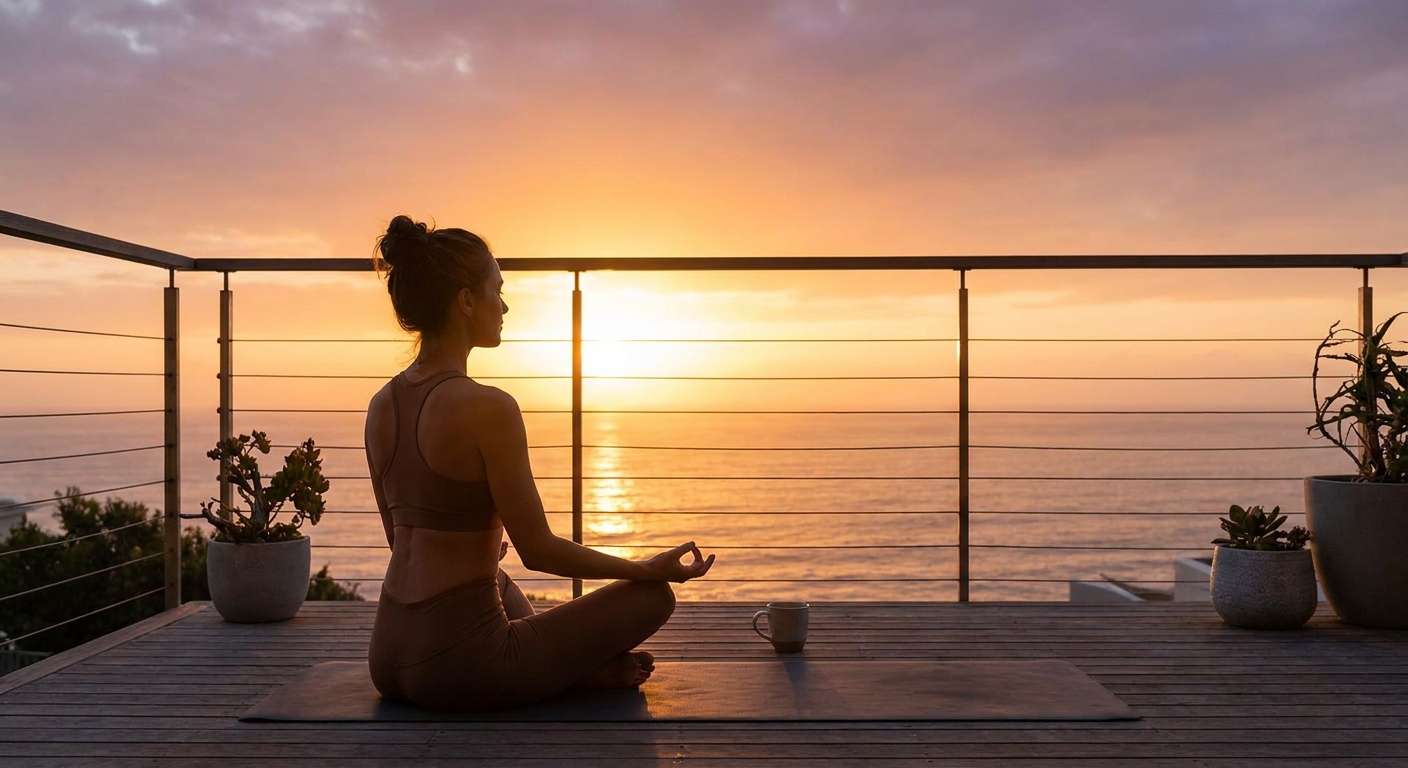
- Create a Dedicated Space — You do not need a fancy studio — just a corner of your room with a mat, a cushion, and maybe a plant. Having a consistent spot signals to your brain that it is time to unwind. This simple environmental cue makes it easier to stick with your practice.
- Use Guided Sessions — Trying to meditate on your own can be frustrating when your mind keeps wandering. That is where guided sessions shine. Vitalizen App offers expert‑led yoga flows and meditation tracks that walk you through every breath and movement — so you never feel lost.
- Focus on Your Breath — Your breath is your anchor. In yoga, each movement is synchronized with an inhale or exhale. In meditation, your breath becomes the object of focus. If your mind wanders, gently bring it back to the sensation of air entering and leaving your body. No judgment, just practice.
- Be Kind to Yourself — Some days you will feel flexible and focused. Other days you will feel stiff and distracted. Both are okay. The goal is not to be perfect — it is to show up. Every time you roll out your mat or sit in silence, you are building a habit that serves your long‑term well‑being.
What Is a Simple Morning Yoga and Meditation Routine?
Mornings set the tone for the entire day. Incorporating even a short yoga and meditation practice into your morning can transform how you show up at work, in relationships, and for yourself. Here is a 10‑minute routine you can try right now.
- Minute 1-2: Deep Breathing — Sit comfortably, close your eyes, and take five slow, deep breaths. Inhale for four counts, hold for four, exhale for four.
- Minute 3-5: Gentle Stretching — Move through a few seated stretches: neck rolls, shoulder shrugs, and a gentle forward fold. Listen to your body and go only as far as feels good.
- Minute 6-8: Sun Salutation — Flow through two or three rounds of Surya Namaskar (Sun Salutation). If you are new to this sequence, Vitalizen App has a guided version that walks you through each pose.
- Minute 9-10: Mindful Meditation — End with two minutes of silence. Focus on your breath or repeat a simple affirmation like “I am calm and present.”
That is it. Ten minutes. No excuses. And if you want to explore longer sessions or different styles — from Hatha to Vinyasa, from body scan to loving‑kindness meditation — check out our blog for more tips, tutorials, and inspiration.
Where Can You Practice Yoga and Meditation?
The beauty of yoga and meditation is that they can be practiced almost anywhere. A quiet corner at home, a peaceful park, or even your office during a break — all can become your personal sanctuary. The key is finding a space where you feel safe and undisturbed.
- At home: Set aside a dedicated area, even if it’s just a small mat by a window.
- Outdoors: A park, beach, or garden can add a calming natural element.
- At a studio: In‑person classes offer community and expert guidance.
- On the go: With apps like Vitalizen, you can practice wherever you are, whenever you have a few minutes.
When Is the Best Time to Practice Yoga and Meditation?
The best time is whatever time you can stick to consistently. Many people prefer mornings because it sets a positive tone for the day. Others find that an evening practice helps them unwind and sleep better. According to a 2026 survey by the American Psychological Association, 42% of regular practitioners choose a morning routine, while 35% practice in the evening. Experiment with different times and see what feels right for your body and schedule.
Common Challenges and How to Overcome Them
Even with the best intentions, beginners often face obstacles like lack of time, self‑doubt, or difficulty staying focused. Here are solutions to common hurdles in yoga and meditation:
- “I don’t have time.” — Start with 2‑minute breathing exercises. Even micro‑sessions build momentum. Use Vitalizen App’s quick routines.
- “I’m not flexible enough.” — Remember: flexibility is a result, not a prerequisite. Gentle Hatha or Yin yoga is ideal for beginners.
- “My mind wanders during meditation.” — That is completely normal. Gently bring your attention back to your breath. Guided meditations can help anchor your focus.
- “I feel silly doing this.” — Everyone starts somewhere. Try practicing in private first, then gradually share your journey with supportive friends or an online community.
Frequently Asked Questions About Yoga and Meditation
Do I need to be flexible to do yoga?
Not at all. Flexibility is a result of yoga, not a requirement. Many people start yoga precisely because they feel stiff or tight. Over time, consistent practice naturally improves your range of motion. The only requirement is an open mind and a willingness to try.
How long should I meditate as a beginner?
Start with 2 to 5 minutes per day. The most important factor is consistency, not duration. As you build the habit, you can gradually increase to 10, 15, or even 20 minutes. Using a guided meditation app like Vitalizen can help you stay on track.
Can yoga and meditation help with anxiety?
Yes. Numerous studies show that both yoga and meditation reduce symptoms of anxiety by activating the parasympathetic nervous system — your body’s “rest and digest” mode. Regular practice lowers cortisol levels, reduces heart rate, and promotes a sense of calm. Many users of Vitalizen App report significant improvements in their anxiety levels within just a few weeks of consistent practice.
Do I need special equipment to start?
No. You can start with just a quiet space and comfortable clothing. A yoga mat is helpful but not essential — a carpet or towel works fine. For meditation, a cushion or chair is enough. Vitalizen App provides all the guidance you need, so you can start right away without buying anything.
How much does it cost to start yoga and meditation?
Starting yoga and meditation can be completely free. Many online resources and apps offer free trials or entirely free sessions. Vitalizen App, for example, provides a free trial with full access to guided yoga classes and meditations. If you choose to attend studio classes, prices typically range from $10–$25 per session, or you can invest in a monthly membership for around $50–$100. The real investment is your time and consistency.
How Can You Start Your Yoga and Meditation Journey Today?
Yoga and meditation are not about touching your toes or emptying your mind. They are about coming home to yourself — one breath, one movement, one moment at a time. Whether you are looking for stress relief, better focus, or simply a reason to slow down, these practices offer a path that is both ancient and deeply personal.
And you do not have to walk that path alone. Vitalizen App | Yoga + Meditation was built to guide you with expert‑led sessions, personalized recommendations, and a supportive community that celebrates every step of your journey.
🎯 Ready to begin? Start your free trial today and discover how good it feels to breathe, move, and be present. Your mind and body will thank you.
💡 Pro tip: Download our free Beginner’s Guide to Yoga and Meditation to keep on your phone for quick inspiration anywhere.