

Yoga and Meditation Morning Routine: 7 Steps to Start Your Day with Inner Peace
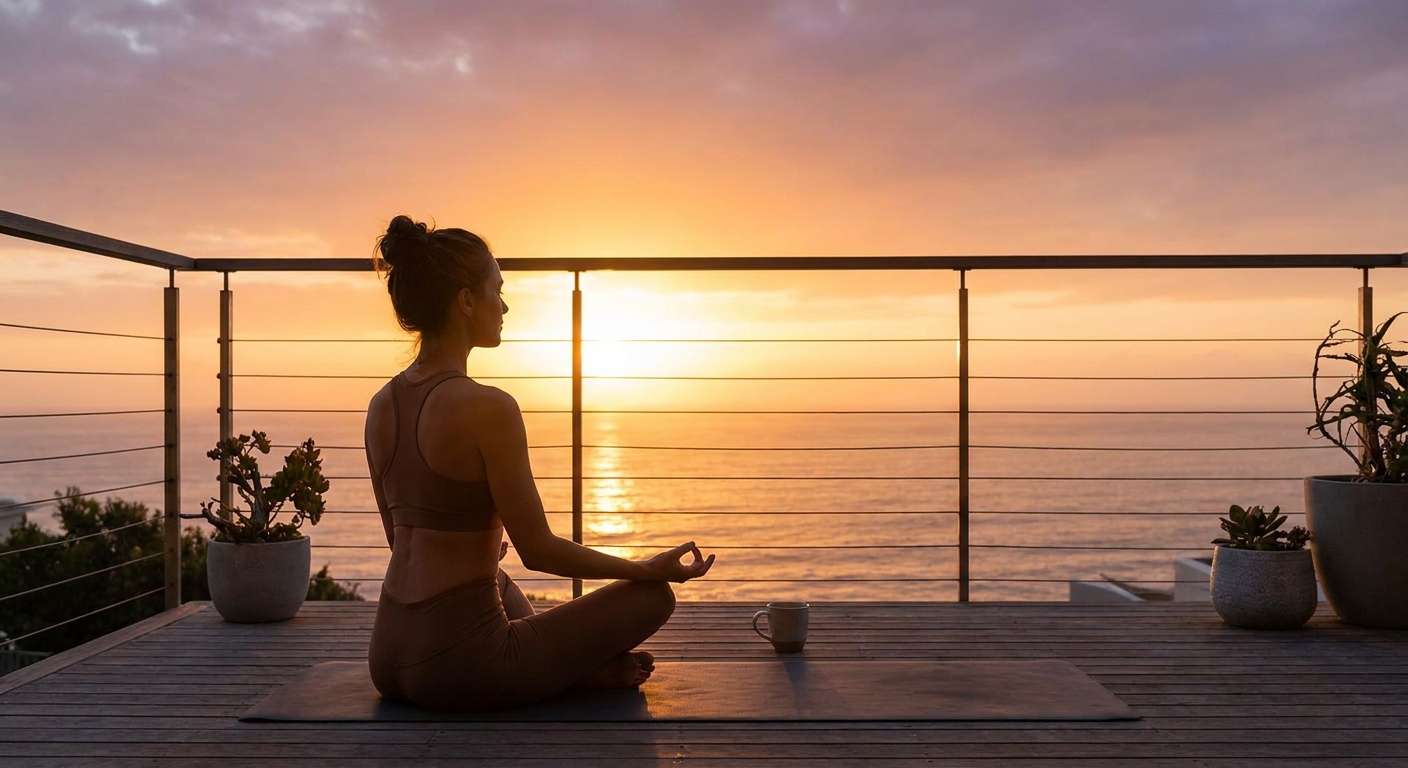
Do you ever wake up feeling already stressed about the day ahead? You are not alone. Millions of people struggle with morning anxiety, rushing through their first hours without a moment of stillness. A simple yoga and meditation morning routine can completely transform how you feel from the moment you open your eyes.
At Vitalizen App | Yoga + Meditation, we believe that how you start your morning sets the tone for your entire day. By combining gentle movement with mindful awareness, you can cultivate inner peace, reduce stress, and boost your energy naturally — without caffeine or chaos.
In this guide, you will discover a practical 7-step morning routine that takes less than 20 minutes. Whether you are a complete beginner or an experienced practitioner, these steps will help you build a sustainable practice that sticks. Ready to transform your mornings? Let us dive in.
- Wake with intention (1 minute)
- Gentle stretches in bed (2 minutes)
- Sun Salutations (5 minutes)
- Standing poses for grounding (4 minutes)
- Seated meditation (5 minutes)
- Gratitude practice (2 minutes)
- Set your daily intention (1 minute)
Why Does a Yoga and Meditation Morning Routine Change Everything?
Before we get into the steps, let us talk about why this combination works so well. Yoga and meditation are not just exercises — they are complementary practices that prepare both your body and mind for the day ahead.
Yoga wakes up your muscles, improves blood circulation, and releases physical tension stored overnight. Meditation, on the other hand, calms your nervous system, reduces cortisol levels, and sharpens your focus. When practiced together, they create a powerful synergy that helps you feel grounded, centered, and ready to face any challenge.
Research published in the Journal of Clinical Psychology shows that consistent mindfulness morning practice can reduce anxiety by up to 38% and improve emotional regulation throughout the day. Moreover, a study from Harvard Medical School found that 20 minutes of daily meditation can actually change brain structure, increasing gray matter density in areas linked to memory and emotional control.
Still wondering if this routine is for you? Consider this: even five minutes of intentional practice can make a measurable difference. The key is consistency, not perfection.
How Can You Build Your Perfect Yoga and Meditation Morning Routine?
Below you will find a complete sequence designed to flow naturally from movement to stillness. Each step builds on the previous one, creating a holistic experience that honors both your body and your mind.
Step 1: How to Wake Up with Intention (1 Minute)
Before you even get out of bed, take one minute to set an intention. Lie still, place one hand on your heart and the other on your belly. Take three deep breaths. Ask yourself: How do I want to feel today? This simple act shifts your brain from autopilot to conscious awareness.
This is the foundation of any mindfulness morning routine. By starting with intention, you train your mind to focus on what truly matters — not on emails, notifications, or worries.
For deeper guidance, try a guided morning meditation from the Vitalizen App.
Step 2: What Are the Best Gentle Stretches to Do in Bed? (2 Minutes)
While still lying down, stretch your arms overhead and point your toes. Then, hug your knees into your chest and gently rock side to side. This releases lower back tension and wakes up your spine. Follow with a gentle spinal twist: keep your shoulders flat and let both knees fall to one side, then the other.
These movements signal your body that it is safe to wake up gradually — no sudden jolts, no rushing. They also prepare your joints for more dynamic movements later in the morning yoga and meditation sequence.
Step 3: Why Are Sun Salutations Essential? (5 Minutes)
Now it is time to get out of bed and onto your mat. Perform 3 to 5 rounds of Sun Salutations (Surya Namaskar). This classic yoga sequence warms up every major muscle group, improves flexibility, and synchronizes breath with movement.
If you are new to yoga, do not worry about perfection. Focus on your breath and move at your own pace. Each round takes about one minute, so five minutes is plenty to feel energized and alive. You can also explore variations like adding a low lunge or incorporating a backbend to deepen the stretch.
For guided instruction, check out the Vitalizen App, where you will find beginner-friendly yoga classes designed specifically for morning practice.
Step 4: Which Standing Poses Build Strength and Grounding? (4 Minutes)
After warming up, move into standing poses that build strength and stability. Try Mountain Pose (Tadasana), Warrior I (Virabhadrasana I), and Warrior II (Virabhadrasana II). Hold each pose for three to five breaths.
These poses are excellent for improving posture, building leg strength, and cultivating a sense of grounded confidence. As you hold each pose, imagine roots growing from your feet into the earth. Feel your stability and power. You can also add a gentle side bend in Mountain Pose to open the side body and improve spinal flexibility.
Step 5: How to Practice Seated Meditation (5 Minutes)
Transition from movement to stillness. Sit comfortably on your mat or a cushion. Close your eyes and bring your attention to your natural breath. Do not try to control it — simply observe the sensation of air entering and leaving your nostrils.
When your mind wanders (and it will), gently bring it back to your breath without judgment. This is the essence of mindfulness meditation. Even five minutes of this practice can reduce stress and improve mental clarity for hours afterward. According to the National Center for Complementary and Integrative Health, meditation can help with anxiety, pain, and high blood pressure.
If sitting still feels challenging, you can use a guided meditation from the Vitalizen App. Our library includes short morning meditations specifically designed for busy people.
Step 6: What Is a Simple Gratitude Practice? (2 Minutes)
After your meditation, keep your eyes closed and bring to mind three things you are grateful for. They can be simple — the warmth of your bed, the taste of your morning tea, or the love of a family member. Feel the gratitude in your heart as you silently acknowledge each one.
Gratitude is one of the most powerful tools for shifting your mindset from scarcity to abundance. Studies from the University of California, Berkeley show that daily gratitude practice increases happiness by 25% and improves sleep quality. This simple exercise is a wonderful complement to any yoga and meditation morning routine.
Step 7: When Should You Set Your Daily Intention? (1 Minute)
End your routine by setting a clear intention for the day. This could be a quality you want to embody (patience, kindness, courage) or a specific goal you want to accomplish. Say it silently or out loud: Today, I choose peace. Today, I choose focus. Today, I choose joy.
This final step bridges your practice with the rest of your day, ensuring that the calm and clarity you cultivated on your mat stays with you as you move through the world.
What Are the Best Tips for Building a Sustainable Morning Practice?
Starting a new routine is exciting, but maintaining it requires strategy. Here are some practical tips to help you stay consistent:
- Start small. If 20 minutes feels overwhelming, begin with 5. Consistency beats duration every time.
- Prepare the night before. Lay out your mat, clothes, and any props you might need. Remove friction from your morning.
- Use an app. Having guided sessions at your fingertips makes it easier to show up, especially on low-motivation days. The Vitalizen App offers structured morning programs that grow with you.
- Track your progress. Journaling about how you feel after each practice reinforces the positive benefits and keeps you motivated.
- Be kind to yourself. Missed a day? No problem. Just start again tomorrow. Perfection is not the goal — presence is.
- Create a morning ritual. Pair your practice with a warm cup of herbal tea or a few minutes of journaling to anchor the experience.
Remember, the goal is not to create a rigid routine but to build a flexible practice that supports your well-being. Some mornings you might do the full sequence; other mornings you might only have time for three deep breaths. Both count.
Frequently Asked Questions About Yoga and Meditation Morning Routines
How long should a yoga and meditation morning routine be?
Even 5 to 10 minutes can make a meaningful difference. For best results, aim for 15 to 20 minutes. The routine outlined above takes about 20 minutes total, but you can adjust it to fit your schedule. The key is consistency, not duration.
Can beginners do this morning routine?
Absolutely. This routine is designed for all levels. Each pose and meditation technique can be modified to suit your body and experience. If you are new to yoga or meditation, consider using the guided sessions available on the Vitalizen App to build confidence.
What if I don’t have time for a full routine?
Do what you can. Even one minute of deep breathing or a single Sun Salutation is better than nothing. The most important thing is to show up with intention. Over time, you will likely find that you naturally want to expand your practice.
Should I eat before my morning yoga practice?
It is best to practice on an empty stomach or after a very light snack like a piece of fruit or a handful of nuts. Wait at least 30 minutes after eating before doing yoga to avoid discomfort during twists and forward folds.
Can I do this routine if I have back pain or injuries?
Many poses can be modified to accommodate injuries. However, it is always best to consult with a healthcare professional before starting any new exercise routine. The Vitalizen App offers gentle and restorative classes specifically designed for people with physical limitations.
What is the best time to practice yoga and meditation in the morning?
Ideally, practice within the first hour after waking up. This is when your mind is most receptive and your body is naturally more flexible after rest. However, the best time is whatever time you can consistently commit to.
How Can You Start Your Journey Today?
Transforming your mornings does not require a complete life overhaul. It simply requires showing up — one breath, one pose, one moment at a time. A yoga and meditation morning routine is one of the most powerful gifts you can give yourself, and it is available to you right now, exactly as you are.
At Vitalizen App | Yoga + Meditation, we are here to support you every step of the way. Our app offers guided yoga sessions, meditation tracks, breathing exercises, and personalized programs that adapt to your level and goals. Whether you have five minutes or fifty, we have something for you.
Ready to experience the difference? Start your free trial today and discover how good it feels to begin your day with peace, purpose, and presence.
Have questions or want to share your experience? We would love to hear from you. Contact us here or explore more articles, tips, and guidance on yoga and meditation on our blog.
Namaste.