How to Meditate: A Beginner’s Guide to Inner Calm (2026)
In the non-stop pace of modern life, finding a moment of genuine peace can feel like an impossible task. But what if you could cultivate an oasis of calm within yourself, accessible anytime you need it? This is the fundamental promise of meditation. It’s not a mystical or complex ritual, but a practical skill for training attention and awareness to achieve a mentally clear and emotionally stable state.
If you’re wondering how to meditate, you’ve come to the right place. This comprehensive guide is designed for the absolute beginner. We will walk you through the science behind the practice, the profound benefits it offers, and the essential first steps on your journey to inner peace and enhanced self-awareness. Let’s begin.
The Science of Stillness: What Are the Main Benefits of Meditation?
Before we dive into the ‘how,’ let’s explore the ‘why.’ The benefits of a consistent meditation practice are not just anecdotal; they are backed by a growing body of extensive scientific research. It’s not about emptying your mind, but rather about observing your thoughts without judgment. This simple shift in perspective leads to a more peaceful, focused, and resilient you.
- Profound Stress Reduction: This is the most common reason people learn how to meditate. Research from institutions like the National Center for Complementary and Integrative Health (NCCIH) shows that mindfulness meditation effectively lowers cortisol, the primary stress hormone, mitigating the body’s stress response.
- Sharpened Focus and Concentration: In our age of digital distraction, the ability to focus is a superpower. Regular meditation practice strengthens the prefrontal cortex, the brain region responsible for concentration, decision-making, and resisting distractions.
- Improved Sleep Quality: Do you struggle with mental chatter at night? Meditation can help quiet the mind, making it easier to fall and stay asleep. A 2025 study showed that meditators spent more time in restorative deep sleep.
- Enhanced Emotional Health: The practice fosters a more positive outlook on life. By creating space between a trigger and your reaction, it can significantly reduce symptoms of anxiety and depression, promoting emotional regulation.
- Deeper Self-Awareness: By observing your thoughts and feelings non-judgmentally, you gain a powerful understanding of your internal patterns, habits, and motivations. This is the foundation of personal growth.
- Better Cardiovascular Health: The relaxation response triggered by meditation can lead to lower blood pressure and a reduced risk of heart disease over the long term, contributing to overall physical well-being.
“A 2026 study from Stanford University’s School of Medicine found that participants in a mindfulness meditation program reported a 68% decrease in anxiety symptoms over an 8-week period.”

How Do You Start Meditating? A 6-Step Beginner’s Guide
Starting your meditation practice is simpler than you think. You don’t need special equipment, expensive classes, or a lot of time. The most important thing is a willingness to try. Here’s a straightforward, step-by-step path to begin your journey into mindfulness.
- Step 1: Find a Quiet Spot. Choose a place where you won’t be disturbed for the duration of your practice. This could be a corner of your bedroom, an office, or even a quiet park bench. Minimizing external distractions is key when you’re first learning how to meditate.
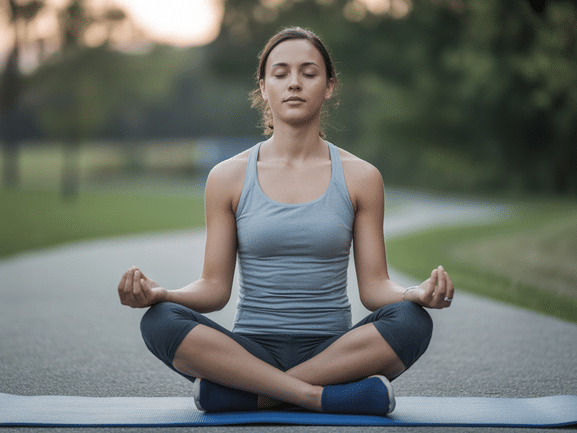
- Step 2: Get Comfortable. Your posture should be a balance of stability and relaxation. You can sit on a chair with your feet flat on the floor, or on a cushion on the ground with your legs crossed. The most important rule is to keep your back straight but not stiff to allow for easy breathing. Your hands can rest gently on your knees or in your lap.
- Step 3: Set a Short Timer. For your first few sessions, aim for just 3-5 minutes. The goal is to build a consistent habit, not to endure a marathon session. As you become more comfortable, you can gradually increase the time. Using an app like Vitalizen App can help you track time with gentle, non-jarring sounds.
- Step 4: Focus on Your Breath. Close your eyes gently or lower your gaze. Bring your full attention to the physical sensation of your breath. Notice the feeling of the air entering your nostrils, filling your chest and belly, and then the feeling of it leaving your body. Don’t try to change your breathing; just observe it.
- Step 5: Acknowledge Wandering Thoughts. Your mind will wander. This is not a sign of failure; it’s what minds do. When you notice your thoughts drifting to your to-do list, a memory, or a sound, gently acknowledge the thought without judgment (e.g., “Ah, thinking”) and then softly guide your focus back to your breath. This act of returning is the core of the meditation practice.
- Step 6: End with Kindness. When your timer goes off, resist the urge to jump up immediately. Slowly open your eyes and take a moment to notice your physical and mental state. How does your body feel? What is the quality of your mind? Offer yourself a moment of gratitude for taking this time for yourself.
That’s it! You’ve just completed a session of meditation. The more you practice, the easier it becomes to find that anchor in your breath and carry that sense of calm and awareness into the rest of your day.
💡 Ready to Start Your Practice? Download the Vitalizen App for guided meditations, timers, and progress tracking to help you build a consistent habit.
Exploring Different Types of Meditation Techniques
While the breath-focused method above is a perfect starting point, the world of meditation is vast. Exploring different techniques can keep your practice engaging. Here are a few popular styles:
Mindfulness Meditation
This is the style we outlined above. It originates from Buddhist traditions and involves paying attention to your thoughts as they pass without judging them. The goal is to develop an awareness of the present moment.
Guided Meditation
In guided meditation, a teacher or an app (like our guided meditations) walks you through the process. They might use imagery, body scans, or affirmations to help you relax and focus. This is an excellent option for beginners who find it difficult to focus on their own.
Walking Meditation
If sitting still is a challenge, walking meditation is a powerful alternative. The focus shifts from the breath to the physical sensations of your feet on the ground. It’s a wonderful way to integrate mindfulness into physical activity.
What Are Common Challenges for Beginners?
Every beginner faces a few hurdles. Knowing them beforehand can help you navigate them with patience and self-compassion. Remember, these are part of the process, not signs of failure.
| Challenge | Solution | Mindset |
|---|---|---|
| Restlessness or Fidgeting | Gently notice the urge to move, then return focus to your breath. A little movement is okay. Try a walking meditation if sitting feels too difficult. | Patience |
| Falling Asleep | Try a more upright posture or meditate at a time of day when you’re more alert. Avoid meditating right after a heavy meal. | Experimentation |
| Feeling Bored or Impatient | Acknowledge the boredom as just another feeling. You can also try different types of guided meditations to keep things fresh and interesting. | Curiosity |
| Inconsistency in Practice | Link your practice to an existing habit, like your morning coffee (habit stacking). Start with a very small, achievable goal to build momentum. | Discipline |
| Feeling Like You’re ‘Doing It Wrong’ | There is no ‘wrong’ way to meditate. If you’re sitting and intending to practice, you’re doing it right. The only goal is to keep returning your focus to your anchor. | Self-Compassion |

How to Make Meditation a Lifelong Habit
Consistency is the key that unlocks the profound benefits of meditation. This is where technology can be a powerful ally. The Vitalizen App is designed to support your journey with a library of guided meditations, calming soundscapes, and progress tracking. We make it easy to build a practice that sticks.
Embarking on a meditation practice is a true gift to yourself. It’s a journey of self-discovery, not a destination to be reached. Be patient, be kind to yourself, and enjoy the process of discovering a calmer, more centered you. For further reading, you can explore studies on mindfulness from institutions like the American Psychological Association and research from academic centers like the Stanford University Well-Being Program.
🎯 Ready to transform your well-being? Begin your journey with Vitalizen today and discover the power of a consistent meditation practice!
Frequently Asked Questions (FAQ)
What if I can’t stop thinking during meditation?
You don’t have to stop thinking. A common misconception is that meditation is about having an empty mind. In reality, it’s about changing your relationship with your thoughts. Simply notice them and return your focus to your breath. Every time you do this, you are strengthening your mindfulness muscle.
How long should I meditate for each day?
Start with what feels manageable, even if it’s just 3-5 minutes a day. It’s more effective to meditate for a few minutes every day than for one long session once a week. As you get more comfortable, you can gradually increase the duration.
When is the best time of day to meditate?
The best time is whenever you can consistently practice. Many people prefer the morning to start their day with clarity, while others find it helpful in the evening to de-stress. Experiment to see what works for your schedule.
How much does it cost to learn meditation?
Meditation is fundamentally free. You don’t need any special equipment to start. Optional costs can include subscription-based apps like Vitalizen, cushions, or in-person classes, but these are not necessary to begin.
Is there a ‘right’ way to meditate?
While there are many techniques, there is no single ‘right’ way. The best way to meditate is the way that works for you. The key principles are a comfortable posture, a focus object (like the breath), and a non-judgmental attitude. For more tips, check out our other articles and guides on the blog.