

Yoga and Meditation for Anxiety: Your Practical Guide for 2026
In our hyper-connected world of 2026, finding a sanctuary of calm is not a luxury—it’s essential for well-being. Anxiety has become a pervasive challenge, but ancient practices offer a powerful, accessible path to relief. The combined practice of yoga and meditation for anxiety works by uniting the mind and body, anchoring you in the present moment to diminish the overwhelming power of anxious thoughts.
This guide explores proven techniques for anxiety relief through mindfulness. With support from resources like the Vitalizen App | Yoga + Meditation, you can build a consistent, life-changing practice to navigate modern pressures with greater ease and resilience. Let’s explore how these tools can transform your mental health.
The Science of Calm: How Yoga and Meditation Counteract Anxiety
To understand why yoga and meditation for anxiety are so effective, we must look at the science. When you feel stressed, your body’s sympathetic nervous system triggers the “fight-or-flight” response, releasing hormones like cortisol and adrenaline. While useful for immediate danger, chronic activation of this system leads to persistent anxiety and health issues.
Yoga and meditation activate the parasympathetic nervous system, also known as the “rest-and-digest” system. This has several key physiological benefits:
- Cortisol Reduction: Consistent practice is scientifically proven to lower cortisol levels, helping to break the cycle of chronic stress.
- Increased GABA Levels: Studies show that yoga can increase levels of gamma-aminobutyric acid (GABA), a neurotransmitter that has a calming effect on the brain. Low GABA levels are linked to anxiety disorders.
- Vagus Nerve Stimulation: Deep, diaphragmatic breathing (pranayama) stimulates the vagus nerve, a key component of the parasympathetic nervous system that helps regulate heart rate and promotes relaxation.
- Prefrontal Cortex Activity: Meditation strengthens the prefrontal cortex, the area of the brain responsible for emotional regulation and executive function. This helps you manage anxious thoughts instead of being controlled by them.
According to the National Center for Complementary and Integrative Health (NCCIH), evidence suggests these practices are effective tools for managing stress and improving mental well-being.
Choosing Your Yoga Style for Anxiety Relief
While any form of yoga can be beneficial, certain styles are particularly suited for calming the nervous system. The goal is to find a practice that feels supportive and grounding for you. Here are some of the best types of yoga for anxiety:
1. Hatha Yoga
Hatha is an excellent starting point. It involves holding basic postures (asanas) for several breaths, with a focus on alignment and mindful breathing. Its slower pace makes it accessible for beginners and provides a solid foundation for connecting mind and body.
2. Restorative Yoga
This is a deeply relaxing practice that uses props like bolsters, blankets, and blocks to support the body in comfortable poses. Poses are held for 5-20 minutes, allowing your muscles to release tension completely and your nervous system to reset. It is one of the most effective methods for direct anxiety relief.
3. Yin Yoga
Yin yoga targets the body’s deep connective tissues, like ligaments and fascia. Poses are held for longer periods (3-5 minutes), encouraging a meditative state of mind. This practice teaches you to sit with discomfort and observe sensations without reacting—a crucial skill for managing anxiety.
4. Yoga Nidra
Often called “yogic sleep,” Yoga Nidra is a guided meditation practice done while lying down. It systematically guides you through different layers of awareness to induce a state of profound relaxation. It’s incredibly effective for reducing stress and improving sleep quality.
💡 Tip: The Vitalizen app offers guided sessions in various styles. Download our free guide to find the perfect practice for your needs!
Essential Meditation Techniques for a Calm Mind
Meditation is the practice of training your attention to achieve a mentally clear and emotionally calm state. It’s a core component of using yoga and meditation for anxiety. Here are a few foundational techniques you can start with today:
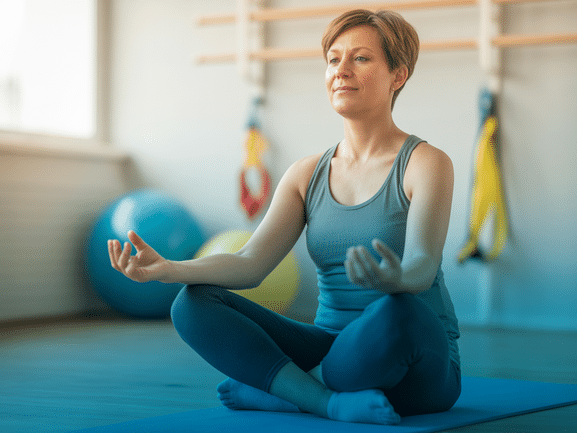
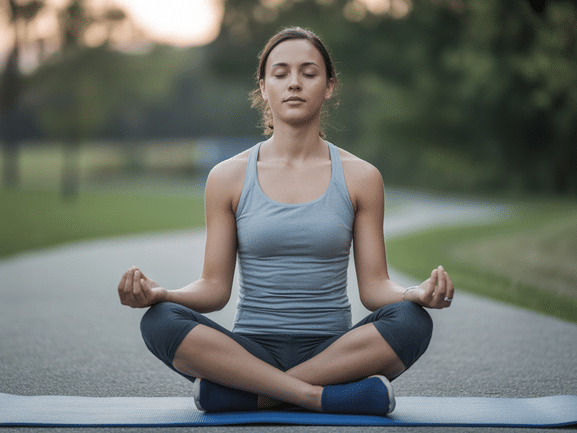
- Mindful Breathing: This is the cornerstone of most meditation practices. Simply find a comfortable seat, close your eyes, and bring your full attention to the sensation of your breath. Notice the air entering your nostrils, filling your lungs, and then leaving your body. When your mind wanders, gently guide it back to the breath.
- Body Scan Meditation: Lie down comfortably and bring your awareness to each part of your body, one at a time. Start with your toes and slowly move up to your head. Notice any sensations—warmth, tingling, tension—without judgment. This practice enhances mind-body connection and releases stored physical stress.
- Loving-Kindness Meditation: This practice cultivates compassion for yourself and others. Silently repeat phrases like, “May I be happy. May I be healthy. May I be safe.” Then, extend these wishes to loved ones, neutral people, and eventually, all beings. It’s a powerful antidote to the self-criticism that often accompanies anxiety.
How to Start Your Practice: A Step-by-Step Guide
Starting a new habit can feel daunting, but you don’t need to be an expert to begin. Follow these simple steps to integrate yoga and meditation for anxiety into your life.
Step 1: Create a Personal Sanctuary
Designate a quiet, comfortable space in your home where you won’t be interrupted. It doesn’t need to be large—a corner of your bedroom is perfect. Keep it clean and clutter-free. The goal is to create a space that your mind associates with peace and relaxation.
Step 2: Start Small and Be Consistent
Consistency is more important than duration. Begin with just 5-10 minutes a day. Many people prefer practicing in the morning to set a calm tone for the day, while others find an evening session helps them unwind. Experiment to see what works for your schedule.
Step 3: Begin with Beginner-Friendly Poses
You don’t need to be a gymnast. Start with simple, grounding poses:
- Cat-Cow Pose (Marjaryasana-Bitilasana): A gentle flow to connect breath with movement and release spinal tension.
- Child’s Pose (Balasana): A resting pose that calms the mind and gently stretches the back, hips, and ankles.
- Legs-Up-the-Wall Pose (Viparita Karani): A deeply restorative pose that calms the nervous system. Lie on your back and extend your legs up a wall for 5-10 minutes.
Step 4: Use Guided Resources
Following a guided session can make all the difference, especially for beginners. It removes the guesswork and helps you stay focused. The Vitalizen App is designed for this purpose, offering a library of guided yoga and meditation sessions for all levels.
Overcoming Common Hurdles in Your Practice
It’s normal to face challenges when starting something new. Here’s how to handle them:
- “My mind is too busy!”: This is the most common myth. The goal of meditation isn’t to stop your thoughts; it’s to notice them without judgment and gently return your focus to your anchor (like your breath). Every time you guide your mind back, you are strengthening your focus.
- “I don’t have time.”: Even five minutes can make a difference. Try linking your practice to an existing habit, like right after you brush your teeth in the morning. Look for small pockets of time throughout your day.
- “I’m not flexible enough for yoga.”: Saying you’re not flexible enough for yoga is like saying you’re too dirty to take a shower. Yoga is what *builds* flexibility. The focus is on how the pose feels in your body, not how it looks.
The Cost of Inner Peace: An Investment in Yourself
The cost of practicing yoga and meditation can vary, making it accessible for nearly any budget. The key is finding an approach that fits your lifestyle. Many high-quality resources are available for free.
| Method | Average Monthly Cost | Key Feature |
|---|---|---|
| Free Resources (YouTube, etc.) | $0 | No cost, but lacks structure and personalization. |
| Meditation & Yoga Apps (like Vitalizen) | $10 – $20 | Guided, structured, flexible, and cost-effective. |
| In-Person Studio Classes | $80 – $200+ | Community, hands-on correction, and higher cost. |
For a structured and affordable approach, an app provides the perfect balance. Want to learn more about our mission? Discover What is Vitalizen.app? and our dedication to making well-being accessible to everyone.
Frequently Asked Questions
How much time do I need to practice to feel a difference?
Even 5-10 minutes a day can make a huge difference. Consistency is more important than duration, especially when you’re starting. Many users report feeling calmer after their very first session. The Vitalizen App offers sessions of various lengths to perfectly fit your schedule.
Do I need to be flexible to do yoga?
Not at all! This is one of the biggest myths about yoga. Yoga is for every body type and flexibility level. In fact, practicing yoga is what helps you improve your flexibility and mobility over time. The goal is to feel good in your body, not to achieve a specific pose.
Is meditation difficult?
It can be challenging at first because our minds are naturally busy, but it’s a skill you can develop with practice. Guided meditations, like those on the Vitalizen app, are a fantastic way to start because they provide clear instructions and support, making the process much easier.
What type of yoga is best for anxiety?
For anxiety, slower, more restorative styles are often recommended. Look for Hatha, Restorative, or Yin Yoga classes. These styles focus on gentle movements, deep stretching, and mindful breathing, which are excellent for calming the nervous system.
Can I practice if I’m not religious?
Absolutely. While yoga and meditation have spiritual roots, they are widely practiced today as secular methods for improving mental and physical health. The focus is on self-awareness and well-being, not adherence to any belief system. It is a personal practice for everyone.
Your Journey to a Calmer Mind Starts Today
You have the power to reduce stress and cultivate inner peace. By integrating simple yoga poses and mindfulness techniques into your routine, you can transform your well-being one breath at a time. The journey of using yoga and meditation for anxiety is personal, and every step you take is a victory.
🎯 Ready to take the first step? Start your wellness journey now and discover a happier, healthier you with Vitalizen. Explore more articles and guidance on yoga and meditation on our blog, or contact us if you have any questions.