


Yoga for Beginners: How to Start Your Practice in 2026
Posted on by Vitalizen App | Yoga + Meditation
What Is Yoga for Beginners and How Does It Work?
Yoga for beginners is an accessible entry point into an ancient practice originating in India over 5,000 years ago. This discipline combines physical postures, breathing techniques, and meditation to promote holistic well-being. The word “yoga” derives from the Sanskrit root “yuj,” meaning to unite or join, representing the connection between body, mind, and spirit.
Modern yoga works through a combination of physiological and neurological mechanisms. When you practice yoga, you activate the parasympathetic nervous system, commonly known as the “rest and digest” response. This activation reduces cortisol levels, lowers blood pressure, and improves heart rate variability. Additionally, the physical postures strengthen musculoskeletal structures while enhancing proprioception and body awareness.
Historical Context and Modern Evolution
Traditional yoga emphasized spiritual enlightenment and meditation, with physical postures serving merely as preparation for seated meditation. However, the 20th century saw the evolution of Hatha yoga in the West, focusing more on physical health and fitness. By 2026, yoga has become a $88 billion global industry, with over 300 million practitioners worldwide according to the Global Wellness Institute.
The Science Behind Yoga Practice
Contemporary research validates what ancient practitioners knew intuitively. Neuroimaging studies from 2026 demonstrate that regular yoga practice increases gray matter density in the hippocampus and prefrontal cortex, areas associated with learning and emotional regulation. Furthermore, yoga stimulates the vagus nerve, which plays a crucial role in regulating inflammation throughout the body.
Types of Yoga for Beginners
Not all yoga styles suit those new to the practice. Here are the best options for beginner yoga enthusiasts:
- Hatha Yoga: Slow-paced and gentle, perfect for learning basic postures and breathing techniques.
- Vinyasa Flow: Links movement with breath in a dynamic sequence, ideal for those wanting gentle cardio.
- Yin Yoga: Holds poses for 3-5 minutes to target deep connective tissues and improve flexibility.
- Restorative Yoga: Uses props to support the body in complete relaxation, excellent for stress relief.
- Chair Yoga: Modified poses performed while seated, making yoga accessible for those with mobility limitations.
Why Is Yoga for Beginners Important for Your Health?
In our hyperconnected digital age, chronic stress has become a public health crisis. The American Psychological Association’s 2026 report indicates that 78% of adults experience physical symptoms caused by stress. Starting yoga offers a scientifically-proven antidote to modern life’s demands, requiring no special equipment and accessible to all fitness levels.
Physical Benefits Backed by Research
Regular yoga practice delivers measurable physical improvements. A meta-analysis published in the Journal of Physical Activity and Health (2026) found that participants practicing yoga twice weekly for 12 weeks showed:
- 34% improvement in flexibility scores
- 28% increase in core strength
- 22% reduction in chronic lower back pain
- 15% improvement in cardiovascular endurance
- 18% enhancement in balance and stability
Mental and Emotional Benefits
Beyond physical changes, yoga significantly impacts mental health. The practice reduces symptoms of anxiety and depression by regulating neurotransmitters like GABA and serotonin. Have you ever noticed how shallow your breathing becomes during stressful emails? Yoga retrains your respiratory patterns, ensuring you maintain calm even during challenging situations.
For those new to yoga, the mental clarity achieved through just 10 minutes of daily practice can transform productivity and emotional resilience. The mindfulness component teaches present-moment awareness, reducing rumination about past events or anxiety about the future.
“Yoga is not about touching your toes, it’s about what you learn on the way down.”
How Much Does Yoga for Beginners Cost?
One of yoga’s greatest advantages is scalability across budgets. Whether you have $0 or $500 to invest, you can begin a meaningful practice today. Understanding the cost structure helps you make informed decisions about your wellness investment.
Equipment and Investment Breakdown
Initial startup costs vary based on your preferences and practice location. Here is a comprehensive breakdown of typical expenses for yoga beginners in 2026:
| Item | Budget Option | Mid-Range | Premium |
|---|---|---|---|
| Yoga Mat | $15-25 | $40-70 | $80-120 |
| Blocks (set of 2) | $8-12 | $15-25 | $30-50 |
| Strap | $5-10 | $12-18 | $25-40 |
| Bolster | $20-30 | $40-60 | $70-100 |
| Monthly Classes | Free (YouTube) | $15-30 (Apps) | $100-200 (Studio) |
Free vs. Paid Options
Free resources like YouTube channels and library books provide excellent starting points for beginner yoga practitioners. However, paid platforms like the Vitalizen App offer structured progressions, personalized recommendations, and expert guidance that accelerate your learning curve. The investment typically pays for itself through injury prevention and faster results.
Many studios offer introductory specials for yoga for beginners, such as one week of unlimited classes for $20. This allows you to try different instructors and styles before committing to a membership.
Where Can You Practice Yoga for Beginners Effectively?
Your practice environment significantly impacts consistency and results. Those starting yoga often wonder whether to begin at home or join a studio. Both options offer distinct advantages depending on your personality and schedule.
Home Practice Setup
Creating a dedicated yoga space at home requires only 6×4 feet of clear floor space. Choose a quiet corner with natural light if possible. Keep your mat visible rather than stored away—out of sight often means out of mind. A 2026 survey by Yoga Alliance found that home practitioners maintain consistency 40% better than those relying solely on studio classes, primarily due to reduced commute time.
For yoga beginners, home practice eliminates the intimidation factor of public classes. You can pause videos, modify poses without feeling self-conscious, and practice in your pajamas if desired. However, ensure you have a mirror nearby to check your alignment, or practice near a wall for balance support.
Studio vs. Digital Platforms
Studios provide hands-on adjustments and community energy, while digital platforms offer convenience and variety. Many beginners in yoga benefit from hybrid approaches: attending one weekly studio class for form correction while practicing daily at home with app guidance. The Vitalizen blog offers sequences specifically designed for home practitioners with limited space.
When choosing a studio, look for classes labeled “Yoga Basics,” “Gentle Yoga,” or “Level 1.” Avoid “Power Yoga” or “Advanced Vinyasa” until you have built foundational strength and knowledge.
When Is the Best Time for Yoga for Beginners?
Timing your practice depends on your chronotype and goals. While yoga benefits you regardless of timing, strategic scheduling enhances specific outcomes for those new to yoga.
Morning vs. Evening Sessions
Morning practice (6:00-8:00 AM): Ideal for energizing sun salutations and setting intentions. Morning practitioners report improved focus throughout the workday and better metabolic function. The cortisol awakening response naturally peaks in the morning, making this time perfect for active, heating practices.
Evening practice (6:00-8:00 PM): Optimal for restorative poses and stress relief. Evening sessions help transition from work mode to rest mode, improving sleep quality. Research from the National Sleep Foundation (2026) indicates that gentle yoga practiced 2 hours before bed reduces insomnia symptoms by 67%.
Lunchtime sessions: Even 15 minutes of desk yoga can reset your posture and mental clarity for afternoon productivity. Simple seated twists and neck stretches counteract the effects of prolonged sitting.
Consistency Over Duration
For yoga beginners, consistency matters more than session length. A 15-minute daily practice yields better results than a 90-minute session once weekly. Choose a time you can realistically maintain, whether that’s sunrise or midnight.
What Are the Main Benefits of Yoga for Beginners?
Beginning yoga initiates a cascade of positive changes across multiple body systems. Unlike high-impact exercises that stress joints, yoga builds functional strength while protecting connective tissues.
Stress Reduction Statistics
Chronic stress contributes to 75% of doctor visits according to the American Institute of Stress. Yoga’s impact on stress reduction is well-documented for beginner yoga students:
- Cortisol reduction: 23% decrease after 8 weeks of practice (Harvard Medical School, 2026)
- Anxiety relief: 60% of participants report reduced anxiety within one month
- Blood pressure: Average reduction of 5-10 mmHg in hypertensive patients
- Sleep quality: 55% improvement in sleep latency and duration
Flexibility and Strength Gains
Contrary to popular belief, you don’t need flexibility to start yoga—you gain flexibility through yoga. Yoga for beginners typically notice improved range of motion in hips and hamstrings within two weeks. Simultaneously, holding poses builds isometric strength, particularly in the core and stabilizing muscles often neglected in conventional gym workouts.
Weight-bearing poses like Plank and Warrior sequences increase bone density, crucial for preventing osteoporosis. The controlled, low-impact nature of yoga makes it sustainable for lifelong practice without the joint degradation associated with running or high-intensity interval training.
Ready to experience these benefits? Start your wellness journey now.
How to Start Yoga for Beginners: A Step-by-Step Guide
Starting yoga requires no prerequisite fitness level or flexibility. This section provides actionable steps to begin safely and effectively, minimizing injury risk while maximizing early benefits.
Essential Poses for Beginners
Master these foundational poses before advancing to complex sequences. Focus on alignment and breath rather than depth.
1. Mountain Pose (Tadasana)
This seemingly simple standing pose forms the foundation for all standing postures. Stand with feet hip-width apart, distributing weight evenly across all four corners of each foot. Engage your quadriceps to lift the kneecaps, lengthen the tailbone toward the floor, and roll shoulders back and down. Hold for 5-8 breaths, focusing on grounding through the feet while lengthening through the crown of the head.
2. Cat-Cow Stretch (Marjaryasana-Bitilasana)
Begin on hands and knees in a tabletop position, wrists directly under shoulders and knees under hips. Inhale, arching your back and lifting your tailbone and head (Cow Pose). Exhale, rounding your spine and tucking your chin to chest (Cat Pose). Repeat for 10 rounds, moving with your breath to warm up the spine and release tension in the lower back.
3. Downward-Facing Dog (Adho Mukha Svanasana)
From tabletop, curl your toes under and lift your hips up and back, creating an inverted V-shape. Keep a slight bend in the knees if your hamstrings feel tight. Press firmly through your hands, rotating inner arms toward each other. Let your head hang heavy between your arms. Hold for 5 breaths, pedaling the feet to stretch the calves.
4. Child’s Pose (Balasana)
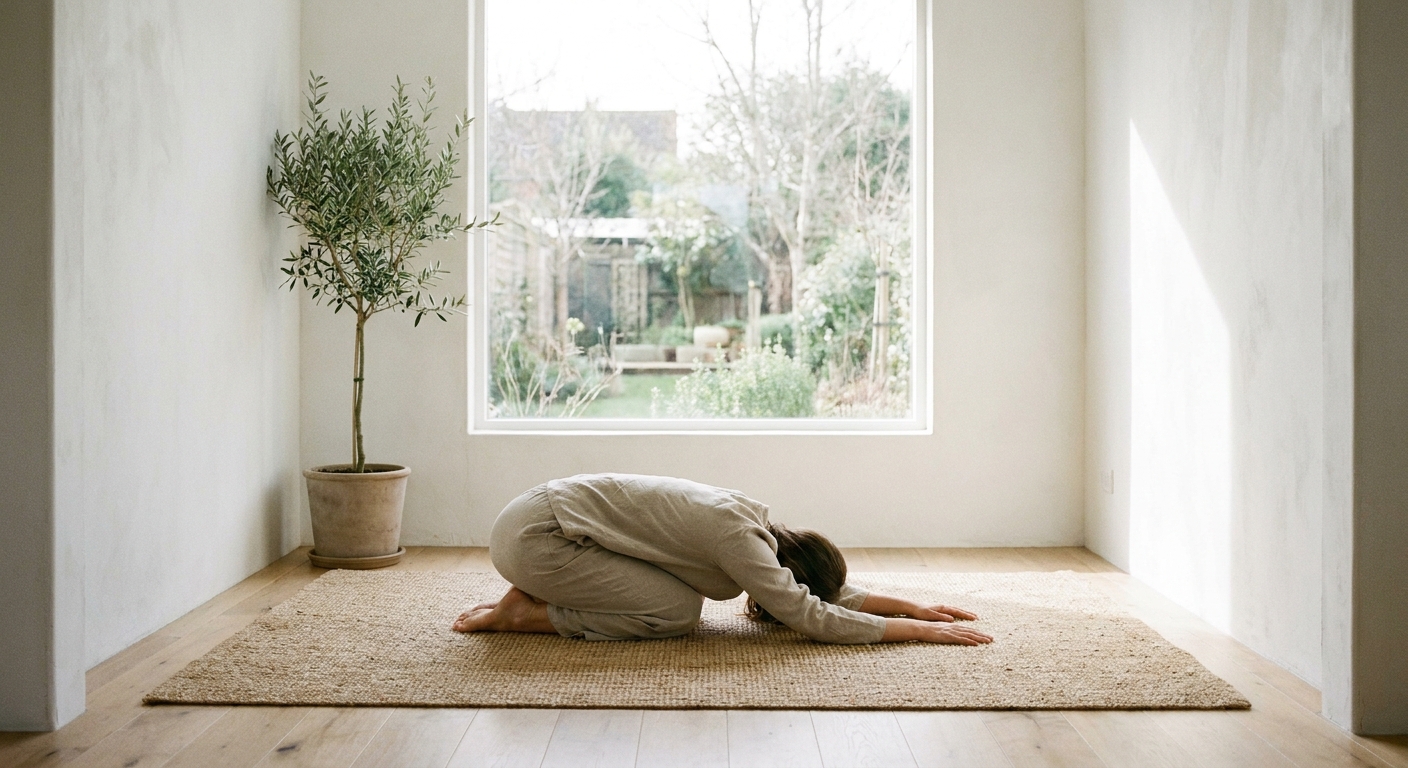
From hands and knees, widen your knees slightly and sit back on your heels. Extend your arms forward or rest them alongside your body. Allow your forehead to rest on the mat. This resting pose provides a sanctuary during challenging sequences. Use it whenever you need to catch your breath or reconnect with your intention.
Your First Meditation Session
Meditation complements physical yoga practice by training mental focus. Start with just 5 minutes daily using this protocol:
- Find your seat: Sit comfortably on a cushion or chair with spine erect. Set a timer for 5 minutes.
- Close your eyes: Soften your gaze or close eyelids completely. Take three deep cleansing breaths.
- Focus on breath: Notice the cool air entering your nostrils and warm air exiting. Count breaths from 1 to 10, then restart.
- Manage thoughts: When your mind wanders (and it will), gently acknowledge the thought and return to breath counting without self-judgment.
- Close gently: When the timer sounds, take three more deep breaths, open your eyes slowly, and notice how your mental state has shifted.
Breathing Techniques for Beginners
Pranayama, or breath control, is as important as physical poses. Try these simple techniques:
- Diaphragmatic Breathing: Place one hand on your belly. Inhale deeply through the nose, expanding the belly rather than the chest. Exhale slowly, drawing the navel toward the spine.
- Box Breathing: Inhale for 4 counts, hold for 4, exhale for 4, hold empty for 4. This technique calms the nervous system instantly.
To learn more about our structured programs, check out What is Vitalizen.app?
Frequently Asked Questions About Yoga for Beginners
What do I need to start yoga as a beginner?
To start yoga as a beginner, you need comfortable clothing that allows movement and a non-slip surface. While a yoga mat is recommended for joint protection and stability, you can begin with a towel or carpet. Additional props like blocks and straps are helpful but optional. The most essential requirement is an open mind and consistency in practice, even if starting with just 10 minutes daily.
How often should beginners practice yoga?
Beginners should aim to practice yoga 2-3 times per week for 20-30 minutes to build consistency and avoid burnout. According to Harvard Health research from 2026, practicing yoga at least twice weekly for eight weeks significantly improves flexibility and reduces stress markers. Daily short sessions of 10-15 minutes are more beneficial than occasional long sessions.
Can I do yoga if I’m not flexible?
Yes, you can absolutely practice yoga without flexibility. In fact, inflexibility is one of the best reasons to start yoga. Yoga meets you where you are, using props and modifications to accommodate every body type. A 2026 study by the International Association of Yoga Therapists found that 78% of beginners saw measurable flexibility improvements within six weeks of regular practice, regardless of starting level.
How much does it cost to start yoga in 2026?
Starting yoga can cost between $0 and $200 initially. Free options include YouTube tutorials and apps with freemium models. A quality yoga mat ranges from $30-$80, while studio memberships average $100-$200 monthly. Digital platforms like Vitalizen App offer guided sessions starting at $10-15 monthly, making yoga accessible for every budget.
What is the best time of day to practice yoga?
The best time to practice yoga depends on your goals and schedule. Morning practice (6-8 AM) boosts energy and metabolism, while evening sessions (6-8 PM) promote relaxation and better sleep. Research from the National Institutes of Health (2026) indicates that morning practitioners show 23% higher adherence rates, while evening practitioners report 31% better stress relief.
Your Yoga for Beginners Journey Starts Now
You’ve taken the first step by reading this comprehensive guide. Now, it’s time to put knowledge into practice. Download the Vitalizen App | Yoga + Meditation to access guided yoga and meditation sessions tailored specifically for beginners. Our platform offers progressive programs that adapt to your fitness level, ensuring safe advancement from your very first downward dog to advanced flows.
Remember, yoga is a practice, not a performance. Your mat is a judgment-free zone where progress matters more than perfection. Whether you practice for stress relief, physical fitness, or spiritual growth, consistency will deliver transformative results.
Yoga for beginners is a journey of self-discovery. Each time you step onto your mat, you learn something new about your body and mind. Be patient with yourself, celebrate small victories, and trust the process.
Have questions about specific poses or need personalized recommendations? Feel free to contact us.