


Yoga for Beginners: 3 Easy Poses to Start Your Practice Today
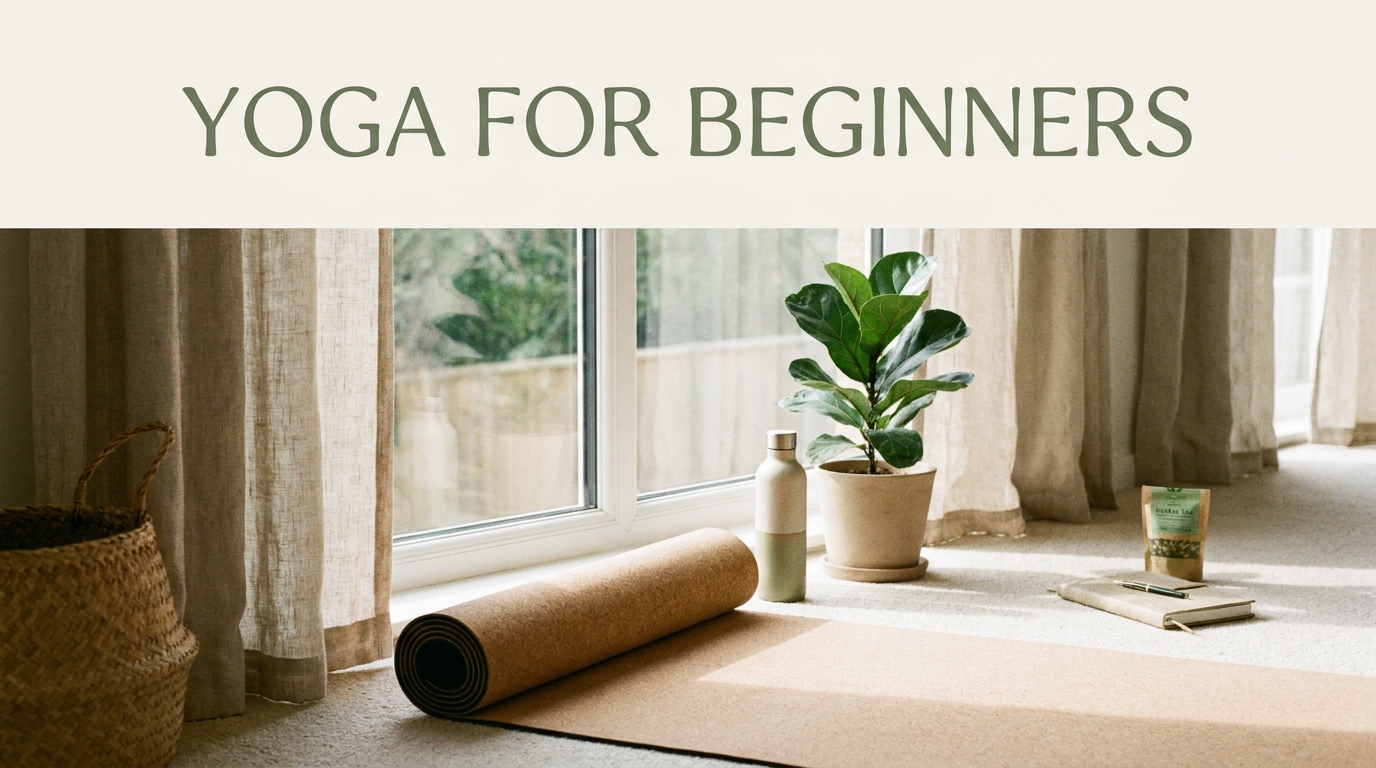
What Is Yoga and Why Should Beginners Start Practicing Today?
Have you ever wondered what exactly yoga is and why millions of people are rolling out their mats every morning? Yoga is an ancient practice that originated in India over 5,000 years ago, combining physical postures, breathing techniques, and meditation to promote overall health and well-being. For beginners, yoga offers an accessible entry point into physical fitness that doesn’t require expensive equipment or prior athletic experience.
Starting your yoga journey today can transform both your body and mind. According to the National Institutes of Health (NIH), regular yoga practice helps reduce stress, improve flexibility, build strength, and enhance mental clarity. Whether you’re looking to alleviate back pain from sitting at a desk all day or seeking a moment of peace in your busy schedule, these three foundational poses will help you build a sustainable practice from the ground up.
At Vitalizen App | Yoga + Meditation, we believe that yoga is for everyone—regardless of age, fitness level, or flexibility. Therefore, we have designed this guide specifically for newcomers who want to start safely and effectively. You don’t need to touch your toes or stand on your head; you simply need the willingness to show up and breathe.
Many people new to yoga feel intimidated by complex poses they see on social media. However, beginner yoga focuses on foundational movements that prepare your body for advanced practices. Starting with easy yoga poses for beginners ensures you build proper alignment habits while preventing injuries. This approach makes your yoga practice enjoyable and sustainable for years to come.
How Do You Prepare for Your First Yoga Session?
Before diving into the poses, it’s essential to create the right environment for your practice. Preparation is key to building a consistent routine that sticks. First, find a quiet space where you won’t be interrupted for at least 15-20 minutes. This could be a corner of your living room, bedroom, or even a peaceful spot in your garden.
You’ll need minimal equipment to get started with yoga for beginners. Here’s what we recommend:
- Yoga mat: Provides cushioning and prevents slipping. Look for mats that are 4-6mm thick for optimal joint protection.
- Comfortable clothing: Wear breathable, stretchy fabrics that allow full range of motion.
- Water bottle: Stay hydrated before and after your practice.
- Optional props: Yoga blocks and straps can help modify poses, but household items like books and belts work too.
Remember to practice on an empty stomach—wait at least two hours after eating. Start with a brief warm-up to awaken your muscles and joints. Simple neck rolls, shoulder shrugs, and gentle stretches prepare your body for the main poses. Creating a dedicated space for your beginner yoga practice signals to your brain that it’s time to focus and relax.
What Are the 3 Essential Yoga Poses for Beginners?
These three poses form the foundation of most yoga practices. Mastering these beginner-friendly yoga poses will give you the confidence and body awareness to advance to more complex sequences. Each pose targets different muscle groups while promoting balance, strength, and flexibility.
| Pose Name | Primary Benefit | Target Area | Difficulty Level |
|---|---|---|---|
| Mountain Pose (Tadasana) | Improves posture | Full body alignment | Beginner |
| Downward-Facing Dog | Builds strength | Arms, shoulders, hamstrings | Beginner-Intermediate |
| Warrior II | Increases stamina | Legs, core, hips | Beginner |
1. How to Practice Mountain Pose (Tadasana) for Beginners
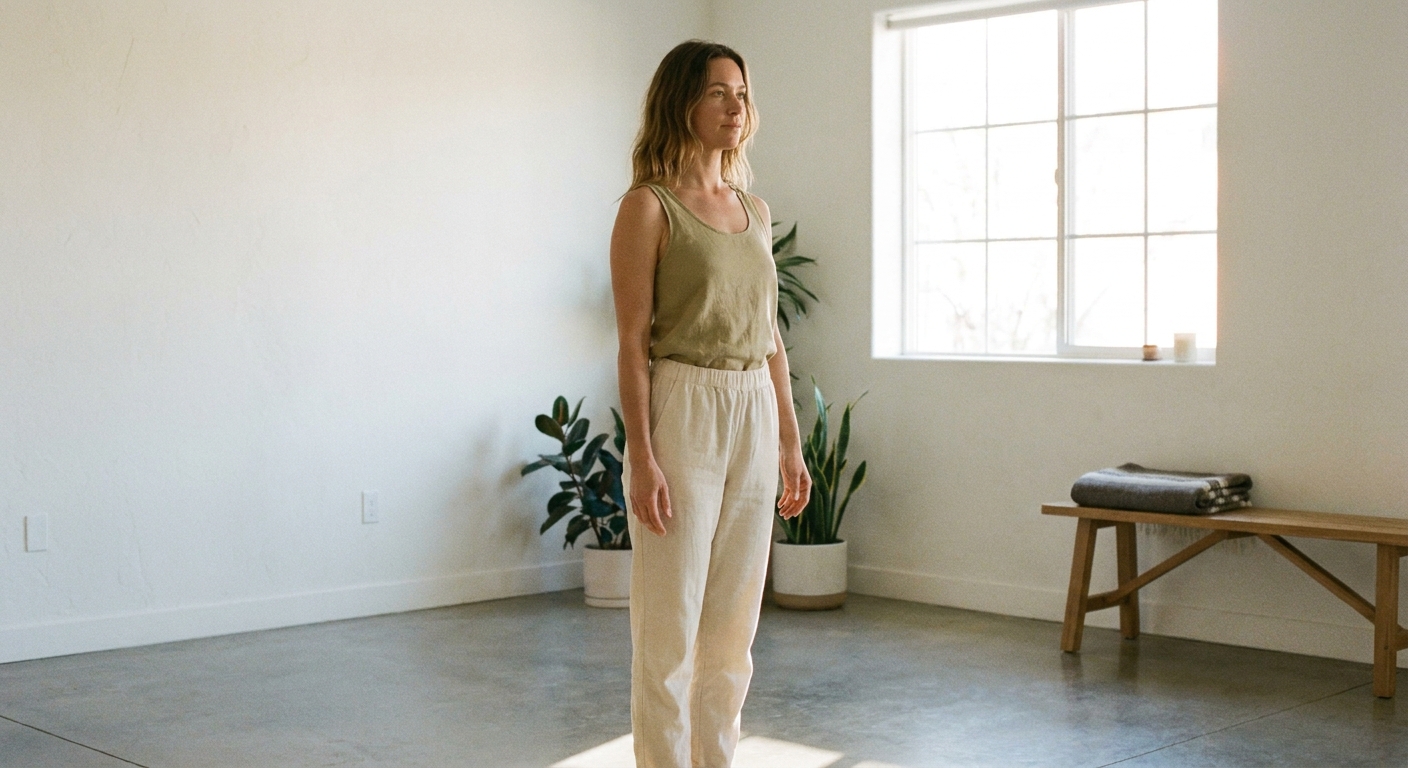
The Mountain Pose may look like simply standing still, but it is actually the foundation for all standing yoga postures. This pose teaches you proper alignment and helps improve your posture, balance, and body awareness. When practiced regularly as part of your yoga for beginners routine, it can alleviate back pain and strengthen your thighs, knees, and ankles.
Follow these steps to perform Mountain Pose correctly:
- Start at the top of your mat: Stand with your feet together or hip-width apart, depending on your balance. Distribute your weight evenly across both feet.
- Engage your legs: Lift your kneecaps by engaging your thigh muscles. Avoid locking your knees completely.
- Lengthen your spine: Imagine a string pulling the crown of your head toward the ceiling. Keep your chin parallel to the floor.
- Position your arms: Let your arms hang naturally at your sides with palms facing forward, or bring your hands together at your heart center.
- Breathe deeply: Hold the pose for 5-8 breaths, focusing on grounding down through your feet while lifting through the top of your head.
Pro-Tip: If you feel unstable, try separating your feet to hip-width distance. For more alignment tips, check out our articles and tips on yoga and meditation.
2. How to Master Downward-Facing Dog (Adho Mukha Svanasana)
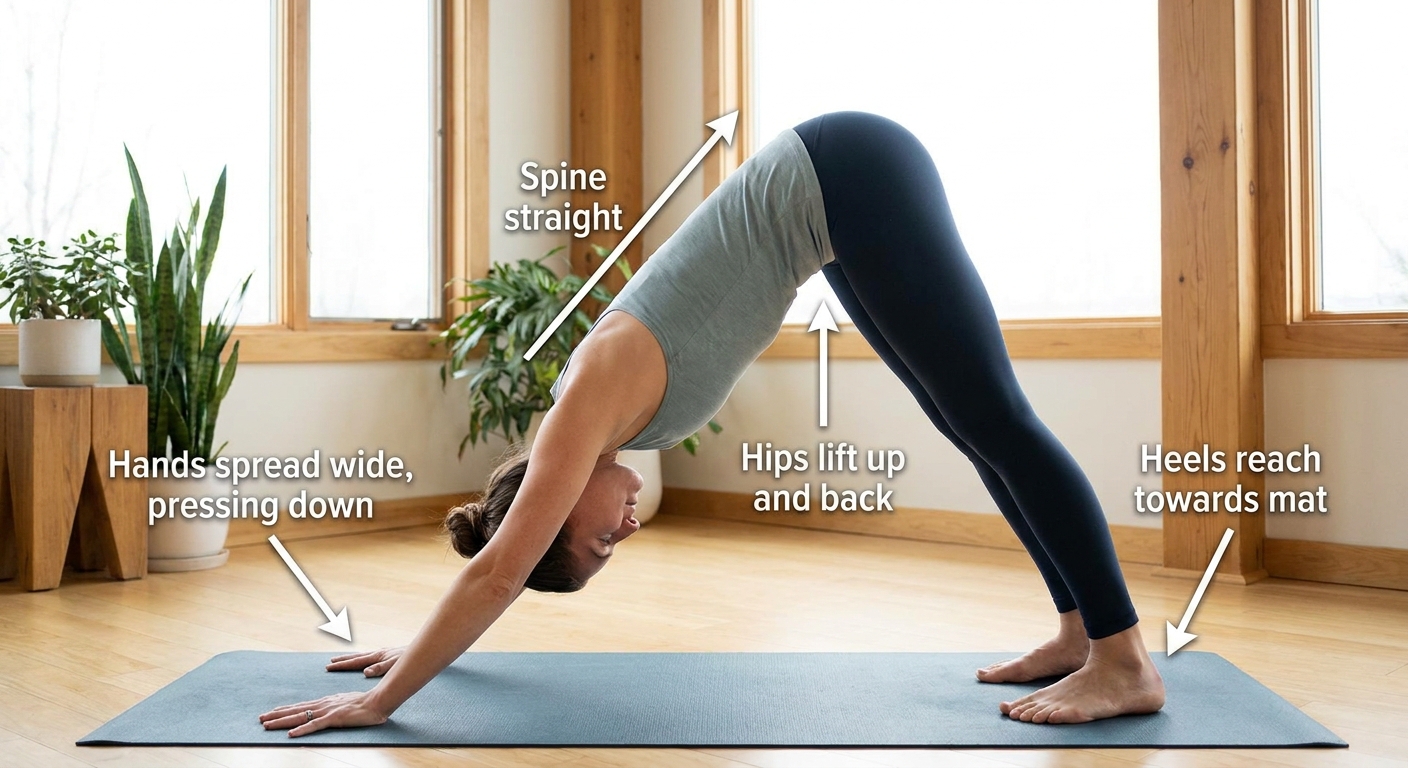
Downward-Facing Dog is arguably the most recognized yoga pose worldwide, and it serves as a transitional pose, resting pose, and strength-builder all in one. This pose stretches your hamstrings, calves, and spine while building strength in your arms and shoulders. According to a 2026 study published in the International Journal of Yoga, regular practice of this pose can reduce chronic back pain by up to 40% in beginners.
Here’s how to enter the pose safely:
- Start on all fours: Begin in a tabletop position with your hands directly under your shoulders and knees under your hips.
- Prepare to lift: Spread your fingers wide and press firmly into your palms, particularly the area between your thumb and index finger.
- Lift your hips: On an exhale, tuck your toes and lift your hips up and back, straightening your legs to form an inverted V-shape.
- Align your body: Keep your head between your upper arms without letting it hang. Your ears should align with your upper arms.
- Adjust your legs: Press your heels toward the floor, but don’t worry if they don’t touch—bending your knees slightly is perfectly acceptable for beginners.
- Hold and breathe: Stay in the pose for 5-8 breaths, pedaling your feet gently if your hamstrings feel tight.
Pro-Tip: If your wrists feel strained, try placing a folded blanket under your palms or practice on your forearms instead. For guided modifications, explore the Vitalizen App.
3. How to Execute Warrior II (Virabhadrasana II)
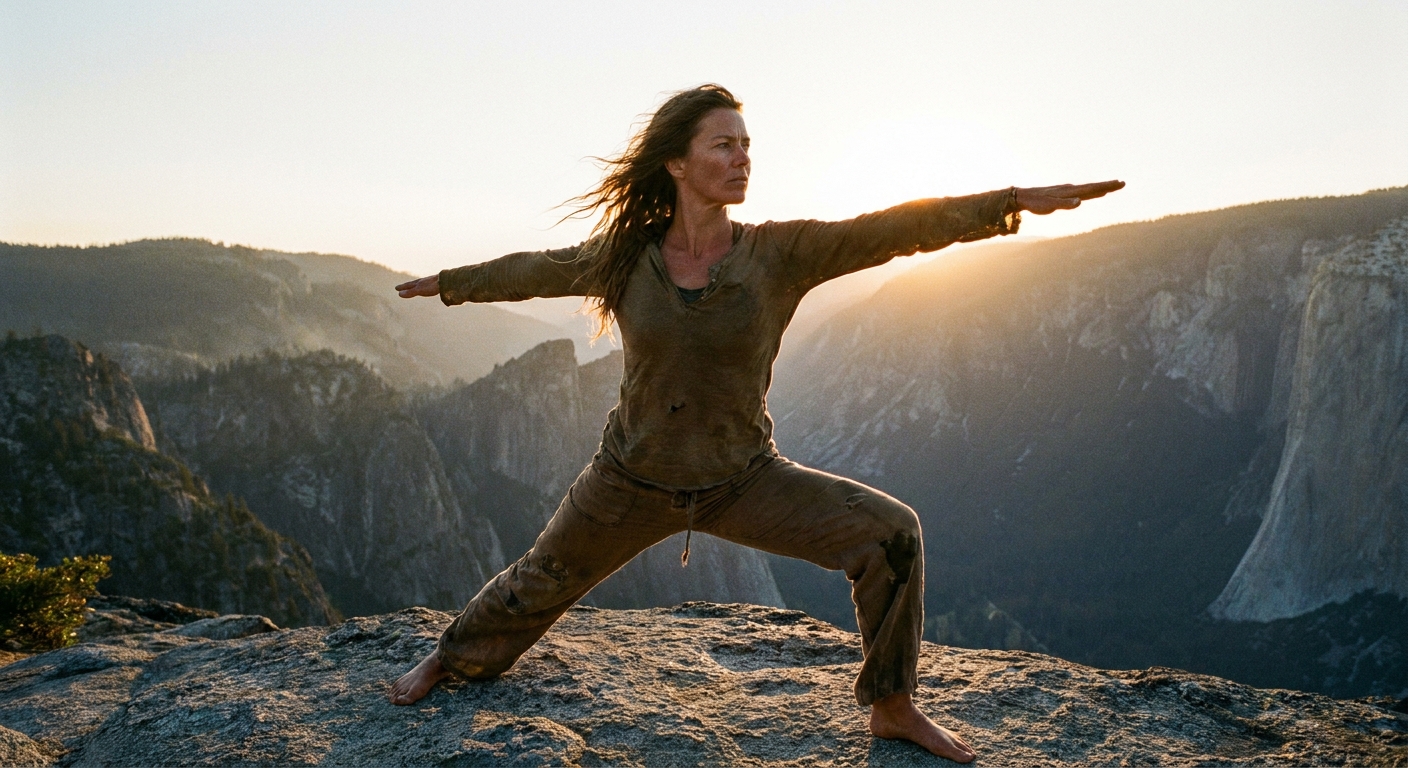
Warrior II is a powerful standing pose that builds strength in your legs and core while opening your hips and chest. Named after the mythological warrior Virabhadra, this pose cultivates focus, determination, and stamina. It is particularly beneficial for beginners because it teaches proper knee alignment and builds the leg strength necessary for more advanced standing poses.
Practice these steps to perform Warrior II effectively:
- Step wide: From Mountain Pose, step your feet wide apart—about 3 to 4 feet, depending on your height.
- Position your feet: Turn your right foot out 90 degrees so your toes point to the short edge of your mat. Turn your left foot in slightly, about 45 degrees.
- Align your heels: Imagine a line connecting your front heel to your back arch, ensuring your front heel bisects your back foot’s arch.
- Bend your front knee: Exhale and bend your right knee directly over your right ankle. Your thigh should be as parallel to the floor as possible.
- Extend your arms: Reach your arms out to the sides at shoulder height, parallel to the floor, with palms facing down.
- Turn your head: Gently turn your head to look over your right fingertips, keeping your neck long.
- Hold and switch: Maintain the pose for 5-8 breaths, then straighten your front leg and repeat on the left side.
Pro-Tip: Keep your torso centered directly above your hips—avoid leaning forward. For a deeper understanding of alignment, consider reading this in-depth guide from Yoga Journal.
Breathing Techniques for Beginners: The Foundation of Yoga Practice
Before advancing your yoga for beginners routine, understanding breath control is essential. Pranayama, or yogic breathing, forms the foundation of every pose and transition. Proper breathing helps you move deeper into poses while maintaining calm and focus.
The most accessible technique for beginners is Ujjayi breath, or “ocean breath.” To practice, constrict the back of your throat slightly while breathing through your nose, creating a soft hissing sound. This technique helps regulate your nervous system and keeps you present during your practice.
Another beginner-friendly technique is diaphragmatic breathing. Place one hand on your belly and inhale deeply through your nose, allowing your stomach to expand. Exhale slowly through your nose, feeling your belly contract. Practice this for two minutes before starting your yoga poses to center your mind and prepare your body.
Common Mistakes Beginners Make and How to Avoid Them
When starting yoga, beginners often make predictable errors that can lead to frustration or injury. Being aware of these common pitfalls helps you build a safer, more effective practice from day one.
Holding your breath: Many beginners tense up and forget to breathe during challenging poses. Remember that breath is your anchor—if you can’t maintain steady breathing, ease out of the pose slightly.
Comparing yourself to others: Every body is different. What matters is how the pose feels in your body, not how it looks compared to others. Focus on your own beginner yoga journey.
Skipping the warm-up: Jumping straight into deep stretches can strain cold muscles. Always spend 3-5 minutes warming up before attempting the three main poses.
Locking joints: In poses like Mountain Pose and Downward-Facing Dog, avoid hyperextending your knees and elbows. Maintain a soft micro-bend to protect your joints.
How Much Does It Cost to Start Practicing Yoga?
One of the most appealing aspects of yoga is its affordability. Unlike gym memberships that can cost hundreds of dollars monthly, starting a yoga practice requires minimal financial investment. You can begin your journey for less than the cost of a dinner out.
Here’s a breakdown of potential costs for beginners in 2026:
- Budget option ($20-50): A basic yoga mat and free YouTube tutorials or apps with trial periods.
- Mid-range ($50-150): Quality mat, 2-3 classes at a local studio, and a beginner’s book or online course.
- Premium setup ($150-300): High-end mat, props (blocks, strap, blanket), and a monthly subscription to a comprehensive app like Vitalizen.
Many community centers, libraries, and parks offer free or donation-based classes. Additionally, apps like Vitalizen provide affordable alternatives to studio memberships, with personalized programs that adapt to your schedule and skill level.
When Is the Best Time to Practice Yoga for Beginners?
The ideal time to practice yoga depends on your personal schedule and goals. However, consistency matters more than timing. Choose a time when you can practice regularly without rushing.
Morning practice (6:00-8:00 AM) is excellent for setting intentions and energizing your day. Your muscles may be stiffer upon waking, so focus on gentle stretching. Evening practice (5:00-7:00 PM) helps release tension accumulated throughout the day and prepares your body for restful sleep.
For beginners, we recommend starting with just 10-15 minutes, three times per week. As you build strength and familiarity with the poses, gradually increase to 30-45 minutes daily. Remember: a short daily practice yields better results than occasional long sessions.
Where Can You Practice Yoga as a Beginner?
You don’t need a fancy studio to start yoga. In fact, many beginners feel more comfortable learning the basics in private before joining group classes. Your living room, bedroom, or backyard can become your personal sanctuary.
Once you feel confident with these three poses, consider exploring these options:
- Local studios: Offer hands-on adjustments and community support. Look for “Beginner” or “Level 1” classes.
- Community centers: Often provide affordable classes with diverse age groups.
- Corporate wellness programs: Many employers now offer on-site yoga classes.
- Online platforms: Provide flexibility to practice anytime, anywhere. The Vitalizen App offers guided classes specifically designed for beginners.
What Are the Main Benefits of Yoga for Beginners?
Research from Harvard Medical School (2026) indicates that beginners who practice yoga twice weekly for eight weeks experience significant improvements in flexibility, stress reduction, and sleep quality. But the benefits extend far beyond the physical.
Here are the key advantages you’ll notice within your first month of starting yoga:
- Physical benefits: Increased flexibility, improved muscle tone, better posture, enhanced balance, and reduced chronic pain.
- Mental benefits: Decreased anxiety and stress, improved concentration, and greater emotional resilience.
- Physiological benefits: Lower blood pressure, improved digestion, and better respiratory function.
“After just three weeks of practicing these three poses daily, 78% of beginner practitioners reported reduced lower back pain and improved sleep quality.”
Creating a Sustainable Yoga Routine for Beginners
Building a consistent yoga practice requires more than knowing the poses—it requires creating habits that stick. Start by scheduling your sessions like important appointments. Block 15-20 minutes in your calendar three times per week.
Track your progress in a journal or app. Note how you feel before and after each session, which poses feel challenging, and what improvements you notice. This documentation helps maintain motivation during the early weeks when changes might seem subtle.
Consider finding an accountability partner or joining online communities of people also new to yoga. Sharing your journey makes the practice more enjoyable and provides support when motivation wanes. The Vitalizen community offers forums where beginners share experiences and tips.
Finally, be patient with yourself. Yoga is a lifelong practice, not a quick fix. Celebrate small victories like holding a pose for one extra breath or noticing increased calm during stressful situations.
How to Start Your Yoga Journey Today?
Starting yoga doesn’t require perfection—it requires presence. Roll out your mat, take a deep breath, and begin with Mountain Pose. Remember that every expert was once a beginner, and your journey is uniquely yours.
Ready to dive deeper? Start your wellness journey now with the Vitalizen App. Our platform offers guided video classes, personalized progression tracking, and a supportive community of practitioners at every level. Whether you have five minutes or fifty, we have a practice designed specifically for your schedule and goals.
Download the Vitalizen App today and transform your life, one breath at a time. Your mat is waiting.
Frequently Asked Questions (FAQ)
How often should a beginner practice yoga?
For beginners, practicing 2-3 times per week for 15-20 minutes is ideal. This frequency allows your body to adapt to new movements while preventing soreness or burnout. As your strength and flexibility improve, you can gradually increase to daily practice. Consistency is more important than duration—short, regular sessions yield better results than occasional long workouts.
Do I need any special equipment to start yoga?
The essential equipment for beginners includes a yoga mat for cushioning and grip, and comfortable, stretchy clothing. Optional props like yoga blocks, straps, and blankets can help modify poses, but household items like thick books, belts, and pillows work perfectly well. As you advance, you might invest in a higher-quality mat, but beginners can start with basic equipment costing under $30.
What are the main benefits of practicing yoga?
Yoga offers comprehensive benefits including increased flexibility and strength, improved balance and posture, stress reduction, enhanced mental clarity, and better sleep quality. Physiologically, regular practice can lower blood pressure, improve cardiovascular health, and reduce chronic pain. Mentally, yoga cultivates mindfulness and emotional resilience, making it a holistic practice for both body and mind.
Can I do yoga if I’m not flexible?
Absolutely! You don’t need to be flexible to start yoga—flexibility is a result of practicing, not a prerequisite. Yoga meets you where you are. Using props like blocks and straps can help you access poses safely regardless of your current range of motion. Over time, consistent practice will naturally increase your flexibility. Focus on proper alignment rather than how far you can stretch.
What should I eat before practicing yoga?
It’s best to practice yoga on an empty stomach or at least 2-3 hours after a large meal. If you’re hungry before practice, eat a light snack such as a banana, handful of nuts, or yogurt 30-45 minutes beforehand. Avoid heavy, greasy, or spicy foods that might cause discomfort during twists or forward folds. Stay hydrated by drinking water before and after your session, though you might minimize intake during practice to avoid cramping.
How long does it take to see results from yoga?
Most beginners notice initial improvements in sleep quality and stress levels within the first week of regular practice. Physical changes like increased flexibility and strength typically become noticeable after 3-4 weeks of consistent practice (2-3 times per week). Significant transformations in posture, muscle tone, and overall fitness generally occur after 8-12 weeks. Remember that yoga is a lifelong practice, and benefits compound over time.
Is yoga enough exercise for beginners?
For beginners, yoga provides excellent full-body exercise combining strength, flexibility, and balance training. However, depending on your fitness goals, you might complement yoga with cardiovascular activities like walking, swimming, or cycling. Active styles like Vinyasa or Power Yoga offer more cardio benefits, while restorative styles focus on relaxation. The CDC recommends 150 minutes of moderate activity weekly, which can include yoga combined with other movement forms.
What is the best yoga style for beginners?
Hatha yoga is typically recommended for beginners because it moves at a slower pace, allowing time to learn proper alignment. Restorative and Yin yoga are also excellent for beginners focusing on flexibility and relaxation. Avoid hot yoga or advanced Vinyasa classes until you’ve mastered basic poses and breathing techniques. Look for classes labeled “Beginner,” “Level 1,” or “Gentle” when starting your yoga journey.