


Morning Yoga & Meditation: 7 Science-Backed Benefits for Your Daily Routine
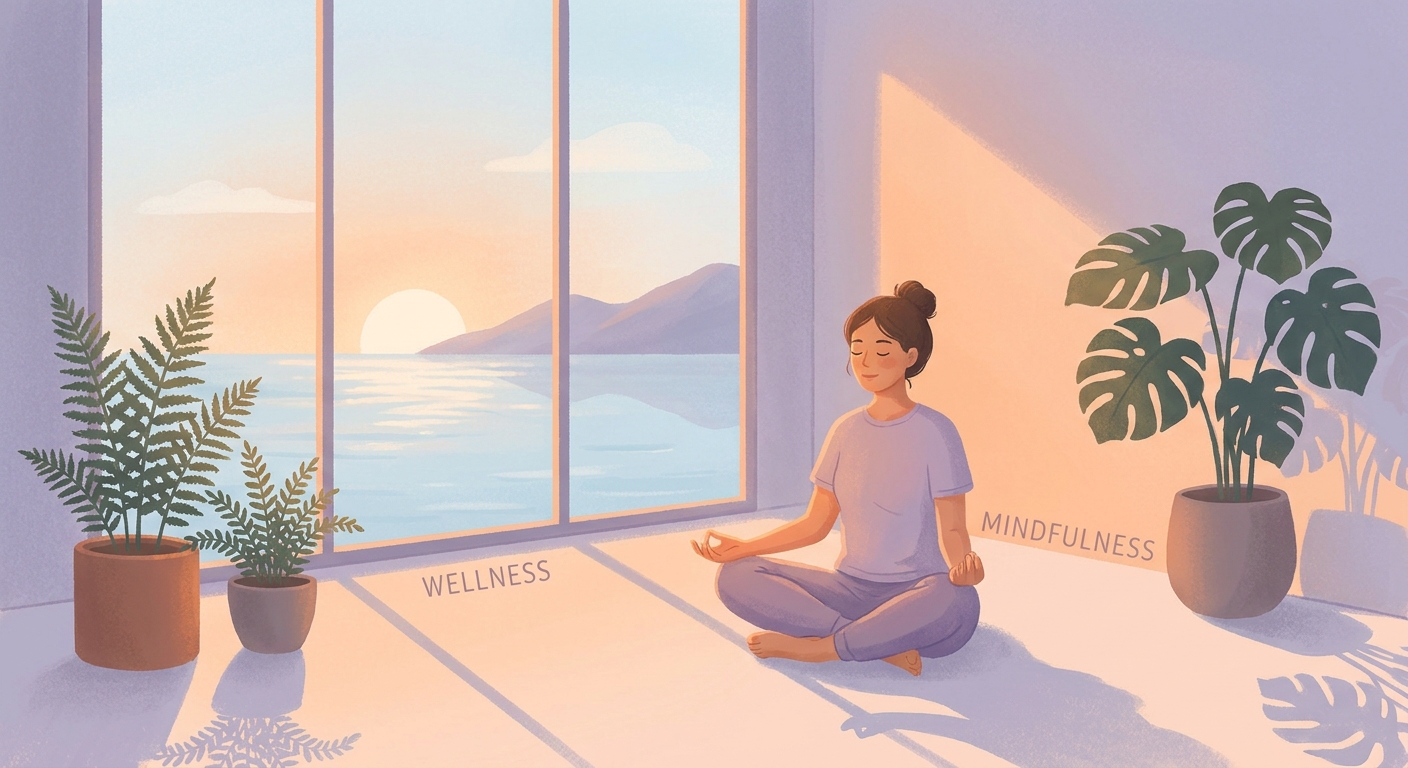
What if the first 20 minutes of your morning could literally rewire your brain for a better day? That is not just a wellness myth — it’s backed by neuroscience. Combining morning yoga with meditation is one of the most powerful habits you can adopt, and the benefits go far beyond just feeling relaxed.
Whether you are a complete beginner or someone who has tried a few Sun Salutations before, this article will show you exactly how yoga and meditation work together, what the science says, and how you can start tomorrow morning — no fancy equipment required.
And if you want a guided experience, Vitalizen App was built exactly for this purpose. But more on that later.
Why Does Morning Yoga and Meditation Lower Cortisol?
Cortisol is often called the “stress hormone,” and for good reason. When you wake up, your body naturally experiences a cortisol spike — it is part of the mechanism that gets you out of bed. However, for many people, this spike stays elevated due to chronic stress, anxiety, or even just checking your phone immediately after waking.
A 2013 study published in the Journal of Alternative and Complementary Medicine found that participants who practiced a combination of yoga and meditation showed significantly lower cortisol levels compared to control groups. The study concluded that mind-body practices are effective at regulating the hypothalamic-pituitary-adrenal (HPA) axis, which controls your stress response.
Morning yoga sequences like gentle stretches, hip openers, and forward folds signal your nervous system to shift from “fight or flight” to “rest and digest.” When you add even 5 minutes of meditation afterward, you extend this relaxation response deep into your morning.
This means: fewer reactive emails, less morning anxiety, and a calmer baseline for your entire day.
How Does a Morning Practice Boost Focus and Mental Clarity?
Have you ever sat at your desk, stared at the screen, and felt like your brain was wrapped in cotton? That is what happens when you jump straight into tasks without preparing your mind.
Morning meditation acts as a cognitive warm-up. A 2018 neuroimaging study from Harvard Medical School demonstrated that regular meditation increases gray matter density in the prefrontal cortex — the area responsible for decision-making, focus, and self-control.
Now combine that with yoga. Yoga requires you to coordinate breath with movement, which activates both hemispheres of the brain. This bilateral stimulation improves neural connectivity. The result? Sharper focus, faster information processing, and better memory retention for the rest of your day.
If you struggle with brain fog in the mornings, a 15-minute yoga flow followed by a 5-minute breathing meditation might be the most productive thing you do all day.
What is the Impact on Emotional Regulation and Resilience?
Let’s be honest — some mornings you wake up already annoyed. Maybe you did not sleep well, or you have a difficult meeting ahead, or the coffee machine broke. Life happens.
But here is the thing: yoga and meditation train your brain to respond instead of react. A 2020 review in Frontiers in Psychiatry found that mind-body practices significantly improve emotional regulation by strengthening the connection between the prefrontal cortex and the amygdala — the emotional center of the brain.
In simple terms: you become less reactive. That annoying email does not trigger a spiral. That traffic jam does not ruin your mood. You develop a kind of inner steadiness that no external situation can shake.
And this is not about suppressing emotions — it is about creating enough space between a stimulus and your response to choose how you want to feel.
How Can Morning Yoga Enhance Physical Flexibility and Posture?
Most people sit for at least 8 hours a day. Your hips tighten, your shoulders round forward, your lower back complains. Over time, this creates chronic pain and postural issues that affect everything from your breathing to your confidence.
Morning yoga is the antidote. Even a short practice that includes Cat-Cow, Downward Dog, and gentle spinal twists can counteract the effects of sitting. The key is consistency — doing 10 minutes daily is far more effective than doing 60 minutes once a week.
When you pair yoga with meditation, something interesting happens: you become more aware of your body throughout the day. You catch yourself slouching and correct it. You notice tension in your jaw and release it. This body awareness is actually a form of mindfulness in motion.
Flexibility is not just about touching your toes — it is about moving through life with ease and without pain.
Why Does a Morning Routine Regulate Your Circadian Rhythm for Better Sleep?
Ironically, one of the best ways to sleep better at night is to practice yoga and meditation in the morning. How does that work?
Your circadian rhythm — the internal clock that governs your sleep-wake cycle — responds to light, movement, and temperature. Morning exposure to natural light combined with physical activity tells your brain: “It is daytime. Time to be awake and alert.” This strengthens the signal that later, when the sun goes down, it will be time to sleep.
Additionally, research highlighted by the Sleep Foundation shows that yoga reduces the severity of insomnia and improves sleep quality. The mechanism? Yoga lowers cortisol (as we saw in benefit #1) and increases GABA levels, a neurotransmitter that promotes relaxation.
So if you struggle with falling asleep or staying asleep, a consistent morning practice might help more than any sleep tea or supplement.
How Does a Morning Practice Increase Self-Awareness and Mindfulness?
There is a difference between going through your morning routine on autopilot and actually being present for it. Most people check their phones within 5 minutes of waking up. They consume other people’s news, opinions, and problems before they have even checked in with themselves.
Yoga and meditation flip this pattern. Instead of starting your day by giving your attention away, you start by turning inward. You notice how your body feels. You observe your thoughts without judgment. You connect with your breath.
This practice of self-awareness compounds over time. After a few weeks, you will notice patterns you never saw before — like how certain thoughts always trigger anxiety, or how your shoulders tense up when you think about work. And once you notice these patterns, you can change them.
As the saying goes: awareness is the first step to transformation.
Why Does a Morning Yoga and Meditation Practice Build Consistency and Discipline?
Of all the benefits of morning yoga and meditation, this might be the most transformative: the practice of showing up for yourself every single day.
Discipline is not something you are born with — it is a muscle you build. When you commit to even 10 minutes of yoga and meditation each morning, you are training your brain to keep promises to yourself. This “small win” early in the day creates a ripple effect. You are more likely to eat well, work productively, and treat others kindly.
A study in the British Journal of Health Psychology found that small, consistent habits reinforce self-regulation across all areas of life. In other words: mastering your morning makes everything else easier.
And the beauty of yoga and meditation is that they are inherently rewarding. You do not need to force yourself — the practice itself feels good. You just need to start.
How to Start Your Morning Yoga and Meditation Practice
If you are reading this and thinking, “That sounds great, but I have no idea where to begin” — do not worry. Here is a simple framework you can use tomorrow morning.
The 15-Minute Morning Routine
- Wake up, do not check your phone. Give yourself at least 5 minutes of phone-free time.
- Drink a glass of water. Hydration matters.
- 5 minutes of gentle yoga stretches. Cat-Cow, Child’s Pose, Downward Dog, and standing forward fold.
- 5 minutes of sun salutations. Move slowly and coordinate breath with movement.
- 5 minutes of seated meditation. Close your eyes, follow your breath. When your mind wanders, gently bring it back.
That is it. Fifteen minutes. No gym, no special clothes, no prior experience needed.
Why Use Vitalizen App?
Vitalizen App | Yoga + Meditation was created for people exactly like you. It offers guided yoga flows and meditation sessions designed for beginners and experienced practitioners alike. The app structures your practice so you do not have to think about what to do next — you just follow along.
Whether you want a 10-minute morning stretch, a breathing exercise for anxiety, or a full 30-minute yoga session, you can start your journey here.
And if you have questions or need guidance, the Vitalizen support team is always ready to help.
How to make it stick
- Start small. Even 5 minutes counts. Do not aim for perfection — aim for consistency.
- Stack it. Attach your practice to an existing habit (right after brushing your teeth, for example).
- Track it. Use Vitalizen App to log your sessions and see your progress over time.
- Forgive yourself. If you miss a day, just start again tomorrow. One missed day does not erase your progress.
Frequently Asked Questions About Morning Yoga and Meditation
How long should I practice morning yoga and meditation?
Even 10 minutes can make a meaningful difference. For most beginners, we recommend starting with 10–15 minutes total: 5–10 minutes of yoga followed by 5 minutes of meditation. As you build consistency, you can gradually increase to 20 or 30 minutes. The most important factor is not duration — it is showing up daily.
Is it better to do yoga before or after meditation?
We recommend yoga first, then meditation. Yoga warms up the body, releases physical tension, and activates the parasympathetic nervous system. After moving, your body is naturally more settled, which makes it easier to sit still and meditate. However, if you prefer the reverse order, listen to your body — there are no strict rules.
Can I do yoga and meditation on an empty stomach?
Yes, in fact it is recommended to practice yoga on a relatively empty stomach. A light snack (like a banana or a handful of nuts) 30 minutes before is fine if you are very hungry. For meditation, being on an empty stomach can help you stay alert and avoid drowsiness. Always listen to your body and adjust accordingly.
What if I am not flexible? Can I still do yoga?
Absolutely. Yoga is not about being flexible — it is about becoming more flexible, both physically and mentally. Every pose can be modified with props (blocks, straps, or even a pillow). Many of the best yoga practitioners started as inflexible beginners. The only requirement is showing up.
How do I find time for yoga and meditation in a busy morning?
Try waking up just 15 minutes earlier. It sounds simple, but it works. You can also combine your practice with an existing habit — do yoga while your coffee brews, or meditate right after your morning shower. The Vitalizen App offers short sessions specifically designed for busy schedules.
Do I need a mat or special equipment?
No. A yoga mat helps with grip and comfort, but you can practice on any non-slip surface like a carpet or rug. Wear comfortable clothing that allows movement. For meditation, a cushion or folded blanket can help you sit comfortably, but a chair works just as well.
How is Vitalizen App different from other yoga and meditation apps?
Vitalizen App combines yoga and meditation in a single, seamless experience designed for real people with real schedules. We focus on guided practices that are beginner-friendly, science-backed, and beautifully produced. Our mission is to make wellness accessible to everyone, regardless of experience level or background. Learn more about our story.
Start Tomorrow. Transform Your Mornings.
The benefits of morning yoga and meditation are not theoretical — they are proven by science and experienced by millions of people around the world. Lower stress, sharper focus, better sleep, emotional balance, and a deep sense of well-being are all available to you. The only question is: will you start?
Tomorrow morning, before you check your phone, before you rush into your to-do list, give yourself 15 minutes. Move your body. Breathe. Sit in stillness. See how it changes everything.
And if you want guidance, structure, and a supportive community, Vitalizen App | Yoga + Meditation is here for you. Start your journey today.
For more articles, tips, and guidance on yoga and meditation, visit the Vitalizen Blog.
How about you? Do you already practice morning yoga or meditation? What is your biggest challenge when it comes to building a morning routine? Share your thoughts in the comments below — we read every single one.