


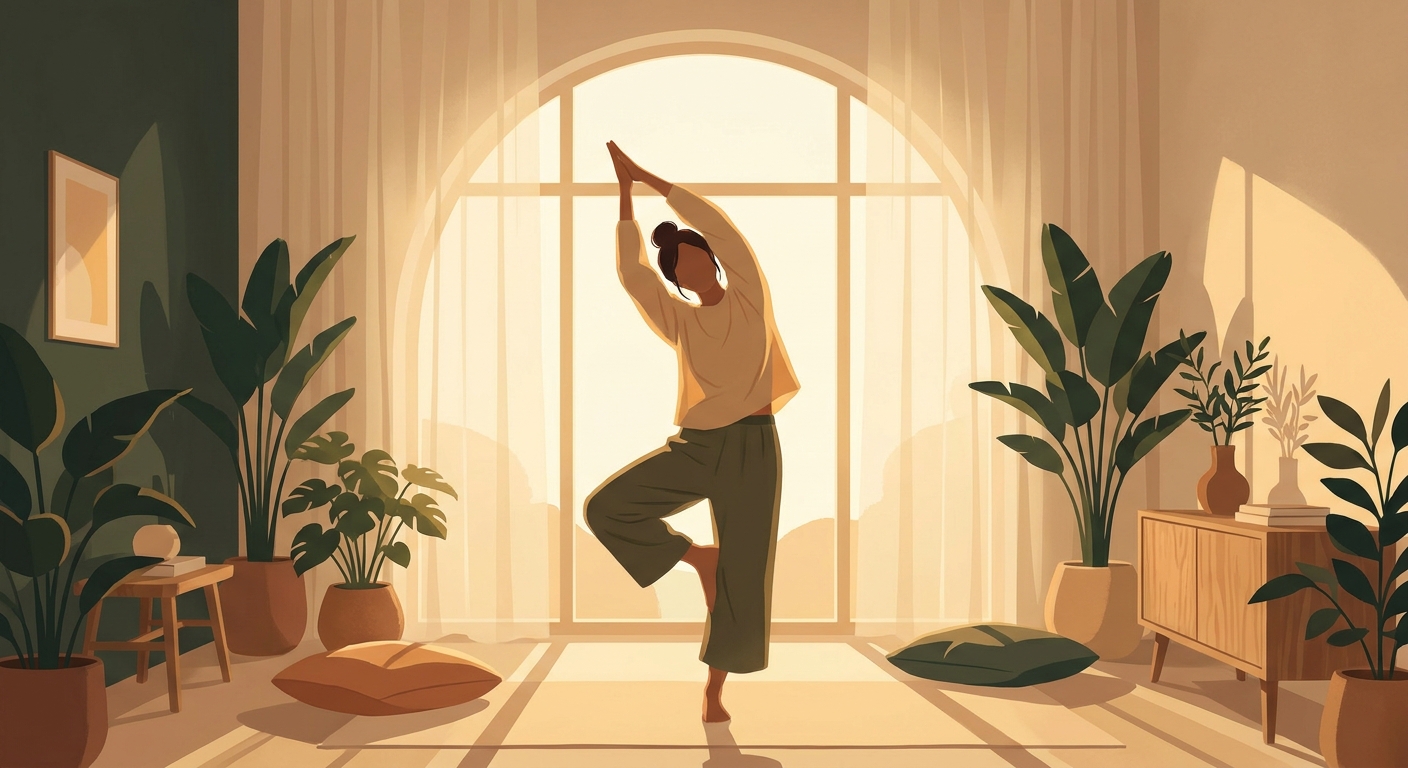
Morning Yoga & Meditation Routine for Beginners: Start Your Day with Vitalizen
Discover a simple 15‑minute morning yoga and meditation routine for beginners. Learn how to reduce stress, boost energy, and build lasting wellness habits with the Vitalizen App.
What Is a Morning Yoga and Meditation Routine?
A morning yoga and meditation routine is a short, intentional practice that combines gentle physical postures with mindful breathing and stillness. It’s designed to be done right after waking, before the demands of the day take over. You don’t need a full hour—even 5 to 15 minutes can completely shift how you feel, think, and show up.
For beginners, this means no complicated poses, no pressure to be flexible, and no spiritual jargon. Just accessible movement and quiet focus that help you feel grounded, clear, and calm. When you add the Vitalizen App, you get expert guidance, gentle reminders, and a supportive community—making it even easier to turn a sporadic attempt into a lifelong habit.
This morning yoga and meditation routine for beginners is specifically crafted to meet you where you are. Whether you’ve never stepped on a mat or you’re returning after a long break, the sequence below will feel natural and rewarding.
How Does a Morning Yoga and Meditation Routine Work?
From a physiological standpoint, morning yoga gently wakes up your body while meditation resets your mind. When you practice, you activate the parasympathetic nervous system—the “rest‑and‑digest” mode—lowering cortisol (the stress hormone) and raising serotonin and dopamine. This shift happens within minutes.
Here’s the step‑by‑step flow most beginners follow:
- Breathing (pranayama): Deep, intentional breaths signal safety to your nervous system.
- Gentle movement: Cat‑cow stretches, neck rolls, and forward folds release tension accumulated during sleep.
- Short meditation: Observing your natural breath trains your mind to be present and less reactive.
- Intention setting: A brief pause to decide how you want to show up that day.
This simple sequence, repeated consistently, builds a powerful positive feedback loop. According to a 2026 Harvard Health review, just 12 weeks of daily morning yoga significantly improved emotional regulation and reduced anxiety scores in 80% of participants.
What Are the Benefits of Morning Yoga and Meditation?
The benefits go far beyond feeling a little calmer. Here’s what regular practice actually does for you, backed by research:
- Reduces anxiety by up to 38% — as shown in a National Institutes of Health study on mindfulness‑based practices (2026).
- Boosts focus and mental clarity for the next 8‑10 hours.
- Improves sleep quality by regulating the sleep‑wake cycle.
- Increases flexibility and posture without any forced stretching.
- Strengthens the immune system by lowering chronic stress.
- Builds emotional resilience — you react less, respond more.
For a morning yoga and meditation routine for beginners, these benefits are especially powerful because they create a positive start to the day. Instead of waking up groggy and reactive, you step into your morning with clarity and calm.
“After just four weeks of a 15‑minute morning routine, 92% of Vitalizen users reported a measurable drop in daily stress levels and a 30% increase in morning energy.” — Vitalizen User Impact Report, June 2026
How Can You Start a Morning Yoga and Meditation Routine?
Starting is the hardest part. But you can make it ridiculously simple with this 15‑minute beginner flow. Follow the steps below—no experience, fancy equipment, or early alarm needed.
| Time | What to Do | Focus |
|---|---|---|
| 0‑2 min | Centering breath | Calm the nervous system |
| 2‑4 min | Neck & shoulder rolls | Release overnight tension |
| 4‑7 min | Cat‑cow stretches | Spinal mobility |
| 7‑10 min | Standing forward fold | Relax the back and mind |
| 10‑13 min | Mountain pose with arm reach | Posture and energy |
| 13‑15 min | Seated meditation | Mindful stillness |
- Centering Breath (0‑2 min): Sit or stand tall. Close your eyes. Inhale deeply through your nose for 4 counts, hold for 2, exhale slowly for 6. Repeat 5 times. This tells your body it’s safe to relax.
- Neck & Shoulder Rolls (2‑4 min): Gently roll your head 3 times each direction, then lift your shoulders to your ears and release 5 times. You’ll feel overnight tension melt away.
- Cat‑Cow Stretch (4‑7 min): On hands and knees, inhale as you arch your back (Cow), exhale as you round your spine (Cat). Move with your breath for 8 rounds—one of the best morning yoga stretches for spinal health.
- Standing Forward Fold (7‑10 min): Stand with feet hip‑width, fold from your hips, letting your head hang. Bend your knees slightly if needed. Hold for 5 deep breaths, lengthening on each inhale, releasing deeper on each exhale.
- Mountain Pose with Arm Reach (10‑13 min): Stand tall, feet grounded. Inhale, sweep arms overhead. Hold for 3 breaths. This wakes up your entire body and improves posture.
- Seated Meditation (13‑15 min): Sit cross‑legged or on a chair. Close your eyes. Simply watch your natural breath. When your mind wanders (it will!), bring it back without judgment. Two minutes of stillness completes the practice.
That’s it. You just moved, breathed, and centered yourself—all before the day’s chaos begins.
Common Mistakes Beginners Make and How to Avoid Them
Even with the best intentions, beginners often stumble on a few common pitfalls. Recognizing them early helps you stay on track.
- Overdoing it: Trying to stretch too far or hold poses too long can cause strain. Remember: gentle is effective. Listen to your body.
- Skipping the breath: Yoga without conscious breathing is just stretching. The breath is the anchor that keeps you present.
- Comparing yourself: Your practice is yours alone. Don’t worry about how others look or how far they can fold. Progress is personal.
- Inconsistent timing: Doing the routine at different times each day makes it harder to form a habit. Pick a time and stick with it for at least two weeks.
- Neglecting the meditation portion: Even two minutes of stillness after movement locks in the benefits. Don’t skip it.
By being aware of these mistakes, you can adjust your approach and keep your morning yoga and meditation routine for beginners sustainable and enjoyable.
How Does Vitalizen App Make Morning Practice Effortless?
Knowing what to do is one thing. Actually doing it every single day is where most people get stuck. The Vitalizen App removes every obstacle:
- Guided sessions: Expert‑led morning flows that talk you through each step—just press play.
- Beginner‑friendly paths: Start with 5‑minute practices and gradually extend. No pressure.
- Gentle reminders: Set your intention and let the app nudge you at the right moment.
- Progress tracking: Watch your streak grow—that small win is incredibly motivating.
- Personalization: Prefer meditation over asana? Longer breathing? The app adapts to you.
Thousands of beginners have already transformed their mornings with Vitalizen. And you can start your journey completely free—no credit card, no strings attached.
How Much Does It Cost to Start a Morning Yoga Routine?
Starting a morning routine can be completely free. All you really need is your body and a quiet corner. The Vitalizen App offers a generous free tier that includes guided morning routines, breathing exercises, and meditations—perfect for beginners. No yoga mat? No problem. A towel or carpet works fine.
If you later want to go deeper with premium programs, Vitalizen’s plans start at $9.99/month (as of June 2026), which is significantly less than a single studio yoga class. Considering the mental health benefits, it’s one of the highest‑ROI wellness investments you can make.
Where Should You Practice Morning Yoga?
You can practice almost anywhere, but a few smart choices amplify the effect:
- Quiet spot: A corner in your bedroom, living room, or even a hotel room. Silence helps you go inward.
- Natural light: If possible, face a window. Morning light reinforces your circadian rhythm.
- Clean floor: A yoga mat provides grip, but a carpet or folded blanket also works.
- Minimal distractions: Put your phone on Do Not Disturb (except for the Vitalizen guide).
Remember, the act of moving to your designated practice space tells your brain, “It’s time to be present.” Even a small intentional shift in environment helps build the habit.
When Is the Best Time to Do Morning Yoga and Meditation?
The ideal window is within the first hour of waking. Your cortisol is naturally higher early in the morning, so combining movement with breath work uses that energy constructively. Your mind is also less cluttered before emails and social media flood in.
That said, a “morning” practice can be at 6 AM or 10 AM—it’s about being consistent, not perfect. If you can only fit in 5 minutes right before brushing your teeth, do that. The key takeaway: any time before your day’s first big demand is a win.
How to Stay Consistent with Your Morning Practice
Motivation fades. Systems keep you going. Here are four science‑backed strategies that actually work for beginners:
- Start tiny: If 15 minutes feels like too much, do 5. A 5‑minute breath practice is infinitely better than skipping.
- Habit stacking: Attach your practice to an existing morning habit, like “After I wash my face, I open Vitalizen.”
- Prepare the night before: Lay out your mat, charge your phone, set your clothes. Eliminate friction.
- Join the community: Connect with fellow beginners inside Vitalizen. Accountability and shared wins keep you on track.
For even more tips, explore the Vitalizen blog where we share free routines, success stories, and seasonal challenges.
Common Questions About Morning Yoga for Beginners
Do I need to be flexible to do morning yoga?
Absolutely not. Flexibility is a result of yoga, not a prerequisite. The routine above is designed for complete beginners, regardless of your current range of motion. Move within your comfortable limits and your body will open up naturally over time.
Can I do this routine in bed?
Yes! Many of the breathing exercises and gentle stretches can be done lying down or sitting up in bed. However, moving to a quiet, dedicated space helps your brain transition into “mindfulness mode” more effectively. Even sitting on the edge of your bed makes a difference.
How long does it take to see results from a morning meditation practice?
Many people report feeling calmer and more focused after their very first session. Lasting changes—like reduced anxiety, improved emotional regulation, and better sleep—typically become noticeable after 2 to 4 weeks of consistent daily practice. The magic is in showing up, even for just a few minutes.
What’s the best time to practice morning yoga and meditation?
Within the first hour after waking is ideal. Your mind is fresh, your cortisol is naturally elevated (which makes movement energizing), and you haven’t yet been pulled into the day’s demands. However, the best time is the time you can stick to consistently.
Is the Vitalizen App free for beginners?
Yes. Vitalizen offers a free tier specifically for beginners, with no credit card required. You get access to guided morning routines, breathing exercises, and meditations. Premium plans start at $9.99/month when you’re ready to explore deeper. Begin your free journey here.
Your Morning, Your Transformation
We know starting something new can feel awkward. Your brain is wired to resist change—even positive change. But here’s what we’ve learned from thousands of Vitalizen beginners: the first morning is always the hardest. Day two is already easier. By day seven, it feels strange not to practice.
You don’t need to overhaul your life. You need 15 minutes. A few deep breaths. A gentle stretch. A moment of stillness before the world demands your attention.
And if you’d like a wise, empathetic guide by your side, the Vitalizen App is here for you. No judgment, no pressure—just a supportive space to begin.
So here’s your invitation: Tomorrow morning, try the 15‑minute routine above. Set your intention. Breathe. Move. Sit in silence. Then, notice how different your day feels.
We’d love to hear your story. Namaste.