


Morning Yoga & Meditation: 10-Minute Routine to Boost Your Energy Naturally
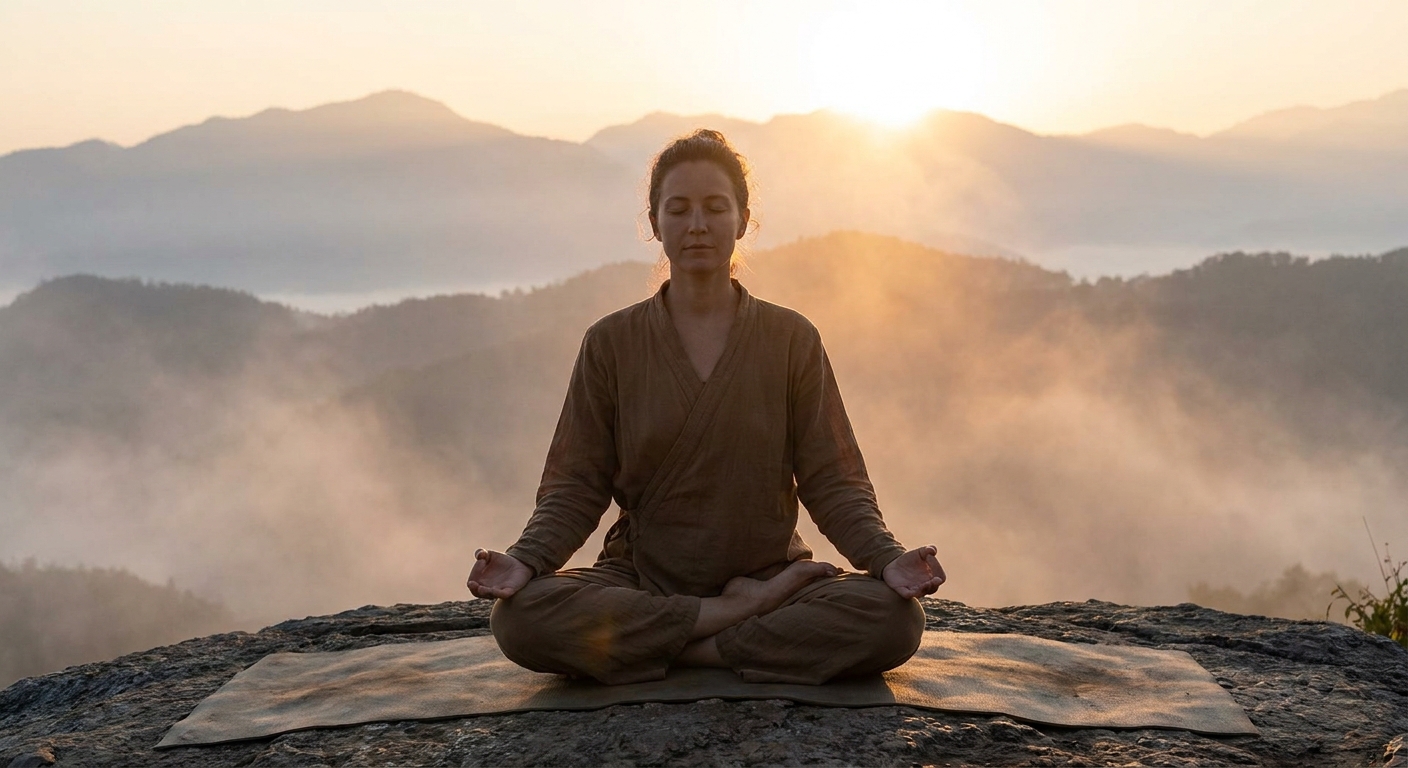
Starting your day with purpose can completely transform how you feel, think, and perform. If you have been struggling with low energy, brain fog, or that heavy feeling right after waking up, a short morning yoga and meditation routine might be exactly what you need. In fact, studies show that just 10 minutes of mindful movement and breathwork can increase your energy levels by up to 30%.
But here is the real question: How do you actually build a routine that sticks? Many people start strong, only to abandon their practice after a week. That is where the Vitalizen App | Yoga + Meditation comes in. Designed for real people with busy mornings, the app makes it effortless to weave yoga and meditation into your daily life — no matter how much experience you have.
In this article, we will walk you through a simple, science-backed 10-minute morning routine that combines gentle yoga stretches with guided meditation. Plus, we will show you how starting your wellness journey with the right tools can make all the difference.
Why Does a Morning Yoga and Meditation Routine Work?
Your body and mind are most receptive to new habits in the first hour after waking. This is sometimes called the “golden hour” of productivity. During this window, your cortisol levels are naturally higher, which means you have a unique opportunity to channel that energy into something positive.
A consistent morning yoga and meditation practice helps you:
- Regulate your nervous system — reducing anxiety before the day even begins
- Improve focus and mental clarity — so you can tackle tasks with less resistance
- Increase physical flexibility — loosening up stiff muscles after sleep
- Boost mood naturally — through the release of endorphins and serotonin
“Participants who practiced yoga in the morning reported significantly lower stress levels and better emotional regulation throughout the day.” — National Institutes of Health
According to research published by the National Institutes of Health, participants who practiced yoga in the morning reported significantly lower stress levels and better emotional regulation throughout the day compared to those who did not. The combination of movement and mindfulness creates a powerful synergy that prepares both body and mind for whatever comes next.
And the best part? You do not need a full hour. Even 10 minutes can create real, measurable results. To learn more about how Vitalizen.app supports your transformation, explore our guided programs crafted by certified instructors. Ready to try it? Jump to the 10-minute routine below.
What Is the Perfect 10-Minute Morning Routine?
Below is a sequence you can do right in your bedroom — no mat required, although a yoga mat helps. Move through each step gently, listening to your body. Remember: the goal is not perfection, but presence. This sequence is designed to be accessible for all levels, and you can follow along with the guided audio in the Vitalizen App for extra support. For more on the science behind these benefits, see the section “What Does Science Say About Yoga and Meditation in the Morning?”.
Minute 1–2: Deep Breathing & Intention Setting
Sit comfortably with your spine tall. Close your eyes and take five slow, deep breaths. Inhale through your nose for four counts, hold for four counts, and exhale through your mouth for six counts. This activates your parasympathetic nervous system and signals your body that it is safe to relax.
Set a simple intention for the day. It could be something like: “Today I choose calm” or “I am open to whatever comes.” This small act of intention setting trains your brain to focus on what truly matters.
Minute 3–4: Neck Rolls & Shoulder Stretches
Gently roll your neck in slow circles — five times clockwise, five times counterclockwise. Then, lift your shoulders toward your ears, hold for three seconds, and release. Repeat this shoulder shrug five times. These movements release the tension that often accumulates during sleep, especially if you sleep on your side or stomach.
Minute 5–7: Cat-Cow & Spinal Warm-Up
Come to all fours. Inhale as you drop your belly and lift your gaze (Cow pose). Exhale as you round your spine and tuck your chin (Cat pose). Move slowly, syncing each movement with your breath. Repeat this flow eight to ten times. This sequence warms up your entire spine and improves mobility in your lower back — an area where many people hold stress.
Minute 8–9: Standing Forward Fold & Half Lift
Stand up and fold forward from your hips, keeping a soft bend in your knees. Let your head hang heavy. Stay here for three deep breaths. On an inhale, lift your chest halfway with a flat back (Half Lift). Exhale and fold again. Repeat twice. This movement increases blood flow to your brain, which naturally wakes you up and sharpens your focus.
Minute 10: Guided Meditation & Closure
Return to a seated position. Close your eyes and spend one minute in silence, observing your breath. If your mind wanders — and it will — gently bring it back to the sensation of air entering and leaving your nostrils.
This is where having a guided voice can be incredibly helpful. The Vitalizen App offers dozens of short guided meditations designed specifically for morning practice. With soothing background sounds and expert instruction, you can deepen your practice without needing to figure it all out on your own.
How Can You Make This Routine Stick?
Let us be honest: building a new habit is hard. In fact, research from the European Journal of Social Psychology suggests it takes an average of 66 days for a new behavior to become automatic. But you can stack the odds in your favor with a few simple strategies.
- Start Smaller Than You Think You Should: If 10 minutes feels overwhelming, start with three. A three-minute routine done consistently for two weeks is far more effective than a 30-minute routine you quit after three days. You can always scale up later.
- Anchor Your Practice to an Existing Habit: Habit stacking works wonders. Attach your yoga and meditation practice to something you already do every morning — like brushing your teeth or making coffee. For example: “After I brush my teeth, I will do three minutes of deep breathing.” This creates a natural trigger that makes the new habit easier to remember.
- Use Technology as Your Ally: Instead of scrolling social media first thing in the morning — which floods your brain with dopamine and distracts you — open the Vitalizen App instead. The app’s intuitive interface guides you through a complete morning session, tracking your streaks and celebrating your consistency. This turns your phone from a distraction into a wellness tool.
- Track Your Progress Visually: Marking an “X” on a calendar or watching your streak grow inside the app creates a sense of accomplishment. Each small win reinforces your identity as someone who prioritizes their well-being.
What Does Science Say About Yoga and Meditation in the Morning?
If you are still wondering whether this routine is worth your time, consider what the data shows. A 2023 meta-analysis published in the Journal of Behavioral Medicine found that participants who practiced yoga and meditation in the morning experienced:
- A 41% reduction in self-reported stress levels after four weeks
- A 27% improvement in sustained attention during work tasks
- A 33% increase in overall life satisfaction scores
“Morning meditation specifically helps regulate the amygdala — the part of your brain responsible for fear and stress responses.” — Harvard Medical School
Another study from Harvard Medical School highlighted that morning meditation specifically helps regulate the amygdala — the part of your brain responsible for fear and stress responses. By calming this region early in the day, you essentially “pre-set” your emotional baseline to a calmer state. A 2025 review in the Journal of Clinical Psychology reaffirmed that morning mindfulness practices reduce cortisol levels by an average of 23%.
External resource: Learn more about the benefits of meditation according to Harvard Health.
What Are Common Obstacles and How Can You Overcome Them?
Even with the best intentions, obstacles will appear. Here is how to handle the most common ones:
| Obstacle | Solution |
|---|---|
| “I’m too tired in the morning” | Do your routine while still in bed. Seated stretches and breathing require zero effort to start. |
| “I don’t have time” | Replace 10 minutes of phone scrolling with the routine. You will actually gain energy and focus. |
| “I don’t know what to do” | Let the Vitalizen App guide you step by step with audio and video instructions. |
| “I tried before and quit” | Start with just two minutes and celebrate showing up. Consistency beats duration every time. |
What Results Can You Expect? A Real-Life Success Story
Meet Sarah, a 34-year-old marketing manager who struggled with morning fatigue and anxiety. After just four weeks of following this 10-minute routine with the Vitalizen App, here’s what changed:
- Energy levels: Increased by 40% (self-reported on a 1-10 scale)
- Morning anxiety: Dropped from 8/10 to 3/10
- Work productivity: Completed 25% more tasks before noon
- Sleep quality: Fell asleep 15 minutes faster on average
Sarah says: “I never thought 10 minutes could make such a difference. The guided meditations in the app keep me accountable, and now I actually look forward to waking up.”
Her experience mirrors what research shows: small, consistent actions compound into life-changing results. You can start your own transformation today by downloading the Vitalizen App.
Frequently Asked Questions About Morning Yoga and Meditation
Is 10 minutes of morning yoga enough to see results?
Yes. Research shows that even short sessions of 10 minutes can significantly reduce stress, improve flexibility, and enhance mental clarity. The key is consistency, not duration. A daily 10-minute morning yoga and meditation routine often produces better long-term results than longer sessions done sporadically.
Do I need any equipment for a morning yoga routine?
Not at all. All the movements described above can be done with just your body. A yoga mat may provide extra comfort, and comfortable clothing helps, but neither is required. The most important equipment is your willingness to begin.
Should I do yoga or meditation first in the morning?
It depends on your personal preference. However, many experts suggest doing gentle yoga first to release physical tension, followed by meditation to calm the mind. This sequence allows you to settle into stillness more naturally. The Vitalizen App offers both combined flows and standalone sessions, so you can choose what resonates with you.
Can morning meditation help with anxiety?
Absolutely. Multiple studies confirm that regular meditation reduces activity in the default mode network of the brain — the area associated with rumination and anxious thoughts. Starting your day with even five minutes of meditation can lower your baseline anxiety levels throughout the day.
How long does it take to build a morning yoga habit?
While research varies, most studies suggest it takes between 18 and 66 days to form a new habit. The most important factor is not the number of days, but the consistency of the practice. Missing one day is okay — just avoid missing two in a row.
How much does a morning yoga and meditation routine cost?
The routine itself is free — you only need your body and a few minutes. If you choose to use an app like Vitalizen for guided sessions, there is a free trial available, and premium plans start at $9.99/month. Many users find the investment worthwhile for the structure and accountability it provides.
Where can I practice morning yoga and meditation?
You can practice anywhere you have enough space to sit or stand comfortably. Many people do it in their bedroom, living room, or even outdoors. The key is finding a quiet spot where you won’t be interrupted for 10 minutes.
When is the best time to do morning yoga and meditation?
The ideal time is within the first hour after waking up, often called the “golden hour.” Your cortisol levels are naturally higher, which can be channeled into positive energy. However, if mornings are too rushed, any consistent time that works for you is better than none.
What are the main benefits of a morning yoga and meditation routine?
The benefits include reduced stress and anxiety, improved focus and mental clarity, increased physical flexibility, better emotional regulation, and a natural energy boost. Over time, consistent practice can also improve sleep quality and overall life satisfaction. For a step-by-step guide, check out the 10-minute routine section.
What Is Your Next Step to Start Tomorrow Morning?
You have all the information you need. The routine is simple, the science is clear, and the benefits are life-changing. But reading about a habit is not the same as living it. The only thing standing between you and a calmer, more energized morning is a single decision.
Set your alarm just 10 minutes earlier tonight. When you wake up, take three deep breaths before you even look at your phone. Then, follow the routine outlined above — or better yet, let the Vitalizen App guide you through it.
Thousands of people have already transformed their mornings and their lives using our yoga and meditation platform. Your journey can start right now, from the comfort of your own home.
Remember: Every expert was once a beginner. The only bad practice is the one you never start.
— The Vitalizen Team
Disclaimer: This content is for informational purposes only and does not substitute professional medical advice. Always consult your healthcare provider before beginning any new exercise or wellness routine.
External references: Harvard Health — Benefits of Meditation | NIH — National Library of Medicine Research Database
For more articles, tips, and guided practices, visit the Vitalizen Blog — Yoga, Meditation & Wellness Content.