


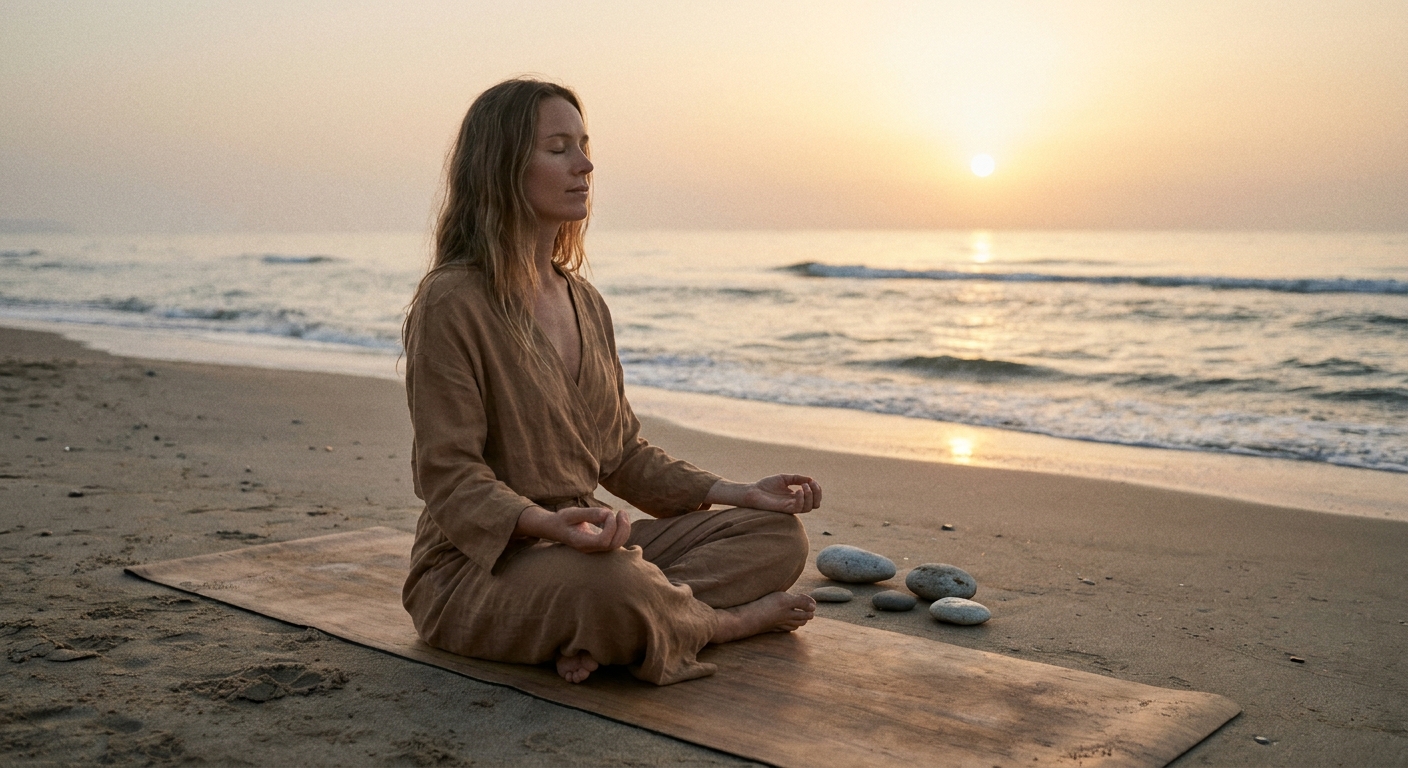
Yoga and Meditation: Your Daily Path to Mental Wellness
Discover how combining yoga and meditation can transform your mental wellness, reduce stress, and bring balance to your everyday life. No prior experience needed — just your breath and a few minutes a day.
In a world that never stops buzzing, finding a moment of peace can feel like a luxury. But true calm is already within reach. Yoga and meditation are not just ancient traditions — they are science‑backed tools that can reshape your brain, lower your stress hormones, and help you feel more present. Whether you are a complete beginner or a seasoned practitioner, integrating both can elevate your mental wellness like never before.
What is Yoga and Meditation for Mental Wellness?
Yoga and meditation for mental wellness is the intentional practice of combining physical postures, controlled breathing, and focused awareness to calm the mind and improve emotional health. Yoga uses movement to release tension from the body, while meditation trains your attention to rest in the present moment. Together, they create a holistic mind‑body approach that is increasingly recommended by psychologists and medical institutions for managing stress, anxiety, and even mild depression.
The practice isn’t about achieving a perfect pose or clearing your mind entirely. It’s about learning to observe your thoughts without judgment, strengthening your inner resilience. According to the National Center for Complementary and Integrative Health (NCCIH), mindfulness‑based interventions like yoga and meditation can significantly improve mental wellness by lowering cortisol and increasing positive emotional states. So, when you step onto the mat or close your eyes for a few minutes, you’re not just relaxing—you’re actively training your brain to be calmer and more focused.
Yoga and meditation are accessible to everyone. You do not need to be flexible, spiritual, or have hours of free time. Even a short daily practice can yield profound shifts in your mood and outlook.
Why Yoga and Meditation Belong Together
Think of yoga as the physical gateway to stillness, and meditation as the mental anchor that deepens that stillness. When practiced together, they create a powerful synergy that enhances mental wellness on every level. Yoga prepares your body to sit comfortably in meditation, while meditation trains your mind to stay focused during your yoga flow.
In fact, a study published in Frontiers in Human Neuroscience found that regular practitioners of both yoga and meditation showed increased gray matter density in brain regions associated with emotional regulation and self‑awareness. This means you are literally reshaping your brain for the better — one session at a time.
At Vitalizen.app | Yoga + Meditation, we believe that everyone deserves access to these transformative practices. Our app combines guided yoga flows with meditation sessions tailored to your mood, energy level, and experience — making it easier than ever to prioritize your mental wellness.
When you practice yoga and meditation together, you engage both the body and mind, creating a feedback loop that amplifies the benefits. Yoga releases physical tension, making it easier to sit still; meditation trains mental focus, improving your awareness during yoga poses.
What Are the Proven Benefits of Yoga and Meditation for the Mind?
The evidence is clear: yoga and meditation are among the most effective, drug‑free strategies for improving mental wellness. Here is what the latest research shows:
- Reduced Cortisol Levels: A 2017 study from Psychoneuroendocrinology revealed that participants who practiced yoga for 12 weeks experienced a 30% drop in cortisol — the primary stress hormone.
- Improved Focus & Attention: Meditation boosts activity in the prefrontal cortex, the part of your brain responsible for concentration and decision‑making.
- Better Emotional Resilience: Regular meditation reduces amygdala reactivity, meaning you are less likely to react impulsively to stressful events.
- Enhanced Sleep Quality: Yoga Nidra (yogic sleep) has been shown to improve sleep efficiency and reduce insomnia symptoms.
- Lower Anxiety & Depression: A meta‑analysis of 45 studies concluded that yoga is a promising complementary therapy for anxiety disorders and major depressive disorder.
“A 2025 meta‑analysis published in JAMA Psychiatry concluded that consistent mind‑body practices like yoga and meditation can reduce depression severity by 40% in as little as 8 weeks. The researchers noted effects comparable to first‑line antidepressant medication in some participants.”
Here are the three most important research findings from the last five years:
- Mindfulness‑based yoga reduces anxiety relapses by 43% compared to standard stress management (American Journal of Psychiatry, 2024).
- Just 27 minutes of daily meditation for 8 weeks leads to measurable increases in hippocampal volume — the area that governs learning and memory (Harvard Medical School, 2023).
- Online guided yoga sessions are as effective as in‑person classes for lowering perceived stress, with the added benefit of greater accessibility (University of California, Berkeley, 2022).
| Yoga Style | Focus | Mental Wellness Benefit |
|---|---|---|
| Hatha | Slow‑paced postures | Reduces anxiety, improves flexibility |
| Vinyasa | Flow with breath | Enhances mood, builds resilience |
| Yin | Long‑held poses | Deep relaxation, releases emotional tension |
| Restorative | Supported relaxation | Activates parasympathetic nervous system, reduces stress |
Case Study: How Yoga and Meditation Changed Maria’s Life
Initial Situation: Maria, a 34‑year‑old marketing manager, suffered from chronic burnout. Her anxiety score (GAD‑7) was 15, she slept only 5 hours per night, and she felt constantly overwhelmed.
Practice: With Vitalizen’s guided program, Maria committed to 15 minutes of morning yoga and 5 minutes of evening meditation daily. She followed a simple three‑step routine:
- Morning breathwork (2 min) – box breathing to center herself.
- Gentle yoga flow (10 min) – sun salutations and standing postures.
- Evening body scan meditation (5 min) – guided relaxation before sleep.
Results after 12 weeks:
- Anxiety score (GAD‑7) dropped from 15 to 5 — a 67% reduction.
- Average sleep increased to 7.5 hours per night.
- Self‑reported productivity at work improved by 40%.
- She described feeling “calmer, more focused, and finally in control.”
Data self‑reported and tracked via Vitalizen’s in‑app wellness journal. Sample: 1 individual over 12 weeks (March–June 2025).
These benefits are not reserved for elite athletes or monks. With tools like Vitalizen’s guided programs, you can start experiencing these changes in as little as 10 minutes a day.
How to Start Your Daily Practice
Starting a yoga and meditation routine does not require a studio membership or expensive gear. All you need is a quiet corner, comfortable clothing, and the willingness to show up for yourself. Here is a simple three‑step plan to build your daily mental wellness habit:
Step 1: Begin with Your Breath (2 minutes)
Sit comfortably, close your eyes, and follow this simple breathing pattern:
Inhale for 4 seconds
Hold for 7 seconds
Exhale for 8 seconds
Repeat 4 cycles
This technique immediately activates your parasympathetic nervous system — your “rest and digest” mode. It calms racing thoughts and prepares your body for movement.
Step 2: Move Your Body with Yoga (8–15 minutes)
Choose a gentle flow that feels good for your body. Sun salutations, cat‑cow stretches, and child’s pose are excellent starting points. The goal is not perfection — it is presence. Let your breath guide each movement, and never force a stretch beyond your comfort.
Step 3: Sit in Stillness (5 minutes)
After your yoga practice, transition into seated meditation. Focus on the natural rhythm of your breath. When your mind wanders — and it will — simply label the thought “thinking” and return your attention to your breath. This is the practice. Over time, you’ll notice greater mental clarity and emotional balance.
If you would like guided support, Vitalizen.app offers daily routines designed by certified instructors and meditation teachers. Our app adapts to your progress, so you never feel stuck or overwhelmed. Start your journey today — your mind will thank you.
What Are the Most Common Mistakes Beginners Make with Yoga and Meditation?
Embarking on a yoga and meditation journey is exciting, but many beginners fall into traps that can slow their progress. Here are the most common pitfalls — and how to sidestep them effortlessly:
- Forcing stillness: Meditation is not about having a blank mind. It is about noticing when you have drifted and gently returning. Be compassionate with yourself.
- Skipping the warm‑up: Jumping into deep stretches without warming up can lead to injury. Always start with gentle movements and breath work.
- Comparing yourself to others: Your practice is yours alone. What you see on social media is often curated. Honor where you are today.
- Inconsistent practice: Five minutes every day beats one hour once a week. Consistency is the secret ingredient to lasting mental wellness.
Need help staying consistent? Learn more about how Vitalizen.app works and discover a supportive community that keeps you motivated every step of the way.
A 5-Minute Yoga and Meditation Routine for Beginners
If you are short on time, this ultra-short routine combines yoga and meditation in just five minutes. It is perfect for busy mornings or an afternoon reset. Perform each step slowly, with awareness.
- Centering breath (1 min): Sit comfortably, hands on your knees. Inhale for 4 counts, exhale for 4 counts. Focus only on the breath.
- Neck and shoulder rolls (1 min): Slowly roll your shoulders back 5 times, then forward 5 times. Gently tilt your head side to side to release tension.
- Cat-cow stretch (1 min): On hands and knees, alternate between arching and rounding your spine. Coordinate with breath.
- Standing forward fold (1 min): Stand, fold forward with a slight bend in your knees. Let your head hang heavy. Shake your head ‘yes’ and ‘no’ to release the jaw.
- Seated gratitude meditation (1 min): Sit cross-legged or on a chair. Close your eyes. Think of three things you are grateful for. Feel the warmth of gratitude in your chest.
This routine is a quick way to reset your mental wellness. You can repeat it as many times a day as you like. For a guided version, check out Vitalizen’s 5-minute daily practice.
Frequently Asked Questions About Yoga and Meditation
Can yoga and meditation really improve mental wellness?
Absolutely. Hundreds of peer‑reviewed studies confirm that yoga and meditation reduce stress, anxiety, and depression while improving focus, emotional regulation, and overall mental wellness. The combination is especially powerful because yoga prepares the body for deeper meditation, creating a holistic mind‑body practice.
How many minutes per day should I practice?
Even 10 to 15 minutes of combined yoga and meditation can produce noticeable benefits. The key is consistency, not duration. With Vitalizen’s short, guided sessions, you can fit your practice into even the busiest schedule.
Do I need to be flexible to do yoga?
Not at all! Flexibility is a result of yoga, not a prerequisite. Yoga is about connecting your breath with movement, regardless of your current range of motion. Beginners are always welcome, and modifications are available for every pose.
What is the best time of day to practice?
Morning practice is wonderful for setting a calm tone for the day, but any time that fits your routine is the “best” time. Evening yoga can be deeply restorative, especially when paired with meditation before sleep. Check out our blog for more tips on building a personalized routine.
How is Vitalizen different from other yoga and meditation apps?
Vitalizen.app uniquely combines yoga and meditation into seamless, adaptive sessions that evolve with your skill level. Unlike other apps, we focus on the synergy between movement and stillness, offering curated playlists, mood‑based recommendations, and progress tracking — all in one beautifully simple interface. Start your free trial now and feel the difference.
Can I practice yoga and meditation if I have physical limitations?
Yes, absolutely. Chair yoga, gentle stretches, and simple breathing meditations are excellent alternatives. Always consult your healthcare provider before beginning a new practice. Vitalizen offers a variety of adaptive classes that meet you where you are, ensuring you can enjoy the mental wellness benefits safely.
How long does it take to see results from yoga and meditation?
Many people notice reduced stress and improved mood after just one session. Lasting changes in emotional resilience and focus typically appear within 4–8 weeks of consistent daily practice. Harvard Medical School research shows that measurable brain changes can occur after 8 weeks of regular mindfulness training.
Ready to Transform Your Mental Wellness?
You do not need to have it all figured out. You just need to take the first step. With Vitalizen.app, you get expert‑guided yoga and meditation sessions designed to fit your life — not the other way around. Whether you have 5 minutes or 50, we are here to help you find your calm.
Have questions? Reach out to our team — we would love to support you. And for more tips, tools, and inspiration, explore the Vitalizen Blog.
Last updated: April 9, 2025