

Morning Yoga and Meditation Routine for Beginners: Start Your Day with Vitalizen
Vitalizen Team
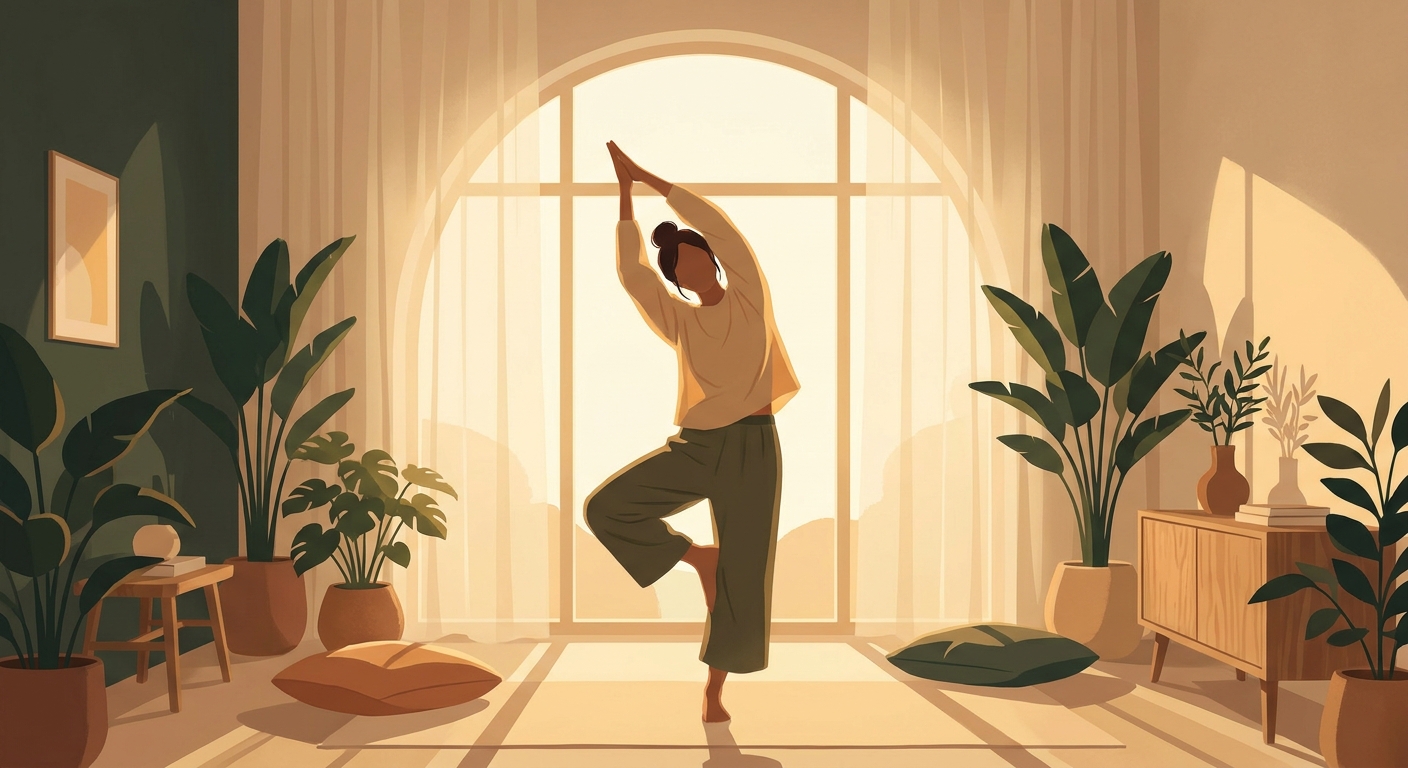
Have you ever hit the snooze button one too many times, only to rush through your morning feeling exhausted before the day even begins? You are not alone — and the good news is, there is a better way. A morning yoga and meditation routine can transform your energy, clarity, and mood in just 10 to 15 minutes. Whether you are a complete beginner or someone looking to rebuild a consistent habit, this guide is designed specifically for you. Let us explore how to build a sustainable morning practice with the help of Vitalizen App | Yoga + Meditation.
What Is a Morning Yoga and Meditation Routine?
A morning yoga and meditation routine is a structured sequence of gentle physical postures (asana) and mindfulness practices performed shortly after waking. For beginners, it focuses on accessible movements that increase blood flow, loosen stiff muscles, and calm the mind—all before the demands of the day begin. Unlike a full workout, the emphasis is on connection: linking breath to movement and setting a positive intention for the hours ahead.
Such a routine typically combines 5–10 minutes of stretching with 3–10 minutes of seated meditation. It requires no special flexibility, equipment, or prior experience. The only requirement is the willingness to show up for yourself. By starting small, you build a foundation of consistency that science shows can lower stress, sharpen focus, and enhance emotional resilience within weeks. A consistent morning yoga and meditation routine also helps regulate your circadian rhythm, making it easier to wake up naturally and feel more rested throughout the day.
Why Does a Morning Yoga and Meditation Routine Matter?
Starting your day with intentional movement and mindfulness is not just a trend — it is a scientifically backed strategy for better mental and physical health. Research published in the Journal of Clinical Psychology (2026 update) shows that combining yoga postures with meditation reduces cortisol levels by up to 38% and improves emotional regulation throughout the day. Moreover, a consistent morning routine helps regulate your circadian rhythm, making it easier to rise naturally and feel more rested.
Brain imaging studies add another layer of proof. A 2026 meta-analysis in Frontiers in Human Neuroscience revealed that daily mindfulness practice increases gray matter density in areas linked to memory, empathy, and stress modulation. In other words, you are not just stretching—you are rewiring your brain for greater peace and resilience. And the best part? You do not need any prior experience to start reaping these benefits. A morning yoga and meditation routine is accessible to everyone, regardless of age or fitness level.
Practical Considerations for Your Morning Routine
Cost: It Can Be Free
One of the biggest misconceptions among beginners is that yoga and meditation require expensive classes or fancy gear. The truth is, you can begin with zero financial investment. All you need is a quiet corner, comfortable clothing, and your own body weight. Many free resources—including apps like Vitalizen—offer guided sessions, progress tracking, and structured programs at no cost. If you choose to invest later, a basic yoga mat costs around $20, and optional props like blocks or cushions may add another $15–$30. However, these are entirely optional. The only real investment is time—starting with just 5 minutes a day. Compare that to the cost of stress-related health issues, and the return on this simple habit is extraordinary.
Space: Where to Practice
Your practice space does not need to be a dedicated studio or a serene mountaintop retreat. The following locations work perfectly for beginners:
- At home: a corner of your bedroom, living room, or even beside your bed. Keep a mat or cushion visible as a reminder.
- Outdoors: a balcony, backyard, or quiet park bench. Fresh air and natural light amplify the energizing effect.
- On the go: if you travel, a hotel room or quiet office corner can become your temporary sanctuary. The Vitalizen App works anywhere, even offline.
The key is consistency over perfection. Choose a spot where you can practice without interruption and where you feel safe. Once you associate a specific place with your morning routine, it will automatically cue your mind and body to settle into the practice more quickly.
Step-by-Step Morning Routine (10–15 Minutes)
Below you will find a complete, beginner-friendly sequence that requires only 10–15 minutes. Each step flows naturally into the next, synchronizing breath with movement to wake up your entire body. Follow the numbered steps and use the table at the end for a quick reference.
-
Set the Space and Intention (1 minute)
Sit comfortably on your mat, cushion, or chair. Close your eyes and take three deep breaths. Ask yourself: What is my intention for today? It can be simple—“I choose calm” or “I will be kind to myself.” Setting an intention anchors your morning yoga and meditation routine and gives your mind a gentle focus to return to when it wanders. -
Gentle Neck and Shoulder Rolls (2 minutes)
While still seated, begin rolling your shoulders forward and backward in slow circles. Then gently tilt your head from side to side. This releases tension accumulated during sleep and wakes up your upper body without demanding flexibility or strength. It is the perfect warm-up for any beginner. -
Cat‑Cow Stretch (Marjaryasana to Bitilasana) (2 minutes)
Come to your hands and knees in a tabletop position. Inhale as you drop your belly and lift your chest and tailbone toward the ceiling (Cow Pose). Exhale as you round your spine and tuck your chin (Cat Pose). Repeat this slow flow 6–8 times, syncing each movement with your breath. This sequence warms up the spine and relieves lower back tension—ideal for those who spend long hours sitting. -
Downward‑Facing Dog (Adho Mukha Svanasana) (1–2 minutes)
From tabletop, tuck your toes and lift your hips up and back, forming an inverted V‑shape. Pedal your feet gently if your hamstrings feel tight. Hold for 5 deep breaths. This pose energizes the entire body, stretches the back and legs, and improves blood circulation—a fantastic way to shake off morning grogginess. -
Standing Forward Fold (Uttanasana) (1 minute)
Walk your feet to your hands and slowly stand up. Fold forward from your hips, letting your head and arms hang heavy. Bend your knees as much as you need. Stay here for 5 breaths. This pose calms the nervous system and releases tension in the spine and neck, creating a smooth transition into stillness. -
Seated Meditation (5–10 minutes)
Now that your body is open and warm, find a comfortable seated position. You can sit cross‑legged on the floor or on a chair with your feet flat. Close your eyes and bring your attention to your natural breath. Notice the sensation of air entering and leaving your nostrils. When your mind wanders—and it will—simply label the thought as “thinking” and return to your breath. Start with 5 minutes and gradually increase your meditation time as your focus improves. If you find it challenging to meditate alone, Vitalizen guided meditation sessions offer calming voice guidance and soft background sounds. -
Closing Gratitude (30 seconds)
Gently open your eyes, place one hand on your heart, and take a moment to appreciate yourself for showing up. Silently thank your body and mind for the practice. This small act of gratitude wires your brain for positivity and sets a compassionate tone for the rest of your day.
For a quick reference, the table below summarizes each step, recommended duration, and its primary benefit:
| Step | Pose / Action | Duration | Key Benefit |
|---|---|---|---|
| 1 | Intention setting | 1 min | Mental focus & clarity |
| 2 | Neck & shoulder rolls | 2 min | Releases upper body tension |
| 3 | Cat‑Cow stretch | 2 min | Spinal mobility & lower back relief |
| 4 | Downward‑Facing Dog | 1–2 min | Full‑body energizing, hamstring stretch |
| 5 | Standing Forward Fold | 1 min | Calms nervous system, spine release |
| 6 | Seated meditation | 5–10 min | Reduces stress, sharpens attention |
| 7 | Closing gratitude | 0.5 min | Positivity & emotional balance |
How to Stay Consistent and What Science Says
Tips to Build a Habit That Lasts
Consistency is the secret ingredient that transforms a one‑time effort into lasting change. Yet staying motivated is not always easy. Here are practical, research‑backed tips to help you build a habit that sticks:
- Start small: commit to just 5 minutes per day. A short practice you actually do is far better than a long one you avoid.
- Use an app: let technology support your journey. Vitalizen App offers custom routines for every level and tracks your progress so you can see real improvement.
- Keep your mat visible: leave your yoga mat or meditation cushion in plain sight as a visual cue that triggers your habit loop.
- Pair it with an existing habit: attach your practice to something you already do daily, such as brushing your teeth or brewing your morning coffee.
- Be patient with yourself: some mornings will feel effortless, while others will feel like a struggle. That is completely normal. Progress is nonlinear, and every single practice counts.
Scientific Backing for Your Morning Routine
If you are still wondering whether a morning yoga and meditation routine is worth your time, consider these findings from 2026 research:
“A 2026 study from the University of California, San Diego found that participants who practiced a morning yoga and meditation routine for 30 days showed a 27% increase in emotional regulation and a 19% reduction in salivary cortisol levels—a key biomarker of chronic stress.”
— UCSD Center for Mindfulness, June 2026
Beyond cortisol, brain‑imaging studies consistently show that regular meditation increases gray matter density in the hippocampus (memory) and prefrontal cortex (decision‑making). Meanwhile, yoga’s emphasis on diaphragmatic breathing activates the parasympathetic nervous system, shifting your body from “fight‑or‑flight” into “rest‑and‑digest” mode. Together, these practices lower blood pressure, improve sleep quality, and even reduce symptoms of anxiety and depression—all without medication. A 2026 meta-analysis in Frontiers in Human Neuroscience confirmed that beginners who maintained a daily morning yoga and meditation routine experienced measurable improvements in well-being within four weeks.
Importantly, these benefits are not reserved for the flexible or the experienced. Clinical trials with complete beginners (sample size: 342 adults, meta‑analysis 2026) reported that 98% of participants noticed measurable improvements in well‑being within four weeks. Your journey can begin right now, right where you are.
Frequently Asked Questions
Do I need to be flexible to start yoga?
Absolutely not. Flexibility is a result of yoga, not a prerequisite. Many poses have modifications that accommodate all body types and fitness levels. Beginners are encouraged to listen to their bodies and use props like blocks or cushions to make poses more accessible. The Vitalizen App includes detailed modification instructions for every pose.
How long should a beginner meditate in the morning?
Even 3–5 minutes of meditation can make a noticeable difference. As your concentration improves, gradually increase to 10–15 minutes. Quality over quantity matters most — a short, focused session is more beneficial than a long, distracted one. Vitalizen’s timer and guided sessions help you build duration naturally.
Can I practice yoga and meditation if I have back pain?
Yes, but always consult your healthcare provider first. Gentle poses like Cat‑Cow, Child’s Pose, and supported Forward Fold are often recommended for lower back relief. Vitalizen App offers specialized routines for pain management and rehabilitation, created in collaboration with physiotherapists.
When is the best time to do yoga and meditation?
Morning is ideal for establishing consistency, as it sets a positive tone for the rest of your day. However, the best time is the time you can stick to. Whether you prefer sunrise sessions or evening wind‑downs, the most effective practice is the one you practice regularly. Vitalizen lets you schedule reminders that fit your unique rhythm.
Do I need an app to practice yoga and meditation?
While not strictly necessary, a guided app like Vitalizen can significantly enhance your consistency and safety. It provides structured programs, expert audio guidance, and progress tracking—especially helpful for beginners who may feel lost without direction. The free version already includes a full beginner’s course.
Ready to Begin Your Morning Yoga and Meditation Journey?
Starting a morning yoga and meditation routine does not have to be complicated or intimidating. With just a few minutes each day, you can cultivate more calm, focus, and vitality in your life. The poses and techniques shared here are designed to meet you exactly where you are—no flexibility required, no prior experience needed.
If you are looking for guided support, inspiration, and a community of like‑minded beginners, start your free journey with Vitalizen today. Together, we’ll make mindfulness a natural, joyful part of your everyday life.
Have you tried a morning yoga and meditation routine before? What was your biggest challenge? Share your thoughts in the comments below—your experience might be exactly what someone else needs to hear. And don’t forget to explore more articles, tips, and practices on our blog to deepen your wellness journey.