

Morning Yoga & Meditation: 5 Essential Poses to Transform Your Day
Discover how combining morning yoga and meditation can boost your energy, reduce stress, and improve focus. Learn 5 simple poses to start your day with balance and mindfulness.
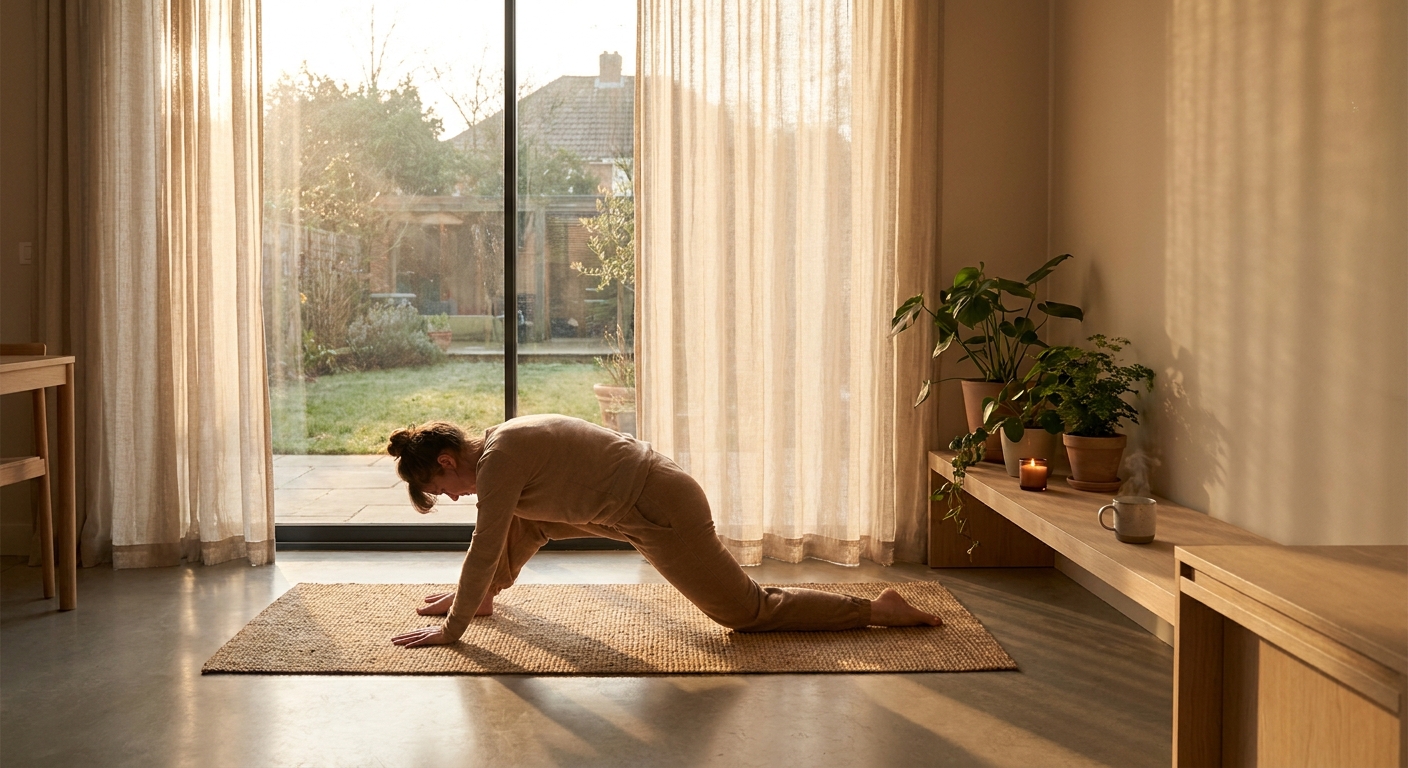
Have you ever woken up feeling already behind before your feet even hit the floor? You are not alone. In our fast-paced world, the first moments of the morning often set the tone for the entire day.
That is exactly why thousands of people are turning to morning yoga and meditation as a powerful way to reclaim their peace, boost their energy, and sharpen their focus. This combination activates both your physical and mental systems in a harmonious way.
Whether you are a complete beginner or a seasoned practitioner, combining these two ancient practices can literally transform how you feel from the inside out. In this article, we will explore five simple yet effective poses that, when paired with mindful breathing and meditation, can help you start each day with intention and calm.
And the best part? You do not need a fancy studio or hours of free time. With the Vitalizen App | Yoga + Meditation, you can access guided sessions tailored to your level, right from the comfort of your home.
Why is Yoga and Meditation in the Morning So Effective?
Morning is a unique window of opportunity. Your mind is still fresh, your body is rested, and the world has not yet flooded you with notifications and demands.
Yoga prepares the body by releasing tension, improving circulation, and awakening your muscles. Meditation, on the other hand, calms the nervous system, reduces cortisol levels, and trains your brain to stay present. When you combine them, you get a powerful synergy that delivers measurable benefits.
What Are the Main Benefits of a Morning Yoga and Meditation Practice?
- Boosts energy naturally without relying on caffeine
- Reduces anxiety and stress before the day even begins
- Improves focus and mental clarity for better decision-making
- Enhances emotional resilience to handle daily challenges
- Creates a consistent self-care routine that sticks
According to a study published by the National Institutes of Health, regular yoga and meditation practice significantly reduces symptoms of anxiety and depression while improving overall well-being. The science is clear: this combination works.
What Are the 5 Best Morning Yoga Poses to Pair with Meditation?
Below you will find five beginner-friendly poses. Hold each pose for five to eight deep breaths, and finish with a short seated meditation. This entire sequence takes about 15 to 20 minutes.
1. How Does Child’s Pose (Balasana) with Mindful Breathing Set an Intention?
Start on your knees, sit back on your heels, and extend your arms forward on the mat. Rest your forehead on the floor. Close your eyes and take ten slow, deep breaths.
This pose gently stretches your back, hips, and shoulders while signaling your nervous system to shift from fight-or-flight to rest-and-digest.
Meditation tip: As you breathe, imagine tension leaving your body with every exhale. This is a perfect moment to set an intention for the day ahead.
2. Why is Cat-Cow Stretch (Marjaryasana-Bitilasana) Foundational for a Mindful Practice?
Come to all fours with your wrists under your shoulders and knees under your hips. Inhale as you drop your belly and lift your gaze (Cow pose). Exhale as you round your spine and tuck your chin (Cat pose). Repeat slowly ten times, synchronizing movement with breath.
This sequence warms up your spine, releases back tension, and improves posture. It also helps you connect movement with breath, which is the foundation of any mindful yoga practice.
3. When Should You Use Standing Forward Fold (Uttanasana) to Calm the Mind?
Stand with your feet hip-width apart. Exhale as you hinge at your hips and fold forward, letting your head hang heavy. Bend your knees slightly if needed. Hold for eight breaths.
This pose calms the mind, relieves headaches, and stretches the entire back of your body. It is an excellent tool to use whenever you feel overwhelmed or need a quick mental reset.
Meditation tip: Notice the sensation of blood flowing to your head. Feel the release in your neck and shoulders. Stay present with each breath.
4. How Can Low Lunge (Anjaneyasana) with Heart Opening Release Stored Emotions?
Step your right foot forward into a lunge, lower your left knee to the mat, and lift your arms overhead. Gently arch your back and open your chest. Hold for five breaths, then switch sides.
This pose builds leg strength, opens the hips, and expands the chest for deeper breathing. Heart-opening poses are especially powerful for releasing stored emotions and cultivating feelings of gratitude and courage.
5. What is the Role of Seated Meditation (Sukhasana) in Rewiring Your Brain?
Finish your practice by sitting comfortably cross-legged on your mat. Rest your hands on your knees, close your eyes, and simply observe your breath for five minutes. If your mind wanders, gently bring it back to the sensation of breathing.
This final stillness is where the real transformation happens. Over time, this practice rewires your brain to be more focused, calm, and resilient.
How to Build a Sustainable Morning Yoga and Meditation Routine?
Consistency matters more than intensity. A five-minute practice every day will serve you better than a one-hour session once a week. Here are some practical tips to make your morning yoga and meditation routine stick:
- Start small: Commit to just ten minutes for the first week
- Prepare the night before: Lay out your mat and clothes
- Use guided sessions: Let an app lead you so you do not have to think about what to do
- Track your progress: Notice how you feel after each session
- Be kind to yourself: Missed a day? No problem. Just start again tomorrow
If you are looking for a simple way to get started, begin your wellness journey with Vitalizen.app. Our app offers guided yoga flows, meditation sessions, and breathing exercises designed for real people with busy lives.
Frequently Asked Questions About Morning Yoga and Meditation
Can I do yoga and meditation on an empty stomach?
Yes, morning yoga and meditation are actually best practiced on an empty stomach or after a light snack like fruit. A full stomach can make certain poses uncomfortable. Wait at least two hours after a heavy meal before practicing.
How long should my morning yoga and meditation session be?
Even five to ten minutes can make a difference. For optimal benefits, aim for 15 to 30 minutes. The Vitalizen App offers sessions ranging from 5 to 60 minutes, so you can choose what fits your schedule.
Do I need any special equipment for morning yoga?
Not at all. A yoga mat is helpful but not required. Wear comfortable clothing and find a quiet space. That is all you need to begin your practice.
What if I am not flexible enough for yoga?
Flexibility is not a requirement, it is a result. Yoga meets you exactly where you are. With consistent practice, you will gradually become more flexible and comfortable in your body.
Can meditation really help with anxiety and stress?
Absolutely. Numerous studies show that regular meditation reduces cortisol levels, lowers blood pressure, and helps regulate emotions. Combined with yoga, the effects are even more powerful for managing stress and anxiety.
Ready to Transform Your Mornings?
Your morning routine is one of the most powerful tools you have to shape your day and your life. By incorporating yoga and meditation into those first precious moments, you are not just exercising, you are cultivating a mindset of presence, gratitude, and resilience.
Whether you have five minutes or thirty, the key is to start. Your body and mind will thank you.
If you want guided support, expert instruction, and a community of like-minded people, start your journey with Vitalizen today. Download the app and experience how simple and transformative a daily yoga and meditation practice can be.
Have questions or want to share your experience? Reach out to us or explore more articles, tips, and guides on yoga and meditation on our blog.
Namaste.