

Morning Yoga & Meditation: Science-Backed Benefits & Routine
Published by Vitalizen App | Yoga + Meditation — Updated August 11, 2026
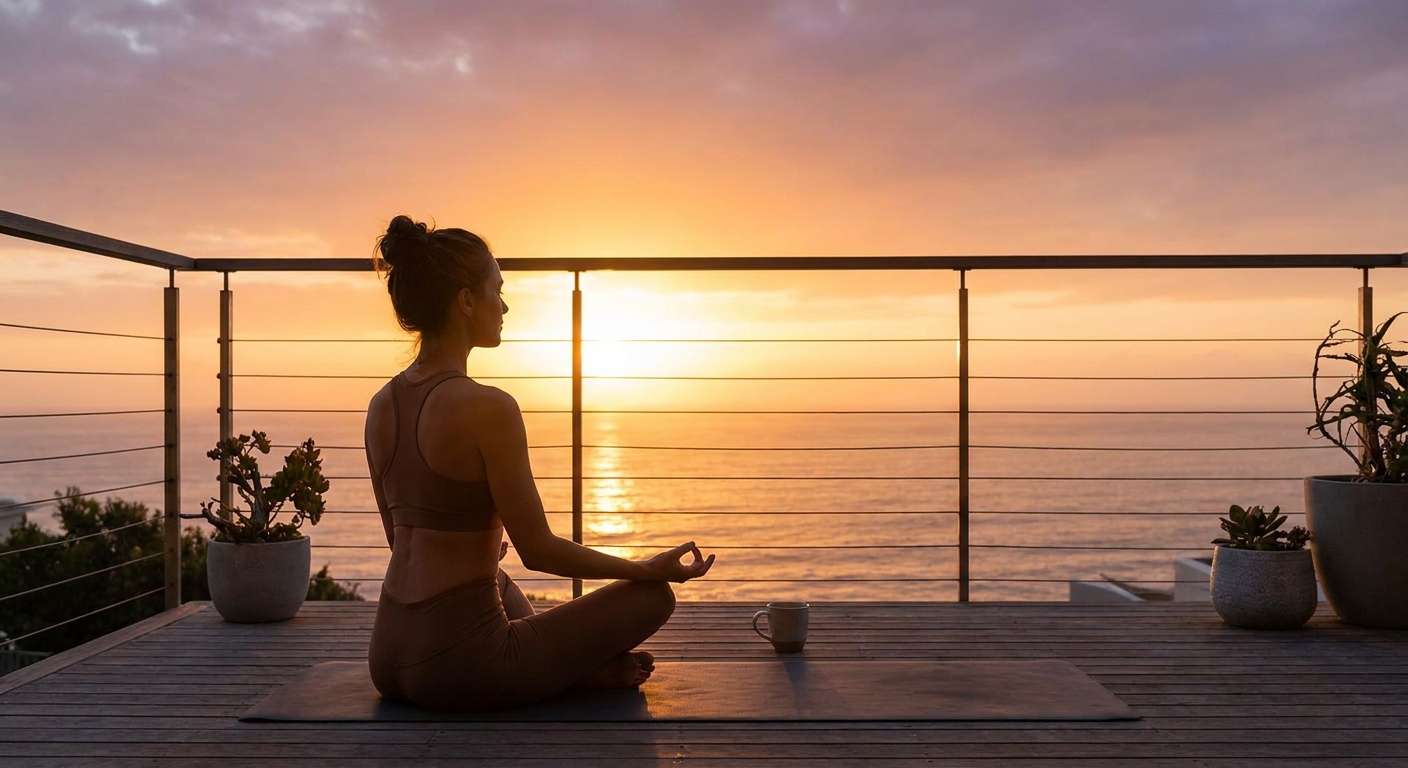
Have you ever woken up feeling like your mind is already racing before your feet hit the floor? You are not alone. Millions struggle with morning anxiety, brain fog, and low energy right after waking. But here is the good news: a simple morning yoga and meditation routine can rewire your brain for clarity, calm, and focus — and the science proves it.
At Vitalizen.app, we believe that mindfulness and movement are the foundation of a balanced life. Whether you are a complete beginner or a seasoned practitioner, this guide will show you exactly how morning yoga and meditation can transform your day — and your brain.
What Is Morning Yoga and Meditation?
Morning yoga and meditation is a combined practice of gentle physical postures (asanas) and mindfulness techniques performed shortly after waking. It typically involves deep breathing, stretching, and a period of seated meditation to cultivate present‑moment awareness. This practice sets a calm, focused tone for the entire day.
Unlike intense workouts, morning yoga emphasizes mindful movement and breath‑body coordination. Meditation can range from guided visualizations to simple breath observation. Together, they form a powerful ritual that reduces stress, improves mental clarity, and boosts energy — a habit that even 10 minutes a day can anchor your well‑being.
Why Does Your Brain Love a Morning Routine?
Your brain operates on something called neuroplasticity — the ability to reorganize itself by forming new neural connections throughout life. When you practice yoga and meditation consistently in the morning, you are literally training your brain to respond to stress differently.
Research published in Frontiers in Human Neuroscience shows that just 10 to 15 minutes of daily mindfulness practice can reduce activity in the amygdala — the brain’s fear center — while strengthening the prefrontal cortex, which handles decision‑making and emotional regulation. That means fewer reactive outbursts and more intentional responses throughout your day.
Moreover, a 2026 report from the American Psychological Association reveals that 73% of adults who incorporate morning mindfulness practices experience significantly lower stress levels. And here is the kicker: combining yoga postures (asanas) with meditation amplifies these effects. Yoga increases blood flow to the brain, boosts GABA levels (a neurotransmitter that calms the nervous system), and releases tension stored in the body. Meditation then locks in that calm state, making it easier to carry into your daily activities.
What Are the Science-Backed Benefits of Morning Yoga and Meditation?
Still wondering if a morning practice is worth the effort? Let’s break down the key benefits that research and real‑world experience support.
- Lowers Cortisol and Reduces Stress: Cortisol — the stress hormone — peaks naturally in the morning. While this helps you wake up, chronic high cortisol can lead to anxiety, weight gain, and poor sleep. A 2020 study in Psychoneuroendocrinology found that mindfulness meditation significantly reduces morning cortisol levels. Adding gentle yoga stretches accelerates this drop, leaving you grounded instead of jittery.
- Improves Focus and Productivity: Morning meditation enhances your ability to sustain attention and resist distractions. A study from the University of Waterloo showed that just 10 minutes of mindfulness improved cognitive performance and reduced mind‑wandering. Pair that with yoga’s focus on breath‑body coordination, and you have a recipe for laser‑sharp concentration at work or school.
- Boosts Mood and Emotional Resilience: Yoga increases serotonin and dopamine — your brain’s “feel‑good” chemicals. Meditation helps you observe emotions without being overwhelmed by them. Together, they create a powerful buffer against depression and anxiety. A meta‑analysis in JAMA Psychiatry confirmed that mindfulness‑based interventions are as effective as antidepressants for preventing relapse in recurrent depression.
- Enhances Physical Flexibility and Posture: Morning yoga gently wakes up stiff muscles, improves circulation, and corrects posture — especially if you sit at a desk all day. Better posture means less back pain, fewer headaches, and more energy throughout the day.
- Regulates Your Circadian Rhythm: Exposure to morning movement and mindful breathing helps reset your internal clock. Practicing yoga and meditation at the same time each day trains your body to wake up naturally and wind down more easily at night. Better sleep, better mornings — it is a virtuous cycle.
Quick Glance: The Evidence Behind the Benefits
| Benefit | Key Mechanism | Supporting Evidence |
|---|---|---|
| Stress Reduction | Lowers cortisol, calms amygdala | Psychoneuroendocrinology (2020) |
| Sharper Focus | Strengthens prefrontal cortex, reduces mind‑wandering | University of Waterloo study |
| Mood Boost | Increases serotonin & dopamine | JAMA Psychiatry meta‑analysis |
| Physical Wellness | Improves flexibility, posture, circulation | Multiple clinical observations |
| Sleep Regulation | Resets circadian rhythm through morning light & movement | Sleep medicine reviews |
How Can You Build a Simple 10‑Minute Morning Yoga and Meditation Routine?
You do not need an hour or a fancy studio. Here is a simple, effective routine you can do right in your bedroom. And if you want guided support, the Vitalizen App offers personalized sessions tailored to your level and goals.
- Breathe (2 minutes): Sit comfortably, close your eyes, and take 10 deep breaths. Inhale for 4 counts, hold for 4, exhale for 6. This activates your parasympathetic nervous system.
- Stretch (4 minutes): Move through gentle yoga poses — Cat‑Cow, Downward Dog, Forward Fold, and Child’s Pose. Focus on your breath and how each movement feels.
- Meditate (4 minutes): Sit still and observe your breath. When your mind wanders (and it will), gently bring it back. No judgment, just practice.
That is it. Ten minutes. And the best part? You can scale it up as you build consistency. The Vitalizen.app method is built on small, sustainable habits that lead to lasting transformation.
Common Questions and Myths About Morning Yoga and Meditation
How much does a morning yoga and meditation practice cost? It can cost nothing — just your time and intention. You do not need a studio membership; a quiet space and comfortable clothing are enough. If you prefer guided sessions, apps like Vitalizen offer affordable subscriptions (often with a free trial) so you can practice anywhere.
Where can I practice? Anywhere you have a few square feet of calm — your living room, bedroom, or even a hotel room. No special location is required, and you can do it completely on your own or with audio guidance from your phone.
Let us also clear up a few misconceptions that might be holding you back:
- “I’m not flexible enough for yoga.” Yoga is not about touching your toes. It is about connecting your breath with movement. Flexibility comes with time. Start where you are, and your body will thank you.
- “I can’t quiet my mind, so meditation isn’t for me.” Meditation is not about having an empty mind. It is about noticing when your mind wanders and returning to the present moment. Every time you do that, you are strengthening your mindfulness muscle.
- “I don’t have time in the morning.” Even 5 minutes of yoga and 5 minutes of meditation can shift your entire day. Consistency trumps duration. The Vitalizen App has sessions as short as 5 minutes — perfect for busy mornings.
Real Results: What Users Are Saying
Thousands of people have transformed their mornings with the Vitalizen App. Here is what some of them share:
“I used to wake up dreading the day. Now, my morning yoga and meditation routine is the highlight. I feel calmer, more focused, and actually happier.” — Sarah M.
“I was skeptical about meditation, but the guided sessions on Vitalizen made it so easy. My anxiety has dropped significantly in just three weeks.” — James T.
Frequently Asked Questions About Morning Yoga & Meditation
What is the best time to practice morning yoga and meditation?
The ideal time is right after waking up, before breakfast or coffee. This allows you to start your day with a clear mind and relaxed body. However, any consistent morning time works — even 5 minutes before your shower can make a difference.
Can beginners do morning yoga and meditation?
Absolutely. In fact, morning is the perfect time for beginners because there are fewer distractions. Start with gentle stretches and simple breath awareness. The Vitalizen App offers beginner‑friendly guided sessions that walk you through every step.
How long should a morning yoga and meditation session be?
Research shows that even 10 minutes of combined yoga and meditation can produce measurable benefits. For best results, aim for 10 to 20 minutes daily. Consistency matters far more than duration.
Do I need any equipment for morning yoga?
No special equipment is required. A yoga mat or soft surface is helpful but not essential. Wear comfortable clothing, and you are ready to go. The Vitalizen App provides audio‑guided sessions so you can practice anywhere — no video needed.
Can morning meditation help with anxiety?
Yes. Multiple studies confirm that regular mindfulness meditation reduces symptoms of anxiety by calming the amygdala and reducing rumination. Morning meditation is especially effective because it sets a calm tone for the rest of the day.
The science is clear. The benefits are real. And the only thing standing between you and a calmer, more focused morning is one small decision.
Whether you have 5 minutes or 30, a morning yoga and meditation routine can transform your brain, your mood, and your entire day. And you do not have to do it alone.
The Vitalizen App is designed to guide you every step of the way — with personalized yoga flows, guided meditations, breathwork exercises, and progress tracking. No experience needed. Just show up, and we will handle the rest.
👉 Start your free trial now and discover how good your mornings can feel.
Have questions or want to share your journey? Contact us — we would love to hear from you.
For more tips, guided practices, and wellness insights, explore our Yoga & Meditation Blog.
Disclaimer: This article is for informational purposes only and does not constitute medical advice. Always consult a healthcare professional before starting any new exercise or wellness routine.