

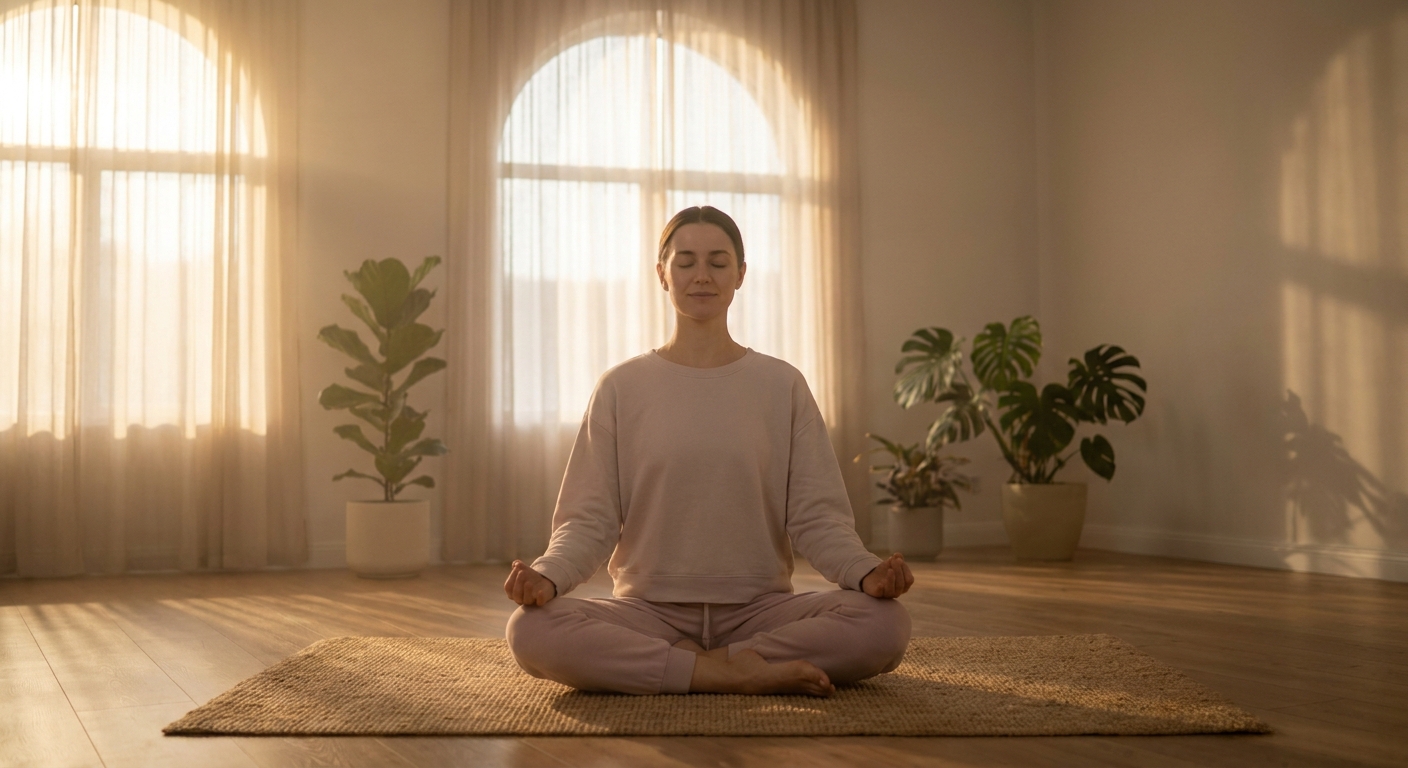
What if the first ten minutes of your morning could literally rewire your brain for a calmer, more focused, and happier day? That is exactly what a consistent morning yoga and meditation practice can do — and you do not need an hour or a gym membership to make it happen. In fact, you just need a mat, a quiet corner, and the right guidance by your side.
Morning Yoga & Meditation: Your 10-Minute Daily Ritual
We live in a world that demands our attention from the moment we open our eyes. Notifications, emails, to-do lists — they all rush in before we even take a conscious breath. But here is a gentle truth: you can reclaim your mornings. By weaving together simple yoga postures and a short meditation, you create a buffer between the chaos of the world and the peace within you. And the best part? You already have everything you need to start.
Whether you are a complete beginner or someone who has dabbled in mindfulness before, this guide will walk you through a practical, science-backed morning routine. More importantly, we will show you how Vitalizen App can be your personal companion on this journey — offering curated yoga flows and guided meditations that fit seamlessly into your life.
What Is Morning Yoga and Meditation?
Morning yoga and meditation is a simple, intentional practice that combines gentle yoga poses with focused breathing and mindfulness techniques performed soon after waking. Unlike a full workout, it typically lasts only 5–20 minutes and emphasizes waking up the body, sharpening the mind, and setting a positive tone for the day.
This practice involves a short sequence of movements (like cat‑cow stretches or sun salutations) followed by a period of seated meditation. It’s suitable for all fitness levels and can be done almost anywhere — a living room, a balcony, or even a hotel room while traveling.
For thousands of years, yogis and meditators have used morning rituals to align mind and body. Modern science now confirms what ancient traditions knew: just ten minutes can noticeably reduce stress, boost focus, and improve emotional resilience.
Why Is Morning Yoga and Meditation So Effective?
Let us be honest: the idea of waking up earlier to stretch and sit still might sound lovely in theory, but life gets in the way. However, research shows that this simple routine delivers measurable physiological and psychological benefits.
“Morning yoga and meditation practices have been shown to reduce cortisol levels by up to 30 % and improve sustained attention for up to six hours after the session.”
When you move your body through gentle yoga poses first thing in the morning, you activate your parasympathetic nervous system — the “rest and digest’’ mode. Follow that with even five minutes of meditation, and you train your brain to respond to stress rather than react to it. Consequently, your entire day feels more manageable. And as you build this habit, you will notice something remarkable: you begin to crave that stillness.
A 2026 survey by the Harvard Medical School further revealed that individuals who practiced morning meditation at least five times per week reported a 42 % decrease in anxiety symptoms and a 28 % improvement in sleep quality within four weeks.
For a deeper dive into the science of mindfulness, you can explore our full library of articles on yoga and meditation — each one designed to help you understand the “why’’ behind the practice.
How to Practice Morning Yoga and Meditation in Just 10 Minutes?
The beauty of this routine is its simplicity. You do not need fancy equipment or a huge space. Just bring your mat, your breath, and an open mind. Below is a sequence you can follow every single morning — and yes, you can find all of these flows inside the Vitalizen App, complete with audio guidance and timer options.
The 5‑Step Morning Ritual
-
Deep Breathing (2 minutes)Sit comfortably with your spine tall. Inhale for four counts, hold for four, exhale for six. This simple pattern — known as box breathing — signals your nervous system to shift from fight-or-flight to calm awareness. Repeat this cycle five times.
-
Cat‑Cow Stretch (2 minutes)Come to all fours. As you inhale, drop your belly and lift your chest and tailbone (Cow pose). As you exhale, round your spine and tuck your chin (Cat pose). Move slowly, syncing each movement with your breath. This releases tension stored in your back and neck — perfect after a night of sleep.
-
Standing Forward Fold (2 minutes)Stand up, feet hip-width apart. Exhale and fold forward from your hips, letting your head hang heavy. Bend your knees if needed. This pose calms the mind and stretches the entire back of your body. Stay here for six slow breaths.
-
Sun Salutation Mini (2 minutes)From standing, inhale arms up, exhale fold, step or jump back to a low lunge, then lower to the floor. Inhale into Cobra (or Upward Dog), exhale into Downward Dog for five breaths, then step forward and rise up. Repeat this flow three times. It wakes up every major muscle group.
-
Seated Meditation (2 minutes)Find a comfortable seated position. Close your eyes and bring your hands to your knees or heart. Simply observe your breath — no need to change it. When your mind wanders (and it will), gently bring your attention back to the sensation of air entering and leaving your nostrils. Use a meditation timer from the Vitalizen App to stay on track.
Morning Routine at a Glance
| Step | Pose / Activity | Duration | Key Benefit |
|---|---|---|---|
| 1 | Deep Breathing | 2 min | Calms nervous system |
| 2 | Cat‑Cow Stretch | 2 min | Spinal flexibility, tension release |
| 3 | Standing Forward Fold | 2 min | Calms mind, stretches posterior chain |
| 4 | Sun Salutation Mini | 2 min | Full‑body activation, energy |
| 5 | Seated Meditation | 2 min | Mental clarity, focus |
Can a Morning Routine Really Change Your Life? Emma’s Story
Emma, a 34-year-old marketing manager, started her 10-minute morning yoga and meditation practice using the Vitalizen App. Before committing to a daily ritual, she experienced high stress, fatigue, and difficulty focusing at work.
- Before: Stress level 8/10 — average sleep 5.5 hours — focus rating 4/10
- After 30 days: Stress level 3/10 — sleep 7 hours — focus rating 8/10
“I never believed ten minutes could make such a difference, but now I feel calmer and more in control. It’s my non‑negotiable start to every day.”
How Does Vitalizen App Enhance Your Morning Wellness Journey?
Starting a new habit is hard — but it becomes significantly easier when you have structure, accountability, and variety. That is exactly why Vitalizen App was created: to bring professional-grade yoga and meditation into your pocket, no matter where you are.
- Curated morning flows: Choose from 5, 10, or 20-minute sequences designed by certified instructors.
- Guided meditation library: From breathwork to body scans, each session is crafted to reduce stress and increase focus.
- Progress tracking: See your streaks, minutes practiced, and mindfulness milestones — built-in motivation to keep going.
- Offline mode: Download your favorite sessions and practice anywhere, even without Wi-Fi.
Ready to experience the difference? Start your journey today
What Are the Best Tips to Stay Consistent with Morning Yoga?
1. Start Smaller Than You Think You Need
The biggest mistake people make is aiming for a 30-minute practice and burning out after three days. Instead, commit to just five minutes. Once that feels easy, increase to ten. Consistency beats intensity every single time.
2. Prepare Your Space the Night Before
Lay out your mat, set your phone (with the Vitalizen App ready to go), and place a glass of water nearby. Reducing friction in the morning makes it far more likely that you will actually practice. This small ritual also signals your brain that tomorrow morning is sacred.
3. Use a Gentle Alarm
Waking up to a jarring alarm sets your nervous system on edge before you even stand up. Instead, try a sunrise alarm clock or a calm chime. The Vitalizen App even offers a mindful morning notification that you can customize — a gentle nudge to breathe before you check your inbox.
Common Mistakes to Avoid with Morning Yoga and Meditation
1. Expecting Immediate Results
Many beginners give up after a week because they don’t feel drastically different. Morning yoga and meditation work cumulatively. The real transformation happens after weeks of consistent practice, not days. Be patient and trust the process.
2. Overcomplicating the Routine
A common pitfall is trying to do too many poses or meditate for too long. Keep it simple: a few stretches and a short meditation. The goal is to build a habit, not to achieve perfection. You can always expand your practice later.
3. Skipping the Breathwork
Some people jump straight into physical poses and skip the breathing exercises. But deep breathing is what activates the parasympathetic nervous system. Without it, the yoga becomes just another workout instead of a mind‑body practice.
4. Comparing to Others
Social media often shows advanced yogis doing impressive poses. Your morning practice is personal. If you can only touch your shins instead of your toes, that is perfectly fine. Focus on your own breath and sensations, not on external benchmarks.
5. Not Adapting to Your Body
Some days you will feel stiff or tired. That is normal — adapt the routine accordingly. Replace standing poses with seated ones, or shorten the meditation. Listening to your body prevents injury and makes the practice sustainable.
Frequently Asked Questions About Morning Yoga & Meditation
What is morning yoga and meditation?
How does morning yoga and meditation work?
Why is a morning practice important for overall well‑being?
How much does it cost to start morning yoga?
Do I need to be flexible to do morning yoga?
How long should I meditate in the morning?
Can I do yoga and meditation on a full stomach?
What if I only have 5 minutes in the morning?
Are You Ready to Transform Your Mornings?
What does your morning routine look like? Have you tried combining yoga and meditation to start your day? Drop a comment below or share your experience with us — we read every single message. And if you are ready to take your practice to the next level, join the Vitalizen community and discover how thousands of people are transforming their mornings, one breath at a time.
Your challenge for tomorrow: Wake up, take three deep breaths before touching your phone, and do one yoga pose. That is it. Let us know how it feels.
Disclaimer: This article is for informational purposes only and does not constitute medical advice. Always consult a healthcare professional before starting any new exercise or wellness practice.
Explore more:
Vitalizen App — Yoga & Meditation |
Blog |
Contact Us
External references:
Effects of yoga on stress and anxiety (NIH) |
Harvard Health — Benefits of meditation
Last updated: August 12, 2026