

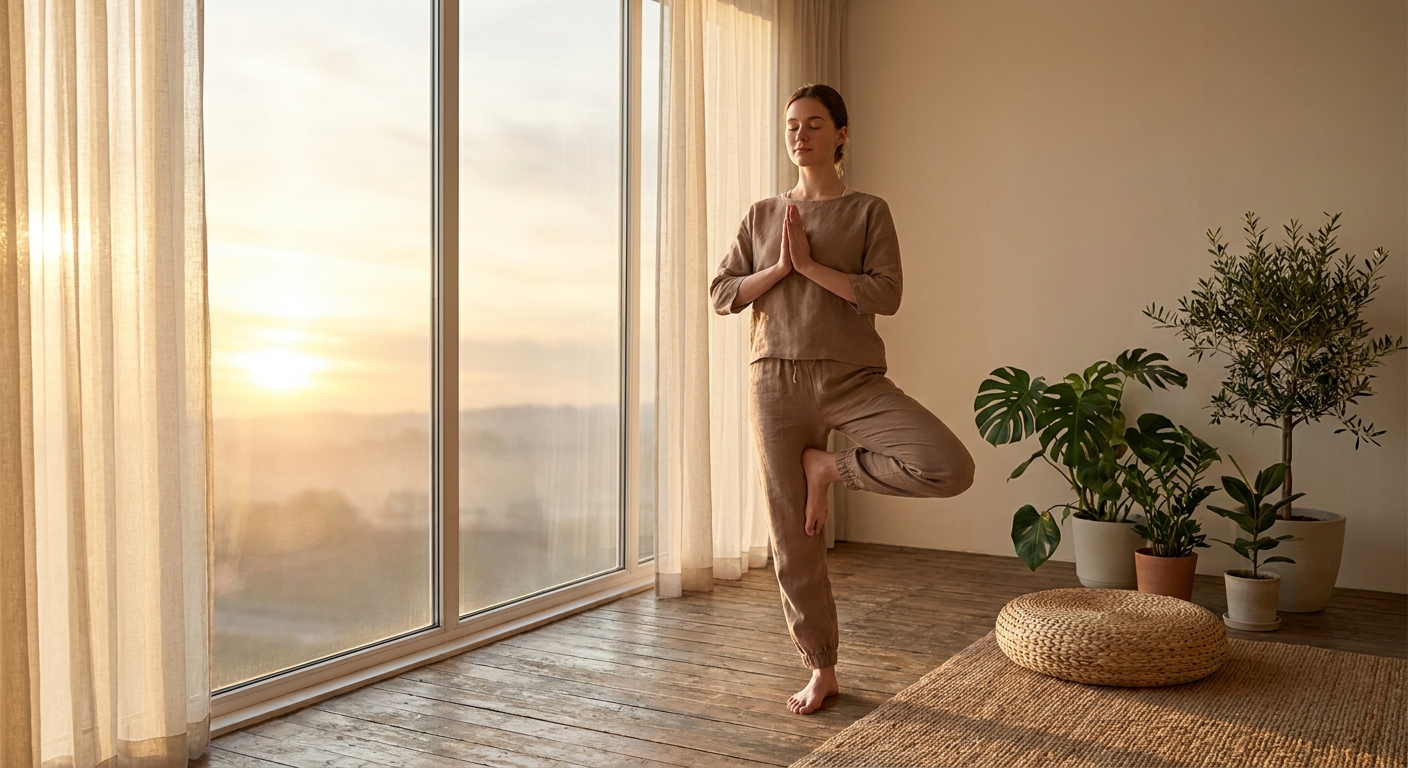
Yoga and Meditation for Beginners: How to Start Your Practice Today
Have you ever felt that overwhelming need to pause, breathe, and reconnect with yourself — but had no idea where to begin? You are not alone. Thousands of people search daily for a yoga and meditation for beginners guide that actually makes sense. The good news is that starting your wellness journey is simpler than you think. Whether you want to reduce stress, improve flexibility, or simply find a moment of calm, this guide will walk you through everything you need to know.
And the best part? With the Vitalizen App | Yoga + Meditation, you can hold a certified instructor in your pocket and begin your practice anytime, anywhere.
What is Yoga and Meditation for Beginners?
Yoga and meditation for beginners is a foundational practice that combines gentle physical postures with mindfulness techniques. It is designed to introduce you to the core principles of body awareness and mental stillness without requiring prior experience or exceptional fitness levels.
This practice involves learning basic poses, understanding breathwork, and cultivating present-moment awareness. The objective is to build a sustainable routine that enhances your physical and mental well-being from day one.
Main Characteristics of a Beginner Practice
- Accessibility: Poses are simple and can be modified to suit any body type.
- Short Duration: Sessions can be as brief as 10 minutes, making them easy to fit into a busy schedule.
- Focus on Breath: You learn to connect movement with your breath, which is the heart of the practice.
- Stress Reduction: The primary immediate benefit is a calmer nervous system and reduced anxiety.
How a Beginner Session Works
- Set an Intention: You start by taking a seat and setting a simple goal for your practice, like “I will be kind to my body today.”
- Gentle Movement: You move through a few foundational poses, such as Cat-Cow or Child’s Pose, to warm up the spine and joints.
- Guided Stillness: The session concludes with a short meditation or final resting pose (Savasana) to integrate the benefits.
Why Are Yoga and Meditation the Perfect Duo for Beginners?
If you think yoga is only about twisting your body into impossible shapes, think again. Yoga is the union of movement and breath, while meditation is the art of quieting the mind. Together, they form a powerful toolkit for mental and physical wellness.
Scientific studies show that just 10 to 15 minutes of daily practice can lower cortisol levels, improve sleep quality, and boost focus. For beginners, that is the sweet spot — small, consistent efforts that lead to big transformations over time. Moreover, combining yoga poses with guided meditation helps you stay present, reducing anxiety and creating a sense of inner peace that follows you throughout the day.
“The journey of a thousand miles begins with a single step. Your step starts with a single breath. Take it today.”
How to Get Started: 3 Simple Yoga Poses for Absolute Beginners
Before you jump into a full class, try these three foundational poses. They require no special equipment — just a mat or a soft surface, and a willingness to breathe.
1. Mountain Pose (Tadasana)
Stand tall with your feet hip-width apart, arms relaxed by your sides. Close your eyes and take five deep breaths. This pose teaches proper alignment and grounds your energy. It is the starting point for most standing postures.
2. Cat-Cow Stretch (Marjaryasana-Bitilasana)
Come onto your hands and knees. Inhale, drop your belly, and lift your chest and tailbone (Cow pose). Exhale, round your spine, and tuck your chin (Cat pose). Repeat ten times slowly. This sequence warms up the spine and releases back tension — perfect for anyone who sits at a desk all day.
3. Child’s Pose (Balasana)
Kneel on the floor, sit back on your heels, and stretch your arms forward on the mat. Rest your forehead on the ground. Stay here for 30 seconds to a minute. This resting pose calms the nervous system and is a safe space to return to whenever you need a break.
How to Create Your First Meditation Session (No Experience Needed)
Meditation can feel intimidating, but it is simply the act of paying attention on purpose. Here is a three-step mini-meditation you can do right now:
- Step 1: Sit comfortably in a chair or on a cushion. Keep your back straight but relaxed.
- Step 2: Close your eyes and take three deep breaths. Inhale through your nose for four counts, hold for four counts, and exhale through your mouth for six counts.
- Step 3: Let your breath return to normal. Place one hand on your chest and one on your belly. Feel the rise and fall. When your mind wanders — and it will — gently bring your focus back to your breath.
That is it. Congratulations — you just meditated. Do this for two minutes daily, then gradually increase. For guided support, explore the meditation library inside Vitalizen App and let an expert lead the way.
What Are the Most Common Beginner Obstacles and How to Overcome Them?
When you first start a yoga and meditation for beginners routine, your brain will resist. Here is how to handle the top three challenges:
| Obstacle | Why It Happens | Solution |
|---|---|---|
| “I don’t have time.” | Perceived lack of schedule flexibility. | Try a 5-minute morning breathing exercise or a 10-minute yoga flow. The Vitalizen App has sessions short enough to fit between meetings. |
| “I feel silly doing this.” | Self-consciousness and fear of judgment. | Practice alone in a quiet space until you feel more confident. Remember, every expert was once a beginner. |
| “I can’t stop thinking.” | Misconception that meditation requires an empty mind. | Meditation is not about emptying your mind — it is about noticing your thoughts without judgment. You are doing it correctly. |
When is the Best Time of Day to Practice Yoga and Meditation?
Morning practice sets a calm tone for the day, while evening sessions can help unwind. However, the best time is whatever works for you. The key is to build a habit, not to chase perfection.
Consistency is more important than the clock. If you are a night owl, a gentle bedtime yoga sequence can significantly improve your sleep quality. If you have a chaotic schedule, a 10-minute lunch break session can reset your focus for the afternoon.
Where to Apply Yoga and Meditation Effectively?
You can practice yoga and meditation in a variety of settings, making it an incredibly adaptable wellness tool. The most effective context is a quiet, comfortable space where you won’t be disturbed.
- At Home: Create a dedicated corner with a mat, cushion, and perhaps a plant. This signals to your brain that it’s a space for calm.
- In the Office: Use a chair for seated stretches and a 3-minute breathing exercise to combat afternoon slumps.
- While Traveling: A meditation app on your phone is the ultimate portable sanctuary. You can meditate on a plane, in a hotel room, or even in a park.
How Much Does it Cost to Start Yoga and Meditation?
Starting a practice can be completely free. All you truly need is your body and your breath. However, many beginners find that a small investment in a quality app or a good mat significantly enhances their commitment and experience.
Free resources like YouTube channels are abundant, but they lack the structured, progressive guidance that prevents injury and builds a solid foundation. A premium app like Vitalizen typically costs less than a single in-studio class per month and provides unlimited access to structured programs, expert teachers, and a supportive community.
What Are the Main Benefits of Yoga and Meditation for Beginners?
The benefits of a consistent practice extend far beyond the mat. Here is a detailed list of advantages you can expect:
- Reduced Stress and Anxiety: Clinical studies show that yoga and meditation lower cortisol levels, the body’s primary stress hormone. Harvard Health confirms these effects.
- Improved Flexibility and Strength: Regular practice gently stretches and strengthens muscles, reducing the risk of injury in daily life.
- Better Sleep Quality: Mindfulness and relaxation techniques prepare the mind and body for deep, restorative sleep.
- Enhanced Focus and Clarity: Meditation trains your attention span, helping you concentrate better at work or school.
- Greater Emotional Resilience: You learn to observe your emotions without being controlled by them, leading to more balanced reactions.
Ready to experience these benefits? Download Vitalizen App and start your free trial today.
The Science Behind Yoga and Meditation: What Research Says
Modern science backs what ancient practitioners have known for millennia. A 2018 study published in the Journal of Clinical Psychiatry found that a regular yoga practice significantly reduces symptoms of anxiety and depression. Similarly, research from the National Center for Complementary and Integrative Health (NCCIH) shows that yoga can improve balance, reduce chronic pain, and enhance overall quality of life.
Meditation, on the other hand, has been shown to change brain structure. A landmark study from Harvard University revealed that eight weeks of mindfulness meditation increased gray matter density in the hippocampus (associated with memory and learning) and decreased it in the amygdala (the brain’s fear center). These changes lead to better emotional regulation and reduced stress reactivity.
For beginners, this means that even a short daily practice can rewire your brain for calm and resilience. The key is consistency, not intensity.
Common Mistakes Beginners Make and How to Avoid Them
Starting a new practice comes with pitfalls. Here are the most frequent mistakes and how to sidestep them:
- Pushing too hard: Trying to force your body into advanced poses can lead to injury. Always listen to your body and use props like blocks or blankets.
- Skipping the warm-up: Jumping straight into deep stretches without warming up can strain muscles. Start with gentle movements like Cat-Cow or neck rolls.
- Comparing yourself to others: Yoga is a personal journey. Focus on your own mat and celebrate small progress.
- Expecting instant results: Benefits like flexibility and calmness build over time. Be patient and trust the process.
- Neglecting breath: Breath is the bridge between body and mind. Always coordinate movement with inhales and exhales.
How to Choose the Right Yoga Style for Beginners
Not all yoga is the same. Here are the best styles for beginners:
- Hatha Yoga: Slow-paced, focusing on basic poses and breath. Ideal for learning fundamentals.
- Vinyasa Yoga: More dynamic, linking movement with breath. Great if you want a light workout.
- Yin Yoga: Passive, holding poses for several minutes. Perfect for deep relaxation and flexibility.
- Restorative Yoga: Uses props to support the body in restful poses. Excellent for stress relief.
Most beginners start with Hatha or Yin. The Vitalizen App offers beginner programs in each style, so you can explore what resonates with you.
Tips for Building a Consistent Yoga and Meditation Practice
Consistency is the secret to lasting change. Follow these tips to make your practice stick:
- Start small: Commit to just 5-10 minutes per day. It’s easier to maintain than a 60-minute session.
- Schedule it: Set a specific time each day, like right after waking up or before bed.
- Create a ritual: Light a candle, put on comfortable clothes, and unroll your mat. Rituals signal your brain that it’s time to practice.
- Use an app: Guided sessions remove the guesswork. The Vitalizen App sends reminders and tracks your streaks.
- Be kind to yourself: Missed a day? No problem. Just start again tomorrow. Perfection is not the goal.
How the Vitalizen App Supports Your Yoga and Meditation Journey
The Vitalizen App is designed to make your practice effortless. Here’s what you get:
- Structured beginner programs: Step-by-step courses that build your skills gradually.
- Expert instructors: Certified yoga teachers and meditation guides lead every session.
- Flexible session lengths: Choose from 5, 10, 15, or 30-minute practices.
- Progress tracking: See your streaks, minutes practiced, and milestones achieved.
- Community support: Connect with fellow beginners for motivation and tips.
- New content weekly: Fresh classes and meditations keep your practice exciting.
Whether you’re at home, in the office, or traveling, Vitalizen is your pocket wellness companion.
Frequently Asked Questions About Yoga and Meditation for Beginners
How long should a beginner do yoga each day?
Start with just 10 minutes per day. Consistency matters far more than duration. Once you feel comfortable, gradually increase to 20 or 30 minutes. The Vitalizen App offers short beginner-friendly sessions that fit into any schedule.
Do I need to be flexible to start yoga?
Absolutely not. Flexibility is a result of yoga, not a requirement. Yoga is about meeting your body where it is today. Many beginners who cannot touch their toes see noticeable improvements within two weeks of regular practice.
Can meditation help with anxiety and stress?
Yes. Meditation trains your brain to respond to stress rather than react to it. Studies from Harvard and other institutions show that eight weeks of daily meditation can shrink the amygdala (the brain’s fear center) and increase gray matter in areas linked to emotional regulation.
What is the best time of day to practice yoga and meditation?
Morning practice sets a calm tone for the day, while evening sessions can help unwind. However, the best time is whatever works for you. The key is to build a habit, not to chase perfection.
Is the Vitalizen App suitable for complete beginners?
Yes! The Vitalizen App was designed with beginners in mind. It features step-by-step video guidance, adjustable difficulty levels, and meditation tracks that range from 3 to 30 minutes. You can start your journey completely at your own pace.
How to Start with Yoga and Meditation Today: Your Next Steps
You now have everything you need to start. But knowing and doing are two different things. To truly transform your life, you need structure, accountability, and guidance. That is exactly where Vitalizen App | Yoga + Meditation comes in.
With curated programs for beginners, progress tracking, and a supportive global community, you will never feel lost. Whether you want to learn yoga and meditation for beginners or deepen an existing practice, the app adapts to your goals. Plus, with new content added weekly, you will always have fresh inspiration.
Are you ready to feel calmer, stronger, and more alive? Start your free trial today and discover the peace that has been waiting for you.
Keep Learning and Growing
Wellness is a journey, and every step counts. Browse more articles, tips, and guided practices on our blog to continue expanding your knowledge. And if you have questions or want personalized advice, do not hesitate to reach out to our team. We are here to support you.
Now close this article, stand up, and take one deep breath. Your practice has already begun.