

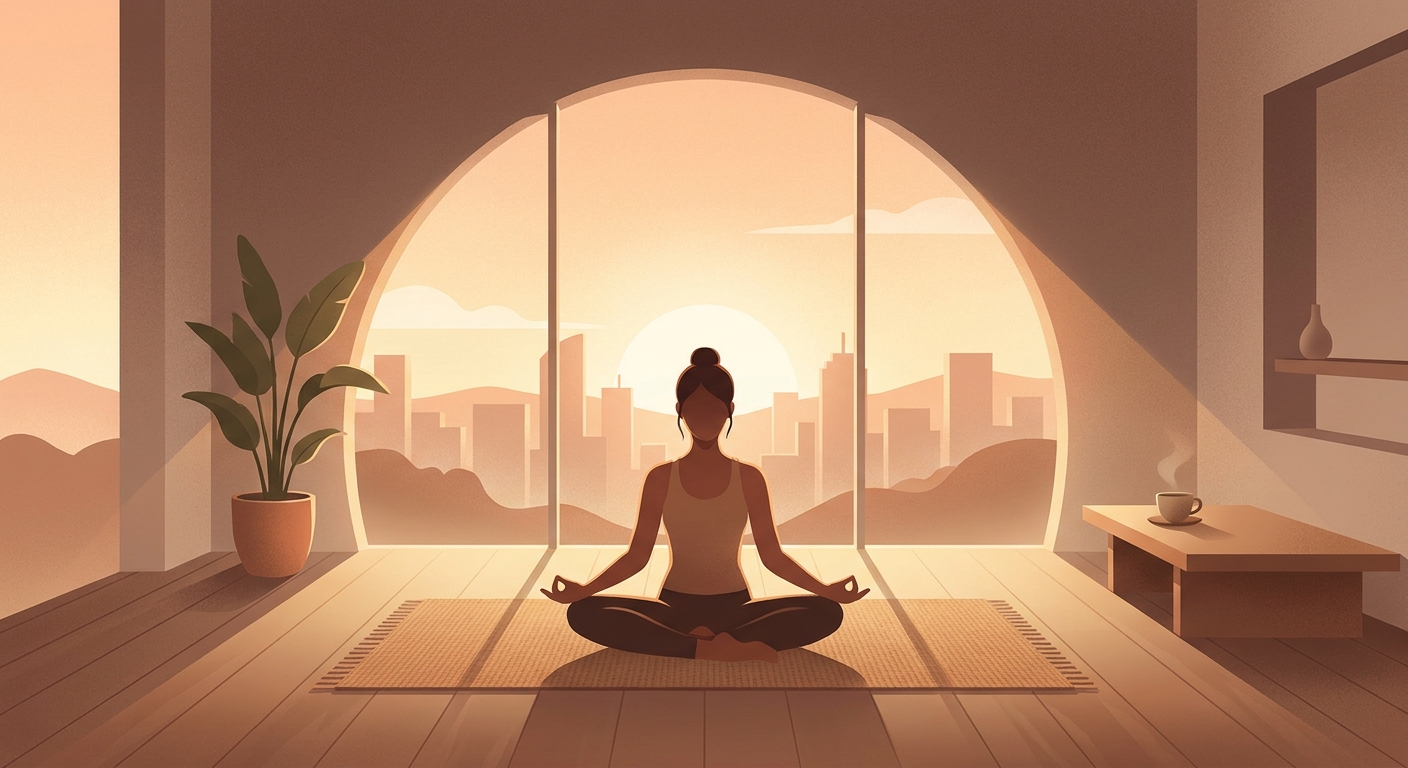
Yoga and Meditation: Your Daily Path to Mental Wellness and Inner Peace
Discover how combining yoga and meditation into a daily routine can transform your mental health, reduce stress, and bring lasting inner peace. Start your journey today with Vitalizen App.
Life moves fast. Between work deadlines, social commitments, and the endless scroll of notifications, your mind rarely gets a moment of silence. That constant buzz — the stress, the anxiety, the mental fatigue — it builds up. And before you know it, you feel drained, disconnected, and desperately in need of a reset.
Yoga and meditation are ancient practices that have stood the test of time. Yoga is a mind-body practice that combines physical postures, breathing exercises, and relaxation techniques. Meditation is a mental practice that trains attention and awareness. Together, they form a science-backed daily routine for mental wellness and inner peace.
In this article, we’ll explore why this ancient duo works so powerfully for modern minds, how to build a simple routine, and how Vitalizen App | Yoga + Meditation can guide you every step of the way.
What Are Yoga and Meditation?
Yoga is a mind-body practice that combines physical postures (asanas), breathing techniques (pranayama), and relaxation or meditation. It originated in ancient India and now includes styles ranging from gentle Hatha to dynamic Vinyasa. Meditation is a mental training practice that strengthens focus and awareness. Together, yoga prepares your body for stillness while meditation deepens mental clarity — creating a holistic daily routine for mental wellness.
For a deeper dive into different yoga styles, check out our guide on yoga styles for beginners.
Why Do Yoga and Meditation Work Better Together?
Yoga and meditation complement each other like movement and stillness. Yoga releases physical tension and improves flexibility, while meditation rewires mental patterns that keep you stuck in anxiety. This combination addresses both your body and your mind.
Research published in Frontiers in Human Neuroscience shows that regular yoga and meditation can reduce cortisol levels — the primary stress hormone — by up to 30%. That is a measurable shift in your body’s stress response system.
“Yoga and meditation are not just relaxation techniques. They are evidence-based practices that reduce stress, improve emotional regulation, and support overall mental health.” — National Center for Complementary and Integrative Health (NCCIH), updated 2026.
When you practice yoga, your nervous system shifts from fight-or-flight (sympathetic) to rest-and-digest (parasympathetic). Your heart rate slows, breathing deepens, and muscles release tension. That creates the foundation for meditation to work more effectively.
Meditation activates your prefrontal cortex, the brain region responsible for focus, emotional regulation, and decision-making. Over time, this strengthens your ability to stay grounded even when life gets chaotic. Even 10 minutes of yoga followed by 5 minutes of meditation can create a noticeable shift in your mood and energy.
The Science Behind Yoga and Meditation
The benefits of yoga and meditation are not just anecdotal; they are backed by rigorous scientific research. A 2026 meta-analysis published in JAMA Internal Medicine confirmed that mindfulness meditation programs significantly improve anxiety, depression, and pain management. Similarly, the American Psychological Association now includes yoga and meditation in its list of evidence-based practices for stress reduction.
Neuroimaging studies show that regular meditation increases gray matter density in areas associated with learning, memory, and emotional regulation. Yoga, on the other hand, reduces inflammation markers and improves cardiovascular health. When combined, these practices create a powerful synergy that supports both mental and physical well-being.
For more on the science, read our article on how meditation changes your brain.
How Can You Build a 15-Minute Daily Routine?
You don’t need an hour-long practice or expensive equipment. You just need consistency and a willingness to show up for yourself. Here is a step-by-step routine that takes only 15 to 20 minutes and works for all levels.
- Set Your Intention (1 minute). Sit quietly, close your eyes, and place your hands on your chest. Set a simple intention such as “I choose calm” or “I am present today.” This ritual signals your brain that this time is sacred.
- Gentle Yoga Flow (10 minutes). Move through a short sequence to awaken your body and release tension. Start with Cat-Cow stretches, move into Downward Dog, flow through a few Sun Salutations, then end with Child’s Pose. The Vitalizen App offers guided sessions with clear instructions and modifications for all levels.
- Seated Meditation (5 minutes). Find a comfortable seated position. Close your eyes and bring your attention to your natural breath. If your mind wanders, gently bring it back without judgment. You can try this simple box breathing technique:
Box Breathing: Inhale — 4 seconds Hold — 4 seconds Exhale — 4 seconds Hold — 4 seconds Repeat for 5 minutes - Gratitude Reflection (1 minute). Before you open your eyes, think of one thing you are grateful for. Gratitude shifts your brain chemistry toward positivity and sets a powerful tone for the day ahead.
That’s it. Five minutes of focused breathing can lower your heart rate, reduce anxiety, and improve concentration.
What Are the Real Benefits You Can Expect?
Consistency is the secret ingredient. When you practice daily, the benefits compound over time. Here is what you can realistically expect.
- Reduced stress and anxiety: Lower cortisol levels and a calmer nervous system mean fewer panic attacks and less chronic tension.
- Better sleep quality: Evening yoga and meditation help your body transition into rest mode.
- Improved focus and clarity: Meditation trains your attention span, helping you stay productive and present.
- Greater emotional resilience: You react less to triggers and respond more thoughtfully to challenges.
- Enhanced self-awareness: Regular practice helps you understand your thought patterns and emotions on a deeper level.
A meta-analysis published in JAMA Internal Medicine confirmed that mindfulness meditation programs significantly improve anxiety, depression, and pain management. Recent 2026 guidelines from the American Psychological Association also highlight yoga and meditation as evidence-based practices for stress reduction.
| Practice | Primary Benefit | Time Needed | Best For |
|---|---|---|---|
| Yoga | Physical tension release | 10–60 minutes | Flexibility, strength |
| Meditation | Mental focus and calm | 5–20 minutes | Stress, anxiety |
| Combined | Whole-body mental wellness | 15–30 minutes | Balanced daily routine |
How Can You Overcome Common Obstacles?
Starting a new routine is not always easy. Here are the most common challenges and practical solutions.
“I don’t have time.” You don’t need an hour. Start with 5 minutes of meditation or a 10-minute yoga flow. The Vitalizen App offers sessions as short as 5 minutes. Consistency matters more than duration.
“I’m not flexible enough for yoga.” Yoga is not about touching your toes. It is about connecting breath with movement at your own pace. There are modifications for every pose, and the Vitalizen App provides beginner-friendly options.
“My mind is too busy to meditate.” That is exactly why you need meditation. A busy mind is normal. The practice is not about emptying your thoughts, but about observing them without getting carried away. Guided meditations help you stay focused.
“I’ve tried before and gave up.” That is okay. Every day is a new opportunity to begin again. Find a method that feels good, not like a chore. Explore different styles — our blog has plenty of tips to keep you motivated.
When and Where Can You Practice Yoga and Meditation?
When is the best time to practice? Morning practice helps set a calm tone for the day ahead. Evening practice releases the day’s tension and prepares you for restful sleep. Ultimately, the best time is whatever fits consistently into your schedule. Experiment to see what feels right for you.
Where can you practice? You can practice at home, in your office, outdoors, or even while traveling. You only need a quiet corner and a mat or towel. The Vitalizen App lets you take guided sessions anywhere.
How Does Vitalizen App Help You Stay on Track?
Building a consistent yoga and meditation practice is easier when you have the right tools. Vitalizen App | Yoga + Meditation was designed exactly for this purpose — to guide you through daily practices that fit your lifestyle, skill level, and goals.
Here’s what makes Vitalizen different:
- Curated daily sessions: Whether you have 5 minutes or 45, there’s a practice ready for you.
- Beginner-friendly guidance: Clear audio instructions and visual cues make it easy to follow along.
- Progress tracking: See your streaks, milestones, and improvements over time — motivation built right in.
- Mindful reminders: Gentle nudges to help you stay consistent without feeling pressured.
- Community support: Connect with like-minded people on the same journey.
How Can You Start with Yoga and Meditation Today?
Mental wellness isn’t a destination — it’s a daily practice. You don’t need to have it all figured out. You just need to start. Roll out your mat. Take a deep breath. Show up for yourself, even if it’s just for five minutes.
With Vitalizen App | Yoga + Meditation, you have a supportive companion on this journey. Guided practices, mindful reminders, and a community that cheers you on — all in the palm of your hand.
So, what are you waiting for? Begin your wellness journey today and discover how powerful a few minutes of yoga and meditation can be.
Frequently Asked Questions About Yoga and Meditation
What is yoga and meditation?
Yoga is a mind-body practice that combines physical postures, breathing techniques, and relaxation. Meditation is a mental practice that trains attention and awareness. Together, they form a daily routine that reduces stress and improves mental wellness.
How does yoga and meditation work in practice?
Yoga shifts your nervous system into a relaxed state, releasing physical tension. Meditation then activates the prefrontal cortex, improving focus and emotional regulation. This combination lowers cortisol and helps you respond to stress more calmly.
Why is yoga and meditation important for mental wellness?
They address both physical and mental stress, improve emotional resilience, and reduce anxiety and depression. Regular practice changes how your brain responds to stress, leading to lasting inner peace.
How much does it cost to start yoga and meditation?
You can start with little to no cost. A comfortable mat or towel and loose clothing are all you need. The Vitalizen App offers free and low-cost guided sessions, making it accessible for any budget.
Where can I practice yoga and meditation?
Anywhere. At home, in a park, at your desk, or while traveling. You only need a quiet space where you won’t be disturbed. Many people practice in their living room or bedroom using a guided app.
When is the best time to practice yoga and meditation?
Morning practice helps you start the day calm and focused. Evening practice releases tension and improves sleep. The ideal time is whenever you can be consistent — even short sessions at lunchtime work.
What are the main benefits of yoga and meditation?
Reduced stress and anxiety, better sleep, improved focus, greater emotional resilience, and enhanced self-awareness. Scientific studies show these benefits develop over time with regular practice.
How can I start with yoga and meditation today?
Start small. Set aside 10–15 minutes, find a quiet spot, and follow a simple routine. The Vitalizen App offers guided sessions for beginners, so you can begin immediately without any prior experience.
Last updated: August 20, 2026. Sources: National Center for Complementary and Integrative Health (NCCIH), American Psychological Association (APA), JAMA Internal Medicine.