
Yoga for Beginners: How to Start Your Practice at Home
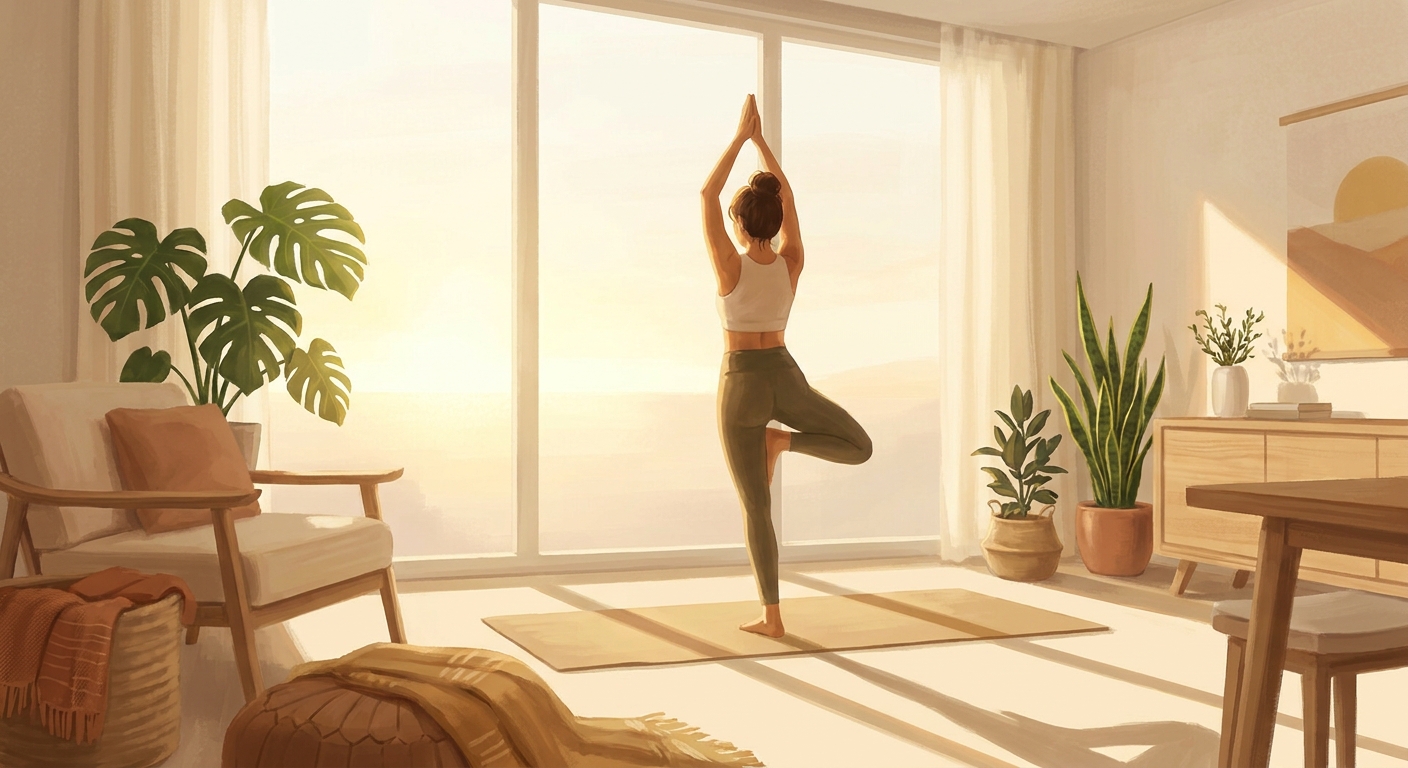
So you’ve decided to start yoga for beginners — but you’re not sure where to begin. Maybe you’ve watched a few videos, rolled out your mat once or twice, and then felt overwhelmed by all the poses, breathing techniques, and conflicting advice online. Trust me, you’re not alone.
The truth is, starting yoga at home doesn’t require flexibility, expensive gear, or hours of free time. What it does require is a clear path, a bit of patience, and the right tools to guide you. That’s exactly what we’re going to explore today — and how the Vitalizen App | Yoga + Meditation can be your companion on this journey.
Whether you want to reduce stress, improve your posture, or simply find a moment of calm in your day, this guide will walk you through everything you need to know. Let’s roll out that mat.
Why Start Yoga? The Real Benefits for Beginners
Before we dive into poses and routines, let’s talk about the why. Understanding the benefits of yoga for beginners can keep you motivated when things feel challenging.
- Stress reduction: Yoga activates the parasympathetic nervous system, helping your body shift from “fight or flight” to “rest and digest.” A 2022 study published in the Journal of Behavioral Medicine found that regular yoga practice significantly reduces cortisol levels. For more on stress relief, see this NIH review.
- Improved flexibility and mobility: You don’t need to touch your toes to start. Consistency builds range of motion over time.
- Better posture: Many of us spend hours hunched over screens. Yoga counteracts that by strengthening the back and core.
- Mental clarity: Combining movement with breath awareness trains your mind to focus — a skill that carries into your daily life.
And here’s the best part: you don’t need a gym membership or a studio class to experience these benefits. Starting yoga at home is not only convenient — it’s incredibly effective when you have the right structure.
Getting Started: What You Actually Need
Let’s clear up a common misconception: you don’t need a lot of equipment to practice yoga. Here’s your honest beginner checklist:
- A yoga mat: Any non-slip mat works. If you don’t have one, a carpet or towel can suffice for the first few sessions.
- Comfortable clothing: Wear something that allows you to move and breathe. No special “yoga pants” required.
- A quiet space: A corner of your living room, bedroom, or even a balcony — just enough room to stretch your arms out sideways.
- Guidance: This is where the Vitalizen App comes in. With guided sessions designed for beginners, you won’t have to guess what to do next.
That’s it. Seriously. You can start your journey right now with nothing more than a mat and your phone.
5 Essential Yoga Poses for Absolute Beginners
These five foundational poses are safe, accessible, and will prepare your body for more advanced practices. Hold each pose for 3–5 breaths.
1. Mountain Pose (Tadasana)
Stand with feet hip-width apart, arms at your sides. Ground through your feet, engage your thighs, and lengthen your spine. This might look like “just standing,” but it teaches body awareness and alignment.
2. Downward-Facing Dog (Adho Mukha Svanasana)
Start on your hands and knees. Tuck your toes, lift your hips up and back, and straighten your legs as much as comfortable. Pedal your feet to warm up the hamstrings. This pose stretches the entire back body.
3. Child’s Pose (Balasana)
From kneeling, sit back on your heels and fold forward, extending your arms in front or resting them alongside your body. This is a resting pose — use it anytime you need a break.
4. Cat-Cow Stretch (Marjaryasana-Bitilasana)
On hands and knees, alternate between arching your back (cow pose) and rounding it (cat pose). Coordinate with your breath: inhale for cow, exhale for cat. This gently mobilizes the spine.
5. Corpse Pose (Savasana)
Lie flat on your back, arms at your sides, palms facing up. Close your eyes and breathe naturally. This is the most important pose — it allows your body to integrate the practice.
Want to see these poses in action? The Vitalizen App offers video-guided sessions that walk you through each pose with proper alignment cues and modifications.
Meditation for Beginners: The Missing Piece
Yoga and meditation are two sides of the same coin. While yoga prepares the body, meditation trains the mind. If you’re serious about starting yoga at home, adding even 5 minutes of meditation can transform your experience.
Here’s a simple meditation for beginners technique you can try right now:
- Sit comfortably with your spine relatively straight. You can use a cushion or chair.
- Close your eyes and take three deep breaths.
- Let your breath return to normal. Bring your attention to the sensation of air entering and leaving your nostrils.
- Your mind will wander — that’s normal. Gently bring it back to the breath each time.
- Start with 2 minutes and gradually increase.
Struggling to stay consistent? The Vitalizen App combines yoga flows with guided meditations, so you can move from mat to stillness seamlessly. It’s like having a teacher and a meditation guide in your pocket.
How to Build a Simple Morning Yoga Routine
One of the most effective ways to build a habit is to anchor it to an existing one — like your morning coffee or your first alarm. Here’s a 10-minute morning yoga routine for beginners:
- Breath awareness (1 min): Sit in a comfortable position and take 5 deep breaths.
- Cat-Cow (2 min): 6 rounds, moving with your breath.
- Downward-Facing Dog (2 min): Pedal your feet and hold for 5 breaths.
- Forward Fold (1 min): Walk your feet forward, hang loose, and gently sway side to side.
- Mountain Pose (1 min): Stand tall, feel grounded, and set an intention for the day.
- Savasana or seated meditation (3 min): Close your eyes and breathe.
That’s it. Ten minutes that can change the trajectory of your entire day. And if you want guidance, the Vitalizen App has morning routines specifically designed for beginners.
Common Mistakes Beginners Make (And How to Avoid Them)
Starting something new always comes with a learning curve. Here are the most common pitfalls when starting yoga for beginners — and how to sidestep them:
Mistake #1: Comparing yourself to others
Social media is full of advanced practitioners doing impressive poses. Remember: yoga is not a competition. Your practice is yours alone.
Mistake #2: Holding your breath
It’s surprisingly common. If you notice you’re holding your breath during a pose, take it as a sign to ease off. Breath is the anchor of the practice.
Mistake #3: Pushing too hard too fast
Discomfort is normal — sharp pain is not. Listen to your body. Use props like blankets or blocks to modify poses.
Mistake #4: Inconsistency
Doing one hour once a week is less effective than 10 minutes every day. Consistency builds both skill and habit.
The Vitalizen Blog has more articles on building sustainable wellness habits — check them out for extra support.
Breathing Techniques to Enhance Your Yoga Practice
Breath is the foundation of yoga. For beginners, learning simple breathing techniques can deepen your practice and calm your mind. Try this basic technique called Ujjayi breath (ocean breath):
- Sit comfortably or lie down.
- Inhale deeply through your nose.
- Exhale through your nose while slightly constricting the back of your throat, creating a soft “ha” sound.
- Repeat for 5–10 breaths.
This technique helps regulate your breath and keeps you focused during poses. For more on breathwork, check out CDC guidelines on physical activity.
Frequently Asked Questions About Yoga for Beginners
Can I learn yoga at home as a complete beginner?
Absolutely. Many people start yoga at home with zero experience. The key is using reliable guidance — like the Vitalizen App — that offers beginner-friendly sequences and proper alignment cues.
How often should a beginner do yoga?
Start with 2–3 times per week, 10–20 minutes per session. As you build confidence, you can increase frequency. Remember: consistency matters more than duration.
Do I need to be flexible to start yoga?
Not at all. Flexibility is a result of yoga, not a prerequisite. Everyone starts somewhere — and yoga meets you exactly where you are.
What’s the best time of day to practice yoga?
Morning practice energizes and sets a positive tone for the day. Evening practice helps release tension and prepare for sleep. The best time is the one you can stick to consistently.
Can yoga help with anxiety and stress?
Yes. Multiple studies show that yoga and meditation reduce cortisol levels and activate the parasympathetic nervous system. Combined with breathwork, it’s one of the most effective tools for managing stress naturally.
Is the Vitalizen App suitable for beginners?
Yes — the Vitalizen App is designed for all levels, with dedicated beginner programs, guided meditations, and yoga flows that grow with you. Start your free trial here.
Your Next Steps: Start Your Practice Today
Reading about yoga is one thing — practicing is where the transformation happens. You now have everything you need to begin your journey with yoga for beginners.
Here’s a simple action plan:
- Roll out your mat tomorrow morning.
- Follow the 10-minute routine above or open the Vitalizen App for a guided session.
- Commit to 7 days — just 10 minutes each day.
- Notice how you feel after one week.
Yoga is not about touching your toes or mastering a headstand. It’s about showing up for yourself, breath by breath, moment by moment. And you’ve already taken the first step by being here.
Ready to begin? Start your wellness journey with Vitalizen App today — your first guided session is just a tap away.
If you have questions or want to share your progress, reach out to us. We’d love to hear how your practice is going.
Namaste.